What tools do you have in your toolbox? Are they the right tools? Do you know when it's appropriate to use one tool versus another? We want to make sure your toolbox is equipped with everything you need to handle whatever may come your way throughout the day.
Cadre fam: We had the opportunity to speak to an organization in Colorado. Pr for us is personal responsibility. We felt like we knocked it out of the park. This is probably the fourth or fifth time we've given this particular presentation.
The presentation that we gave was about your personal brand, you as a leader. Instead of using the word intention and inspire, we use the words engage, align, and congruent. Where can we take personal responsibility on this? Better communication, more clarity.
We want you to take a look at where you can take ownership in your life. Personal responsibility is a mindset, mindset shift. It's a minor, minor tweaks in your day to day operations that then make your communication style better. This week you can hop and chime in what you're working on in the chat or in our community feed.
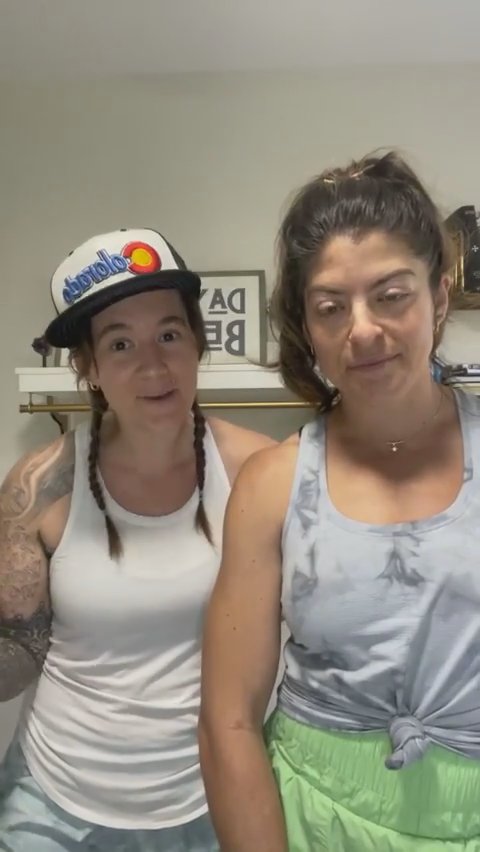
What's up, Cadre fam? Hey, Cadre fam. How's everyone doing on this? Wonderful. I don't know if it's sunshine where you are, but it is where we are. Tuesday. We are not in Colorado. We are not. Though I do love sporting my roots, we are both from there. Fun fact, we are. We did not grow up together. That's a common question we often get asked. We met in Arizona. I have a sneaking suspicion that once upon a time in our high school career, our paths probably crossed 1000%. However, it wasn't official until Scottsdale, Arizona.
We were just meant to be. So that's where we are coming at you live from today. We're excited to chat with you a little bit about a concept that's literally changed my entire life or my outlook on life and how I go about dealing with situations. And that is a concept of prs, not personal records or public relations. Not that either. Pr for us is personal responsibility, and we have a little story about something that happened with us this last week that we had to take some personal responsibility for, even though we really didn't want to.
Mm hmm. We had the opportunity to speak to an organization in Colorado, actually, of moms and daughters on Sunday. And Mary and I have been in this relationship with this particular organization since last October. So we've been nurturing and making sure that all of our I's are dotted and our t's are crossed so that we show up for this training fully prepared. And we, in our opinion, we sleep. We knocked it out of the park. It was such a great presentation, and we feel that way because this isn't the first.
It's a chapter of a larger organization, and we've worked with several other of their chapters. So it's not the first time we have come in contact with this particular organization and gotten the feedback around the presentation, because this is probably the fourth or fifth time we've given this particular presentation, and the feedback prior has been of, you guys did great. This landed incredibly well, so on and so forth. So we presented back in October just literally a sentence this big in terms of what the presentation entailed.
And it was leadership skills. There was a couple of acronyms to support those leadership skills, and we got the thumbs up around that topic. So since October, we've given that presentation a few more times and we've tweaked it, and it's evolved since we presented the topic. So we presented the evolved topic on Sunday, and like Jill said, we felt like we knocked it out of the park. I mean, it felt so good, especially showing up online. There's one thing when we're in person and we have that in person energy, we really try to replicate that when someone brings us in virtually.
So we felt we both walked away being like, wow, not only did like, did we feel like the conversation was engaging. We had a ton of participation. Laughter, hands were going up. It was the bantering back and forth. It felt so organic and authentic and natural. And we closed on time. I mean, we answered questions. All of it felt really, really good where we walked away feeling proud. So yesterday, well, in the interim, I sent an email that said, thank you so much for allowing us to come into your chapter.
Give us any feedback that you have meaning it. I don't just say that. To say that. Right. So we got an email back yesterday that said, your presentation was great, but it wasn't what we agreed on. I felt awkward introducing you because it was totally offline from what we had agreed upon. And I was really taken aback because we didn't talk about baking cookies. We talked about leadership, which is what we agreed on. Like I had previously mentioned, though, the presentation had definitely evolved from October.
So as much as I wanted to be really defensive, that wasn't the appropriate path to take. So instead, this is where personal responsibility comes in. Where can we take ownership? What's our piece in the miscommunication that happened because although we felt like our presentation was fire, she felt like we missed the mark based on a sentence that we agreed upon back in October. So where can we take personal responsibility on this? Better communication, more clarity leading up to the actual presentation date and making sure that we outline exactly what we'll be talking about and not comparing it to other experiences we've had with the exact same organization.
Right. It was. I mean, all of it was because she also took responsibility in the email, too, just saying, hey, I should have also at least sent an email last week. I mean, our last communication, we felt like everything was buttoned up, and we showed up prepared, as prepared as we possibly could to deliver this incredible presentation. And what, she also took responsibility. It was just saying, hey, this was really good for me because I should have set you guys up for success last week, and I didn't.
So, yes, did that feel good to read that and to start to try to make meaning from it? And then her and I jumped on the phone to just discuss about where did we go wrong? Like, man, we felt like we were walking away on cloud nine. And did we miss the mark or was that her perception of us and did everybody else in the audience feel the same way and our hope? And from what we gathered, the audience really didn't know. The audience walked away inspired and in action around the conversation that we were having.
It was just about the initial conversation because she took a vote. She took the conversation from October to a board, and they voted on this particular subject, which was leadership skills. Which was leadership skills. It was about intention and inspiring and getting people to create action based on who you were as a leader. So the presentation that we ended up giving was about your personal brand, you as a leader. And instead of using the word intention and inspire, we use the words engage, align, and congruent.
Yeah. How do you get people to create action based on the leader you are? So there was just a minor miscommunication on garbage, which we were a little dumbfounded on because the presentation, in its entirety was about being the leader in your life in order to get people inspired around whatever movement you wanted. And we spent a long time asking who leaders in the room were. And whenever you ask that question, nobody raises their hand. It's a really great opportunity for us to point out that everyone is a leader, regardless of a position or a title that you hold.
So we spent a good long time going over that. So the feedback we got was confusing because it felt like she was really dead set on those three words because that was literally what we presented. But we couldn't get caught up on what she was caught up on because it was her perception of the way the presentation went that mattered, because she was the one who sought us out. She was the one who brought us in. And we really needed to make sure that she left our conversation, our email communication, feeling valued and heard in her feedback, rather than getting defensive and being like, this is exactly what we presented on.
That was not the way to present it at all. And honestly, that's a concept that's taken me, I'll speak from the place of I years to understand, because how easy is it to point the finger? How easy is it to shift the blame to somebody else and play the victim and be like, well, I delivered exactly what you wanted. That gets nobody anywhere in terms of building a connection. Now, the way we responded, because we wrote a very nice email back that took full responsibility for the miscommunication, the way that she felt.
And maybe that email leads to an incredible other opportunity in the future. But getting defensive, absolutely no way, no how. Would we have an opportunity to make it right or another opportunity to come in in the future. And by doing that again, the conversation we were talking about with these girls and their moms was around leadership. At the end of the day, whether she responds back to us or not, we feel complete. We do. We close the loop. We close the loop. So, personal responsibility allows you to bless and release versus holding on to that resentment.
Or the woulda, coulda, shoulda. It's like, hey, you know what? We asked for feedback. If we invite that feedback in, we need to sit with it and do the right thing by saying, hey, you know what? Our bad. We also could have followed up. And, you know, we were taking ownership of what we could have done differently as well. And at the end of the day, we still want this relationship to be intact because it is tied to us as people and as a brand, and we want that to be represented in such a way that doesn't shift.
I mean, Luke, you said it perfectly. Claim, blame, shame. We don't want to blame. We don't want to shame anybody else for the way that they're feeling because their feelings are valid to them. So we wanted to make sure that she, like I said, walked away feeling like her feelings were heard. That was the most important part, regardless of the way we felt the presentation went. So I was just gonna say, so for you all tuning in, we want you to take a look at where you can take ownership in your life.
Personal responsibility, like Mary said, has been a game changer, not only for her, where it's literally changed her life. Same for me as a leader, a leader in business, but also a leader in my family, in relationships, in how I treat my kiddos. So there is so much value in always looking at yourself first to say, what is my piece in this? And what could I have done differently? Regardless if you feel like you knocked it out of the park or if you missed the mark or if you feel like you share zero responsibility in it, that mindset will get you nowhere.
So, Luke, you put it perfectly. It's a mindset, mindset shift, so much like everything else we talk about with these toolbox talks, it's literally a practice. Like, you have to flex the muscle. You have to be willing to get out of your way of being the way that you've been for your entire life, to open up your blinders and look outside of the way you've been your entire life, to see that there are other pathways that you could take to get the results that you want in your life. So it's little stuff.
It's asking the question, was that my fault? Was there a miscommunication? Could my email have been taken in the total wrong way? My text? Could I have picked up the phone instead of sending an email or a text? Like where could you have done something different? It's a minor, minor tweaks in your day to day operations that then make your communication style better. You're enhancing it, you're refining it in order to get better results. Right? Because that's all we want as human beings. We want our relationships to improve.
We want our communication styles to improve. Also. We get better results. So where can you look at that? Put it under a microscope. I know it can be, like I said, very easy to shift the blame onto someone else. But where can you shift the blame on to you in order to create more ease in your relationships, especially the relationship you have with yourself. So with all that being said, go out and pr some things today. That's right. And I love Luke. We're now adopting this. We've got tools. They're multiplying.
It's electric. It is. So that's like the best way for us to sign off and giving you all a little energy for your day to take some personal responsibility and go kick some b*** and take some names. Yeah, take names and kicks. Alec, you're really, you're joining us at the. Hi, Alec. The a** end of this conversation. But really, all we talked about was where you could take more personal responsibility for your actions in your life so you can improve all areas of your life. That's right. And speaking of, as you take action today, don't forget there's an incredible lineup of people who are jumping on lives all week.
This week you can hop and chime in what you're working on, what you're taking responsibility for in the chat or in our community feed. So lots of ways for you to get involved, get inspired for change and help be the change for other people. So until next time, we'll see you on the next ideation of toolbox Tuesdays, y'all. Bye everyone.
Reactions and comments are for members. Joining is free and takes a minute.