What tools do you have in your toolbox? Are they the right tools? Do you know when it's appropriate to use one tool versus another? We want to make sure your toolbox is equipped with everything you need to handle whatever may come your way throughout the day.
I look forward every May 1 to just drop it, to drop it to somebody. I also really love when a month starts on a Monday. It just feels like a mini, like, reset. Happy May. Happy Tuesday.
May is mental health awareness month. Mental health in our teen population, specifically 21 and under, is dismal. The amount of depression, the amount of anxiety is on the rise. Jill and Mary provide some tools for you to pop in your toolbox.
This month, we're talking about mental health awareness and taking away stigma. Mental health conditions are the leading cause of disability across the United States. Less than half of the adults who need services and treatment get the help they need.
Jungfrau: We need to be advocates as one big community, as adults, but also teaching our kids that as well. There's a very large, distinct difference between bullying and conflict. We appreciate the conversation, you guys, and we will see you next week.
Hello and Happy Tuesday. Happy Tuesday. It's May. It's gonna be May. It's gonna be May. Do you get the reference? I feel like you have to be of a certain age to get the reference. However, it's been a thing for years, so I feel like everybody probably knows now, but if you don't, Justin Timberlake with his boy band NSYNC back in the day, it'll never get old. It'll never get old. I look forward every May 1 to just drop it, to drop it to somebody. And we did. We dropped it in our newsletter yesterday, which was also awesome.
I also really love when a month starts on a Monday. So it's not only May 1 was yesterday, it was Monday. Obviously, today is the second, which is Tuesday. It just feels like a mini, like, reset. I agree. We don't, obviously, have to stay up until midnight and scream happy new year. But that's kind of the feel of a new month. Happy May. Happy Tuesday. We're here to talk about your toolbox and provide some tools for you to pop in that toolbox for you to be able to show up as your best, brightest, and most confident selves.
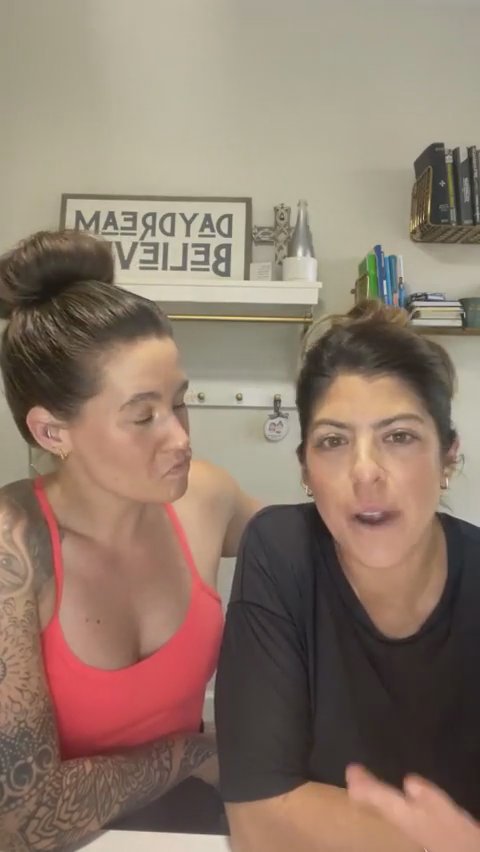
And if you don't know us, our names are Jill and Mary, and we own a company called girls mentorship. So we get to be in this work and in these conversations with teen and tween girls. But what we know about teen and tween girls is their parents need this work, too. And if their parents need it, other adults do as well. And this month is. What is this month? It is mental awareness. Well, may is mental health awareness month, and this is a big thing that we talk with to our girls all the time, because mental health in our teen population, specifically 21 and under, is dismal.
The amount of depression, the amount of anxiety that's happening in our teen and tween young adult population is on the rise. So we want to chat a little bit about that today. So, Luke Risa, junk food junkie, what's up? Happy Tuesday. So good. So when we were talking about. All right, what conversation is relevant? And, I mean, mental health isn't going anywhere. And what is gonna be, I mean, this whole month, what we're highlighting is it is just talking about mental health awareness and bashing or taking away the stigma that comes along when someone says that they have some type of mental condition, illness disorder, you name it.
So today we want to talk about what is stigma and why is it a problem. Ooh. And this became a central part of language for us when we hosted a self love workshop last year, February. And we hosted a wonderful woman who owns a non profit called Kid in the corner. And it came about because her son was the kid herself, her shoulders, to break the stigma. And we all know that there is a stigma around mental health, and it's something that doesn't need to exist. Because what she brought up in these conversations was, we have outlets when we're not feeling physically well.
Right? If I have a stuffy nose. Risa, you were talking about your allergies earlier. If I have a stuffy nose or I'm having allergies, I'm going to go to the store and buy Claritin or Zyrtec, or I'm going to get Kleenex, Nyquil, dayquil. I'm going to help with that. And if those problems, if those things don't solve my problem, I'm going to take it to the next level, which is going to see my doctor. I'm going to go see my doctor so he can give me a prescription for see something else that will help me feel physically better.
It's the same with mental health. Well, and what I want to call out in that, around breaking the stigma is that we need to shout it from all the rooftops, whether it's in our youth or as adults, that it's okay to have sad and bad days. Sad and bad days are okay, and it's just knowing how long or checking back in with yourself around those sad and bad days. So, again, if Mary was sick with allergies, Risa, I also. My allergies are terrible lately. If I'm not feeling well for more than seven days, I'm gonna go seek out probably something additional to support all the other symptoms that I've tried to handle myself.
So if I was sick and I wanted soup and that didn't work, okay, I'm gonna move on to medicine. And if the medicine doesn't work, I'm gonna go to the doctor. Same with mental health. If we are feeling bad for longer than a week to two weeks, that's when we really need to check on one another. So we're just bringing awareness around saying that it is okay. It is not okay to not be okay. And what does, like, stigma? What does stigma do for people? Couple of bullet points here that we just want to read off.
People experiencing mental health conditions often face rejection, bullying, and discrimination. This can make their journey to recovery longer and more difficult. Mental health conditions are the leading cause of disability across the United States, which means if I ask somebody in a room to raise their hand. If they're experiencing mental health problems, more than one hand is going to go up. And I think that's really important to point out because sometimes we don't talk about it because we feel like other people aren't expecting experiencing it and can't relate to what we're going through.
However, it is the leading cause of disability across the United States. Even though most people can be successfully treated, less than half of the adults in the United States who need services and treatment get the help they need. We have a visitor coming to the house. So what I also want to say around this, there's one more. There's two more bullet points that we want to just bring to your attention. The average delay between the onset of symptoms and intervention is eight to ten years. So, for me, I started really experiencing not feeling great when I became a mom.
And I was trying to pretend like everything was okay and I can handle the pressure. And really, it wasn't until I looked back and got to speak to more moms around my feelings that, well, my feelings were validated and other people were experiencing them as well. But I realized that I wasn't alone. But it took years for me to really shove those feelings down, and I was making myself wrong for them. But the fact that symptoms and intervention is eight to ten years is mind blowing. So people are walking around with that.
I mean, just holding on to what it is that they're crippled with. And then we're asking them to perform in their jobs or have solid relationships and do good for the world. That is heartbreaking. And then finally, suicide is the second leading cause of death of youth ages 15 to 24, and the 10th leading cause of death for all Americans. That's sobering. That is a sobering, sobering statistic. And it's just what Jill said. It's because we don't think anyone else is going through it. And there's certain generations, I feel, that have put up or learned different ways of coping.
And for me in particular, I know that I was kind of taught to sweep it under the rug and pick myself up by my bootstraps, right? So it's like big girls don't cry. Certain things that parents said through the generations, not ragging on parents whatsoever, they were operating with what they had, the tools that they had, that they didn't know any better. We have so much information now that the more we know, the better we can do. So in order to really help facilitate change, it pays to be open and honest with how you are.
Feeling so other people can take that permission from you and share how they're feeling as well. We have to share with one another as well as just be cognizant that we don't know the full story. We have no idea what someone else might be going through. And in that case alone, it pays to just be kind. It really does. And if there was one thing that we learned from this incredible woman who unfortunately lost her child, it is sometimes, as society and a community, when we see other people struggling, we feel the need to not be convenience to them, so we don't say anything.
And what we learned was, you need to be an advocate for other people. And there is a really awesome distinction. This can be something that you give to your kids. There's an awesome distinction between the word advocate and tattle, tattling on somebody because they're going through something, is looking to get them in trouble. Advocating for them because they're going through something is looking to get them the help that they need. And I think that's a really important conversation to have with your kids because they need to know the difference.
I don't know if you have kids. I know all of you were kids, and it was easy to run and tell on somebody. So and so is doing this. So and so is doing that. Right. org chart, in your teacher's view, in your parents opinion, to be the good kid who is vigilant. But being vigilant means you're going to be an advocate for somebody. And if you can reach your hand out and help that person, you're gonna make a world of difference for one single person. And that makes a world of a difference, truly for the entire world.
So today, we hope that we gave you a little bit of insight to just check in on how you're doing today and reminding you that you are enough. You are enough where you are, regardless of your situation or your circumstance. And that together we can break the stigma around mental health and be advocates for one another. We need to be advocates as one big community, as adults, but also teaching our kids that as well. And honestly, Jungfrau junkie, you said, unfortunately, in today's world, kids, teens have no refuge from bullying that leads to their mental health.
And we obviously work largely with that population. We agree. And I think this would be a really good spin off live to do around the subject of bullying versus conflict, because the bullying word is thrown out a ton in today's day and age. Raising kids now is definitely a ton different than when we were being raised as kids. But there's a very large, distinct difference between bullying and conflict. And oftentimes parents want to step in and throw that word around when they think something is going wrong, which is robbing them of valuable conflict resolution skills that they could learn through healthy conflict.
So thank you for saying that because I think that would be a really good episode for us to dive a little bit deeper on next time around. I totally agree. So. And we can make some, some videos as well. Oh, we totally can. So with that being said, thank you for being here. Thank you for being you. Thank you for being on this platform. Because we know that if you're on this platform, you're looking to better your own mental health. Because when you can be a light for yourself, you can be a light for others.
And all that light does is light other people's candle. So, amen. Go out there and light somebody else's fire. That is going to help you in and of itself feel better as well. So we appreciate the conversation, you guys, and we will see you next week. Take care, everybody. See ya. See ya. See ya. See ya. See ya. See ya.
Reactions and comments are for members. Joining is free and takes a minute.