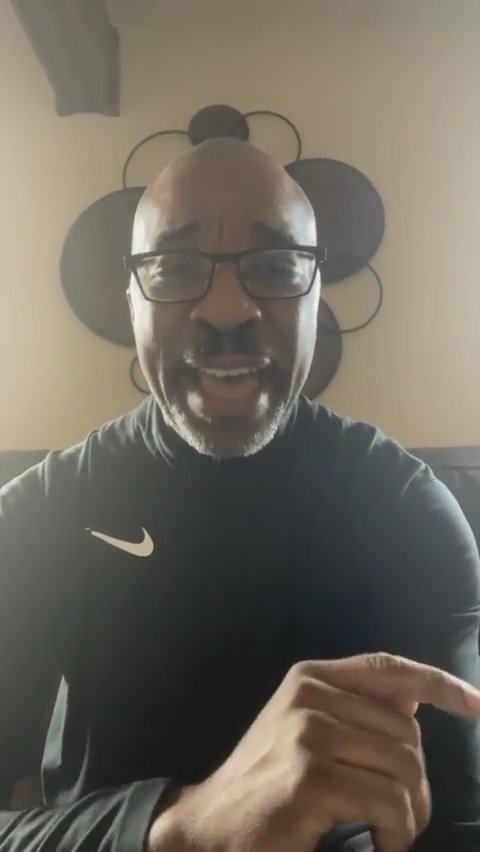
Doctor E explains why a leader's willingness to be vulnerable matters for diversity, equity and inclusion. He urges leaders to question habitual practices, step beyond comfort zones and model openness.
Doctor E: The most important quality from a leadership standpoint is a willingness to be vulnerable. If a leader has an expectation for folks to go places, to do things, that sets the tone for diversity, equity and inclusion, he says. Strength and vulnerability starts with being vulnerable but understanding it not as a weakness.
Hello, hello. Hello. Happy Wednesday. Hope you are doing well. Doctor E here touching base, fresh off of an inclusion conference where I was asked, well, inclusion and leadership, where I was asked what did I think the number one characteristic or quality for leadership is or was as it relates to diversity, equity and inclusion. So I'm going to give you my thoughts on that, which is going to be quite surprising because it isn't necessarily, you know, how a leader sets the tone, how the leader models, but I believe is the most important quality from a leadership standpoint as it relates to Dei, is a willingness to be vulnerable.
And what do I mean by that? If a leader has an expectation for folks to go places, to do things, to talk about areas that they aren't necessarily comfortable doing or haven't had a lot of experience doing, that sets the tone for diversity, equity and inclusion in a significant way that does not and cannot be replaced. If you are a leader and you practice and vulnerable, talking about different things, talking about ways that you would like to engage, that you haven't necessarily engaged, if you think about how to do things different, change management, all of those other kinds of explorative, engaging kinds of ways, without shying away from the discomfort, without shying away from your level of engagement, that willingness to be vulnerable sets the tone for others that won't necessarily be done or can't be done by anyone else.
And so get out of your comfort zone, stretch yourself, but start with those basics, understandings and questions of what do I typically and normally do? What do I typically normally do as a leader? What do we typically and normally do as an organization, and what does that mean in terms of setting standards, practices, policies, all of those other kinds of things, and then begin to challenge yourself to step away from how you've gotten to that point, what you've always done, why you've always done it, exploring some of those things.
But it starts with, with a fundamental willingness to be vulnerable and asking that question, why? Chances are if you ask that question, you might find that you really don't have an answer other than those last dying words of every organization. This is the way we've always done it. So if you want to avoid some of those kinds of realities, step into that space of vulnerability. Whether it's challenging yourself as a leader, whether it's challenging yourself as an organization to really begin to think about what, where and why are we uncomfortable with certain kinds of things, and what does it take for us to move beyond those boundaries of comfort?
That's my biggest key to leadership, particularly as it relates to diversity, equity, inclusion is a willingness to be vulnerable and their strength and vulnerability. Just because you're vulnerable, just because you express vulnerability doesn't necessarily make you weak. That's a huge misnomer. Actually some of the best leaders I know, some of the best leaders that I've worked with and worked for have practiced that willingness to be vulnerable, to take ownership, to ask not just them questions of themselves but to encourage folks to ask the questions of them too.
Why, where and what and how do we stretch ourselves as an organization. So that's my two cent, those are my two thoughts and hopefully they give you more than two points that you can move forward with and work on. Strength and vulnerability starts with the willingness to be vulnerable but understanding it not as a weakness but as a standard of practice that is an exercise of strength. So see you next time. Thanks for tuning in and I'll catch you soon.
Reactions and comments are for members. Joining is free and takes a minute.