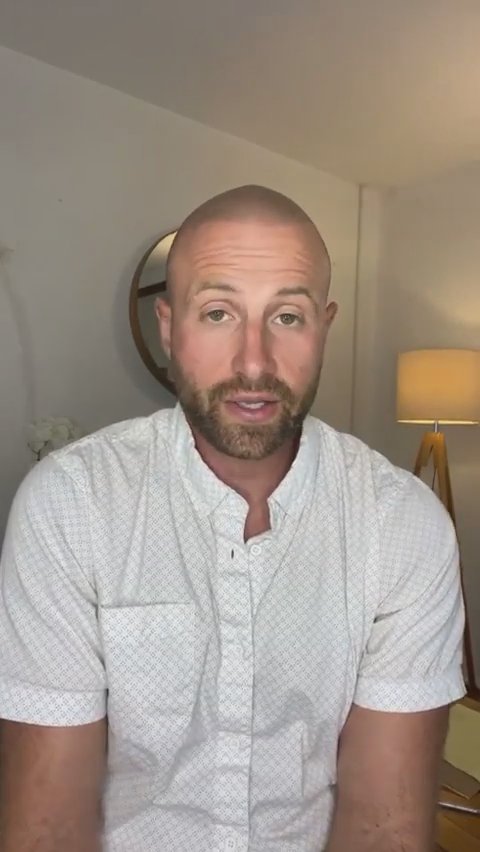
In this Livestream, I will answer questions from Cadre users and even coaches! So please join so I can answer any mental health and addiction questions you have.
Evan: Today I'm doing a special episode, and that is just Q and A. We're going into the proverbial mailbag and we're going to see what questions you all have. Feel free to go on that community page and ask me or anyone else a question and we'll be able to share in our live stream.
What's the difference between CBT, cognitive behavioral therapy, and other types of therapy? What kind of therapy is right for me?
Therapy should be about you. They should have your full, undivided attention. You should feel comfortable opening up. If you think you may not be vibing, you have two general options. One is you just find somebody else.
When does generalized anxiety disorder, GAD, turn into a panic attack or panic disorder? There are some root causes there as well. How do I approach someone with delusional disorder to advise them to seek help?
There's often paranoia with delusions. When they get extremely stressed and anxious, they can start to get paranoid. It's a fine line between validating their reality and emotionally validating the reality. Sometimes people just have to go against their will at the beginning.
Luke: What is a personality disorder? Luke: It's like a persistent pattern of behavior that is extreme and deviated within the context of one's culture. He says there are three clusters of personality disorders. Luke: A lot of these things may have other explanations versus, like, a personality Disorder.
How do factors such as culture and economic status impact mental health? Sometimes cultures view mental health in a different way. Sometimes certain cultural practices can lead to better emotional health. It's all kind of this one holistic picture of mental health.
What's up, Cadre fam? Evan here, your resident mental health and addiction therapist. We're back for another episode, another livestream. This is mental health matters because mental health matters. And we're gonna be talking about some mental health matters. See what I did there? Anyways, the beacon has gone out. Hopefully we're gonna get some people coming in because today I'm doing a special episode, and that is just Q and A. We're going into the proverbial mailbag and we're going to see what questions you all have.
So either whether it's from the Cadre community, I did a post in the community page, the feed, asking for any questions. I got some really good ones and asking fellow Cadre creators and collaborators, and they provided some good questions as well. So I got some really good material today. But hopefully we're gonna have some other people hopping in and they could share and interact. So be sure if you're seeing this, feel free to go on that community page and ask me or anyone else a question and we'll be able to share in our live stream.
Maybe we'll even make an entire video on your question. I know that in my career of content creation, I have done that as well. So, yay, Carrie's here. Let's go. Let's do this. Carrie asked some good questions as well. So let me pull those up and we could just jump right into it. So first question does come from Carrie. So since she's here, let's go ahead and answer Kerry's question. So this one is, what's the difference between CBT, cognitive behavioral therapy, and other types of therapy? What kind of therapy is right for me?
Well, Carrie, I'll tell you exactly what's right for you personally. No, I'm just kidding. So I like to look at the art of therapy as two different general kinds. One I call top down, one I call bottom up. Now, top down therapy is when we examine our thought patterns, how we think, how we think affects the way we feel, how we look at different situations, how we talk to ourselves, the narratives in our mind. Because when we do that, when we're able to change thoughts, behaviors, when we change our thoughts and behaviors and our actions, right, that changes how we feel and we feel better, right?
So that is top down. And that's actually what cognitive behavioral therapy is, is a top down. But let's go ahead and talk and about the inverse, which is bottom up, what I call it. And that is when we go right to the emotions, when we do emotional processing, when you talk about your feelings. So something like a lot of types of trauma therapy would fit into this category. It's being more in tune with your body. It's talking about some of those past things that have happened to you. So really feeling, experiencing your emotions, because by doing that, you will feel better through emotional processing and not just avoiding some of those uncomfortable feelings, but making sense of them.
So when you do that, that changes how you feel. And when you change how you feel, you're thinking your outlook, that's going to change as well. So CBT is very much a top down because it's focused on thoughts and behaviors and impacting your feelings. Not sure. Again, sometimes the line gets blurred. You know, nowadays you're not going to find like too many people. You probably find a lot, but your average run of the mill therapist will probably be trained in a lot of different methods. And so CBT is one of the most tried and true therapies.
One of the oldest that's still commonly practiced today, probably has some of the most research backing behind it and is applied to many different settings. So CBT actually really isn't just one thing. It is an umbrella. It's an umbrella of different therapies, like rational emotive behavior therapy, which is one of the original ones from Aaron Beck, who was doing this for like, until he was 100, he only died recently, and many other very well known psychologists. Another interesting book is by David Burns called feeling good.
It's a really classic book on how to apply cognitive behavioral therapy in your life and feel better and just be generally happier. So CBT is awesome. And if that's something that rings true to you, I recommend finding a therapist who does that. If some of the other types of therapies, like different types of trauma therapies that are more about emotional processing, if that sounds like it vibes more with you, then you could look into some of those modalities, something like maybe an EMDR, brain spotting eFT, emotional focused therapy.
So sorry, I meant my time reading. Just because I got this light in my face, I haven't heard of those terms. Thanks for explaining CBT. More depth. No problem. That's a great question because you see that word all the time. It's like, okay, well, what does that really mean? I think sometimes therapists just like, don't think about that. Not everyone's gonna know what that means. So, yeah, that's just how I look at it, how I make sense of it. But, yeah, I mean, I've applied in the therapy. I do. I apply a lot of different CBT tactics, tactics, modalities, or different assignments I give people.
So, for example, like, reframing thoughts, I'm looking at different thought patterns that maybe don't suit you anymore and looking at alternatives. And again, it's another way of making sense. So again, I like to burn the candle at both ends to try to get to the middle, you know, versus just one or the other. And one, you burn one end, it may take you all the way down. You can burn the other, it may take you all the way up. But I like to do both because I think. I think there's merit to it, you know, not necessarily which one is better.
So, yeah, that second part of the question, what's right for you? I think that's whatever makes sense, whatever vibes most with you. Which kind of brings us to the next question is, what should I look for in a therapist? And I think that's a great example. You know, just kind of some general things to throw out of what I look for in a therapist. One is like consistency, right? I mean, therapists are human, and sometimes they're, like, always canceling appointments or seem like they're not really paying all that much attention.
So, look, therapy should be about you. There's. They should have your full, undivided attention. You should feel comfortable with them. You should feel comfortable opening up. Now, granted, that may not come right away. A lot of times we may come in guarded and have trust issues or whatever, so don't just run right away unless they're just given a bad vibe. Sometimes it is just a vibe check, too. Therapy is interesting because it is these clinical modalities we do, but so much of it is relational art of therapy.
There's a science of therapy, and then there's the art. And the art is that. Is that human connection delivered in an actually therapeutic way. So, yeah, just how much do you vibe with them? And, you know, as you start to see them more, asking yourself, am I improving? Am I getting better? You know, is this. Are they addressing my need? Are they listening to me? Are they reaching? Are we working towards my goals or their goals? Right. In those situations where you think you may not be vibing, you have two general options.
One is you just find somebody else. Now, you don't have to necessarily say anything I recommend, like, ghosting people, but if you need to, that's fine. But, you know, have that conversation. Hey, you know, I just. I'm going to be looking for someone else. You know, clients have done that with me, and of course, I don't want to hear hear that, but I respect them for doing that, and I'm not for everyone. I've had some clients who think I'm great, so I'm not for everyone. And the other option, which I actually lean towards, unless you really know this therapist, is not for you.
Right. Then you want to kind of cut one way or the other. But sometimes it could be a deeper issue. It could be something more internal. You could maybe feel like you're being judged by them. It could be something that you're bringing to the table. Also, therapists are not mind readers, so maybe, and I've had this happen where I'm. I think I'm doing a good job or something, or I think we're working towards a good direction, but maybe I'm not doing what they really want, you know? And I just don't know.
So I'm just doing the best I can based on what I know. So having that conversation, hey, I'm not really getting what I want out of this. I would prefer if a client said that, and I could be like, oh, I didn't know. What, you want to work more on this? Well, let's do that. So I've had that with clients, too. Maybe they feel like we're working too much on one issue, and I'm like, okay, well, here's why. I was leaning towards that direction. But, yeah, that makes sense if you want to move here. I mean, it's your therapy.
Sometimes there's a limit to that. If someone's, like, using heroin every day and they just want to talk about their emotions and they're not really getting all that much better, there's this elephant in the room, and there's just no progress being made. I could have that choice of saying, hey, here's what I'm seeing. And I have that same choice as a therapist, too, technically, of, like, who I see, and if I feel like I'm not vibing with someone, I don't know if I've ever really haven't had that happen too much or at all.
I can't remember where I was. Like, actually, I've had that where I refer to someone else. I'm like, look, it's just, you know, this is not what therapy's about. This is not, you know, we're not reaching the objectives of our treatment plan. It's a big part, part of therapy that we don't really talk about as much as having a treatment plan with objectives, because you can measure progress in therapy. Really good therapy is when you also measure the progress. And I like to do that with clients after three, six months to show them how far they've come.
Do the same screening as when you came in the door. You forgot you even did it. And I show, hey, you improved 15 points since we started based on the work we've done together. So if that's not happening or someone needs a higher level of care, I may do that on my end. So it takes two people, just like any relationship, two people to be in a healthy, productive relationship. So those are some of the things that I look at, whether it's at the beginning or as you go through the process. So let's see here.
Let's do a little more technical question to these. I love to. So Luke asks, when does generalized anxiety disorder, GAD, turn into a panic attack or panic disorder, and what's the difference? So, in as far as mental health disorders go, there's, like, different families, right? You have depressive disorders, kind of mood disorders, bipolar related disorders, anxiety disorders. And that's what this category is, is anxiety disorders umbrella. Now, in every umbrella, there's typically one kind of core disorder that everything else, like, breaks off from.
Like with depressive disorders, major depressive disorder, which has a list of symptoms, and all the other depressive disorders are variations of those symptoms. And so here, like, the core disorder would be more like generalized anxiety. That lists all the symptoms. And one of those, actually is a panic attack. And it's kind of complicated. We all have kind of a general idea of what a panic attack is, but it's like these very acute episodes. They usually don't last very long, but they're extremely intense, of extreme fear.
Feeling like your body's out of control. Sometimes you may feel like you're dying and be like, go to the emergency room. So, like, I'm having a heart attack, or I'm like, no, really. They're just maybe having an acute anxiety episode. A lot of it's related to the blood oxygen content, to carbon dioxide. Often when you're breathing heavy, having too much, I believe. I can't remember if it's, like, one way or the other, having too much carbon dioxide in your blood or not enough. One of the two, but, yeah.
So there are some root causes there as well. So some people are just more prone to them than others. Now, other people start. They find that they start having them out of nowhere, like, later in life. So I think a good example of that is the show the Sopranos, which that's the whole basis of the show, is this, like, big tough guy mob boss Tony Soprano starts having panic attacks, and then he finds himself in therapy. Oh, so that's interesting. Right? That's too much CO2. That's what I thought. Thanks, Doctor Carey.
That's why it's good to have doctor Carrier. But, you know, so you have this mob boss tough guy who's having panic attacks, right, and it's crippling him, and no one could find out, because if they find out he's in therapy, right, that shows his weakness and he may get. May get whacked. So, yeah, so they can come later in life out of nowhere, and it could be really dysregulated. I mean, having panic attacks are horrible. You know, I've had people who have them, like, when they're driving and. Yeah, so, so panic attacks are part of that generalized anxiety disorder cluster.
Now, you can have generalized anxiety with panic attacks, but you can also have panic disorder. Now, the main difference is the panic disorders. You're not really having this constant anxiety, but you just. The main issue is just having these acute panic episodes, and that is the center of it versus, like, having kind of both with the generalized anxiety that may lead to panic attacks. So that's kind of the difference in just how we code it. But they do have, they're just different presentations, so that's the difference.
And maybe we would look at treatment in a slightly different way. Or if you're doing medications, they'd look at it. Psychiatrists may look at those and, you know, and take those things into account. So hopefully that answers the question of what the difference between gad and panic is. So, you know, it's like, again, gad is, you know, you could have that with panic attacks. Or if it's primarily panic, panic disorder. Let's see, what else? Oh, God, this is a great question. Okay, so how do I approach someone with delusional disorder to advise them to seek help when they don't know they have a problem, or someone with a schizophrenia type diagnosis.
So a thought disorder where you're having delusions or hallucinations, you lose this contact with reality, and this could be quite dangerous and one of the more severe, persistent types of mental health disorders. Now, this is an amazing question, and it's really complicated, and we almost always do the wrong thing when we're in this situation, including myself, because there's the tendency, we want to try to orient them to reality and debate with them. No, you're wrong. Hey, look over here. There is not a wire tap from the FBI.
You can see that doesn't work, because what happens when you're doing it, when you're trying to rationalize with them, you are denying their reality. Now, imagine that happened to you. If I came and I started telling you, look like you're not actually working as an accountant, and you are, and this is like a. You'd be like, what the h*** are you talking about? If I just tried to deny your reality right now, just your reality versus mine. Why is mine superior to yours in your mind? Right? So that's how intense this is, is like you're trying to deny someone's reality.
Now, of course, over time, somebody with the thought disorder, if they have it a little bit longer, could start to accept that and have more awareness about, you know, this is something that frequently happens, and here are the patterns and here are the warning signs. But often, at the very beginning, it's even more difficult to try to convince someone. So this is where it takes a little bit of nuance. So I did a really awesome interview with a guy. I would recommend checking out his stuff. He's pretty well known.
His name is the schizophrenic hippie. That's his handle, Cody Green. He's an awesome. He makes awesome content very unique because there's not a lot of content creators that are schizophrenic and talk about it. And one of the best parts, I actually get to interview him, and I brought my friend in, Lily, who, she's a psychiatric social worker, has just immense amount of experience working with people with thought disorder. So she knows more than I do as well. So I wanted to bring her in, and we just had an amazing conversation.
And this is one of the things that we talked about, and one of the things he said that really stuck out to me is he said that the people who challenged my reality became wrapped up in my delusions, right? So they almost became the enemy, and they became part of this world, this, like, antagonistic world of not being in reality. And so that person is automatically out. So you kind of lose your ability to be helpful if you directly challenge them. So I always have a hard time, like, explaining this.
I always get asked. I'm like, okay, how do I explain this? Well, because you don't want to, like, directly be like, oh, yeah, FBI. They're totally, you know, you don't want to feed into it like that. But a lot of it's just like, listening, asking questions, being supportive. Yeah, that must be really hard to feel like that's happening to you or you use, like, language like that. So you're not directly supporting it or tell me more, like asking questions. Why do you think that? And when you start to take that approach, it's a little bit.
It's going to be better. You're going to have more of an allyship with them. Does that make sense? Yeah. So then it's like, yeah, so it's a fine line between validating their reality, like you said, emotionally validating the reality, but maybe not technically, you know, and if someone too, not everyone is, like, necessarily dangerous. Like, I had a friend who was having a situation who doesn't have schizophrenia. I was kind of worried for a second, but, you know, he was, you know, sometimes, like a delusion, a paranoia.
Often. There's often paranoia with delusions. Sometimes people just have the tendency to get. I have a couple friends like that. When they get extremely stressed and anxious, they can start to get paranoid. Their mind could go to that scary place and around their house gets a phone, but they could start. I can almost see it in their eyes. There's almost a look that comes with it, this kind of look of confusion and fear that could come with delusions. Kind of these would call them persecutory delusions, like you're being persecuted.
So, you know, some friends that are, like, maybe not full blown schizophrenic, but, you know, sometimes, like, if someone is, like, a danger to themselves or others, you know, you really have to try to get them that support and maybe a little bit more urgent, and there may need to be emergency services called. And unfortunately, sometimes people just have to go against their will at the beginning. But, you know, usually someone like Cody, he's very much more self aware at this point and knows what his mind has the tendency to do, knows the warning signs, knows the type of thoughts that he has preceding it, the delusions, the type of hallucinations, where it does get more intense.
But. So it's, again, I've fallen to this trap, too, with people with paranoids just want to be like, yo, this makes no sense because it often doesn't. You know, it's usually stuff around, like. And I always know it because there's like. There's just these. There's just these patterns, right? Like poisoning. Like thinking like someone's poisoning, but it's always like. It's not like someone. Well, sometimes it is like someone puts stuff in my drink, but it's like, you know, someone put it in the air vents.
I had one friend who was like, really believe that his neighbor, he couldn't, like, explain why his neighbor why would your neighbor do this? Or why would the maintenance person, you know, he thought that there were certain levels of chemicals. He was getting it tested, you know, and then often they start to think that the symptoms that they're having, this anxiety parent, you know, whatever is actually from what the person or am feeling this way because they did this poison sometimes then it's around the government, the FBI, religious delusions.
There's really these pretty set patterns. So often when you start hearing that, then I'm like. Because oftentimes folks with schizophrenia or a thought disorder, they're really good at rationalizing. So actually, sometimes they could convince people and actually get you to start believing this because they start connecting these dots that aren't there. Especially people are like, really smart. You know, they could, like, like, tie these dots. They can make the case for this thing that, like, really, when you, like, look, makes no sense.
So it is. It could be really scary. Let's see. How do you suggest. Let's see. This is why you don't wear a white shirt at a live stream. I always forget because the letters are what? So how do you suggest they get help when they have no self awareness? And that's the really difficult if you have a really good rapport with them. So, like, with one of our friends, like, you have to sometimes phrase it differently. Like, hey, like, with my one buddy, you know, like, who was having this, you know, he's kind of, like, hard headed, too.
And, you know, he's very, you know, like, I have it together. I don't need help, you know, with, like, you know, his wife and family's calling me out worried. What do we do? And, like, in that situation, sometimes you just phrase. Sometimes you just phrase things differently. So as they're saying you're delusional, then they're going to give the argument as to why, just like, if you did for addiction. So sometimes, like, in this situation, you could phrase it in a different way. Oh, it seems like you're under a lot of stress.
Seems like you're having some anxiety. Oh, sounds like you're having anxiety that people are doing this. Sounds like you're just a little overwhelmed. Is that what do you think? You know? And then maybe you could get their foot in the door to services that way. And maybe if they hear it from someone else, a medical professional, to start addressing it. But yeah, it's really, it's really delicate and it's really difficult. And like I said, sometimes it does require a little bit more intervention, and sometimes that is against the person's will, which we'd like to avoid at all costs.
But sometimes it's just getting them the medication, because like if you're schizophrenic, that's like pretty much the only thing you could do. You know, it's like, as a therapist, it's like, let's say someone comes in with depression just doing therapy could like be 80%, 70%, 50% of the game and medication the rest. But it's kind of the inverse with schizophrenia is like, I could do as much therapy as I want. That's not going to make their delusions go away, but there is benefit in therapy around awareness and other coping skills and stuff like that.
But the medication is really important. So sometimes if you just get the medication in them, they come down, then they could start seeing things a little more rationally and then realize, oh, yeah, I was. And then start working with them on that. The medications could be a little harsh for some people, though. They're getting better. So was there something else I missed? Yeah, no, that's it. So, yeah, that's an amazing topic and very delicate. So. Okay, this was another good one from Luke. So what is a personality disorder?
It's kind of funny. Like, if I, like, if I asked a therapist to define a personality disorder, I think they may have like a hard time. They'd have to kind of think about, we all know what it is, sort of. And maybe anyone who has like some general knowledge of mental health, you know, it's like you have a rough idea, but like, how do you go and explain it? And I probably would have had a hard time too. I'd have to really think about it. I probably put some coherent together until I did a video on this where I broke down all the personality disorders and what they are.
And I like the definition. So kind of the technical definition I really like this in the DSM is it's like a persistent pattern of behavior that is extreme and deviated within the context of one's culture. So extreme and problematic. So basically you bring up culture because you could behave one way in one culture and that would be very normal, and then in another it would be viewed as very extreme. So it's got to be like within the context of one's culture that you're exhibiting these extreme and problematic behaviors persistently to the point, you know, where it does cause a lot of issues.
So, for example, and you have different clusters. So you have three clusters of personality disorders. I think those are like eleven. I just forget the number. I probably list them count them. But the first would be ones that are cluster a, which is like the avoidant. And that would be something like avoidant personality disorder, where it's a constant pattern of avoidance, of conflict, of responsibilities that causes problems. I think I only met one person who I thought technically met that definition.
That one's a little bit more rare or dependent. Personality disorder is another one where you just rely on other people chronically, another more rare one. A lot of these things may have other explanations versus, like, a personality disorder. A lot of these come from, like, a traumatic upbringing. They become like a maladaptive coping mechanism, is what a lot of these things are. Some of them are more biologically ingrained, just like anything else, where you start to get to the cluster b, where you have things like antisocial personality disorder, which is a pattern of criminal behavior, but also violation of the rights of others, and a lack of empathy.
You know, so pretty much all your, you know, this would be extreme example, but all your, like, kind of serial killers or, like, chronically incarcerated folks. And there's other explanations for that, too. But, you know, severe criminal, that kind of thing is usually accompanied with antisocial personality disorder. So in, like, a prison setting, a very high percentage, at least compared to, like, the 1% of the population, it may be like 15, 2030 or something like that. I forget the actual number could be lower, could be higher than that.
So another class example, borderline personality disorder, which is the most common. That would also be in the cluster B, which is a pattern of a lack of emotional and big. So actually the cluster B. So, like we said, a is avoidant. Cluster B is a lack of emotional and emotional and behavioral control. So difficulty controlling your emotions and your behavior. So that could look like substance use for some people. Cutting suicidal ideation. That would be like a borderline personality disorder. Constant feelings of abandonment, you know, maybe could be manipulation to meet your emotional needs that you feel are lacking.
And you have, like, narcissism, which is the other one in that category. Narcissistic personality disorder, which is a chronic pattern of, like, thinking you're better than other people, that you deserve more, that, you know, there's also a bit of an antisocial piece in that, too. A lack of empathy, exploitation of other people, you know, self obsession, that kind of thing. And then the third cluster again, which is like, we start to get into some rare territory, which is eccentric and odd behavior.
Something like a schizotypal personality, right? That would be just like kind of this pattern of, like, almost living in a fantasy type world of, you know, kind of people who. Again, you can't start diagnosing people with these things, but people who are like, only one person, again, did I find maybe meet this criteria. But, you know, kind of living in this, like, metaphysical crystals and, you know, things are being dictated by the wind, you know, like just kind of bizarre type behaviors like that.
But to like a serious. Not just like, oh, like horoscopes or crystals and stuff, but pretty extreme detachment. You know, kind of like detachment. Detachment from reality in some ways, but not better explained by a delusional disorder or thought disorder. So that's like a pretty deep breakdown. Most of them eccentric, odd behaviors like a schizoid personality disorder. You know, the schizoid. Schizotypal. Not to be confused with schizophrenia, but I don't know sometimes, like, with someone who's like, kind of schizoid.
I don't know if I've schizoid. I don't know if I've ever come across. But sometimes maybe if someone's like, maybe more moderately disappearedly autistic, you know, maybe that could explain it. So I don't know. Some of those other personalities I don't know if I fully buy into most of the time just because I don't, like, ever see them. But you know something that I've seen narcissism, I've seen antisocial, I've seen borderline all the time. Saw avoidant once. Right. So some of these could be pretty rare.
But that's. That's what a personality disorder is, is. Yeah. A pattern, a pervasive pattern of behavior far outside the norm in one's culture. That's problematic. So I love talking about this stuff. So thanks for that question. I think I may have hit them all that I have. Oh, wait, there's one more. Yeah. Okay, so this one's about culture. Let me just take a sip of this protein shake quick. All this thinking is making me hungry. So let me just read this off directly. So how do factors such as culture and economic status impact mental health?
So we talked about that, like, top down therapy. And part of that top down approach, too, is one's environment. So someone could come to therapy and say, okay, I have a job that I hate. My boss is like, I'm in an abusive relationship. And you have this. My relative close friend just died. So you come in and you're like, okay, I have depression. Or at least you have all these symptoms of depression. Now, that would make sense given everything you've been through, like, very situational. So sometimes it's hard to tell the line, and I've done many videos on this, between what is depression, what is situational?
But at the end of the day, this kind of feels the same and needs to be addressed. So my mind's going to a couple different places here. So if we look at socioeconomic, for example, you could see how your mental health would be impacted. So if anyone here, most people have been through a tough economic time at some point, that's a huge cause of stress. And if people have chronic struggles with meeting their basic needs in any way, that's a huge drain on your happiness and your emotional well being and mental health.
You could just even say that outside of even just talking about mental health disorders, right. It's all kind of this one holistic picture of mental health. So usually once you remove that burden, then the amount of money you make actually doesn't matter as much as we think it does. After that, it's more just like, this is like a negative you want to get out of the way, which is like financial stress. So, you know, look, certain cultures experience more of that, more levels of poverty, maybe where you're in a high crime setting.
I mean, these are all just stressors. So if you're in a socioeconomic or cultural situation where there are stressors or experiencing persecution, that's going to play into the picture. Now, another thing with cultures. So cultures, in different cultures, we see things differently, like from an east, you know, if you come from an eastern culture versus a western culture. Right. Actually, our brains develop differently based on the culture that we're in. So sometimes cultures view mental health in a different way.
A lot of times there's a de emphasis on a mental health disorder viewed as a weakness, maybe in some cultures more than others, and that could have a negative impact. Now, sometimes certain cultural practices can lead to better emotional health, and I'll give you one example. Right? So the 7th day Adventists, I don't know, they're like a sect of Christianity that are out in California. Is that the 7th day Adventist, is that right? I think so. You could look this up, but it's a blue. It's considered a blue zone, and it's this community out in California, like with this religious community, and they have an inordinate amount of people who live to 100, and they report higher levels of happiness and health.
And one of the reasons for that, I mean, a lot of it's like diet, but, you know, but in this case, it's like a sense of community. So that is a really big factor. So if you grew up in a culture with a stronger sense of community, that could be a huge benefit to your overall happiness and well being. I'm not saying go join a religious sect or something like that, but it's more. You break down, you take away the decor, and what you see, the bones of what that is is a foundation of community. So that's another way, another example of how culture can have an impact on your overall mental health.
Yeah. I mean, also, too, looking at, like, the LGBTQ population, right. They're gonna. They have higher levels of mental health disorders. Trauma, PTSD, substance use. I mean, we're talking, like, two to three fold to the general population, and that is because a lot of the cultural stressors. Now, let's give an example. This is actually a great example of how it could impact in a couple different ways. So let's look at gay men for a second. Right now, they're at higher risk of things like HIV. Now, a lot of older gay men have been through this traumatic event of losing, like, half their friends in the, like, eighties and early nineties or maybe starting the seventies.
I can't remember, with, like, the HIV epidemic. That is a huge stressor. That is a weight on your mental health. Growing up in families that were not okay with their kid being gay or being bullied or, like, all this centered around being gay. This is just one example, and I could do it for lesbian, you know, whoever else, but I'm just going to use this example for a certain reason. Now, higher rates of trauma, being sexually abused. So therefore, PTSD, high risk for certain health conditions, bullying.
Now, also because of that, people are more prone to using substances who have mental health disorders and trauma. However, that's one end. Now. The other end is that there is a culture in the LGBTQ community of substance use not just as a means to escape, but for fun. And you could argue it as, like, a form of escape, but, you know, where did people go to meet each other once they got old enough to get out of the house was the gay bar. You know, it wasn't like, a nice community center where they played bingo, you know, is going to a gay bar, LGBTQ and partying.
So there's a big culture of partying, and some of that is just like, you know, you're partying for your freedom, you know, like, getting out of whatever situation you're in and feeling a sense of pride, feeling a sense of, you know, more self fulfillment. So, you know, when you're in a culture of partying, you're gonna have more substances around. So right now, a big example of that is the meth epidemic in the gay male and men who have sex with men or trans female population of meth, kind of used as a party and sex drug for various reasons.
And meth is such high addiction rates that it's pretty much devastated much of the gay male community and all the other things I just mentioned. And you find a lot in the lesbian side of things, a lot of alcohol. Usually the older gay men tend to have more alcohol abuse than lesbians. And then the meth really is affecting. I mean, it goes pretty high. Plenty of 50 year olds, 40 year olds who can got rap. I'm almost 40 now. I'm thinking, like, with my 20 year old brain, but, you know, so much more common, you know, in the late nineties, two thousands, the meth epidemic.
So that's an example of how culture could impact from both ends, from the environment you're in, but also from the experiences that you've had. So, anyway, I'll end it there. Went longer than I thought. These are just great topics, great questions. Very grateful for all you, all of you, all of you, all of yous. But all of you who contributed and asked these amazing questions. And with that, folks, I'm out. Have a great rest of your day. Cheers. Bye.
Reactions and comments are for members. Joining is free and takes a minute.