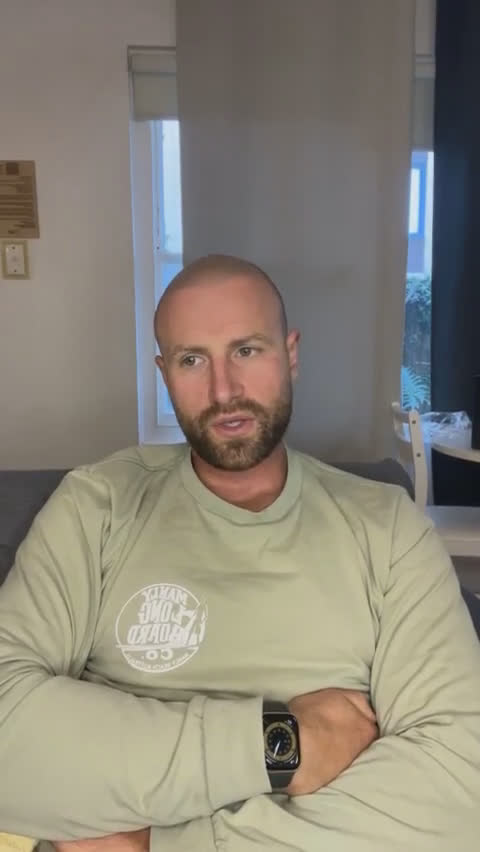
Last week a member of the Cadre family asked me if remote work was good for our mental health. It seems like a straightforward question, but like anything in life, the answer is a bit more nuanced, so join me as I dive deeper into the topic.
Evan is your resident mental health and addiction therapist. Next week we're going to be doing another q and a session. I'd love to hear any questions related to mentalhealth and addiction.
Is remote work good for mental health? We're going to be talking about remote work. Do you work remote? Have you ever worked remote? What things do you consider with that?
Many more jobs are being able to be done remote. But just like the pace of technology increasing exponentially, our brains don't evolve in that way as well. A lot of people found it to be awesome, but other people find it difficult and didn't like it at all.
For half of people, remote work is a benefit, for other half, it's not necessary. Being in a building, they find that they're not able to be as productive. But then almost always, their personal life is going to be a bit better.
As a contractor, what I'm showing you is you can make 40,000 more. But still there's people that just don't want to have to deal with any of that. The end of my rant is kind of deciding what's best for you.
The biggest problem that people have is the fear of changes in their work. Change is inherently good. However, you can make a change that will have potentially disastrous consequences. It is good from a psychological, mental health perspective to challenge some of those fears.
Tune in next week for some Q and A. Tag me in the community feed so I could stack up some questions. All right, y'all take care of yourselves.
Hi, I'm Evan here, your resident mental health and addiction therapist. And this is mental health matters. Because mental health is important, we're going to be discussing some matters related to mental health and addiction. Anyway, so last week we had our bi weekly q and a for mental health matters, which means next week we're going to be doing another q and a session. So whether it's in the community feed or you reach out to me directly, I'd love to hear any questions related to mental health and addiction.
So you all provided some really good ones. So let's get on the ball with that. But one of the questions I didn't have a chance to get to just because of time last week, and it was a great question. And after I was like, oh, man, I wish I got to it. But I figured today, why not just do a whole episode on this question? And that is, is remote work good for mental health? Alright, so I actually had to do a little bit of digging into this. What up, junk food junkie? I was like counting down, like, how long is it going to take for them to come in?
But anyway, we're going to be talking about remote work. Is that good for your mental health? So for those of you jumping in like our favorite junk food junkie, let me know your experience. Do you work remote? Have you ever worked remote? Do you want to work remote? What things do you consider with that? And I'll start to break down some of my experiences, but also what some of the early research has. So let's see. No problem. Yeah, no problem. Junky junkie. I hope that worked out in any way. So anyway, so remote work, because of the advent of technology that we have, many more jobs are being able to be done remote.
And that's a very cool thing. It's a very cool opportunity. However, just like the pace of technology increasing exponentially, our brains don't evolve in that way exponentially as well. So it creates a lot of interesting dynamics, whether it's any invention like tv, antibiotics, whatever it is. And, you know, our brains are used to, they evolve very slowly, right? So basically, we're used to being in small bands of hunter gatherer societies. And then all of a sudden, as things increase in the pace of change, our minds don't have a lot of chance to catch up, right?
For example, this is why a lot of us struggle with our weight. Oh, hey, car jazz. You seem to look familiar. So, you know, often we struggle with our weight because, you know, we have, if we're lucky, we're living where we're living and we have an abundance of food, but to the point where it's like we have too many calories available and it's harder to regulate the amount when we have that abundance because we're not used to having that abundance right. When we're hunter gatherers in the same exact way.
So now, so now with remote work, we have this ability to be productive, do our jobs, whatever you want to call it, and not have to be face to face with other people. Not only that, not having to even leave your home to do that work. And I guess you could find some examples of maybe artists, you know, people who were able, so that people were able to work from home before, but it was much more limited. But now those opportunities are growing. And obviously with the pandemic, it was a real test because a lot of jobs had to go remote for at least a certain period of time.
And, you know, with any change. Right. It's almost like a conservative type mindset, not politically per se, but more of like this fear of doing something different to say, well, if we allow people to start working remote, here are all the reasons of bad things that could happen which prevents progress, and that could be for the better, because maybe those bad things would happen if we uproot and change a big part of society, bad things can happen. But so some companies were forced to be like, well, we kind of have to run this experiment now.
The bad things may happen. Well, let's see, let's see. But there's also, of course, with the progressive mindset, good things that could happen from uprooting whatever system you have in place. So what happened? And the results were interesting. A lot of people found it to be awesome. They loved having this new sense of freedom. And other people found it to be really difficult and didn't like it at all. I mean, just, it'd be interesting to hear your experience, but just based on the people I've talked to, about half really liked it, half didn't.
So what does that say? Now? There's a few things we could draw from this. One would be for certain people working remote, working from home is better for them, at least for their overall wellness. For some people, it's not. Now, one possibility, though, for those people who it's not better for is maybe they were just thrust into it too quickly and there was no roadmap given of how to do it. So you basically get thrown in the deep end. You start flailing. You're like, I don't like this. But what if you could learn to swim, then will you like it then?
Will you like being over there, having that more freedom? And so I think that happened for a lot of folks as well. It also probably depends on the job you're doing. So I'm going to go through some of the different positives and downsides that people have reported in general and also like, kind of what the research shows of what variables have been better for people. So let's see here. For example, some of the positive impacts is, you know, the amount of autonomy and flexibility it provides. Right.
You having more freedom, you know, for example, like not having to commute, that takes a lot of time out of your day. For some people, it could be 2 hours of their day fully that they're just in a car. Maybe you're listening to an audiobook or something somewhat productive. But yeah, you have more time, you have more autonomy. You don't have someone necessarily looking over your shoulders. So basically, autonomy means ability to make choices and then the flexibility in your schedule and the environment that you are.
Maybe you don't have to be at home. You can, you know, work. Some people found co working spaces with other people who work remotely, or they go to a coffee shop or they go sit outside. I know I've done that quite a bit. So junk food junkie says, we'll just call you JFJ for short from now on. So JFJ says from a business owners found that they don't need the big office spaces. So that's, that's a very interesting point too, that I probably wouldn't have brought up right away. But yeah, for a business owner, that's cost saving.
So it kind of cut out a lot of the fat, so to speak, where it's like you're paying for all this like retail or commercial space that you actually didn't need. So that, so it can actually be more efficient to have people work remote and to lower that cost expenditure for companies. You know, especially if you're a business owner, that could be beneficial. So that it works both ways. It benefits the business, but also benefits the employee contract or whatever. So, you know, so with that, you know, with that time saved, it does promote overall better work life balance for a lot of people because you have more time that you could dedicate to your personal life.
So I think that's where, I think this is a good way of looking at it, this dichotomy. So in life, we have two basic worlds, right? Our work, professional life, just in general, and our personal life. And I think kind of what's happened is that, like, overall, it's probably 50 50 on someone's professional life. So the time you actually spend working, doing the work, being productive. Right. For half of people, it's a benefit. For other half of people, it's not necessary. They don't like the lack of face to face, especially if that's what they were used to.
Being in a building, they find that they're not able to be as productive. That's something that I noticed as well. Although I never worked too much. I don't know, it's a long. It's a long story about my professional life. But, you know, having to go into an office, people often find it's very difficult to be productive. So their work life kind of struggles a bit or it has some downside, but then. But then almost always, their personal life is going to be a bit better. Unless they, like, lose all their money or something because they're not productive enough.
But, you know, their personal life is always going to be better, but they still have this element of, okay, I'm just not being as productive at work, and I'm not as fulfilled in my professional life, but my personal life is better. Maybe. Lost your sound. That may be on you, I'm not sure. Maybe JFJ will let me know if you could hear me still, so. Yeah. Improved work life balance. Some of the negatives we've already talked about is like, you know, that's social isolation and loneliness. Yeah, the social bees found it difficult to work from home.
Exactly. And that's what we're talking about now is, yeah, people are really extroverted, love being around other people. So I think introverts, like, loved it, extroverts didn't like it, and generalizations, I don't know. But sometimes what we like is not always what's good for us. For example, like, in certain situations, I find it could be difficult because I've worked remote mostly for, I don't know, going on ten years, probably. And I had to really learn how to basically set boundaries for myself.
And it's still a struggle even eight years later. It depends on, you know, the environment you're in from traveling, because some of these things that, you know, like, since I could work from anywhere, I've had this really cool experience where now, as many of you know, I'm in Australia. By my accent, you could tell I'm not from here visiting family, but I've just ended up staying here for months on end and working. But there's been times, it's been a struggle because I live in, you know, a beautiful part of the world.
I have a beach to. I've never lived next to a beach from the midwest, and I have a world premier beach, literally a block that way. So it's kind of hard sometimes to motivate. Oh, do I do more writing? Do I make a couple more videos? Do I work on my taxes? Or do I just go to the beach? Now I've had to find a balance being in this new environment. Whereas for a while, living at home in the midwest, I had my home office, I had my kind of general schedule that I followed. And it was a pretty decent system until moving here.
I had to figure it out all over again. So I had to struggle with, I'm kind of like, thinking out loud. I'm like, I didn't realize this was exactly the case, but I had to figure out a new balance being in a new environment. And so some of those downsides of remote work start happening again that you have to figure out. So again, you know, is this better for mental health? I'd say for most people, yes. But, you know, they have to find a way to set boundaries for themselves and find a way to meet some of those needs that they're not getting.
Because one of the things that could be difficult that I didn't mention. Another downside is those blurred boundaries between work and home. If I'm working from home, right, usually it's like separate. I come home, I do my home duties, and blah, blah, blah. And then not only that, the fun things you could do at home. And so now there's not this, like, grand separation. There's a very fine line. So it's really easy to get distracted at home. That's why a lot of people maybe go to a coffee shop or just somewhere outside of their home environment, because the distractions, especially if you have a family, if you have kids running around.
I know a lot of people that was really difficult who got thrust into that during the pandemic where they were stuck at home, you know, with their families, and they just could not. And it drove them bananas. So. So it's just important to find a way to adjust, to get the best of both worlds because ultimately, d***, man, if you're able to do it, if you're able to work remote, if you're able to find ways to still be productive and to minimize those downsides of social isolation, blurred boundaries, a lack of routine, it could be an incredible opportunity.
You know, one of those things where it's like nobody really had you know, this grand opportunity, you know, before the advent of some of these very recent technologies, like my ability to do telehealth or manage a business remote through various types of software or whatever that are available, I probably would not have been able to do this. So, yeah, I'm pretty thankful for it, but a lot of things, but it isn't best for everyone, and I believe that to be true. Just like, because there's no just like with human behavior, our brains, it's just like, it's just everything is complicated, and it's.
I love you. Will say yes, you know, working remote is just better for you in general, but like anything, it's different for everybody. So for JFJ, it's definitely was learning juggling act for people that never worked remote. Yeah, yeah. Again, it's. It's like a new skill. You have to, like, learn how to do it. And I think it takes a little bit of floundering, but if you're able to set up some good boundaries, structured routine, then maybe you would like it, right? It'd be like if I gave you, like, french fries or something like that for the first time and I didn't put any, like, salt or dipping ketchup, you'd be like, oh, these are, you know, you're trying them.
You're like, oh, these are okay, I guess. But then you're like, hey, let me show you a little better way. Put a little salt on there, a little seasoning, and some dip in some ketchup or aioli or something. You're like, holy crap. So you got to give it a little bit of time and do it the right way, and it could be for you. And I find that, too. Like, for example, I'm not a w two employee anymore, and I had done some recruiting for different companies and, like, consulted with them on how to recruit and retain people.
And this is like a learning experience for me, especially when trying to recruit contract workers. So not having that w two necessary. Like, you may have, like, a pretty steady income as a contractor, you know, for example, like being a contracted therapist, and there's, you know, benefits and risks. For example, as a contractor, you could often make more money, and you get less taken out of taxes, you get more write offs, you get more freedom. However, you don't have the same level of, like, benefits, like health insurance, 401K matching, and PTO.
Those are usually the big ones, so you don't have that. And maybe there's a little more risk because you're kind of starting your own business in a way. But, you know, the, you know, the advantages are you can make significantly more money, have more freedom. And I found that trying to get people out of that w two mindset was really difficult. And some people, because in my mind I'm like, oh, clearly. And again, there's come some, a little bit of privilege with that. But for me, I just, once I went contractor route, whatever, I did not want to go back because of having this just amount of freedom that I valued over safety.
But again, a little privilege. I had some safety nets over the years that I built up and just other advantages in life. But even for those other folks, even if I tried to explain, hey, this is why, this is a better, potentially better way to go, they just couldn't get there because they'd be like, okay, well, I get health insurance. What does health insurance cost? 500 a month? I mean, max, 400. I mean, it could be more or less. I don't know. I'm just throwing out a number. What does your company actually pay for it?
Because they're paying for a plan. You could pay for a plan on the marketplace that is just as good. Now, maybe you have to pay 300 or 400 versus the 200 that's coming out of your check. So basically what your company is giving you is a monetary value of $2,000. What about PTo matching or PTO, what about matching? Okay, we'll put a number on that. Maybe this is worth 5000. This is worth 2000. So now basically my salary in the benefits is I'm getting 8000, $10,000 worth of benefits. However, as a contractor, what I'm showing you is you can make 40,000 more.
But still there's people that just don't want to have to deal with any of that. They just want to show up, go to work, and their value may be they get professional enjoyment, but they don't want to have to think about that stuff. They just want to show up, punch in, punch out, do the work they like to do or need to do, and that's it. Right. So they're just different mindsets. So I think in the end here, the end of my rant is kind of deciding what's best for you. And if you have that fear, if you have that anxiety, maybe doing a little deeper analysis of those fears and considering some of the upsides and what that would look like to try it because you are jumping into a little bit of a scarier world with a little bit more risk, a little bit more unknown, but the benefit could be huge.
So I think a lot of people get locked into the, let's just call it the w two mindset or the which again, is not inherently worse, or they get locked into that, have to kind of show up to work mindset. Or maybe they don't. Maybe they don't and you kind of lose out on a missed opportunity. But again, maybe you just know so well, you know yourself. Nope, couldn't do it. Have no interest. And I could try to convince you of how great it is, but it's just not for you. So. Yeah, so the research is mixed.
It makes sense based on what I know of human behavior. Yeah. I don't know. That's my analysis. But I think it was a great question. Let's see if there's any last ones. Yeah, definitely learning, juggling. Yep. We said that. So the biggest problem that people have is the fear of changes in their work. Yeah, it's, the fear of change is huge. Right. That's kind of that more conservative mindset. There's healthy conservative, healthy progressive. It's not political, though it relates. But, you know, it doesn't matter if you're politically conservative.
There's conservative mindsets, which is not changing, which inherently is not changing a structure in place in fear that you're going to be getting rid of a good thing. Right. Or that a bad thing will happen if you do something different, which is certainly could be true. The progressive mindset is like, this needs to change. And, you know, change is inherently good. However, you can make a change that will have potentially disastrous consequences. And that's why it's always risk benefit ratio in any decision you make.
And it is good from a psychological, mental health perspective to challenge some of those fears that keep you locked in. And I've worked with people like that who work in very toxic work situations and they never get out because of fear. But then if you put the shoe on the other foot and said, you know, hey, you know, I want you to go into this job that has all of these downsides that you're in right now, you would never do it, right. You know that this is the horrible situation and you would have never gotten into in the first place.
Now that you're into it, it's a familiar evil. So it's like we always pick the familiar evil versus the potential good or the potential evil, even if the familiar evil is really bad. So even though you're in a really bad situation, you at least know what it is versus saying, hey, you could get out of that. And yeah, there's some risks or some downsides, but the upside is much more there. So challenging your fears and anxieties and having a contingency plan to say, hey, what if it doesn't work out?
Is that it's like investing or something like that, where it's like you don't want to gamble, you don't want to invest more than you're willing to lose. Right. So being able to give things a try, challenging your fears and anxiety. So anyway, that's my thoughts on the topic, and I hope you all have a great day. Tune in next week. We're going to do some Q and A, and I'd love for you to send some questions. Tag me in the community feed so I could stack up some questions so we could have a good, productive livestream next week.
All right, y'all take care of yourselves. Have a good one.
Reactions and comments are for members. Joining is free and takes a minute.