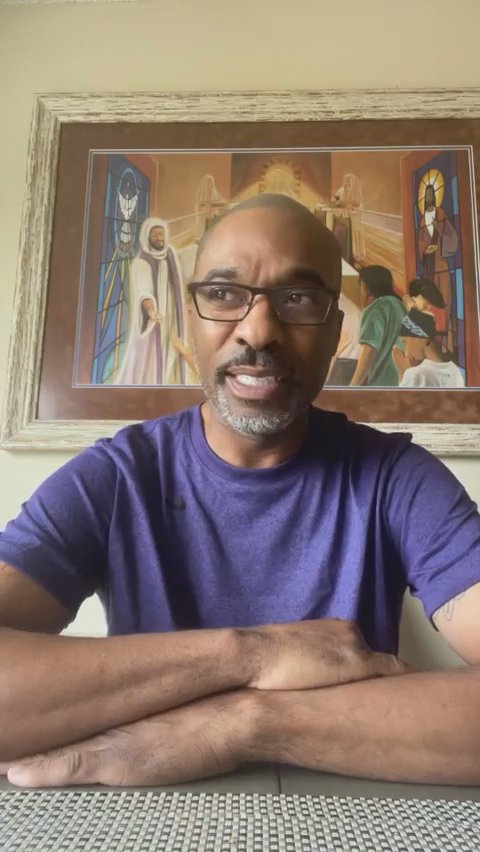
A leader reflects on building intentional spaces for reflection and dissent, encouraging regular moments for questioning, challenging assumptions, and modeling tough conversations to strengthen teams and prevent behind-the-back discussions.
Got up early, did some yard work, some weeding, some planting, some watering, got some meditation in. Going to hit the course a little later. Hopefully I can find some fairways and some birdies.
Are you building in spaces, places, moments, and opportunities for conflict, for questioning, for dissent, for inquiry, for interrogation? And if you are not, I want to really encourage you to do so. That builds great culture.
Good morning, Cadre folks. How are you doing today, Doctor e here doing well on a beautiful, sunny summer morning here in the Twin Cities. Got up early, did some yard work, some weeding, some planting, some watering, got some meditation in. So I am feeling fantastic. Going to hit the course a little later. Hopefully I can find some fairways and some birdies, and that'll make my day complete. So, on another note, while I was doing all of those things this morning, something crossed my mind and I wanted to pass it on to you today in terms of what I want you to think about, whether it's diversity, equity and inclusion related, whether it's leadership related, whether it's your own personal growth and development focused.
What on I wanted to start off with was a question. And my question is, are you building in spaces, places, moments, and opportunities for conflict, for questioning, for dissent, for inquiry, for interrogation? All of those kinds of things. And the reason I ask that is, on a personal level, if we aren't really interrogating ourselves, if we really aren't reflecting who we are, where we are, what we're doing, why we're doing it, how we're doing it, chances are we're either on the path of status quo or we're getting to that path of status quo, of being satisfied, of being what I call complacent.
And so what you want to do, you want to make sure whether it's daily, whether it's weekly, biweekly, monthly, you want to build in moments, times, opportunities for reflection, where you're actually questioning and interrogating yourself. Am I where I want to be? Am I doing what I want to do? Am I achieving and getting the results that I want leading up to this particular point? And if it is related to a team, an organization, a department, are you building in moments where folks can actually ask questions of you and of themselves and of your group?
You know, why are we doing this? Is this the best way? Can we be thinking about this differently? Can we be doing some things differently? And if you are not, I want to really encourage you to do so. One of the things I always remember being told in a leadership course is that folks are either having conversations in your face or they're having conversations behind your back. If they are having conversations behind your back, chances are these are probably individuals and probably things that you want to be discussed in your face.
So why don't you tackle those things head on? Why don't you provide those moments and opportunities head on so you aren't creating those moments to have behind the back conversations. And as a leader, that's exactly what you want. You want to be able to model having challenging conversations, having difficult discussions, all of those kinds of things that make you better, that grow you, that develop you, that build team cohesiveness, team understanding, and more importantly, team camaraderie in terms of being able to have these types of fundamental, challenging conversations as a construct of your culture, of who you are.
One of the things that I always encourage my students in class or whether it's my team members, I have an open door policy. You can talk to me anytime about anything. But as you challenge me, please know that I'm going to challenge you back. I'm going to push back, and I want you to push back on me pushing back. And hopefully that makes us better. And as you start to build some of that into your culture, into what you do, I think you'll start to see folks really buying into that, folks really understanding what accountability and responsibility looks like.
And from a leadership standpoint, you're able then to step back and they will do it with each other and to each other. So you'll get to a point where maybe you don't have to lead those types of conversations because folks will ask and challenge of themselves, what are we doing? Why are we doing that? Where is the value in that? Where are or where is our mission and values reflected and how are they reflected in that? So built in those moments to really, really interrogate, to challenge, to build some kinds of constructive conversations that aren't necessarily complimentary, but they're necessary.
And what I mean by not complimentary, people aren't just blowing smoke to make other folks feel good, but they're necessary because they're really identifying the challenges and the issues and the concerns or maybe even just, you know, points of view that may be different, that you've never even thought of. And that, to me, is what builds great teams. That, to me, is what builds great culture. And hopefully in a really, in a really positive way, that's what leads to great results. So think about that.
Building moments, places, spaces, opportunities for dissent, for interrogation, for questioning. And how do you start to then integrate that into every and any aspect of what you're doing as a leader and as a team? That's my thought for the day. That's my lie for the day. I will see you next week. Good luck.
Reactions and comments are for members. Joining is free and takes a minute.