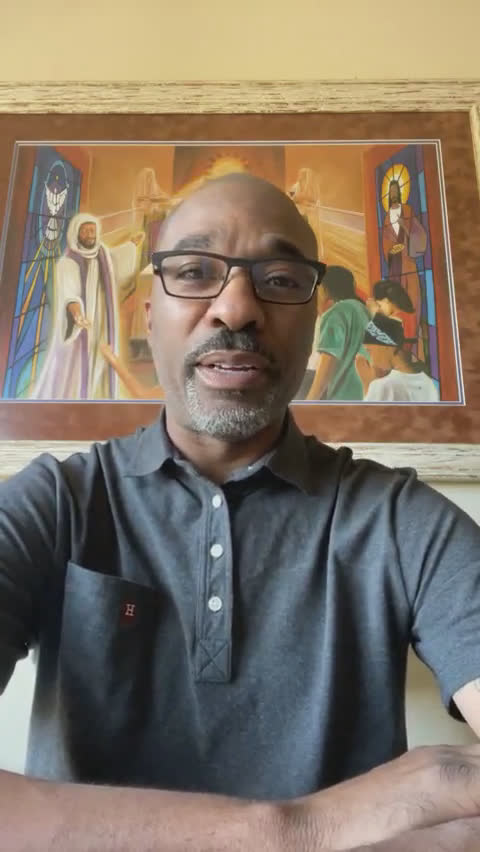
Doctor E explores why people may not follow a leader, urging introspection about leadership style and alignment with personal traits and organizational context, and highlights brave vulnerability and caring paired with challenge.
Hello, Cadre family doctor e here. Hope your day went well. And hope the week is going well. I hope your weeks finish well.
So I wanted to chat today a little bit about leadership and why folks might not be following you if you are a leader. Does your approach align with who you are as a person, and does it align with the context and the culture that you find yourself in?
Brave and bold can be anything simple. Brave and bold could be being vulnerable in a situation where you're sharing with your team. Caring and challenging. Both go together. If folks really know that you care about them, they will accept any challenges.
Hello, Cadre family doctor e here, your resident and neighborhood diversity, equity and inclusion conversationalist, specialist and consultant. So happy Wednesday. Hope your day went well. If it's still continuing, hope it is and will continue to go well. And hope the week is going well. I hope your weeks finish well. So I wanted to chat today a little bit about leadership and why folks might not be following you if you are a leader. I think this is a very challenging topic and a very challenging conversation because, one, it really begs and invites you, as the leader into some introspection.
And what does that mean when you are a little bit more self interrogative, a little bit more self reflective about your capacity, your ability, your characteristics, your attributes, your strengths, your weaknesses, all of those things that I think either foster or hinder individuals following you, not just in a formal way, but also maybe in an informal to and receiving you. So the abcs of leadership, for me, the first approach and alignment approach is very generic, right? You can have an authoritarian approach.
You can have a democratic approach. You can have a transactional or transformational type of approach. You can be a conformer or a disruptor. All of those things. Approaches are very generic. But what's most important to me is, does your approach align with who you are as a person, and does it align with the context and the culture that you find yourself in and that you're trying to create and or build very important connection, because if you are attempting to apply an approach that doesn't necessarily align with who you are or doesn't align with the context that you're in, that will come across so transparently and so blatantly.
And so one of the worst things that I think I've seen, or one of the biggest mistakes I've seen leaders commit is trying to be the type of leader or trying to implement a leadership style or approach that doesn't fit who they are. So if you are a conversationalist and you really enjoy engaging with others and you want to solicit other people's opinions and all of those other kinds of things, it's very difficult then to have an authoritarian type approach. And so that's the type of putting a square in a circle or a circle in a square type of connection or misconnection that I think is the biggest mistake in leadership.
And so when you think about who you are, you know yourself better than any other people. Think about your best traits, your best qualities. When are you most comfortable? When are you thinking about things differently? When are you open? When are you receptive? When are you a little bit difficult? And try to align all of those characteristics and attributes with the type of culture you want to set, with the type of context that you're in, and probably most importantly, with the type of leader, leadership that you want folks to identify and have with you.
And so that's it. That's the a or of the abcs approach and alignment for the B's. It's going to sound really simple, brave and bold. Now, generically, that sounds so. Oh, so I'm going to. When something happens, an emergency comes up, I'm going to put on my super leadership cape, swoop in and save the day. But that's not what I'm talking about. Brave and bold can be anything simple. Simple, too. And simple for you. Brave and bold could be being vulnerable in a situation where, you know, you're sharing with your team.
You know what, don't have the answer right now or you know what? I'm stuck, too. I don't know what to do. Let's figure it out. Brave and bold could be doing something out of the ordinary, doing something out of the norm that creates opportunity and space to think about things differently, to really engage in a way that's constructive but also allows you to pivot. Brave and bold could be, you know, what, asking difficult questions when the time comes and what does that look like in terms of soliciting input from other people?
One of the best things that I think I ever did as a leader, I was trying to think about what I could do to let this new team know who I was, the type of person that I am, maybe even building some expectations and sharing experiences. And it just so happened that my mother was visiting me that week, and I brought her into my first team luncheon and allowed her to talk and share really embarrassing stories about me, allowed the team to ask her questions about who I was or who we were. And it really set the stage for how I wanted us to begin to engage with each other.
And I also wanted them to know how to be able to come and talk with me directly, even in some of those difficult times where they needed support, personal or otherwise. And so think of that can be brave and bold, right where you're stepping out of your comfort zone in any way, shape or form. And so don't think brave and bold just relates to problem solving or managing difficult situations or taking the lead or grabbing the bull by the horns. Brave and bold is also how you allow yourself to expand, to enhance, to grow, develop, and to also be able to connect with your people.
And so the last one is caring and challenging. Both go together. I'm going to say that again, caring and challenging. Both go together. If folks really know that you care about them, they will accept any challenges that you put in front of them, individual or team. But you as the leader have to give that expression and that feeling and that sentiment of value, of validation, of care and how that comes across, hopefully, authentically and genuinely can set the stage for your team to work as hard as you need them, to work, to tackle any issues that come up, to work together, to be cohesive, to support one another.
But they have to know that you care. And if they know that you care and they feel that you care, you can challenge them in any way, shape or form. And I believe those team members, that organization will step up to each and every challenges that you all face. And so that's my abcs of leadership and why folks might not be following you, that you can think about approach and alignment, brave and bold, caring and challenging. So I'll leave you with that. I'm so sorry about the late start today. Really had some conflicts and challenges.
m.. Time. So have a great, wonderful rest of your week and I'll see you soon. Bye.
Reactions and comments are for members. Joining is free and takes a minute.