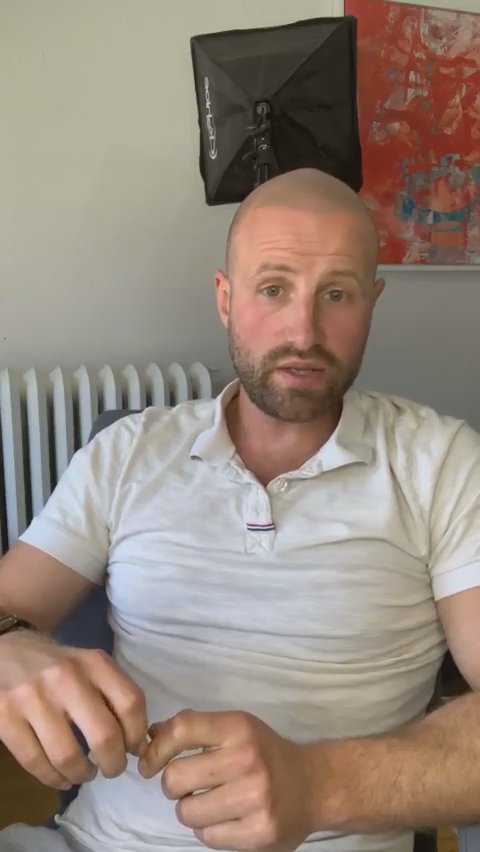
Attachment Styles is a psychological theory that's gained quite a lot of popularity. I believe it's because its another way of looking at our personality traits to understand ourselves better, sometimes in a fun way. Whether it be horoscopes, Hogwarts houses or the Myers-Briggs, we are drawn to personality categorizing (pseudo-science or not). So let's explore attachment styles, where they came from, and what your attachment style says about you.
Evan: Today, we talk about the idea of attachment styles. Why are people so interested in attachment styles? Evan: It's just kind of fun, and it tells us something about ourselves. We need to talk about some of these issues when it comes to addiction.
attachment theory says that when mothers leave their babies, the babies have four distinct reactions. These reactions are predictive of childhood development, personality, and one's ability to attach with others. Break down each of the attachment styles and what that could tell you about yourself.
Someone who leans dismissive has, again, low anxiety, but high avoidance. Oc people have attachment to perfection. The more trauma, negative things that happen again, they push you more to the extremes. Let's break down each of the styles.
This is the disorganized. It's called disorganized because you have these two kind of competing phenomenon, right. Anxiety and avoidance. Fear. Yet I still engage, and I still.
Your relationship to your attachment style reflects your preferences on whether or not you drop off, give or receive rides from the airport. The work we do with someone who's dismissive or what I do is trying to melt that icy layer a bit.
JFJ: Maybe you can start to gain a sense of your attachment style or where you lean on that spectrum. Maybe that gives you some ideas of some things you could work on if you're in therapy or just in general. Take care.
What's up, folks? Welcome to mental health matters. I'm Evan, your resident mental health and addiction therapist. And on mental health matters, we discuss matters involving mental health, but also because mental health is important, we need to talk about some of these issues when it comes to addiction and other general forms of mental health and all the topics that come with it. Anyways, I thought we'd have a little fun today and talk about something that is quite popular in pop culture, and that is the idea of attachment styles.
Right? So, I don't know. People are really interested in this. So I thought about, why are people so interested in attachment styles? And I think the best thing I could come up with is we love personnel. Anything that is about giving us insight into ourselves through, like, categorizing our personalities. And I think attachment is just one lens and one way of looking into it. Junk food chunk, you right on time. So, yeah, today, attachment styles and talking about what we can understand from them, what we can understand about ourselves.
And again, I think it's so attractive, like, just for the same reason horoscopes are attractive or the Myers Briggs test. I mean, it's just kind of fun, and it tells us something about ourselves, and maybe it's an opportunity to learn more about ourselves. Now, of course, some of these things are more scientific than others, and we should probably not draw serious inferences. Don't want to offend anyone's beliefs or anything, but, you know, attachment styles and attachment theory is a legitimate psychological theory with a lot of research.
And so I think it is worth looking into and drawing some insights from in this, I'll just give a little general background about attachment theory and break down each of the attachment styles and what we can understand about them and what that could tell you about yourself. Yeah, so, basically, attachment theory, it comes from, I think it was like, the early 19 hundreds where a researcher, and, I believe, an orphanage in Africa. Africa, you know, did some research into mother and child attachment.
And I believe what she came up with and noticed, I think her. And there's a female and a male researcher. Bowlby, bowl boy, I don't know. Anyway, they determined that when mothers left their babies, the babies had four distinct reactions, and that they found later. Those reactions are predictive of childhood development, personality, and one's ability to attach with others, or the way in which they attach with others throughout their life. It could be predictive. So the four were a secure attachment, a preoccupied attachment, a dismissive attachment, and a disorganized attachment.
And you'll hear different ways of it being described, someone may say an anxious attachment or an avoidant attachment, but those four I just listed, those are the technical terms, and I'll talk about why people mix them up a little bit. But those are the attachment styles. An anxious attachment is not an attachment style. It is one of the measures of which attachment you are. So there's like two measures. It's anxiety and avoidance. So each. So think of it like when you look at attachment style, it's like a box of four different attachments.
That's like a graph, and on one end you have your level of avoidance and the other your level of anxiety. So a secure attachment is you have low anxiety when it comes to relationships, but you don't. But you also don't avoid them. So, you know, anxiety meaning, like, you're afraid. Like, if my caregiver leaves me, I'm, like, afraid that they're not going to come back. A secure attachment is, you know, I have that faith that they will come back. Hey, car jazz. And then on the other end of avoidance, the avoidant will.
Out of fear, right? So there's kind of an element of fear there. So the avoidant will avoid the closeness of relationships, and therefore they don't really attach to the same degree. Or maybe they don't really care. You know, maybe that's not the right word, but, you know, they just. They're. They place less emotional weight on the relationship. They're more avoidant of them. Right. So I'll talk about the attachment styles and just give a little bit of. A little bit of a breakdown on some of the characteristics you may see.
Now, I don't want you to necessarily, you know, I don't say diagnose yourself because it's not a diagnosis. I mean, you could do some of these quizzes online. It's not an exact science, so it's not an exact science. But, you know, I'll give a description and maybe you could identify more with one or the other, and maybe that is all that it takes, you know, I mean, but you could do one of these quizzes. I don't really know, like, if there is, like, a super official way of doing it, but, you know, it's just something that, let's say you and your therapist could work on.
I mean, and if you can relate and there's evidence in your life that you approach relationships in this way, it just, again, it just gives you some insight, maybe a roadmap into what you can do to become more secure. Because the goal is in this graph, you want to work your way to the top left as much as possible. By doing that, you lower your anxiety and yes, you lower your anxiety and you lower your avoidance to converge into that secure box. So anyway, let's just say we all took this really objective test and we all plot somewhere within that graph.
So it's not just, I'm here, I'm here, I'm here, you know, but it's somewhere, right, so you can be, let's say, closer to the secure maybe, but you lean a little more dismissive or you lean a bit more disorganized or you lean a bit more preoccupied, right. But if you're like far over here, you know, you're further away from secure. It's more of a problem. You're further, you know, if you're over here in this corner, you know, you're going to be a little bit further away. So, yeah, anyway, we want to be as close as we can to that secure, right.
Maybe that the far tip of the square, right. That, you know, such thing as perfection. But the perfection would be that corner up here of the square. I wish I could put a visual up or something like that. But let's see before we go junk food junkie. I remember from social studies in high school, the first attachment a baby has with its mother starts in the womb. The baby knows its mother's heartbeat and sound. Yeah, that could be very true. I'm not like a childhood development expert or whatever, but yeah, that seems to track.
So let's break them down. Let's start with the dismissive attachment. This is one of my favorite ones. Now someone who leans dismissive has, again, low anxiety, but high avoidance, meaning they don't have as much anxiety that let's say someone's going to leave them or have a negative. They're not as anxious that that attachment bond is going to be broken. They don't put, because they don't put as much weight on the relationship. These folks tend to be hyper independent. Like, I don't need you, you don't need me, right.
Or it's like we're on, maybe we're in a relationship but we're on the same, you know, we're on the same track but in different rails, right. So it's a little bit more, I would say, like running cold, right. So a little bit more of a coldness. Right. So maybe one could argue that there is a fear and maybe that is why they're more avoidant. Right. Maybe that is just a. Their coping mechanism. Right. But they don't on the surface, have that fear because they don't put that weight into the relationships.
Again. Now, this. A lot of this could just be, again, what you're born with, your personality, your temperament, but what you experience in your life moves you along the graph. So maybe you stay within that zone, but, you know, the more trauma, negative things that happen again, they push you more to the extremes. So I guess, I mean, it's okay to be, you know, run a little more dismissive, and maybe you're in the secure box, but you're just lower in the box, right. So you just work to stay up here.
Oc people have attachment to perfection, right? Yeah. I say it's like a different type, but I think that's an interesting way to put it. But, yeah, I mean, it's. And I guess if we're going to relate it to attachment, right. It's fear, right. Folks with anxiety or the OCD have excited extreme anxiety. OCD is, you know, categorized by extreme anxiety if certain. If certain rituals are not met, if certain behaviors are not done right, there's, like, a fear if I don't touch every other line on the crack, that something really bad is going to happen.
So they have, you know, they do these behaviors out of fear, out of anxiety. Right. So I guess that's how it would connect those two. But it's an interesting point, JFJ. So that's dismissive. Now, when I have folks in my office, well, first, let's just break down each of the styles, and then I'll talk about, like, maybe what could be done in therapy. Now, the other one, another one of the styles is preoccupied. So that's up on this box. These folks have high anxiety, but low avoidance. Right. So they put a lot of emphasis on the importance of their relationships, and they can be like, well, that's a good thing.
Yeah, that is a good thing. However, it gets to the point because of the fear that they become preoccupied, right. Maybe they obsess. They kind of are outside of their own lane. Often they. You know, these folks may struggle with codependency. They put all their focus on the other person, the relationship, and they neglect themselves. No matter how inconvenient something is right there. They're kind of like, I don't know, that martyrdom principle where they're sacrificing themselves for others, maybe going out of their way.
They're sometimes enabling other people's behaviors. Yeah, that's true. Car jazz. So, again, that's a protective mechanism for the folks that are dismissive, actually, you find they're very calm. Right. Like they. Something like bad could happen in a relationship or something that would throw this person off, and they would throw them into a huge tizzy, but they would just be like, whatever, right. They're a little more apathetic, you know, hey, this person broke up with me. That sucks. But whatever.
I was never that close to them anyway, right. So they're much more guarded. And since they're more guarded, they don't care quite as much or at least disconnect from the feelings. Right. So that's in the more dismissive realm. Because of that lack of anxiety, they're more calm. Back to the preoccupied. Yeah. So, yeah, often, again, they put just a really high emphasis on relationships, and there's a lot of fear because of such high emphasis. It's like. It's kind of like gambling a little bit. Right.
We all have a certain amount of emotional chips, and that is our energy, and we put our emotional chips in the form of expectations. Right. So if I rely on primarily my relationships to make me happy, I'm putting all my emotional chips there. So if it goes well, I'm very happy. But if it doesn't, I could be emotionally bankrupt because I'm not really dividing that up or I'm putting too much into relationships and not balancing that out in other areas. That could be, like, you know, my hobbies, my interests, my work, you know, other things that bring you happiness.
Maybe a little too much of that is unbalanced and weighted towards relationships. Therefore, when things don't get well, it becomes intense. Therefore, you're extremely fearful. And, of course, you're fearful because you don't want to lose all your chips. So that is kind of a general avoidant, anxious type thing. And so that is the preoccupied attachment. Now, this is where it gets interesting. This is the disorganized. So it's called disorganized because you have these two kind of competing phenomenon, right.
Anxiety and avoidance. Right. Fear. Yet I still engage, and I still. So, like, so it's like I'm interacting with this thing in a preoccupied sense, yet I'm anxious of it. So it's like I'm running into this thing I'm anxious with. So it creates all sorts. So it's kind of like you're just, like, moving back and forth. Right. You know, so it's like I'm anxious, but I avoid, but then I engage. And so this comes a lot of times with more severe trauma that people have this. So it could be, you know, really, you know, a lot of like dysregulation, a lot of tumult in their relationships.
Extreme, you know, so it's like you kind of have like the worst of both worlds, honestly, because you have both of those negative patterns. Right. So that's why it often comes from severe trauma. And, and these folks could really struggle with, like, emotional regulation. They could really struggle with negative coping using substances, self harm, suicidality, the extreme, extreme turbulence in relationships in the disorganized realm. So, you know, then we just have the secure, which is, you know, not having, you know, having a healthy level of engagement, of having a healthy level of lack of avoidance.
So engagement, but also a lower level of anxiety. Therefore, what would be the opposite of anxiety? So I don't have anxiety. Therefore I have courage. Maybe that, yeah, maybe I have the courage to invest in relationships knowing that maybe they won't work out, but I do it anyway. There we go. So before I go, okay, so I kind of came up with this and I'm really, like, happy with myself. I think it's really funny. Anyway, so in order to highlight this principle, I had the idea of we could understand your attachment style based on your preferences for airport ride pickups and drop off.
So what do I mean by that? So, you know, we always have friends that ask us for rides to the airport. Or maybe we ask our friends for rides to and from the airport. So your relationship to your attachment style reflects your preferences on whether or not you drop off, give or receive rides from the airport. So let me explain. If you have a secure attachment. So if you have a secure attachment, you're okay with asking people to give you rides to the airport and pick you up. You have no problem asking for or giving.
Right? Now, maybe it's not the ultimate thing you want to do on a Saturday morning is pick someone up from the airport, but you do it, right? So it's like you, so you have, so you're okay. It's not. So this is not an issue for you now, the dismissive attachment, if you ask them to give you a ride to the airport, it'll probably upset them and it'll upset them because you're like inconveniencing them. Now, to be fair, they won't ask you for a ride to the airport because they don't want to inconvenience you, right.
They think it's kind of, they view it as kind of a, I'm trying to use like, proper language here. They view it as not insulting but rude. So they view that as a rude thing to do to ask someone to pick you up from the airport when you're capable of getting an uber yourself. So you're making people go out of their way, but they'll also be offended if you ask them. They'll also do it because they don't want to owe you a favor, too. It's like, God, if they pick me up, then I'm going to have to pick them up later.
I don't want to do it. That's the dismissive now, the preoccupied person. They will always pick you up from the airport, drop you off. No matter how inconvenient it is for them, however, they will always harbor a resentment about it, a hidden resentment, because they'll never ask. Right? So they'll always do it. They'll never ask, and then they'll just be resentful about it. The disorganized folks, this is a little more complicated now. The disorganized, they would maybe, and again, this is just kind of a little fun thing here bit.
But there's. There's some truth to it, right? So for them, maybe they would, you know, regardless of whether they ask or don't ask or whatever, they may spin a web in their mind of you not liking them, right? Or they may take personal slight no matter the situation, and then they will, you know, feel bad about it, though. So they may get angry. Then they'll feel a sense of shame because you don't like them, or they got angry. And then they'll, like, be really apologetic, and it kind of becomes this cycle for them.
Right. Again, it could be very dysregulating to have that attachment style. Then you have the folks who will always ask for rides, and they'll always avoid giving you rides. Those people fall under the attachment style of kind of being a jerk, so not a real attachment style. So with that being said, what's the work we do? The work we do with someone who's dismissive or what I do, at least, right, is trying to melt that icy layer a bit. And this is why I love working with these folks, because you don't see them quite as much in therapy.
You see more of these folks in therapy because they get. Especially these folks. But people on the anxious side, they're more apt to seek therapy. Someone who's dismissive will probably avoid therapy because they may view it as a weakness, because they're hyper independent. But let's say they wind up in therapy. They're great clients. They'll kind of always challenge you on stuff. But if you make a good enough case, you can appeal to their logic, they'll go along with it. But what's fun about them, and maybe it's because I'm a little master, maybe a little sadistic, just like a little pinch of it.
But, you know, I kind of like to make them squirm a little bit because, so it's like, basically challenging them to be vulnerable and authentic, and that could be, like an allergy to them, especially that vulnerability piece. So really kind of like, just like with OCD, if someone has that fear of something, you slowly try to get them to face that fear until it is no longer scary. You kind of have them face it head on, but in a gradual way. And that's what I do with folks with more of the dismissive attachment, is to get them to be more vulnerable, engage in the relationships, and, you know, look at some of the underlying reasons why they avoid and why they, you know, aren't apt to give or receive.
And maybe there is some fear under that. Even though they're on the low anxiety, deep down, there is an anxiety there, and that's why they avoid, and avoid putting themselves in situations where they care enough to be anxious. So it's really a lot of, like, bringing. Bringing warmth into their life to melt that icy exterior. The preoccupied folks were working on kind of that building up that sense of self, self identity and self care, similar to, like, what you would do in, you know, if you had a family member and you kind of really struggle with addiction, you kind of get sucked into that cycle.
That's right. Vulnerability is a challenge, for sure. And so you get sucked into that cycle. So it's really important to learn how to, you know, put. Take some of those emotional chips and spread it out into other areas of your life and really work on valuing yourself. That's one of the issues, is folks who are preoccupied don't often value themselves, and they put others before them. And you could be like, well, these are just great people. And often they are right. But sometimes under that is this.
They're soothing their own anxiety by doing these things. Now, the problem is it becomes a self fulfilling prophecy because they push too much, and then they end up often losing people because they push so much and maybe push others away, and then their fear becomes true, and then they just have more fear. So it becomes this cycle. So that's what we work on with them, is trying to diversify where they put their expectations and where they get value in their life and trying to focus more on self identity and self care.
The disorganized attachment. It's really, really crucial to work on emotional regulation, really finding skills, right. So, like a lot of folks would say borderline personality disorder fall into this disorganized category. And with those folks or folks, you know, similar on that spectrum, people who struggle with emotional regulation is learning skills and tools for distress tolerance, using mindfulness, using whatever coping skill they could find when they get those intense, unfiltered emotions that take over.
How to gain control back and how to take a different approach. And how to take a different approach. So they're not doing some of those things that are damaging. Right. Damaging in the relationships, but damaging to themselves as well. Substance use, you know, the turbulence in relationships and putting your emotions and, you know, viewing those as just pure reality. Right. Again, like, same with the airport example of, oh, that person hates me and therefore acting as if they hate me or getting upset with them where there's really not much evidence to show that.
Right. It's just like an emotional response out of fear and often out of trauma. Right. So it's kind of a building block of, you know, gaining more control over emotions, finding new, healthy coping skills, and approaching life in a different way, and then eventually, hopefully working on some of that trauma. And that really does work. I know. Even though it's like a little bit more intense, these folks often, you know, these folks often really do better. So it's really cool to see. But anyway, you know, hopefully that makes sense.
Maybe you can start to gain a sense of your attachment style or where you lean on that spectrum and maybe there's something you can relate with and maybe that gives you some ideas of some things you could work on if you're in therapy or just in general. So check it out. Look at more into attachment. It is. I agree. It is kind of. It is fun. Fun. It's interesting and could be illuminating. So anyway, I hope you got something out of that, folks. You have a good one. Thanks for those JFJ and carjazz, for participating and pushing the conversation along.
Take care.
Reactions and comments are for members. Joining is free and takes a minute.