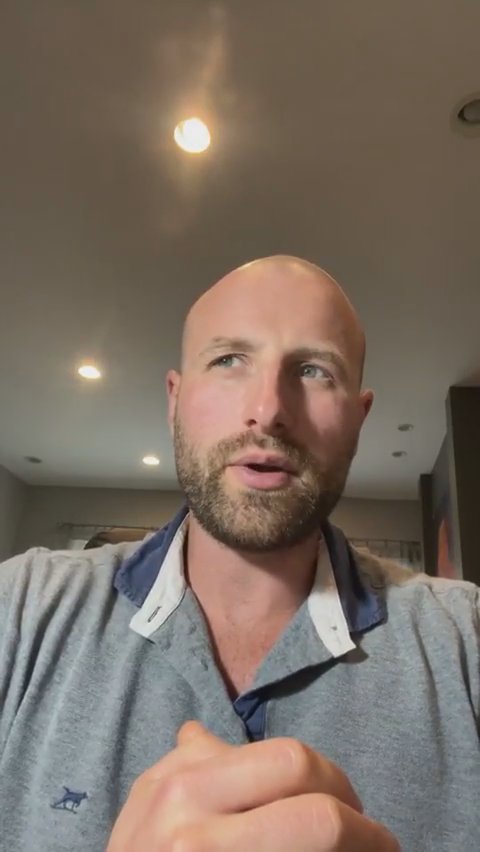
In this episode of Mental Health Matters, Evan your resident mental health and addiction therapist breaks down his top qualities of a good therapist and what are some signs it may not be working with yours. So tune in and see if your therapist passes the muster.
Evan is your resident mental health and addiction therapist. Today we'll talk about what are some signs of a good therapist. I did a video a while back about when you should fire your therapist.
Not all therapists are created equal. A lot of times it's about fit. How to know when it may be time to find someone else. It's so important to try to have a good experience and to minimize the odds of it being a bad experience.
You want to find someone that's a good fit. What do they specialize in? There's certain types of presenting issues that are better suited for a specialist. Not every client I've had do I vibe with them. It isn't always the best fit.
If you just feel something's off or the connection's off, you're not getting what you want out of it. You could tell your therapist if you've seen them for a while. I think it's worth having that conversation even though it could be uncomfortable. Find the best therapist that's the best fit.
Hey, Cadre fam. Evan here, your resident mental health and addiction therapist. I'm outside my usual studio. I'm traveling to Chicago to visit some family, do a little bit of work. But anyway, I'm your resident mental health and addiction therapist, and today we're going to be talking about a topic that's come up quite a bit. I've had a lot of people this very common. A lot of people reach out to me and they want help finding a therapist or they want a referral. This has happened multiple times.
And I did a video a while back about when you should fire your therapist and got a lot of comments recently on it, so kind of brought that back into my mind. So I thought maybe we could explore that topic again and talk about, like, what are some signs of a good therapist? I mean, I really believe that almost anyone could benefit from therapy. I certainly have, and that's why I got into this. And I think it's such a big difference. It's like not all therapists are created equal, and it's not always because the therapist is bad, per se.
I mean, in any profession, you're going to have people who are better than others. And I think the same goes with being a therapist. Right. You're going to have, like, the rule of thirds, you know, some thirds that are maybe not that great, a third that are pretty good, and third that are excellent. I don't know. I just made that up. I don't know what the breakdown is. Hopefully it's way less than 30%. That's not good. But a lot of times it's about fit. So I'm going to go over some of the variables.
Let's just say five. I don't know if there's actually five, but I'll see if I could come up with five. When you're considering choosing somebody, or really when you're choosing or if you are seeing someone, when you're going to choose to not see them anymore. And how to know when. How to know when it may be time to find someone else. Because I find a lot of people. Right. Especially if you don't have a lot of experience with therapy. Maybe it's not like vibing with you, but you're not sure if it's you or you're not sure if it's them or if this is just how it's supposed to be.
And I find people don't know. And I think it's unfortunate where someone. Because I think it's such a big step to try therapy for a lot of people who've never done, and I'm sure if you're watching this, maybe have done it, maybe you haven't, but if you have, think about that first time. And so I think for a lot of people, it's anxiety provoking and, you know, it's scary to be vulnerable, it's uncomfortable, and there's a lot of stigma around it for a lot of people. So that's why I think it's so important to try to have a good experience and to minimize the odds of it being a bad experience.
So one of the ways that, one of the recommendations I have is, let's say you're seeing, you're trying to find a therapist. You want to find someone that's a good fit. Well, what can you do? Certainly you could go try a couple out, but that's not always practical if you don't have the money to do that. But it's certainly possible some therapists will do a consult. But there are some great search tools, something like psychology today, and it has profiles. But also, let's say if you google some local mental health clinics, they're going to have a list of therapists, and sometimes they have a little profile there.
And so a couple things you could look for is, like, what do they specialize in? Right. If you're looking for something like trauma therapy, like for PTSD or like sorting out past trauma, or you're just, you know, probably most people are like, you know, stressed with work or they're not feeling themselves down, depressed, anxious, some life circumstances, substance use, whatever that is, there's going to be therapists who specialize in something like depression or anxiety, are probably the most common reasons people come in.
So pretty much any therapist is going to have some experience with that. But trying to find someone to match the specialty, whether it's a food issue, obsessive compulsive, there's certain types of presenting issues that are much better suited for a specialist. Something like PTSD, obsessive compulsive disorder, borderline personality disorder, substance use. These are all things that you're probably better off finding a specialist in. Some people think they could fix everything or help everyone and they have some experience with it, but, you know, you probably as a therapist come across a little bit of everything but having a specialty, and it's very different.
So making sure that lines up. And then probably another thing is when we look at people's profiles, like, you know, kind of, I just call it the vibe check, right? What are, what are they saying in their profile? Is it something that matches with me? Does it sound, does it stand out to me? Do I like what they have to say? Because I get a lot of people who reach out for therapy. Like, I really like your profile, and I really like what you said, and it really stood out to me. And usually it's a good fit.
I mean, usually when I see people, it tends to be a pretty good fit who find me there for that reason. I think, at least that's my biased opinion. And not every client I've had do I vibe with them. I've had clients fire me. You know, it's. You know, I don't know if I've ever fired a client, but. So it isn't always the best fit. Right. But most of the time, it is. I think that the vibe check is important, you know, getting a recommendation from someone else, just like you would anything else, you know, great chiropractor.
I've been seeing him for you. Right. The problem with the therapy is, like, you probably shouldn't see the same therapist your friend is or a family member, especially a friend is, like, a little iffy on the line. I had one. My supervisor said, you know, sometimes a person, a client would refer a friend, I would tell him, look, like, if I'm going to see your friend, both of you need to know that you cannot talk about each other. And if you have an issue with each other, I can't help you with that because I got to maintain that confidentiality and impartiality.
But, like, a family member, you don't want to cross those boundaries. Some therapist will go there, which is probably not good, but most would know, you know, you shouldn't see two family members for individual under. Unless it's under much different circumstances. I don't know. So, yeah, so those are some of the things to consider to really increase the chance of a good experience. But if it's not, I mean, I'd say give it a few sessions, right. It's kind of like a date, you know? Like, sometimes on the first impression, you're just like, just not for me.
But, you know, sometimes our first impressions are off a little bit, and that first session, you're doing, like, an intake, and you're not really diving in to the same degree. So usually, you know, give it a few. Sometimes people surprise you. I've had maybe not the best first impressions of people, and they've turned out to be awesome. Like, I guess some of my employees who at first, I was like, oh, God, they're not gonna make it. And they turned out to be great. So, you know, so you give it a little bit of a try, give it a little bit of leeway.
We're all human. Maybe as a therapist, we're not always putting our, you know, we're not acing our entrance interview always. So, yeah. Now, the other side of this is, when do we fire a therapist? Right? So here are a few different things that I would say to look out for maybe some red flags, if you will. I mean, just for one, if you're even asking yourself that question, if you're like, should I fire my therapist? That's probably a sign that something's not going great with it, and that's okay.
And there's usually a couple reasons why that doesn't mean you should necessarily fire them right off the bat. I guess I'll explain why a little later with all these, another one. If you feel like you're just not making progress, if you're just, if maybe you're not reaching some of the goals you want or you feel like you're kind of stuck, other times, people, you know, maybe feel like, you know, I'm not getting what I need out of it. I'm not getting the advice I want. There's a lot of therapists that are kind of hesitant to give advice.
It's not like we're just here to tell you what to do. But at the same time, there's gotta be a balance where some therapists just won't and they just kind of emotionally support. And I find clients, more than anything, find that to be really annoying. So I've learned that from asking people, what experience did you have in your last therapy? They almost always say, well, they just kind of nodded their head at me and it's kind of helpful, but they didn't give me much direction. So people really are wanting that.
So it's, I think, a delicate balance. So, yeah, if you find that maybe you're not getting what you want out of the experience, you know, some of the worst ones would be like, there's some ones that are obvious being inappropriate or whatever. But sometimes, you know, like, I've heard horror stories of therapists that are always kind of talking about themselves and bringing the issue back to themselves. And I always joke, it's like, well, therapy is like an emotional massage, right? Sometimes you need that massage when you have an injury, but sometimes it's just nice to have the massage.
That's why I think therapy is great for a lot of people, but it'd be like your massage therapist gives you a massage and then throws you the oil bottle and says, all right, my turn. The session is supposed to be about you. It's something very, it's a really special type of relationship that really is about you. And it's not a two way in the same way a normal relationship is. And that's one of the reasons why therapy is so effective. So, I mean, that's another thing to consider is the session. Are you feeling like it's not really directed at you now?
Maybe some other ones will come into my head, but, yeah, if you just feel something's off or the connection's off, you're not getting what you want out of it. I mean, so you could just go ahead and find someone else. You could tell your therapist if you've seen them for a while. I think it's worth having that conversation even though it could be uncomfortable. But I also lean towards like, having that conversation because as therapists, we're not always mind readers. So, like, we may think things are going well and that you're making progress or that you think, but you're not.
Right, and we don't know that. So I think sometimes every person, every one of my clients maybe wants something a little bit different from me. And I don't always know what it is unless, you know, I'm told, you know, I do my best. I try to feel the situation out and get to know the person and, you know, tailor my style a little bit towards what they may get out of it most, but I can't always know. So again, some clients maybe want a little more direction, a little less direction, a little bit more goal setting or whatever.
And so I think it's important to consistently have those conversations. I'll tell the people I supervise that, to try to have those conversations and check in. Just like a relationship, a lot of the relationship therapists, experts and talk about the importance of check ins in your marriage and really get that feedback, even though it may be uncomfortable, even though it may be things you may not want to hear, but that really could benefit the relationship and your therapist could benefit from hearing that and see if it doesn't change after that.
One conversation like that could potentially lead to things turning around and having a better relationship. So you don't necessarily have to give up. If the person is therapist is super inappropriate for some reason, then yeah, no, you don't have to. You don't know. You don't know that you're therapist anything. I mean, you really don't. They're a professional. But I think it's worth having that conversation. I think it's also beneficial therapeutically. Right. Therapy is about facing fears, challenging anxieties.
And in that regard, that could be a therapeutic exercise in and of itself that could benefit you in other ways and other relationships. So anyways, I hope you found that helpful. My goal here is for you to find the best therapist that's the best fit and not to get stuck into a relationship with a therapist that's not going anywhere, because having therapy that is with a therapist, that's a good fit. I mean, is something you don't want to miss. All right, folks, it's been real, and I'll talk to you later.
Reactions and comments are for members. Joining is free and takes a minute.