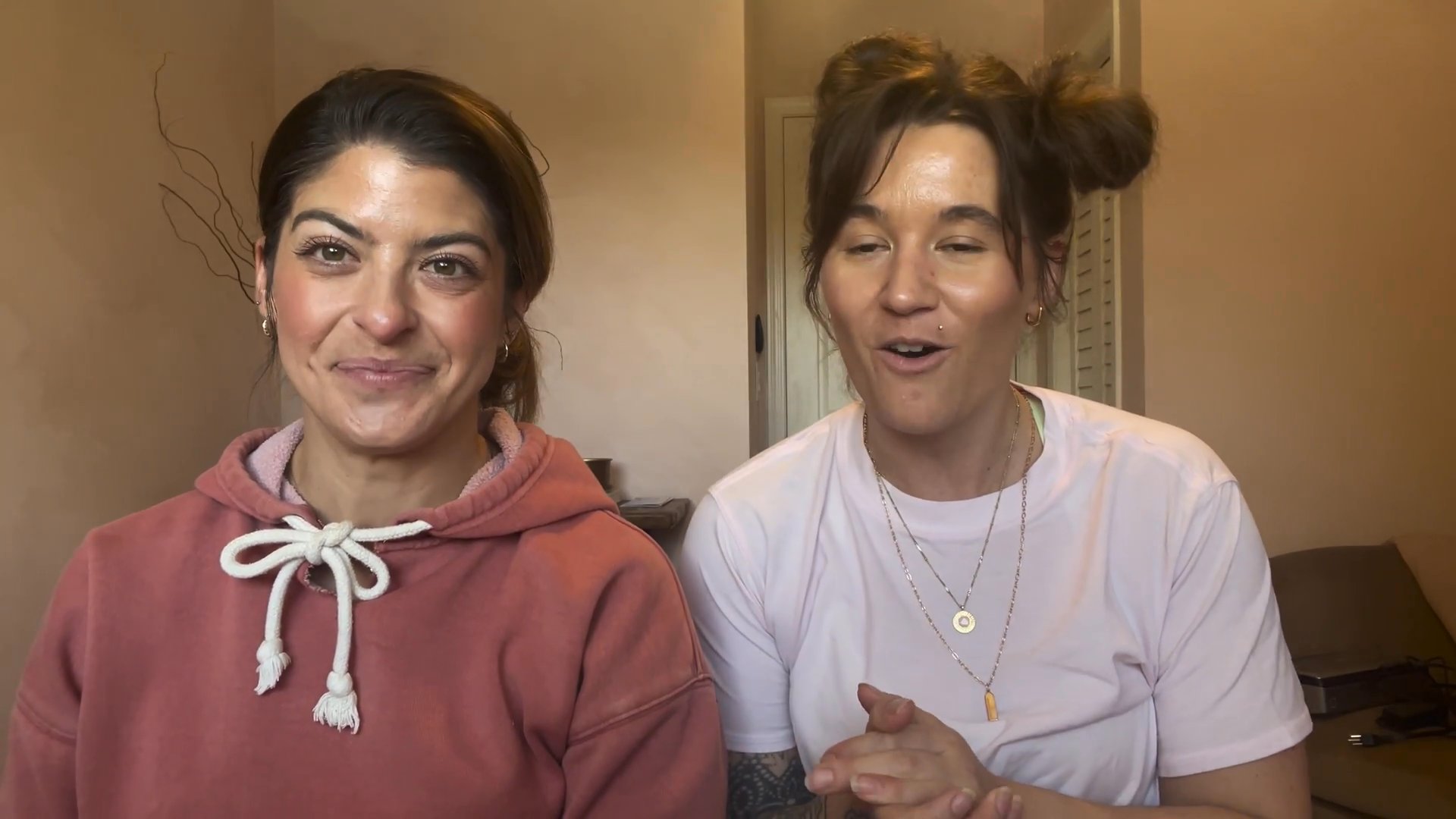
How many of you forget someone's name directly after they introduce themselves? What about those of you who are already prepping what you want to say before the person speaking has even finished their sentence. In this edition of the art of pickling, we chat about the importance of active listening & a few things you can do to help yourself improve on your active listening skills
Mary and Jill open the video, explain this is part three of a four-part Art of Pickling series, and tell viewers to watch the earlier parts if they haven't. They give a brief welcome and transition into the topic.
The hosts name 'actively listening' as the second key idea in the series, note its challenge, and begin describing common frustrations when people aren't truly listening.
What's going on everyone? Mary and Jill here, your social-emotional learning coaches, back with another segment of the Art of Pickling. Now, stop. Right there. If you have no idea what I'm talking about, I'm going to ask that you go watch part one and part two, because this is part three of a four part series labeled The Art of Pickling. So you're not going to know what the heck we're talking about if you've skipped just to this video. However, if you've already watched part one and part two, congratulations.
Here's a gold star and the second golden nugget in the series of how to do the art of pickling. Let's get into it. So the second idea of the art of pickling is one that's very challenging for me. And I'm sure I'm not alone in this. It is actively listening. How to be an active listener. What? She wasn't even listening to me. Do you see what I'm talking about? But the idea of active listening is challenging because we are constantly distracted. We like to kind of glamorize multitasking or our to-do list and we feel like we can do and be multiple things at once when we're trying to really be present with the person in front of us.
And what we're gonna tell you everyone is that it doesn't work. You can't, multitasking isn't a thing, it's not, it's not. So when you wanna be with somebody, What we like to teach people is that you have to listen from a place of nothing. So wrapping up work or your to-do list or the laundry that you have going on so that you can really be present with the person. So listen from a place of nothing, come from a place of nothing so that you're not expecting anything in return. Yeah. The expectation, right?
Who here has something to say? And I know I mentioned this in the presence video, but it rolls over. Who here is already coming up with a response prior to the person finishing their sentence that you're speaking to? Because I know that's something that I do, which... automatically takes you out of actively listening to what that person is actually saying because you're rearing to go. You're ready to give them a rebuttal. You're ready to give them your stat or whatever you're about to say, you want to say it, which means you're taking yourself out of actually actively listening to that person.
So it is a challenge. None of these concepts are easy and they take a lot of practice, especially in a day and age where we're inundated with notifications and texts and emails and phone calls, and people expect us to respond to those things within seconds of getting them. So we're constantly thinking of what's going on outside of this conversation, which makes it really difficult to tune directly into this conversation. Now, on the other side of that, I have an issue not tuning into other conversations, but actually really tuning into the conversation I'm in, and I know that because I forget people's names the second they tell me.
Does anybody else struggle with that? Oh, it's in one ear and right out the other. And what that tells me is that I'm not actively engaged. So I know that about myself based on the fact that I've really worked on refining my self-awareness and I want to do something about it. So what do I do? There's studies, there's science behind verbally repeating somebody's name or saying it in your head five times so you don't forget it. But when somebody introduces themselves to me, Hi, my name's Amber. I take their hand and I say Amber and I let it marinate.
For me, it's so wonderful to meet you, right? Such a good tip. It's just repeating it back, writing it down after I've concluded the conversation. So I now know that the person I just met, her name is Amber. There are things that you can do to improve your active listening skills, but you have to be actively present with yourself to understand that you need to work on it. So if you love this tip you gotta gotta wait for the next video so we will tie everything up into a big beautiful bow so that you can start practicing the art of pickling.
We'll see you in the next video!
Reactions and comments are for members. Joining is free and takes a minute.