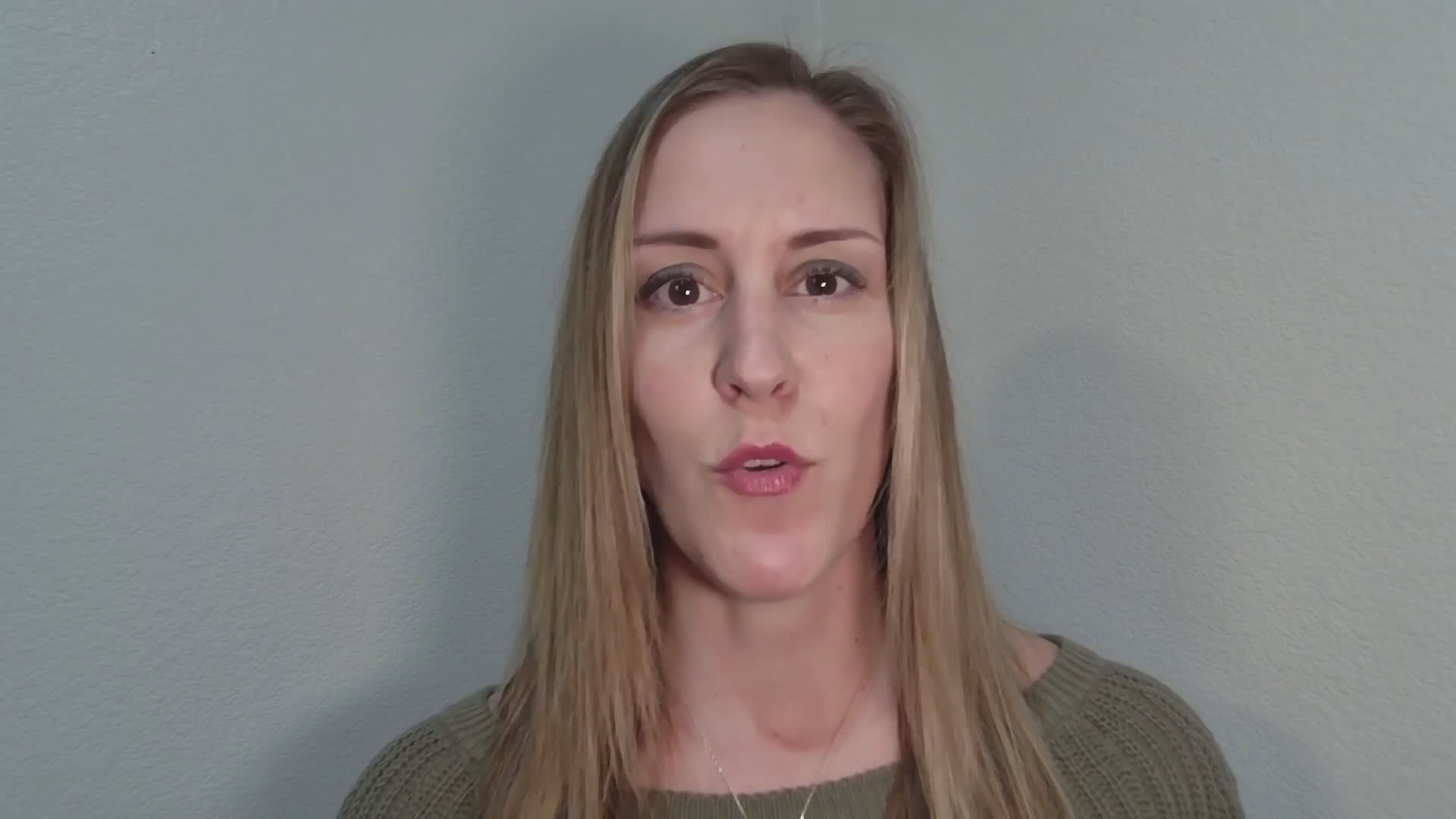
In this educational video, Dr. Carrie explains the definition of triggers and flashbacks, and provides examples of how they show up with different types of traumatic experiences.
A trigger is something that evokes a memory or an emotional response. A flashback is the actual reliving of the experience, of the traumatic experience that your brain just can't stop. There are several techniques you can engage in to overcome a flashback.
Hey, Cadre. Family doctor Carrie here. Today I want to talk about triggers, and I want to describe how these are different from flashbacks because some people get these two terms confused. First, the definition of a trigger is something that evokes a memory or an emotional response. So I want to give you some examples of that. For me, a trigger in a relationship is when somebody raises their voice and when somebody gets. Their muscles get tense. My ex husband used to do this. When he would get angry, his muscles would get really tense, and they just physically look like they're ready for fighting.
Those are two really big triggers for me in a relationship. In just social settings, a trigger is somebody coming too close to me in line as a result of my sexual assault experience and being attacked from behind. If someone is standing really close to my back when I'm in line somewhere, that is a trigger for me. So what happens when your body experiences a trigger, and I'll break this down for you a little bit, is really. It's a sympathetic nervous system response. So your body is sensing a threat because it has been conditioned to believe that this thing is a threat.
So in the example of my marriage, when my ex husband would raise his voice or his muscles would get tense, that meant usually harm was about to ensue, whether that he was going to harm me with his words or physically. So my body and my brain really stored that information. As this is a threat, you are in danger, and it prepares your body to fight, flight, or freeze, which is the sympathetic nervous system response. In my other triggers, somebody standing too close to me in line or like, getting too close to my back, same trigger.
I only had one experience with that, with my sexual assault. Not the repeated exposure from my ex husband and that trauma, but even that one traumatic incident from my stranger. Rape was enough for my brain to register that information. As this is a threat, so it can be related to one traumatic incident, it could be conditioned from multiple traumatic incidences, but basically your brain is doing what it's supposed to do to protect you in that sense, when you experience a trigger because it evokes a memory or an emotional response.
Now, a flashback sometimes follows a trigger. Flashbacks, I describe them as like a video when you press play and it's going in your brain and you can't stop it. So when somebody is standing too close to me in line, not recently, but for the first few years after my rape, if somebody was standing too close to my back behind in line, I would sit. I would immediately start replaying that night of being attacked and being raped. So my brain would just hijack and it would start playing this video of me being attacked and I couldn't stop it.
So that's really what a flashback is, is it's more of a prolonged memory. Your brain might remember the incident when a trigger comes up, but the flashback is the actual reliving of the experience, of the traumatic experience that your brain just can't stop. And what happens is if you think about your brain as having, like, a bunch of file cabinets, it has a trigger associated. It's like the little tab on the file that says, this trigger is somebody's too close to my back, okay? It pulls out that file and your brain opens it up and goes, oh, my gosh, there's a horrific memory associated with this.
We better remember this right now because of the brain, the way your brain is wired, this is normal because our brains were made through evolution to protect us from danger and from threats. So I'll talk more in future videos about how to actually overcome this, but I want to give you the empowering notion that you don't have to watch that video when a flashback starts. There are several techniques you can engage in. One of them is a grounding technique. I'll go into that in more detail in another content as well.
But just remember, you don't have to watch it right then. A lot of times our brain will want us to remember that eventually and it will replay it. But that is not a healthy thing to sit and watch the flashback memory play in your brain. That is going to evoke more of that sympathetic nervous system response. So just know you don't have to. Your brain will make you try. But a lot of times, distracting techniques, grounding techniques, there's a lot of techniques you can do to get yourself out of that, but recognize when it's happening and you can have that empowered feeling to say, I'm not going to watch this right now.
And that's okay. That is totally okay. Your brain might try to make you watch that video or have that flashback come up multiple times because it wants to process it. But if you're in a situation like for me, it happened a lot at work and it was not the right time to do it. I just told my brain, we're going to watch this later and I will process it when I'm in a safe place because right now I actually need to work. So I just want you to feel encouraged that it does get better and that flashbacks become less frequent.
I rarely have flashbacks anymore. I still have triggers. Those will probably always be a part of who I am just because my brain has a whole bunch of file cabinets with a bunch of triggers saying hey, we stored all this information so we can protect you. And that's okay. Just recognize that you actually have the power to overcome this and move past this and heal from this. It is scary. It is. A lot of work requires a lot of counseling, coaching, getting help in these areas. But it is possible because I'm here telling you that I don't live with flashbacks every day and I used to.
So I hope that was encouraging for you guys today and tune in more for more on this topics where I talk about distraction and grounding techniques. Thanks. Take care. God bless.
Reactions and comments are for members. Joining is free and takes a minute.