Do you want to grow your self-awareness? This is the one of the best tools to do so: a performance profile
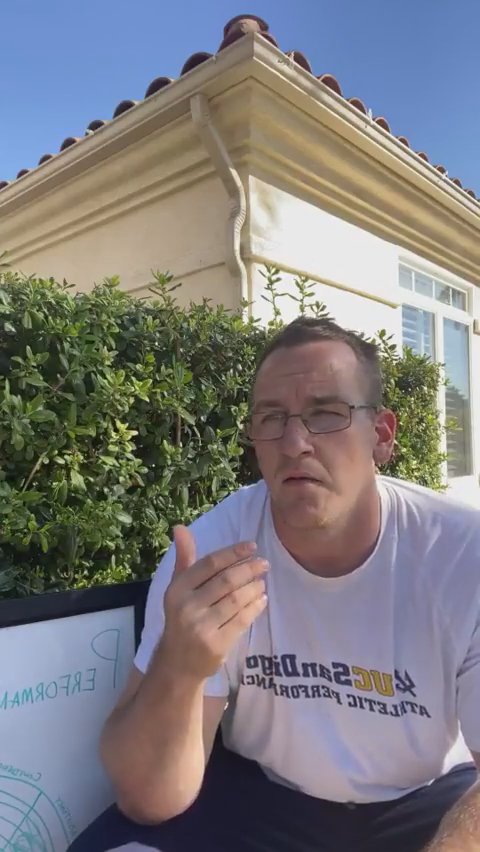
Garrett Westway uses his background in sport and performance psychology to help people. Today, he shows you how to build self awareness and figure out a direction for how to set goals. The activity is called a performance profile. All you need is a piece of paper and the ability to draw circles.
The eight skills are confidence, focus, leadership, performance under pressure, communication, motivation, self talk and consistency. You get to rate yourself on a scale one to ten on all those qualities. After that, you go through a self reflective process to identify where you need to improve.
This is kind of like a video game. It's assessing who you are as a player. It gives you a sense of where you can train. And in future videos, we can talk about those individual areas and build on that. I think it's a great tool for anybody.
What's up, Cadre? This is Garrett Westway coming at you on this lovely Monday. Again, filming you from lovely Southern California. Sorry if it's not sunny wherever you're from, but hopefully I can spread some of that sunshine and warmth and positivity on you today. If you didn't follow me last week during my first video, again, my name is Garrett Westroley, and I use my background in sport and performance psychology in order to help people. People recognize that everybody's a performer, and we can use a lot of different mental skills to help you and your mind work for you rather than against you.
So today, what I'm really excited about is to show you one of the best ways, hands down, that I'm aware of, of building self awareness and figuring out a direction for how to set goals. So building self awareness is number one, and a lot of is the foundation for how we build a lot of skills. And like I said, this is one of the best ways to do it. And it's also going to be fun because it's an activity based tool and technique, which is what I'm all about, being practical for you all. So the activity, little drum roll, is called a performance profile.
Double p performance profile. And I actually have my trusty whiteboard here, which, I'm sorry if it's backwards, I just want to preface that because of some camera stuff, but it'll be helpful to visualize this activity as we go throughout it. So what is a performance profile? What the heck is it? Who is this guy, you might be asking? Well, a performance profile is, again, a great way to build self awareness. All it is is where you take whatever role you have or whatever position you have or whatever, pretty much anything that you want to improve at, you think about and brainstorm.
What are the top qualities that I need to be good at this. What mental qualities lead to success in this area? And once you get there, that's step one. Step two, we map out those qualities where you are at on those qualities, and then you get to visualize it. And it's a fun thing. So let's just dive right in. Right? So, like I said, I got the whiteboard here. Boom. Just like that. It looks like a lot right away, but don't worry, we'll break it down. And even if it is backwards on your screen, which I think it might be, but we can adapt, right?
We're all adaptable here. So all it does, I'll just kind of briefly explain what all the words are in case they are backwards. But right at the top, just the name of the activity, performance profile. And then we have this little pie chart, which I have some examples in there of what an activity or what an experience in this activity would look like. And then what's really important, because it's step one, is what's at the bottom here. So you can do this at home, whether you're watching it live or after this, it's really easy.
It takes a few minutes. As you'll see. All you need is a piece of paper and the ability to draw circles and a writing utensil. That's pretty much it. So anybody can do it? Pretty much. Once you have that, step one is thinking about an area of your life that you want to improve at. What's a role you have? When I do this with athletes at any level, it's maybe specifying the role that they want to get good at. So if it's a basketball player, what do you want to be better at? I want to be a better point guard for my team.
Okay, great for you all. It can be that. It can be athletics or it can be, I want to be a better parent, I want to be a better writer. I want to be a better manager at my job, whatever it is. Everybody has a role. Everybody's a performer. And think about that role that you want to improve. Step one, done just like that. Think about that role. Step two, which is where it gets really fun, and I love to do this just to brainstorm, is think about the mental qualities that are important for that role.
In other words, what's in, in your personality, in your mind, what skills does it take to be successful in that role? All right, now, again, using this, an example of an athlete. An athlete has to have physical qualities. They got to be strong. They got to be fast, you know, quick, quick change of direction. For example, whatever their sport might be, they gotta have those physical skills. And number two, they gotta have technical skills. They gotta be able to have footwork or dribbling skills, passing, whatever the sport is, again.
And number three, which is really important, is those mental skills. All right, so like I said, just brainstorming, what are those important qualities? And it'll leave us at a good spot. So in this example that I have here, don't worry about this pie chart up top. Just worry about the bottom here. I just, before this, just for sake of quickness, kind of brainstorm some qualities that I think are applicable to athletes. So, for example, on here, I have some things like focus. You got to be able to have focus and be attentive during your sport, right?
Confidence, consistency, performance under pressure, self talk, discipline, leadership, communication, listening, adaptability, imagery or the ability to visualize, motivation and creativity. Those are all great things that I think you can take a lot of those into any profession, really, and they really show off or showcase all the cool stuff that athletes need and any role that you need to succeed. So take some time brainstorming those qualities. Try to get at least eight. And eight is our magic number.
But if you go over that, that's great, because I went over that. I believe I have, I don't know, let's just say a dozen here, right? All right. If I have a dozen, then step two is complete. Alright, we brainstorm those important mental qualities. Now, step three is pick those top qualities, eight, to be specific, and we'll transfer that to the next step. So let's say you do have a dozen, like I do, or whatever I have, you have to do some process of elimination. What do you think is really important out of those qualities?
So that's the ones that I have. It's a tough word on here. And then you transfer that to this fun pie chart, which I have eight sections. Eight sections around here, just like thanksgiving, pumpkin pie all around. And then these little rings, there's ten of them around and you'll see why that is. But first, I want you to take those eight mental qualities that you have and just put those on each slice. So for me, for this hypothetical athlete I'm working with, let's say they're, I don't know, I played collegiate football, so I'll just choose a football player, right?
So these eight skills that I chose are confidence, focus, leadership, performance under pressure, communication, motivation, self talk and consistency. So I have those labeled around each section or each slice of the pie. Now it gets really fun. You get to rate yourself on a scale one to ten on all those qualities. So that's where these ten rings come into play. So if you just use those rings to rate yourself and be honest, it doesn't matter. It doesn't matter to overinflate your ego and try to, you know, get a ten on all these, obviously that'd be great.
But in reality is you take almost anybody, actually, really anybody, and they won't be a ten on all of these. But once you have your qualities, I want you to just rate yourself. So let's. Let's go to confidence. Number one, how confident am I in this role? Let's say, using those examples before, in your role as a manager and your role as a writer, how is your confidence in that role? Let's say you're, I don't know, a three. So I'll just color in 1 bar two all the way up to a three. Right. And again, just be honest with yourself.
This is a way to assess focus. You know, let's say I five going through here and then we'll go through the line. I won't go through all them all, but leadership. Let's say I'm a heck of a leader. I'm all the way up at a ten in whatever role I want. All right, don't judge my coloring skills. All right. And then we have performance under pressure. Let's say I'm a two. I really feel like I struggle in that area. So you go around and I'll just color in the rest of these just so you can kind of see the visual going through them.
All right. And now you can kind of visually see what it looks like. And just to give you a closer look, I know it looks like a lot and if I had the time, I would color each of them in nice and pretty. But that gives you a visual picture of. Alright, now I can see which areas are my strengths. So for here, leadership's out of ten. That's a big slice of my pie. That's a big slice of who I am, of my strengths, leadership. Whereas maybe confidence. Maybe I have a two or three in this example. All right, well, now I can visualize and see that's an area where I really need to work on.
And so that is pretty much it. After that, you just go through a self reflective process where you think about, again, those strengths, those weak or areas of improvement rather. I like that term better than weaknesses. And you just go through, again, this can apply to athletes that I work with. This can apply to really any performer. It can be your role as a parent at work, maybe a certain you want to be a really good friend. It can apply to anything. So again, after that you just self reflect.
And that's pretty much the end of the activity. And what I love about this activity is it gives you a sense of direction. It gives you two very important things. One, being self awareness and two, goal setting. It just gives you a sense of direction, of where you want to go. If you want to just improve globally at a role, that's great. But you need to know where you need to improve and identify specific steps. And that's certainly a video we can talk about later is specific goal settings. But last thing I'll leave you with here today for this activity is kind of an analogy of why I love this activity so much.
And it also starts with a question. So has anybody ever played like Madden or NBA two K or a video game in general, whatever it might be, it doesn't have to be just sports. But in a lot of video games, you go through a create a player mode where you can build on a certain player's ratings. So for, again, I'm the sports psychology guy, so I'll use Madden as an example. If their speed is at, you know, on a scale one to 99, maybe it's a 99. And they're so, so fast, like a Tyree killer or something that can help them understand their strengths, whereas their awareness might be at like a 45.
This is kind of like a video game. It's assessing who you are as a player in that video game, and it gives you a sense of where you can train, where you can build, where you can really hone in your attention and your goals on in order to improve. And what's really cool is in future videos, we can talk about those individual areas and build on that. We can build on focus, we can build on leadership, we can build on confidence, consistency, self talk, all those things. But the performance profile is where we can start to understand how we are in those things before we grow.
So that's all I've got for you all. And I would say that would be my call to action for you, is to try this activity and let me know how it is. Like I said, I think it's a great, a great, great, great tool for anybody, regardless of, you know, what, what role you're looking to improve on. So again, reach out if you have any questions. And I look forward to seeing you all to improve all the other areas. So have a great rest of your Monday and have fun with the performance.
Reactions and comments are for members. Joining is free and takes a minute.