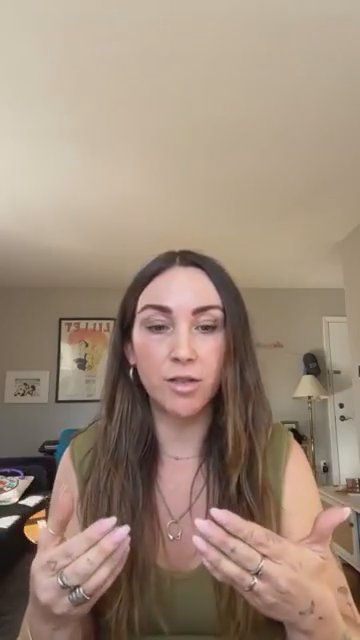
I’ve recently had many opportunities come my way and my first thought to all of them has been “why me?” Imposter Syndrome hits almost everyone—so how do we navigate it and prevent self-sabotage, build self-confidence, and lean into the unfamiliar instead of hiding away?
Rachel's room is a place for us to talk about anything we're struggling with. After 19 years of therapy and energy healing and a master's in psychology, I am proud to be in a place of wellness and stability. As always, my little puppy, Milo, is present with us.
The author is going to be a keynote speaker at Cadre's live event in November in Minnesota. She says imposter syndrome is self doubt in our abilities, despite having skill sets or experience or expertise. The first thing she likes to do is reframe it as being a beginner.
Rest is so vital for folks with imposter syndrome. Who can I ask for support from and get on my team? It's really important that we have a team. There is maybe some stigma around asking for validation.
Your job after watching this is to to journal on the last time that you felt imposter syndrome. Get curious about what beliefs came up, how you responded and what you ended up doing. I will see you next Wednesday at 03:00 p. m.
Hello, everyone. Okay, I think we're live. I just tried to go live and I don't know if it started. So hopefully we're here and that this is recording. I'm so glad you're here. We are going to be talking about imposter syndrome today and the four questions I ask myself and the tools I use when I get imposter syndrome. If you're new here, welcome. My name is Rachel and we are in Rachel's room. Technically, it's my living room, but that doesn't have a nice cadence like Rachel's room. So as always, my little puppy, Milo, is present with us.
So if you see a fluff ball running around or hear toys in the background, it's Milo. So I'm Rachel. If you're new here, after 19 years of therapy and energy healing and a master's in psychology, I am proud to be in a place of wellness and stability. And my hope is to provide you with wisdom, tools, and hope. m.. PST. And it's a place for us to talk about anything we're struggling with. I will always bring something to the table to talk about because there's something I'm likely struggling with or working on in therapy.
And as always, if there's something that you're struggling with, let me know in the comments and we'll bring it in the room. So today we'll be talking about imposter syndrome because that has been very present for me lately. I have been very fortunate to be invited to a lot of different opportunities coming up. One of them is that I'm going to be a keynote speaker at Cadre's live event in November in Minnesota. It's a two day event on November 13 and 14th, and I highly implore you to attend. If you go to Cadre's Instagram page, which you can access through the app on the left side, there's three little bars, and then you can get to their instagram in their link and bio.
There's a link to the event. It's going to be a two day in person summit with so many experts talking about a lot of different topics on wellness. I will be there. I will be nervous. I'm already having imposter syndrome. And so it's something that I'm working through right now with my therapist, and I'm excited to talk to you about what I do and what it is and what helps me so quickly. Let's just define imposter syndrome. So, imposter syndrome is self doubt in our abilities, despite having skill sets or experience or expertise, and a general belief that despite actual representation of our success, we're not actually good at what we're doing, and we might be exposed as frauds.
So there's this famous old story or fable about a group of students at Harvard, and they're there on the first day of class in the classroom, and the professor says, you know, raise your hand if you feel like you belong here. And half the class raises their hand. And then the professor says, okay, now raise your hand if you feel like there was a mistake in your application and you're not supposed to be here, and half the room raises their hand. So it's this imposter syndrome is this idea that even though we are in the place where we can have affirmation that we belong, we're already there.
There's still something in our head that says, I'm not supposed to be here, this is a mistake, and I'm going to get caught. So, imposter syndrome can manifest in lots of different symptoms or behaviors, like perfectionism, performance anxiety, fear of failure, self sabotage, which I feel like I should probably do an entire live on that because I have a lot of experience with self sabotage, and it often goes hand in hand with imposter syndrome. So if that's something you'd be interested in, just let me know.
And, you know, another thing that comes up a lot is low self esteem, oftentimes depression, burnout. So imposter syndrome can really have a negative impact on our lives and make it difficult for us not only to accomplish our goals, but to celebrate our successes. So the first thing that I like to do when it comes to imposter syndrome is I like to reframe it as being a beginner. So even if I'm feeling imposter syndrome about something that I've been doing for a really long time or that I have done before, if I can treat my present experience like it's the very first time, like I'm a beginner, then I can start by reducing any shame I might have about having imposter syndrome, because all shame does is compound whatever we're already experiencing.
So by reframing imposter syndrome, as I'm actually experiencing something as a beginner, which creates normal anxiety, fear, and uncertainty, I can reduce any shame or story I'm telling myself about having imposter syndrome. So that's the first thing I like to do. And I. I think about. I don't know if any of y'all have memories of driver's Ed, but I have vivid memories of being in driver's Ed and thinking, like, how am I going to remember all of these traffic rules, all of the different lines on the road, the different signs in the road, and then also navigate the order in which I put on my blinker, turn my wheel, look in my mirror, look to the left, slow down, speed up and change lanes.
Like, it was just so overwhelming to me. And in my mind I thought, I know that people have done this before. I know that every driver on the road has learned to drive and now can drive well, but I have no idea how they get to a place where it's habitual. And eventually, with practice, consistency, rest and support, I learned how to drive. And now I can drive. With Shania Twain blasting in the background. I could eat five cheeseburgers while I'm doing that and change lanes at the same time. Like, it's no big deal.
I probably shouldn't be doing all those things at once, but it's become habitual. And so I have to remind myself that we can learn new things and become good at them. And so anytime I get imposter syndrome, I try to focus less on telling myself, Rachel, you are good at XYZ. Why are you feeling this way? Or stop feeling this way? Clearly you're qualified. All that does is reignite shame. And so instead, I start by reframing. As I'm a beginner, I'm a baby, I'm learning how to walk. How am I going to get on my feet?
So the next thing I do is I ask myself a set of four questions. So the first question I ask myself is, what skills do I need to practice to get confident in this? So sometimes those skills are practical. So if we're using the driver's example, sometimes it's practical. Skills of like, I need to learn. I need to learn the skills of multitasking with driving a wheel and a blinker and, you know, and turning around. Sometimes, though, those skills are self talk, sometimes they're skills around how we think about ourselves or the internal world that we have.
I remember when I talked to my therapist about imposter syndrome for the first time. She said, you know, rachel, do you think that you have inherent value? And I said, oh, not really. I have no idea why people ask me to do things. And she said, well, maybe that's a good place to start. So that was the skill that I had to practice. I had to practice the skill of believing I had value. So that looked like writing affirmations, it looked like mantras and gentle reminders that I add value to this world.
It looked like making lists of the ways in which I add value to this world, and examples so that I could see it and experience it and believe it, until I inherently just believed that I had value. So what skill do I need to practice to feel more confident is the first thing I ask myself. The second thing I ask myself is, what is a sustainable routine that I can implement? So having a sustainable routine does two things. Number one, it breaks down a long term goal or project into small, more manageable bites.
If you're someone that struggles with imposter syndrome, I have a feeling that if you're like me, you probably also struggle with perfectionism. And a lot of times when we are hyper fixated on doing something perfectly, we can get overwhelmed with the end goal and we get really attached to it because we want it to look a certain way and that can create overwhelm around. How do I get to here? Because we've created such a high bar. So by breaking the goal down into smaller steps, we can funnel and focus our energy onto just this one thing in this moment.
If you haven't heard of smart goals, I highly recommend googling smart goals. It's a great acronym to help you remember how. How to make smaller goals that are manageable and reasonable in ways that allow us to accomplish larger frame goals by breaking it down. The second thing that is really great about creating a consistent routine is that it builds self trust. So I remember last year, like around this time, I was working with my therapist on, I was actually working on a workbook that I had a deadline for.
And one of the things that I was working on my therapist with was self sabotage. And I was coming off the tail end of summer and I was living somewhere warm. So I was spending a lot of time on the beach and drinking beer and having a wonderful time. And I have no shame or regrets about that. And I felt like, okay, I'm ready to be in a place where I want to have a little bit more clarity mentally. And I want to be able to focus on this goal of finishing this workbook. So I'm going to make a promise to myself to not drink alcohol for three weeks until this workbook is done.
And so I remember thinking, okay, the way I'm going to do this is breaking it down. And each day I'm going to wake up and I'm going to write a promise to myself. That says, today I promise I'm not going to drink alcohol because I want to feel clear and focus on my workbook. And I focused just one day at a time, knowing that there was an end date in mind. And at the end of those three weeks, I remember talking to my therapist and saying, I feel a sense of, of self trust. And I have never experienced that emotion or that feeling in my life.
I have never felt self trust. And it was such a new relationship to myself and it created such a level of stability and it created a foundation from which I then knew, because I could trust myself in the future, I knew that I would be able to rely on myself if I had new things come my way. So it becomes a protective mechanism against future imposter syndrome, because there's this previous experience or previous history and evidence of, oh, no, I can do things that require time, consistency and effort.
So that's the second thing. What is a sustainable routine that I can implement? The third thing is, what can I do to rest and recharge so I don't burn out? Rest is so vital for folks with imposter syndrome, because chances are, again, if you have imposter syndrome, you're probably prone to overworking, hyper fixating on details, trying to make everything perfect. And that can lead to burnout really, really fast. And oftentimes burnout can become a barrier for us actually accomplishing the thing that we so desperately want to do.
And then if that happens, it reinforces this belief that we're not capable. So even though it might feel really difficult to build in rest, rest allows us to. To slow down and to focus on times between the effort and the action, and reminds us that the end goal does not need to be perfect, it just needs to be done. So, making sure that we rest, that we don't burn out, so that we don't reinforce this narrative of, oh, I'm not capable and I can't finish things that I start the final one, the final question I ask myself is, who can I ask for support from and get on my team?
So, support is massive when it comes to anything, whether it's a goal, whether it's our mental health, it's really important that we have a team. So the minute I am embarking on something new, I tell my friends, I tell my family, I tell my therapist, now I'm probably gonna tell you, hey, I have this new thing on my plate and I'm nervous and I keep having thoughts that I'm not gonna be able to do it. And I'm feeling the imposter syndrome is coming up. You know, I just want you to know, because I wanna make sure that I have people to reach out to.
And do you have capacity to be on my team? So, number one, telling people that I have something coming up that's new, that I'm nervous about, it holds me accountable, right? So as soon as I verbalize it, then somebody else knows it's real, and then I. Then I'm accountable to it. Right. Number two, I immediately have people that I can ask for support with and lean on. It's like I have Rachel's roomies there to help me navigate the newness. Number three, I can name the imposter syndrome, and as soon as I name it, the less power it has.
So the more I vocalize with trusted others that I'm scared or that I'm nervous and unsure, the less power that it has and the more feedback I also get that I have value. So I also think that there, I don't know if shame is the right word, but I think that there is maybe some stigma around asking for validation. And I think that I disagree with that because I think that we heal in relationships, and I think that one of the greatest ways that we get to know ourselves better and then we get to learn who we are and have accurate mirrors for us is to seek information and support and feedback from the people who know and love us.
So I think it's actually really valuable when we're having self doubt or insecurity to check in with people who know, love, and support us and ask them, hey, can we talk about this? Because I'm having some thoughts. Like, you know, I was at dinner last night with you, and I think I overshared. Like, what do you think? Or I'm having these thoughts about my appearance today. Like, can you fact check with me? After I went live last week, the first thing I did was call my best friend who watched the live, and I said, oh, my God, I think that was terrible.
She was like, I was just about to tell. Tell you that I thought it was great. And so we sometimes have really false perceptions of ourselves. And leaning on the people that know us really well is a wonderful way for us to help rewire those self perceptions so we can start to see ourselves a little bit more accurately. So those are the four things that I like to do when I'm experiencing imposter syndrome. And again, I'm going to repeat them just so you have them all together. What skills do I need to practice to feel more confident what is the sustainable routine I can implement?
What can I do to rest and recharge so I don't burn out? And who can I ask for to ask for support from and get on my team? Okay, fam, that is all I have for you today. And your job after watching this is to to journal on the last time that you felt imposter syndrome. So I want you to get curious about what beliefs came up, how you responded and what you ended up doing. And without any judgments, just simply observe what skills you use to navigate and if you could do it again, what you might try instead.
m. Right here in Rachel's room. Stay curious Cadre.
Reactions and comments are for members. Joining is free and takes a minute.