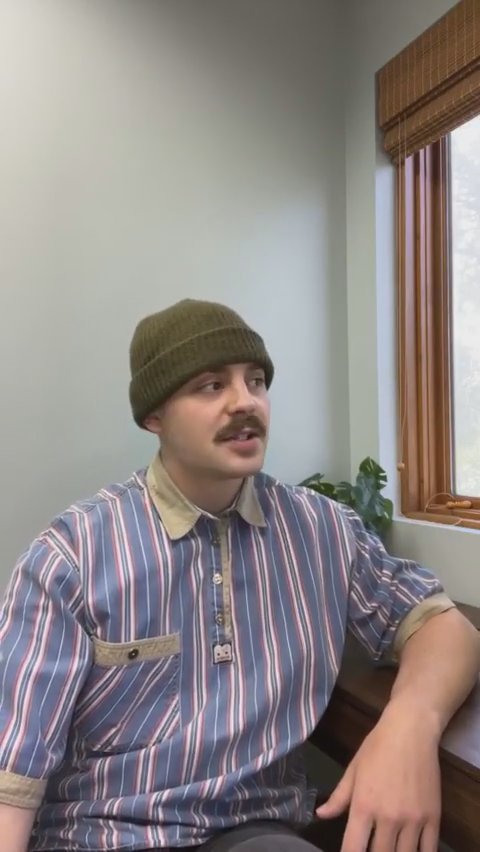
Join me this week as we discuss the most recent pre recorded video and practice a tool to help create space between thoughts/emotions and self.
Join a moderately sunny temperate day here today up in Minnesota. The fall season has come and the winter season is making itself known as well. We'll get started on what the topic is for today and follow up on some of the stuff we've already set forth.
Eric: I'm a clinical counselor and here to provide affordable, accessible mental health information and direction through this awesome app Cadre. One thing I've based this foundation of my content here on so far is this idea of wellness. We often run into the place of nothing being enough.
Our mind has been specifically developed for survival. When our present environment is likened to something uncertain and not quite what it could be, mind looks for places and ways in which we should change within that environment. What do we do to incite change in our lives towards the direction that we want to see them?
I want to encourage you to start thinking about one thing in your environment, a sensory input that stands out to you. For me, it's going to be a sound. Maybe it's a feeling, something you can feel or smell or taste. We're just going to sit with that for a minute, allowing our attention to be connected to the reality of our present moment.
mindfulness is also a tool, and it's a tool that slices through our attention. My encouragement for you this week going ahead is to observe. And when possible, come back to the present through some sort of mindfulness or observation of what is reality.
The notification of my live pops up on your screens here. Join a moderately sunny temperate day here today up in Minnesota. I got my beanie on because it is that season. The fall season has come and the winter season is making itself known as well. So just a few minutes here, we'll get started on what the topic is for today and following up on some of the stuff we've already set forth in our live streams and pre recorded videos here. Alright, so if you're joining me this week, hopefully you've seen some of the content that I've put out here before and if not, welcome as well.
Excited to have you. My name is Eric. I'm a clinical counselor and here to provide affordable, accessible mental health information and direction through this awesome app Cadre. And really excited to continue to use this space to connect with you all. One thing I've kind of based this foundation of my content here on so far is this idea of wellness and what it looks like to pursue maybe a transformed perspective of, of wellness. And today that becomes relevant as we focus on this idea that our mind is a tool.
Often one thing that stands between us and our ability to be, well, whatever we define that as right now is our minds focus on the outcome. The outcome of what we tell ourselves is enough, will be the place in which we finally can be free from fill in the blank. And when our mind is stuck in this place of the outcome, the thing that we tell ourselves that doesn't exist here, but exists somewhere else, and will be the fulfillment of who we are and what we can allow ourselves to be content with, we often run into the place of nothing being enough.
And that's where I want to start today, is what is that place? That imaginary place that our minds like to go? And why is it there? Why do we have this ability to look three steps ahead and see maybe the ways in which we imagine everyone else's lives around us appear to be full and we somehow may have missed the ball. I know I've felt that way often throughout my life, as I've encountered a lot of struggles, as life changes, as we develop, and the things we anticipated. Life could or should be all about bringing on a new meaning.
Or maybe we're disappointed or let down. And so this idea that our mind is a tool is relevant in the sense that our mind has been specifically developed for survival. We have systems in our mind that have been created over generations of human existence for the sake of keeping us alive. And so if we can follow that rabbit trail of logic about the way in which our mind may be a tool for us, we can come to a few possibilities. The first thing is our mind craves comfort. Our mind doesn't like to be in uncomfortable, uncertain, confusing circumstances because to our mind, the tool of survival that indicates that we are not safe, safe.
And so when our present environment is likened to something uncertain and not quite what it could be, mind looks for places and ways in which we should change within that environment. Going back to this idea of our mind as a tool, I want you to imagine that you're walking through a forest and this forest is an unknown place and in fact you're lost. And as you're walking along this trail, you hear a little rustling in the bushes. And if you're like me, the first place my mind goes is, oh no, what's there?
Anxiety. And maybe our mind starts to race a little bit and give us images of what could possibly be the danger lying behind the bushes there. And from there it gets passed on to another part of our brain where it's like, alright, action. What's going to increase our likelihood of survival here? I can run away, I can maybe try to fight it and stick around, but the reality is we don't know. Our mind is using itself is becoming a tool for our prediction of something that might be a threat to us. Come back to here and this present time that we exist.
A majority of our circumstances are not life or death, they're not threats to our well being. And yet our mind likes to be the one controlling the show. And so we end up having these very hasty responses to our environment. Why do I say this? I say this to bring back to this idea of actualized change. What do we do to actually incite change in our lives towards the direction that we want to see them? And so it may look something like this, and it's a phrase that you may have heard thrown around in many different areas of life, which is mindfulness and something we talked about last week.
Part of the practice of flexibility and being well is being able to let go those images, ideas, imagination, places our mind takes us for the sake of survival and recognize the present moment we exist within. So today I'm going to teach you one of those things. And so if you will join me in closing our eyes, for me at least, that's a place that I find a lot of comfort and focus. And so if we can close our eyes here, here, and maybe just slow down our pace, and we're going to start with just a deep breath in and maybe another.
And as we're here. I want to encourage you to start thinking about one thing in your environment, a sensory input that stands out to you. So for me, it's going to be a sound. In my place right now, I hear the sound of the light buzzing. I'm going to allow my attention just to gravitate towards that light for a minute and pay attention to the unique texture of the sound, the ways in which I often overlook the sound. That's pretty common in my environment here. As I do that, there's the temptation to.
To focus my attention back on maybe the other thoughts, ideas, things that can come to mind. And rather than resist those things, just bring my focus back to that buzzing of the light, whatever that thing may be for you. Maybe it's a. A feeling, something you can feel or smell or taste. We're just going to sit with that for a minute, allowing our attention to be connected to the reality of our present moment. Now, as we come back to maybe feeling a little bit more relaxed, a little bit more open to what the day may bring, I want to connect the relevance to this practice here before we part ways, which is mindfulness is also a tool, and it's a tool that slices through our attention, being ever taken away from this present moment to places elsewhere that seem to be important.
And it brings us back to this present place, the place where we can actually act and change and take steps towards the way we want to see our life in actuality. And so my encouragement for you this week going ahead is to observe. To observe the ways in which your thoughts, your imagination, pulls you out of this present moment, and what emotions, things come up with that. And when possible, come back to the present through some sort of mindfulness or observation of what is reality. It's good to touch base with you all.
I should have some more videos coming to you here this week. And the one that I mentioned last week, five reasons why we should part ways with the medical model of wellness is shortly on its way, and I'm looking forward to seeing the response from that. So I encourage you all to go check that out once it drops. I hope you have a great rest of your day, a great, a great weekend, and I look forward to connecting with you again here next week. Take care.
Reactions and comments are for members. Joining is free and takes a minute.