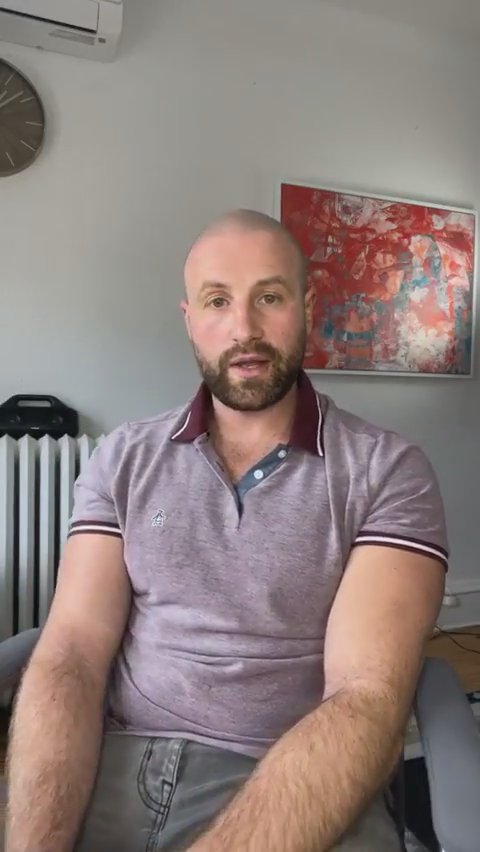
In this Livestream, we talk about how stress plays a role in developing mental health disorders and addictions, as well as the ongoing effects on your mental health. So come join, learn, and participate in a fun open discussion!
Evan is your resident mental health and addiction therapist. If you have any questions for him, feel free to comment on any of my videos. Tag me in the community feed, and I will answer your questions on next week's episode.
Today's topic is the connection between stress and mental health. What does stress really mean, and what does that do to our body? How does that relate to the development of a mental health disorder?
If you're someone who has a predisposition towards a thought disorder like schizophrenia or anything that causes psychosis, it could just be smoking weed. What vulnerabilities and what kind of environments certain people need to be in to flourish.
Life is inherently stressful. One of the best things you can do is cutting out unnecessary stress. Fear of things is one of my biggest stress factors. Stress is detrimental to your body's health. There are lifestyle changes that can be immediate to relieve the pressure.
Having profound grief can have a profound impact on a person's mental health. Just being under that stress could really flip that light switch on anything. Make sure you're balancing the pendulum of letting yourself experience your emotions and moving forward and living life.
What's up, folks? Welcome to another episode of Mental Health Matters. I'm Evan, your resident mental health and addiction therapist, where we talk about matters regarding mental health and because it's important. So, mental health, addiction, all that good stuff. So, remember, if you have any questions for me, you can feel free to comment on any of my videos. I will see it. Be sure to follow my videos if you're interested in these topics. I probably have over a hundred on here of various topics and also more in depth series.
And you can post in the community feed. Tag me in the community feed, and I will answer your questions on next week's episode or every other week's episode where I do a Q and a format. But today we have a topic format, and today's topic is the connection between stress and mental health. Car, jazz, what's happening? How are you? So, again, stress and mental health. And there's a few reasons why I want to talk about this, not because just the mere fact, which is true, that if you're more stressed out, obviously your mental emotional health is not going to be quite as good.
But what is the connection, not only in a given moment, but throughout someone's lifetime? And what does stress really mean, and what does that do to our body? And also, how does that relate to the development of a mental health disorder, and how does that impact the symptoms? So let's do a basic overview, which is stress, right? And that could come in a fear response. That could come in stress on the body, whether it's through lack of proper nutrition, whether that's, again, like, maybe fear. When you're a child, let's say you have parents in the home that are constantly fighting or you're witnessing domestic abuse.
You know, you're in a community with a lot of violence, where there's a lot of fear. Right. You have often these adrenal responses, like, to keep you safe. And regardless of what the stress is, it typically releases this stress hormone called cortisol, which, you know, again, serves a purpose. And the problem is that when you are exposed to too much of those adrenal dumps, with cortisol being part of that, you are doing damage on your mind and body, and it affects your development, especially when you're a child.
So when we're talking about the development of mental health disorders, kind of the best understanding that we have, which makes sense, is vulnerability plus stress. So I like to think of it like a car. Every car is built differently, just like individuals. Some. But every car is more prone to certain mechanical issues, transmission electrical issues than others. Some cars are maybe a little more reliable and almost regardless of the situation you put them in, are not going to have as many issues.
I'm not trying to judge like good or bad, this is just like a metaphor, right? So some cars, like the old Ford Pinto or something, it's almost like no matter what you do to it, regardless of the stress, it's gonna have a bunch of issues versus your standard, like Toyota Camry or Honda Civic or something like that, that are known for their reliability. Now you could even think of it too, like maybe like a sports car and a sports car, you may put under more stress cause you're always revving the engine.
So it may have a lot of problems that come with that. It may be a little bit more high maintenance, but it's also a pretty cool car. So just like some individuals are maybe really creative, talented. What up, junk food junkie? Oh, I'm glad that was helpful. I'll hit that in a sec. And I think that's actually a good example of another form of stress, right? Going through a lot of grief and loss. So I'm glad that you got something out of my advice last time. That's why I always recommend asking questions that I could answer and joining the liver alive.
But anyway, so we all have these unique individual characteristics, abilities. However, some of us are going to be more prone to certain issues. Now, what happens when you put almost any individual under a bunch of stress? Even maybe the Honda Civic, when you put that under too much stress, whatever those vulnerabilities are, are going to like get exploited? Maybe that's not the best way to put it, but it's kind of like that's wherever is. Whatever part is the most vulnerable, that's the first thing to blow out during stress, right?
Just like a, like a building or something like that, right? If there's a certain part that's maybe not formed in the optimal way, if you put too much pressure, like an earthquake or something happens, the building is likely to fall or that, or that part of the building is likely to have damage. So that's the same way it works, right? Is. Oh, okay. Hey, Becky. So, yeah, and so that vulnerability for human mental health, that could be like proneness to depression, addictions, anxiety, post traumatic stress.
Now, so certain people. What's up, Ray? So again, those examples of stress, especially in childhood, what we call adverse childhood experiences, when we've looked at like very large scale studies have found that the more of these adverse childhood experiences you have that lead to stress, a parent having an addiction in the home, incarceration, food insecurity, financial insecurity, physical mental health, sexual abuse, all of these things. The more stress, the more that individual is likely to have issues down the line or even in that moment when it comes to mental health.
But also very much associated with physical health, these individuals are much more likely to have ongoing physical health problems, like heart disease, cancer, like, all these different things. That's why stress plays such an integral role. Mental health, whereas you could have. So it's like, I always think of it like the rule of thirds, if it applies in so many ways. So, again, it's not going to be a perfect number, but let's just divide it into three different groups. Let's say there's a group, let's say, like, myself, where, you know, I am prone to addictions and, like, mental health stuff, and I didn't have, like, a ton of these adverse childhood experiences or, like, really any.
And yet I still develop, like, a severe addiction and some other mental health stuff. Right. So there's the group that, like, no matter what, like, I'm kind of like the sports car. You know, like, I was gonna say the Ford Pinto. Let's just say a sports car. Like, I got some good things about me. There's, you know, some talents, whatever. However, I'm prone to certain maintenance issues, so I need to be a little bit more careful to not put too much stress on the system so that I don't fall. That those mechanical vulnerabilities don't fall through in the form of addiction and other mood disorders, whatever.
Added to the list of crap that I have. Right. So that's one group. And the other group on the other poll is the ones that, like, have more of, like, a resilience in some ways where you could put them under a lot of stressful situations, and they're not super prone to addictions or mental health disorders. And so we'll probably not develop the enough symptoms to cause enough consequences that. That it's going to impact them. Of course, like, in those moments, a great stress, just like any human, you know, just because you're experiencing stress and having down times or whatever, I mean, that's probably appropriate to be in a state of stress.
And. What's the word I'm looking for? Like, not like situational depression, let's say, but not like clinical, ongoing depression in the absence of a very specific, ongoing stress. Right. So you got those individuals on the other end. Then there's the folks in the middle and those folks in the middle could go either way, right? You put them in that stressful situation, then the mechanical failures happen. You put them in the other situation when there's not enough stress, then they would never develop the disorder.
So they will go either way based on their environment. And it's actually really interesting you see this even with like, very innate biological disorders like schizophrenia, you know, that are very genetic. Like, you have to have that vulnerability because, like, I could take even the most resilient person and find some situation where we totally just. It's like the. I'm not like super religious, but it's like the biblical story of job. Is it job? I don't know. Maybe someone who knows a little more about the Bible where God throws everything at him possible to make his life a nightmare, to still test to see if he's loyal to him.
So you could take this resilient person and throw everything at them, but eventually every person has their breaking point and it's going to maybe cause PTSD in their life or whatever. And so let's say these individuals who have more of that biological predisposition to a schizophrenia or severe bipolar, there's a very good chance that they fall under that same thing where the vulnerability. Now, sometimes that stress could come even in the form of substance use, because different mental health disorders are subject to different types of stress.
Like, if you're going to be more prone to a PTSD, if you have a certain scary experience, you're more likely to develop it, because not everyone who goes through a severe trauma is necessarily going to develop PTSD certainly depends on the trauma, but also depends on traumas of the past. The individuals who actually have more of those adverse childhood experiences, environmental, are going to be more likely to form that PTSD. These things go on top of each other now for something like now smoking marijuana, smoking the dope, right?
That's not like a traumatic experience. However, if you're someone who has a predisposition towards a thought disorder like schizophrenia or anything that causes psychosis, it could just be smoking weed that one time or over a certain period or doing certain other drugs that could turn on that light switch, right? So it's like, do you have the lights installed? But if you do, you may need something to flip that light switch. It could be something intense, or it could be something that just is not that intense or so happens to flip the light switch, right?
So really it's coming down to another metaphor, right? Of like that environment versus seed, right? You could plant the seed, but if it's not in the right environment, it's not going to. It's not going to grow and flourish. However, you could take something really resilient. Like, I like to have, like, an herb garden. The hardest. Like, the cilantro is, like, really hard to maintain. Like, you really have to put it in the right environment. Water it all the time, or cilantro is not going to flourish.
Parsley, much more resilient. I could plant it, forget to water it. Whatever that thing is going to, I'm going to have. If I don't pick it, I'm going to have a crap load of parsley. Also my tarragon. I have a tarragon bush. It's, like, my favorite thing, but I have way too much tarragon because every year the thing comes back. I have, like, literally a giant bush of tarragon. So if anyone's in the twin Cities and you want some tarragon, you make some tarragon vinegar or something like that. It's great.
Probably my favorite herb. But I have more than I would know what to do with because it almost doesn't matter what environment it is. That thing is hearty. Doesn't necessarily make it inherently better than another herb because of that. But some things are just a little like an orchid. If you put it in the right environment, it turns into this very beautiful thing, but not the hardiest thing in the world. It's got to be, you know, or, like, or succulent. Right. So I think that really does apply.
Right. What vulnerabilities and what kind of environments certain people need to be in to flourish. So, yeah, so I just wanted to talk about that because I think that it's just something really important to understand and being really mindful of the stress that you're in now, it's easy for me to say, well, just stop stressing yourself out. Don't put yourself in stressful situations. But, you know, life is inherently stressful. One of the things I like to think about as well, when talking about stress, is, like, one of the best things you can do is, like, is cutting out unnecessary stress that you don't need.
There's certain stresses, like, well, you know, you don't like your job, just don't work. Just chill. Why put pressure on yourself? Well, unfortunately, we need to work to. Most of us need to work to sustain, and so we just don't have a choice. However, maybe you are in a job that is causing undue stress. It's a toxic environment, and you actually have some opportunities to find another job in the same field. Where you're not going to have that. Right. And so sometimes it's just a matter of looking to see what's out there instead of just accepting you're in that situation if you have the luxury of doing so.
I find often people do have other options. They just don't always look into them or they're like afraid or afraid of change. But that could be like one example or maybe they're in a relationship that's a little more toxic, unfulfilling, you know, they're afraid, oh, I'm not going to find someone else and I'm just okay with the status quo yet, you know, that's just a bit of a fallacy where they probably could find someone else and maybe it isn't the right relationship, or maybe that relationship is mendable through couples therapy or something like that.
Right? So, like, as a therapist, I'm looking for like what I would call the low hanging fruit of like, lifestyle changes that could actually, without necessarily even having to go deeper into therapy, which is there's still a benefit of doing that for them to make any type of lifestyle changes that could be immediate to relieve the pressure and therefore reduce the symptoms right then and there. And some of that could be not just what negatives you have, but what are the positives you're missing.
For example, for example, exercise, nutrition. Right. That puts stress on the body often by not doing it. So, you know, what are some stress relief techniques also? Things like substance use, removing that which can cause more stress in the long run. Well, let's take a minute to see what we got folks saying. So, junk food junkie, let's get your take. So like, stress, the shock absorbers on the truck isn't good because other parts come under stress to which cause breakdowns. Oh, okay. I didn't know that.
So, yeah, you don't want to put stress on the shock absorbers. I guess that makes sense. Which my advice above sample meaning is stress is detrimental to your body's health. Yes, yes, yes. And correct me if I'm wrong, but fear of things is one of my biggest stress factors. Yeah, exactly. So you know the fear response, right. Is that like state of stress, cortisol release, adrenaline release, which too much of that has a detrimental effect on your brain, on your brain development. You know, like literally like things like overtures could like lower your iq.
You know, it can lead to all these other physical health elements. So you are not wrong on that. And I think anxiety is probably one of the biggest ones, probably one of the number one reasons people come in for therapy is having too much anxiety. And you can see how that impacts all these different areas of their life and the symptoms of it in and of itself. Getting to the point where it's having such a negative impact that we would maybe classify it as a generalized anxiety disorder. So regardless.
So sometimes, like, with a generalized anxiety disorder, sometimes the fear is, like, disproportionate. Sometimes it is psychological in the way where it makes sense. Based on your past experience, however, these fears are all encompassing, overpowering. It becomes a like, kind of like a cascading effect where your, like, fear is overcoming you. Yet it's actually not likely to happen, you know, but sometimes, too, that anxiety is just like, well, maybe it's pretty founded. Or if you're like, you know, like facing eviction or food insecurity or job loss, like, yeah, it makes sense why you're going to be anxious, mounting debt, you know, all those things.
So, I mean, it's important to address the root causes of those. But also, for a lot of people who are more prone to anxiety, sometimes I would say it's like having a smoke alarm that's overactive and. Right, so, like having an overactive smoke alarm. Right. If there is some fire going on, like, it's going to detect it. However, you may be cooking up a steak, and it's going to tell you it's a level five emergency. So how do we recalibrate that smoke detector to, you know, we don't want to be, like, so low in anxiety that if we run and just happen to run into a tiger on the street, that we want to go try to pet it.
Right. That's. We have an anxiety response for a reason. So, anyways, I hope that made sense. Some great participation. I always appreciate that. Makes for a better conversation than just a one way me talking at you. But I do have some other videos where I talk about these in my addiction series about developing addictions. And then also I have my next batch of videos probably coming out in the next month or so. I'm going to have a video on this as well. So again next week we're doing mental health matters Q and A, so just feel free to join and bring your questions or post them in advance in the community feed or comment on any of my videos.
I'd love to hear from you. Oh, yeah. Okay. We could talk about that. But, yeah, I guess, like I mentioned before, like, having profound grief, right? Like, if you're in a, like, a war zone or, like, situation where, you know, you're dealing with a lot of grief and loss situations, you know, or for example, like someone loses a child, right? Of course that's going to have a profound impact on their mental health. So if they were more prone to anxiety or depression, depression. And again, certain situations, like going through a grief and loss may be probably more triggering towards like, a depressive response.
But literally just being under that stress could really flip that light switch on anything. So that's why it's important, like we talked about last week, to really make sure you're balancing the pendulum of letting yourself experience your emotions, feeling your feelings and processing them, versus the other side of the pendulum, which is moving forward and continuing to live life and letting yourself go back and forth, not staying in one so long as to neglect the other, but hopefully getting more and more time in the moving forward and living life.
So, yeah, hope that makes sense. But again, it's just any kind of grief and loss, any kind of adverse childhood experience, major stressor, all of those things just contribute to the stress that he just likes to go around and flip light switches like it's its job. So anyways, folks, it's been real. As always, feel free to reach out. Thanks for your participation. We'll see you next week, Tuesday, eleven Central, or no. 1130 Central. I realize it's okay to cry, but my mom would want me to move on living life.
And that's a great point. Sometimes I ask folks that, like, what would that grieving person want? Sometimes it's like loss of a partner, feeling guilty of, you know, seeing someone else and my dishonoring their memory. Right. You know, often asking, what would your partner want? I think is a profound question that reframes the narratives and how you view something and what you allow yourself to experience and allowing yourself to move forward and live life. Junk food junkie. As always, you are the number one Cadre.
We should give you some kind of reward. Anyway, thanks for joining. I'll catch you all later. Bye.
Reactions and comments are for members. Joining is free and takes a minute.