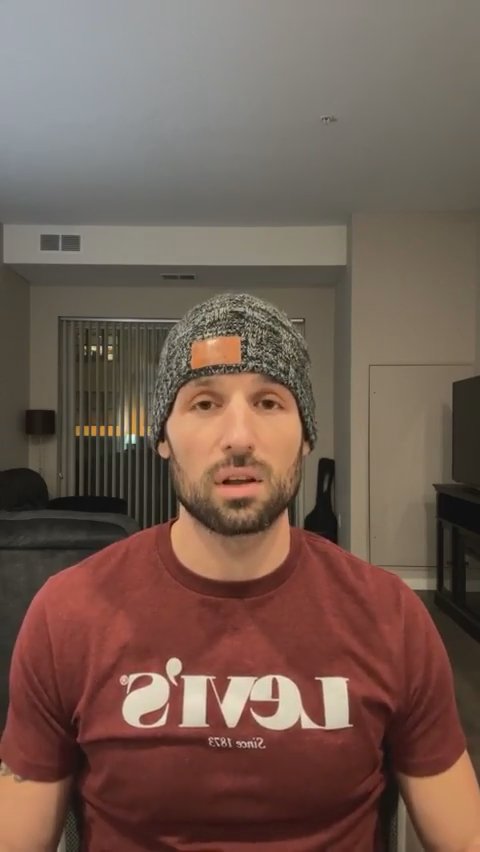
Join me every Sunday evening to set the tone for the upcoming week, with stories that bring out the serenity inside all of us!
Jason Lennox: I believe that gratitude is the answer to most of our problems. He says a lack of gratitude played a big role in his struggles with addictions. Lennox talks about ways to incorporate gratitude into daily practices.
Luke: Make a list of 100 things that you're grateful for every day. Every day. Peggy: How can we incorporate this into our lives? Luke: Make sure to get to Cadre tomorrow for the big summit.
How do I turn gratitude into action? I want to take you back to a one month period probably six or seven years ago. I shared with 30 people what they meant to me. Over the next week, make a list of 100 things you're grateful for.
Is gratitude the answer to all our problems? Now, I don't like to live in the world of absolutes, so I'm not going to say yes to that. But I believe that gratitude is the answer to most of our problems, at least most of my problems. And tonight I'm going to tell you a little bit about why I believe that I'm grateful to be here. My name is Jason Lennox and I'm your resident recovery champion, here to share about all things recovery, mental health and well being. And this is my Sunday Serenity live series where I pull stories from throughout my week and turn them into experiences that can share with you in hopes of creating some serenity, joy, peace in your own lives.
And so three things I want to talk about when I think about gratitude. By the way, it's November. Great month to practice is gratitude, and really think about all the things we have to be thankful for. But tonight I want to talk again about three things. And first, I want to talk about why gratitude matters so much, set the foundation for what it can actually do and why I believe it is the answer. And second, I want to talk about ways to incorporate gratitude into daily practices. And then third, I want to talk about how we actually turn gratitude into an action of sorts because I believe that that can be done.
I know that can be done and I'll sure explain experiences about that. But this story really came from a recovery meeting that I went to this past Friday and the topic was gratitude. And so speaker got up and he shared about how grateful he was for the things he had in his life. And we ended up breaking out into little rooms and talking individually about where we were at with gratitude and what we were grateful for. And it was always for me, an incredible exercise. Gratitude is one of the three key things that I talk about in life, and I will forever practice gratitude.
But it took me back to the reason that I felt like I was sick most of my life. This is before I found drugs and alcohol and struggled with mental health as a young child. Then as I got into drugs, alcohol, addictions to many things, I believe that a lack of gratitude played a big role in that. One of the core barriers to peace and happiness for me was the inability to accept what I had and that it was good enough. I always wanted more. I always wanted a little bit better. I always wanted a little bit faster.
And in today's world, we see so much of that. How do we get more, how do we get bigger, how do we get better, and how do we get it all faster? And when I'm doing that and I'm in that state of mind, I can't practice gratitude, because I'm always looking for the next bit thing. But when I can practice gratitude, there isn't a lot of room. So, conversely, when I practice gratitude, I don't have room for all those bigger, better, faster. And so, again, gratitude, for me, such a key component. And if I can remain grateful, then I'm not thinking about all the things that I don't have.
And again, this is an illness. I think of all humankind, not just people who struggle with drugs, alcohol, sex, food, money, those kinds of things. This is, I think, would solve so many of our problems. So that's why I believe it's so powerful. And now I want to talk about. Hi, Peggy. Peggy, good to see you here. I want to talk a little bit about how we can incorporate this into our lives. And so I told this story at this recovery meeting. There was a time early in treatment where I came home, and I had a.
A meditation paper on my bed. Someone had left it there, and it said, make a list of 100 things that you're grateful for every day. Every day. Hey, good evening. Recovery cafe, Frogtown. Every day, make a list of 100 things. Right. So 100 things. I thought, I can't even think of 100 things in general, period, let alone 100 things that I'm grateful for. Good evening, Luke. I know you're busy getting ready for the big summit. If you all want to go check that out, make sure to get over to Cadre. Big summit tomorrow, Tuesday, maybe get a chance to sneak in.
But 100 things. So a hundred things that I'm grateful for. So I took the challenge on, and I sat down, and it took quite some time, but it was, you know, easy to get to 2025, something like that, thinking about the things I have materially, emotionally, physically. But then I got stuck, and, like, what else can I be grateful for? And I'm looking around the lights or the heat of the windows. What would life be like without that? The toothpaste on my dresser. Imagine we didn't have toothpaste. We wouldn't be able to be in close contact with each other.
So all these things. And next thing you know, I had a hundred. And I did it the next day. And I think that went on for three or four weeks. And the paper said, do it until you notice a change. And I realized that I was becoming grateful for things that I'd never even thought twice. So about. Not only was I talking about how I was grateful for them. I was thinking about what my life would be like without them. So again, that's incorporating. And I'm in this text chain with the group. And I said yesterday, it was the day after the meeting, I said, I invite you all to take this challenge on.
I'm going to write 100 things I'm grateful for today, just in memory of this practice I did and I did that. And then I went back and I read those hundred things and it just filled me up. And a couple people took that on with me. So making those gratitude lists, and I actually still do that every day. Every day I make a list of three things I'm grateful for, but then talk about why I'm grateful for them. And that leads me to my third point, which is action. How do I turn gratitude into action? And I want to take you back to a one month period probably six or seven years ago.
And what I did, I don't remember if I read this in a book, if I just thought about this as something to do, who knows? Is one of the two. But what I did was go on a mission for 30 days, making a list of 30 people who I was grateful for. And what I did was each day I woke up and I reached out to one of those people and I told them, I shared with them, acknowledged them for how grateful I was. Not only that, I expanded even further and talked about why. What did they mean to me? Who were they in my life?
What kind of impact did they have on me? And as I did that, a couple things happened. First of all, there's nothing as incredible as acknowledging people in our lives for who they are for us, because people are extraordinary. And when I can actually share that with people, I don't know how that makes them feel. I can get a sense, by the way, that I get feedback from them, but we just never know. And the second thing is, the way that reciprocated back to me was phenomenal. The things that people shared back to me about what I actually had done for them and what I meant in their lives, or just that, hey, you have no idea how bad of a month I was having, how hard life is right now, and how much of a difference is actually made.
And so I took that on 30 days, and I shared with 30 people what they meant to me. And that's not something I do every single day, but that is a practice that I've never given up on. If you're out there and you know me, hopefully you've heard from me, you do matter. You make a difference for me and I'm grateful for you. I'm so grateful for the people in my life and I do my best to let people know. So again, in closing a few things, I'm setting the foundation for gratitude and why I believe it's a solution for most of my problems.
Because when I'm grateful, I don't have to experience life wishing that I had a little bit more all the time or a little bit better or a little bit faster, and I'm content with where I'm at. And then secondly, I create this list. I create a practice in my life, routines, exercises that actually keep gratitude front and center every single morning. That's how I start my day. So things happen between those 23 hours. But when that's how I start every day, they don't linger on forever. Because I'm grateful for what I have in third man, I get out there and I share with you people what you mean to me and how much of a difference you make in my life because we so often sell ourselves short and don't believe that we make that difference for other people.
But I'm here to tell you, that's what we do for other people. And so again, think about that. What does it mean? How does it solve problems? How do I create routines that incorporate it, and then how do I go tell the people? So I challenge you. I invite you to a challenge. Over the next week, do the 100 things, make a list of 100 things you're grateful for. I promise it'll pay off and go share with seven different people what they mean to you, how they've impacted your life and why you're grateful for them.
And I promise, I promise something will happen and you'll be amazed. So I hope you've all had a wonderful time. I hope you come back. Luke, I'm grateful for you. Luke is the man. He's the mind behind having us all here together. So grateful for him. And again, I really just hope I continue to interact with you and that you get something so valuable out of this. This is a time of year to really be grateful. Take the practices and really, really hang in there. Keep doing the work. Life is so beautiful.
Have a blessed week. We'll see you all next Sunday, perhaps sooner.
Reactions and comments are for members. Joining is free and takes a minute.