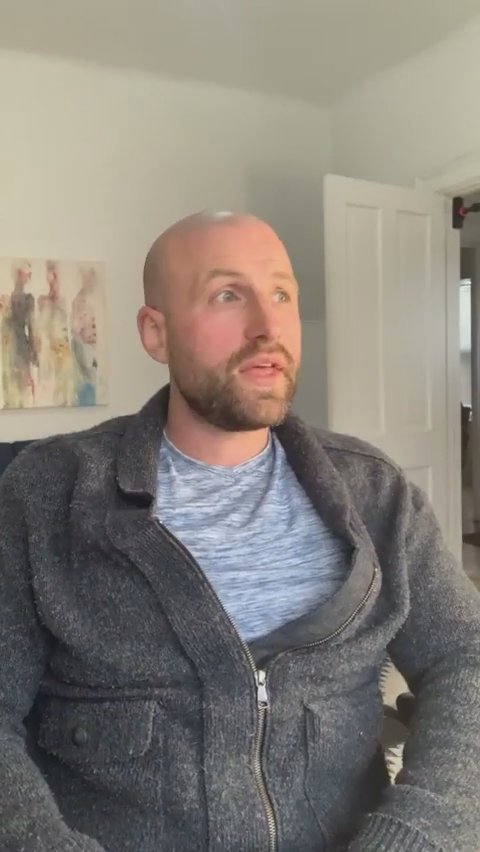
In this Livestream of Mental Health Matters, I talk about a complicated question I often get, and that is about "functional alcoholics." and if that really is a "thing" or is it merely a myth. So feel free to join if you are interested and bring any other questions you may have!
Mental Health Matters is a weekly live stream from CNN.com. Evan: Today I want to talk about what people refer to as functioning alcoholics. I'd love to hear what you all have to say about the topic.
Alcohol is what I would refer to as a weird drug. The effects are really different than almost any other drug. There's different levels of somebody being able to function. People really associate functioning alcoholics with work. Is this a myth?
There are people who lie in the middle where their drinking is heavy but not so severe that it causes debilitating consequences. Those individuals often have consequences, but they may be a little more subtle. Alcohol is a very, very strong variable in predicting divorce.
What's up, folks? Welcome to another episode of Mental Health Matters. I'm Evan, your resident mental health and addiction therapist. And here we are, another live stream. Today I want to talk about a topic that I think is going to resonate with a lot of people. And I think that because it is about alcohol, and, well, a lot of people drink alcohol, or if you don't, you know, people who do, who may have a problem with it. And so today I want to talk about what people refer to as functioning alcoholics.
We hear this term a lot, and people have asked me a few times, is this real or is this a myth? Is there such thing as functioning alcoholic? So in this live stream, I want to break that down a little bit, but also see what you all have to say. Hopefully, if you're able to pop into the live stream, also, if you're just going back and you're watching this afterward, I'd love to have you comment and give me your experience, your thoughts, your opinion, because this could be a little controversial, I think, but I think most folks will probably agree with me.
All right, so let's talk about functioning alcoholics. What is a functioning alcoholic? Right. So basically, this is inferring that an individual has a problem with alcohol, yet the problem is not bad enough that it's, like, utterly devastating their life to the point where they have no choice whether they stop or just continue to have horrible consequences. I find alcohol is what I would refer to as a weird drug. Alcohol is a drug. It's just liquid and legal. However, it's extremely strange because one.
I mean, it's so commonly used as number one use substance. The effects are really different than almost any other drug. Alcohol, obviously, in large quantities, brings you outside of your element and changes your personality almost more than any other drug. Let's say you do something like heroin, you're probably just gonna, like, nod off, fall asleep like alcohol. You're gonna be like, right? Just like anyone you see, like, going wild, inhibitions, their personality changes. You know, a really high percentage of people wind up in the ER are on alcohol.
I mean, so there's so much associated because it really knocks you out of your element. So alcohol is strange in that way. But also, let's say if we compare it to a drug like heroin, heroin is very black and white. If you use it, there's a very high chance you have a problem with it. And it's very difficult to function on a high level. There have been some functional heroin addicts. I mean, it's pretty rare, but people are able to do it and get away with it for a while. But again, that is the exception, not the norm.
So that's a very. So it's like, are you a functional heroin addict? Maybe, but not for that long, right? And bifunctional. It's like, can you maintain a somewhat normal life or at least project that, like, am I going to work? Can I maintain that job? Am I thriving in that job? Or even just kind of maintaining in that job in my relationships? Oftentimes, I think people really associate functioning alcoholics with work. Like, they're able to hold down a job. They're able to get wasted at night, perhaps, or really drink quite a bit and then show up to work the next day and actually do a decent enough job.
Maybe they're doing really well, or maybe they're just, you know, kind of, like I said, skating by. So, um. Yeah, so work, you know, also, we could associate family life. You're able to hold down your family, albeit maybe your relationships aren't the greatest, or you're not showing up to the degree in which you could. I mean, I've seen some things where certain family members, or they'll talk about their fathers or something like that, that, you know, were heavy drinkers throughout their life. But then we're still, like, good dads.
So there's different levels of somebody being able to function. And so alcohol being a little stranger than some of the other harder drugs is that people are able to function on a very big spectrum. A lot of people are able to use it safely. There are a lot of people in the middle in that, let's say functional level. And then there's a lot of people who are. Who basically, alcohol is like heroin to them, and it is just as consequential. They cannot function. They're in withdrawals. They can't hold down a job, whatever.
Right? So we'll call it the rule of thirds. Those are the three groups. And then in the middle, we have this group that is more functional. Now, is this a myth? I think in some ways it can be. So if we divided that middle group up, there's the people that are, let's say, really heavy drinkers, and they maybe don't really have that many consequences yet. Now, these individuals could go back and become healthier drinkers, or they go down the line, because often this is progressive. Most people who are extremely.
Who have alcoholism in a really severe sense, they didn't always start out that way. They moved down the line. So sometimes people in this functional range, it's like, how long can they actually stay there? Some people, for a very long time, maybe throughout their whole lives. Some people, a lot of people, maybe half of those will become severe at some point, right? They're on that path. So let's talk about those people, those really functional folks that are in the middle. Those individuals often have consequences, but they may be a little more subtle.
For example, alcohol is a very, very strong variable in predicting divorce. It is cited in divorce as typically being an issue that led to it by the other partner who is often initiating the divorce or dissatisfied in the relationship. So maybe you can maintain your relationships, but they're not going to be as good as they probably would otherwise, at the very least, if not ruining the relationship. Now, a lot of people get divorced. Doesn't mean they're not functional in life, right? They move on.
Maybe they find another partner. Maybe they have a series of relationships, and then that same issue keeps happening. Or maybe they find someone similar to themselves who's also a functioning alcoholic and will then be a good match, I guess, and not really, you know, or you find a partner that tolerates it. Very often they're just like, well, that's how they are. And it just, you find what's called a homeostasis, or I like to call it that, where you find a norm, you find a balance. And sometimes that balance is not healthy.
Right. So you have a partner, they're dissatisfied with your drinking. It affects a relationship, yet not so much that they're going to leave. The other big thing with alcohol is even if you are able to function in all these other ways, you're doing fine, if not great at work, your relationships, or you're maintaining your family, yet you're drinking very heavily. You're binge drinking more than three to five drinks, maybe more days than not, would be a good kind of accurate general representation of what binge drinking is.
Even if you're able to avoid all those other consequences, there's health consequences. Alcohol, more than almost any other substance, is horrible for your body. Horrible leads to, like, any disease, any chronic condition you could think of, pretty much alcohol is associated with. So some of those health consequences, heart disease, it's even associated with a lot of different cancers. You have an increased risk from drinking. So a lot of times these individuals are not that physically healthy. However, it's kind of hard sometimes to completely draw that to alcohol.
A lot of times, weight is an issue. Diabetes, because of the high caloric content, the amount of sugar, all these different factors that could contribute to all these chronic health conditions. So would we call that person a functioning alcoholic who shaves off five to ten years of their life because of their drinking? So it depends how you define it. There really is no true definition of it, but it just becomes this colloquial term in our culture, and that's roughly my best guess of how to define it.
To sum it up, there are people, especially with alcohol, that lie in the middle where their drinking is heavy but not so severe that it causes debilitating consequences for these individuals. They often have consequences, but they tend to be much more subtle, and it could actually be more harmful sometimes, because if it's never bad enough that you actually need, you find the need to quit, then those health consequences really stack up, and then those subtle consequences remain throughout. So often I would call it a disease of missed opportunities, not like, for example, people who use weed, cannabis, whatever, very frequently.
Right. It's very easy to be a functional cannabis user. However, for some people, it just doesn't seem to get bad enough that they want to break that cycle. And yet the consequences remain for decades. Right? Whereas maybe if it was something that's worse, if it's. Sometimes it's better if it's worse, because then you actually will stop doing it and not return to it and then not have the consequences at all. But it just has to get bad for a little bit. It's kind of like a general one said, where it's like the biggest mercy you could do is just like, I don't know, end the war as quickly as possible, be kind of as brutal as possible for a short period of time, and end it right then and there so it doesn't drag on and cause even worse consequences later.
That's kind of an ugly metaphor, but there is some truth to that, where for some people, it is better to have more consequences early and have enough and not be functional, then you're able to stop and then be free of it once and for all. But that's not the case for everybody. I mean, some people who have those heavy consequences, they just are in the cycle where they have heavy consequences for the rest of their life or they die, right? So it's kind of a double edged sword on that. So hopefully you got something out of that.
I'd love to hear your experience. What do you think? Do you think my assessment is accurate from your experience, what you've seen? Love to hear from you. So feel free to comment on this or go watch any of my other videos on the topic. I have a whole addiction masterclass series where I have, like, 20 videos or something like that on different topics and addiction. So if you're interested, check those out. But on any of my videos, you could comment, you could ask questions. And in my live streams, I will answer those questions, especially on my ask me anything episode, which I will have actually, in a couple days.
I'm actually doing two livestreams by a couple days, I think. Actually, I mean, tomorrow. I think I'm doing another one tomorrow because I gotta play a little catch up. Yep. So tomorrow I'm doing an ask me anything episode, so stay tuned for that. As always, it's been real, folks. Take care.
Reactions and comments are for members. Joining is free and takes a minute.