Use real numbers to show how normal we actually are as members of groups like caregivers, the lonely and the anxious.
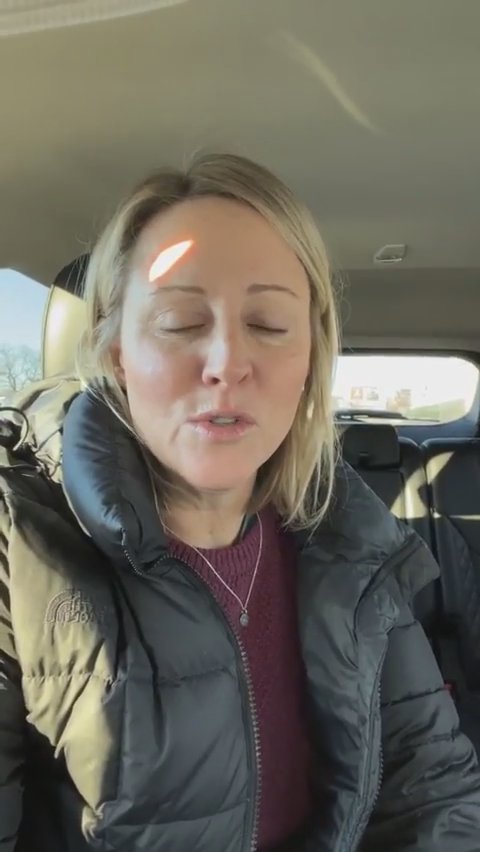
Hey, everybody. Good morning. It's a Tuesday morning here in beautiful St. Paul. I'd love to do these outside. It is now too cold here to do that, so coming to you from my car this morning.
Many of us who are seeking support with our mental health, might feel alone. Because there's a stigma in talking about them. You're definitely not alone, and these numbers will help you.
Numbers for anxiety, depression, caregivers and people who have been divorced. 30% of the population will have anxiety at some time in their life. 25% of people in the US have been divorce. It's important for us to understand that we are not alone.
Hey, everybody. Good morning. It is Shannon from aloud. I'm in my car. Oh, there we go. I'm trying to get the sun off my face. Good morning. Happy to see you. It's a Tuesday morning here in beautiful St. Paul. Excuse me, while I'm trying to. I'd love to do these outside. It is now too cold here to do that, so coming to you from my car this morning. Okay, guys, so today we are going to talk about the numbers, right? So many of us who are on Cadre, many of us who are seeking support with our mental health, might feel alone, which makes complete sense, because a lot of times when you're dealing with mental health issues, they're in your head.
Right? And so because there's a social stigma attached to talking about them. Oh, good morning. Speak, wonder. I'm glad you're here. I've missed you. Because there's a stigma in talking about them. We feel more alone than we probably need to. So today, what I'm going to do is I have my really official scientific data here that you can see, but I'm going to just give you some numbers. Speak, wonder. I am truly, truly glad you're here. I have been wondering and been wondering and missing you, wondering where you were.
So I'm glad you're here. You're definitely not alone, and these numbers will help you. Okay, so today what I'm going to talk about are the numbers for anxiety, depression, caregivers and people who have been divorced. These are all things that have touched me personally, so I know what it feels like to be alone in each of these states. So I'm just going to tell you. We're going to start with depression. There are 2,004,000,000. Can you tell? I'm an english major and not a math person. There are 280.
Yeah. There's 2,400,000,000 people who suffer from depression. So think about that. Think about how many people that is. Think about if you were to look at the state, at the United States and break off 2,400,000,000 people, how many that is. Let's talk about anxiety. 30% of the population will have anxiety at some time in their life. 30% of adults. That's over 280 million people who will have anxiety at some time in their life. I'm one of them. Let's talk about caregivers. There are 53 million unpaid caregivers in the US.
53 million of them. Speak, wonder. You're one of them. To your 92 year old mother, 40% to 70% of those caregivers will experience depression as a result of that role, or clinically significant symptoms is how they talk about it, and 26% of them will have anxiety. In the US, 25% of people have been divorced. That's not something. Divorce isn't something we talk about a lot in the mental health space. I think we should, because it's such a significant life event and there's so much social stigma around it.
But regardless, 25% of people in the US have been divorced. So think about those numbers, okay? Think about that mass of people that are living with anxiety, depression. They're caregivers. So when you go to the store, three in ten of the people that you encounter as you walk in and out have anxiety. When you go to the store, there's an incredibly high likelihood that one of the four people that you pass has been divorced. And so why this matters is because, again, it's such a norm. Billions of people are experiencing these things, and the conversations that we have about them still can carry shame and can be hard to talk about.
And so I want to say that to you today, primarily to put your mind at ease. We have these inherent, or we have these internal stories that we tell ourselves about something being wrong with us, because we experience these things. And I just want to share with you all, there's nothing wrong with you. There's billions and billions of people who have the same experience. So by coming here and speak, wonder, by you sharing that you are a caregiver to your mom, you just actually made me feel less alone.
I'm a caregiver to my son. And now I know that you and I have that in common. And I can understand. Even though I don't know you, even though you're not here with me in freezing St. Paul today, I can know a little bit of what you're going through. So the more we do that with each other, the more we tell our stories, the more we open up and say, this is what's happening, the more that we will connect as humans and the more that hopefully, we'll know we're not alone and we can decrease the shame in the conversation.
So that's all I have for you today. I'm going to keep coming back to you with these numbers, because I think it's so important for us to understand that we are not alone. And you're not. You never are. And if you need help, if you need support, we are always here at Cadre. We're always here to support you. Anytime. I'll be back tomorrow. I think what I'm talking about tomorrow is things I'm supposed to be ashamed of. So tune in for that where I will talk about being twice divorced. So I hope you have a beautiful day.
Speak, wonder. I'm here with you. We are all here with you, supporting you, everyone else out there. Have a beautiful, beautiful day. I hope it's warmer where you are. And we'll see you again soon at Cadre. Bye, guys.
Reactions and comments are for members. Joining is free and takes a minute.