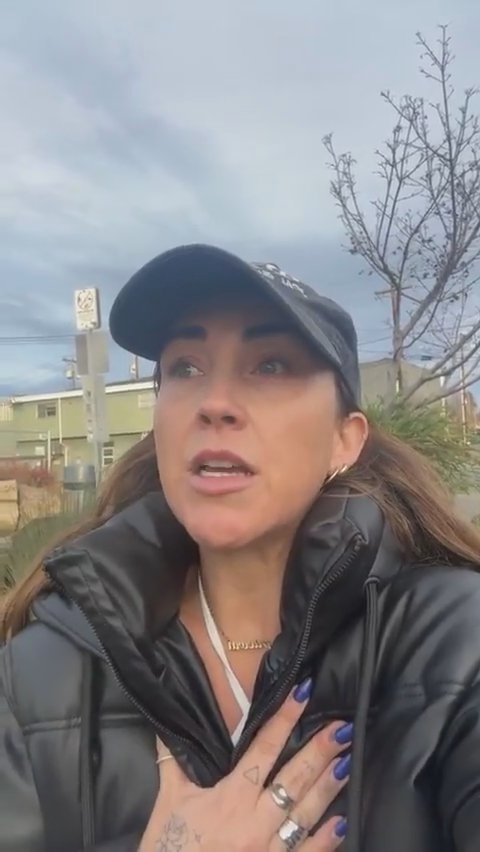
A host sits by the marina and talks through three practices for coping with loneliness: sitting with the feeling, journaling what it feels like, and offering different perspectives or ways to connect, aiming for small, 10% gains.
Cadre fam sits outside by the water to talk about coping with loneliness. The first suggestion is to sit with the loneliness. Second is to write down what loneliness feels like. Third is to offer a different perspective.
Ask yourself what the loneliness is communicating to you. Third thing is finding ways to connect to something bigger than ourselves. Speakwunder says it is possible to feel alone while surrounded by humans.
All right, my loves, I'm going to say goodbye. Please leave anything in the comments that you would like me to chat about. I will see you again next week, same time as always.
Hi, Cadre fam. Happy Wednesday. I am. It's such a beautiful day in Seattle, so I wanted to bring you outside with me. So I'm here at the marina. Hang on. But I don't really know if I'm allowed to be here. So I'm hoping that we don't get kicked out. But I thought it would be nice to sit together by the water and chat a little bit about coping with loneliness. So we can hear all the trains. We're gonna. We're gonna hear all the sounds today. So, loneliness is something that everybody struggles with.
We absolutely have a loneliness epidemic now and have for a really long time, especially since the pandemic. And I have been. I have been looking for practices for several years now to cope with my own loneliness. And I found. I found that there are three things that I find effective enough. I don't like to say perfect or incredibly effective, but they're effective enough. I think this is the thing about loneliness, is it's something that I think we all desire to be free from and desire not to experience, because it's very painful to feel loneliness.
And I think that in the desire for absolute lack of loneliness, sometimes we don't give ourselves enough grace to just feel 10% better. So my invitation to you, when coping with loneliness is just look for 10% better. Not 100%, not 80, not 50, just 10%. So these are the three things that I like to do. The first one, which no one's gonna like. I don't like it either, is sitting in the loneliness. This is probably the most avoided feeling and experience that I move through on a day to day basis, which is just sitting with my emotions.
And loneliness is a really difficult one to sit with. And what I have learned from being in therapy for 19 years and struggling with depression and anxiety and panic attacks, is that feelings are temporary. They have a rise and a fall of about 90 seconds. And if we allow ourselves to sit with them and feel them, they do pass. So my first suggestion or invitation is to sit with the loneliness. What does that mean? What does that look like? That means sitting down somewhere comfortable where you're safe.
So maybe not necessarily in a public place or in someone else's home, but maybe in your own home. On the couch. On the couch. Should I say on the couch choice. On your couch. In your bed. And asking myself, where do I feel this loneliness? Asking, where in my body do I feel this loneliness? And then putting your hand to that space and just allowing yourself to be with it and being with that feeling. Where it is physically in your body and allowing whatever comes up to come up. And sometimes it helps to journal through it.
Right. If for someone who struggles to actually emote or feel our emotions, which is very, very common, it might be helpful to write through it. So another option for sitting with our feelings is to take out a piece of paper and a pen or take out your laptop and simply write down loneliness feels like dot, dot, dot. I feel lonely because dot, dot, dot. When I think about being lonely, I think about dot, dot, dot and starting to process what it feels like to connect with our own loneliness. So that's my first suggestion.
And. Hi, Rachel. Yes, perfect is overrated. I agree. Hi, speak wonder. Thank you for being here, too. Sitting. Oh, yeah. Rachel says, I've been sitting in it for years. Maybe that's different than with. That's a really interesting distinction. And I think that, like, this is where language is really interesting because we kind of get to define what that means for ourselves. I think sitting in loneliness and sitting with loneliness are different. And I think that when we sit with our emotions, we're meeting them, we're having a relationship to them, right?
So if I sit with my loneliness, it's almost like I've extracted the loneliness outside of myself, like it's another human being. I personify it in some way and I say, okay, loneliness, I see you. I'm gonna sit with you as if you're a person, as if you're someone I love. And I'm going to ask you some questions. And this detaches it from ourselves, right? It makes it not who we are. It's not a permanent state. Whereas sitting in something is when something consumes us completely, right? So if I'm sitting in my loneliness, that's.
That's. I'm absorbed and consumed by it. And so I think maybe allowing yourself to think about what it would be like to sit with side by side your loneliness instead of in it, might offer you a different perspective. So my second suggestion is asking yourself what the loneliness is communicating to you. So our feelings are communicating something to us. So asking, you know, what is my loneliness telling me? Is it telling me that I actually have an absence of human connection in my life? Is it telling me that despite having human connection, I still feel lonely?
And getting curious again about what is my loneliness telling and what is it asking me? So I just started listening to this really brilliant podcast by doctor Rebecca Ray. She's an australian psychologist, and it's about self sabotage. And she starts to talk about values. And if you haven't done any core values work. It's a really wonderful exercise. I might do a live or a video on it because I think it's a really important thing. And she talks about how if you don't know what your values are, if you don't know what you care about, ask yourself where it hurts the most.
And where it hurts the most is where we're missing something. So if what hurts for me is loneliness, that's communicating to me an absence of something that I value. So that might mean that I'm missing human connection or I'm missing feeling safe with certain people in my life. And so asking myself, what is the loneliness communicating to me? And getting really clear on that, because that then gives us an indication of what our action items are. That gives us an indication of what we can actually do.
So asking ourselves, what is the loneliness communicating to me? And then the third thing I would say is, oh, what was I thinking about? I had this written down. So this is what happens when I go outside. I don't have any of my notes with me. So sitting with, asking yourself what it's communicating to us and then finding ways. The third thing is finding ways to connect to something bigger than ourselves. So that might mean connecting to actual human beings. So maybe that means, like, starting to go to a yoga class.
Maybe that means taking our work into a coffee shop instead of doing it at home. Finding ways to connect with actual other humans. Maybe that means connecting to something bigger than ourselves, like having faith. Right? So I know for me, during the pandemic, I couldn't, obviously, connect with physical humans, so I started to pray a lot more. And I'm not religious, but I started to find ways to connect something bigger than myself, like the universe, and creating a spiritual connection to something outside of myself.
And that really, like having faith, made me feel connected to something, even when I was physically alone, which alleviated my loneliness in a lot of ways. Another option is to connect to something that is meaningful, like a purpose. Finding something that we care about, are passionate about, and gives us meaning in life. Connecting to a passion, whether that's art, a project, a mission, finding something that we really believe in and connecting to that deeply. Speak. Wonder says, I had a therapist who often would say, sit with the discord.
I love that, Rachel. I value connection, but feel as if I don't have anyone to connect to. Yeah, it's really common. And I think that those are, you know, that's where we get opportunity to ask, like, how are. How else can I connect? Right? Can I connect to nature? Can I connect to my body? Can I connect to something I believe in? And finding other ways to connect to alleviate that loneliness, which sometimes creates opportunity for us to feel confident and safe enough to go out into the world and connect with human beings?
Speakwunder says it is possible to feel alone while surrounded by humans. Yes, a lot of people feel that way, and oftentimes that's communicating to us that perhaps we don't feel safe, that perhaps we don't feel confident to be who we truly are. That perhaps we don't feel safe, mean or understood. And so asking yourselves and getting curious about what all of that means. All right, my loves, I'm going to say goodbye. I will see you again next week, same time as always. Please leave anything in the comments that you would like me to chat about.
And I'm just so grateful that you are all here and that we've got to spend a little time together. That's our love.
Reactions and comments are for members. Joining is free and takes a minute.