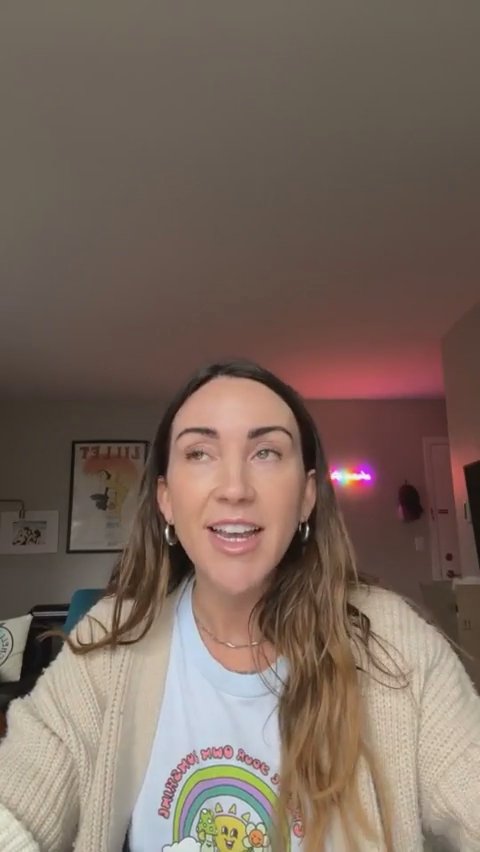
Rachel discusses navigating life transitions and shares three practical tools—gratitude and learning from experience among them—to manage the uncertainty and emotional shifts that come with change.
Happy Wednesday, Cadre fam. I'm finally back in my apartment. So happy to be back, actually in Rachel's room. I feel like the last few lives, I've either been outside or on a trip somewhere.
Alec: Transition can be difficult for a lot of people, myself included, because transition means change. Alec: Here are three things that I like to do to cope with transition. The first one is to practice gratitude.
Only people who are creating videos on the app as creators can add things to the Cadre calendar. Alec says there may be an issue there for now. It'll be fixed soon.
I do not believe the cliche that everything happens for a reason, but instead choose to look at what I can learn from any experience. We can learning from every experience we have, whether it's positive, negative, or in the middle. I think it's really helpful to find ways to navigate that.
Next week is my 35th birthday. Maybe we'll talk about celebrating and celebrating joy. If you have any other ideas, though, I'm always open. Thank you so much for being here, and I will see you next time.
Happy Wednesday, Cadre fam. I am so happy to be here with you today. I'm finally back in my apartment. I feel like the last few lives that we've had together, I've either been outside or on a trip somewhere. So happy to be back, actually in Rachel's room. And today I want to talk to you a bit about coping with transition. So transition can be difficult for a lot of people, myself included, because transition means change. And anytime that we are in an energy of change, it can feel like maybe everything is changing around us, or we might feel like this need to be doing more things in order to create change.
And it can create a lot of anxiety. So I'm going to share three tools that I use during transitional times to help me mitigate anxiety, uncertainty, fear, sometimes grief. Right. So I first want to talk about what, like, what is a transitional time? So transitional time is. It's really anytime. Hi, Alec. Hi, Rachel. It can be any time when we're experiencing change. It can be anytime when there's something that has passed and something new is coming and we're kind of in this in between space. So that might mean maybe we're in between jobs or about to start a new job.
This can be heading off to school after the summer. This can be IMMEdiately after a breakup. Rachel says all the time. Yes, thank you for pointing that out. I recently saw this video and a man was talking about this idea of transition and how it's funny that as a society, we're so resistant to this idea of transition because the fact of life is that we are constantly in transition. Every single moment of life is a transition. And from the moment we're born until the moment we die, we're transitioning.
And so I think that's a really good point to make. And I think when talking about seasonal changes, so when the seasons change, there are certain events in life that kind of trigger an internal sort of awareness that things are changing. Right. I think we have habits and routines that keep us feeling like things are the same in our day to day life, which creates a sense of stability, it creates a sense of security, because we now know that we can rely on. I wake up, I do these things throughout the day and I can expect that to happen, which is really soothing for our brains to have that familiarity of routine.
And we do these things in our lives and then suddenly things outside of our control, like the seasons changing, or like right now, the new year coming, remind us that, oh, things are changing. I'm in transition. And so when these external events happen that remind us that we are constantly in transition. We sometimes experience that anxiety because now we're suddenly aware of the fact that things are changing. And so right now this feels relevant because we're approaching a new year. And so collectively, we're experiencing that transitional energy, which I do believe is a lot of the reason.
There are many, many reasons that this time of year is really difficult for people. But I think that this collective experience of we're leaving an entire year behind and we're entering into entire new year is a real big slap in the face that we are in transition. And so we experience a lot of anxiety, a lot of uncertainty, a lot of fear, maybe a lot of depression or grief about the year past did or did not happen. And so I think this is a really good time for us to start to look at that experience of transition and start to go, okay, what can we do to navigate it?
Because it's a fact of life, right? Like Rachel said, we're going to be in transition. Also, for anyone watching the replay, I'm not talking to myself. There's another Rachel in the chat. So. So here are three things that I like to do to cope with transition. So the first one is, and this might seem like a platitude, and now I'm going to rhyme, so please forgive me, but practice gratitude. So lot of times when we're in transition, we do two things. One, we look at the past, and two, we look at the future.
So when looking at the past, it's helpful for us to reflect on what has happened and try and do it through the lens of gratitude. So by looking for, like, let's use the new year, for example, right? So if I'm looking back on 2023, I can do a lot of things. I can write down all the things I did wrong. I can write down all the things that did not happen that I wanted to happen. I can write down all the things that I did do that I'm proud of. I mean, there's a whatever. I can do whatever I want, right?
And if I'm able to look back at the year and think of it through the lens of gratitude and not through the lens of accomplishment, whether positive or negative, then I'm able to simply acknowledge what happened and be thankful. Right? And that allows me also to acknowledge things that didn't happen. So I might be able to acknowledge, you know what, I didn't, you know, I didn't succeed at this goal, and I'm actually grateful that I failed because it taught me how to. How to. How to sit with failure.
And it taught me what I did, what I didn't do, and maybe what I need to do to make it happen next time. So we start to learn how to reframe past experiences and also look at them objectively without attaching to what did or did not happen. So the first one is practice gratitude. The second one is a little bit similar, and it's writing down what I want to let go of. So it's like a let go list, right? So this might be, you know, behaviors I want to let go of. This might be values I want to let go of.
This might be people I want to let go of getting really honest with ourselves about. What are some things that feel like are adding weight to my life that I'm ready to release. And this is really great because a lot of times when we go through transition, we start to add things onto our plate. We start to think, oh, I need to actually do more if I want to experience a positive change as I move forward. These are all things that I need to start doing. And all that does is add things to our plate.
And it can actually make. Make us feel more overwhelmed and feel like we actually are failing more, because now there's more things that we're supposed to do that we're maybe not able to keep up with. Right? So instead of approaching change through a lens of, like, what can I do to make this better? If we approach it through the lens of what can I let go of to make things easier, then we free ourselves up. We free ourselves up energetically, we free ourselves up mentally and emotionally to move into whatever's coming next.
And then the third thing I practice is radical acceptance. And this is really hard, and I don't like doing it, and it's very effective. Radical acceptance is basically, it's the notion of instead of ignoring, instead of avoiding, instead of wishing things were a different way, we radically, fully, in our entire body of being, accept reality. And this can be really difficult because that might mean accepting something we don't like. And I heard this when I was in treatment, when I first learned about radical acceptance years ago, because I had a really hard time with this concept, I had a therapist say to me, acceptance does not mean agreeing with.
And that really helped me because I thought, okay, I can accept this thing that I don't like doesn't mean I like it, and I can accept it. And that allowed me to lean towards whatever reality I didn't want to accept without having to acknowledge that I like it. So radical acceptance helps us when we're going through periods that feel like we don't have a lot of control, which is typically a transitional time, because usually we're losing or letting go of or already have lost something in the past that is no longer present for us.
Right. And so we can feel like we're in this space of, like, things are changing around me. I don't have any control. And so radical acceptance really helps us settle into that experience of not having control. Okay. Rachel asks, curious if anyone else has tried adding events to your calendar. Oh, interesting. So you mean, like on. Do you mean on the Cadre app? Because if that's what you're asking, I think only creators can add things to the calendar because that's. Unless you mean, like, if you see that I go live and you're trying to add that to your calendar, you should be able to do that.
And if you can't, let me know. Yes. Wait, do you mean, so adding things to the Cadre calendar, like, so when you see on the calendar that, like, I've scheduled live and I've added that in, only creators can do that. So only. Only people who are creating videos on the app as creators can add things to the Cadre calendar. If you want to save an event that you see on the Cadre calendar to your own calendar, you should be able to click it and just click add to calendar, and that should be able to add it on your personal Google calendar or iCal.
Alec says there may be an issue there for now. It'll be fixed soon. Awesome. Thanks, Alec. Alec is our resident tech master designer, so you're in good hands. Rachel, if he says that, okay, then, yeah, that should be, that should be fixed soon. I do not believe the cliche that everything happens for a reason, but instead choose to look at what I can learn from any experience. I love that. And I think, like, you know, to that same effect, like, I think everyone has their own way of coping with things, right?
And we all have our own lenses and there are certain, like, certain things that help us to get through. And so for some reason, believing things happen for a reason helps people cope, right? For other people, that does not help. And so I think it's really good that you have an awareness of what works for you and what does it. And I love this idea of, like, how can I learn from this experience, right? Because we can learn from every experience we have, whether it's positive, negative, or in the middle, in between.
And so I think it's really helpful to find ways to, to navigate that. And I love that you're, your way of doing that is, what can I learn from this experience? I think that's a really a wonderful mindset to have. Rachel. Okay, my loves, thank you for joining me today. m.. PST next week. Next week is my 35th birthday. I will be 35 on the 29th. So the day before, I will be, I'll be going live with y'all, and maybe we'll talk about celebrating and celebrating joy, which is something that I had to learn how to do in therapy.
If you have any other ideas, though, I'm always open. Feel free to leave a comment and let me know. Thank you so much for being here, and I will see you next time. Bye.
Reactions and comments are for members. Joining is free and takes a minute.