What were your favorite books of the year? I’m a huge reader and want to share some top recommendations for our community
Cadre: Today I want to share two practical tips for how to read better. Number one is concerned with the quality of, or the quantity, of how many books you read. At the end, I'm going to share another tip on how to take notes specifically.
I read 27 books so far this year. I try to read two books a month, one fiction and one nonfiction. Here are my top five and two honorable mentions.
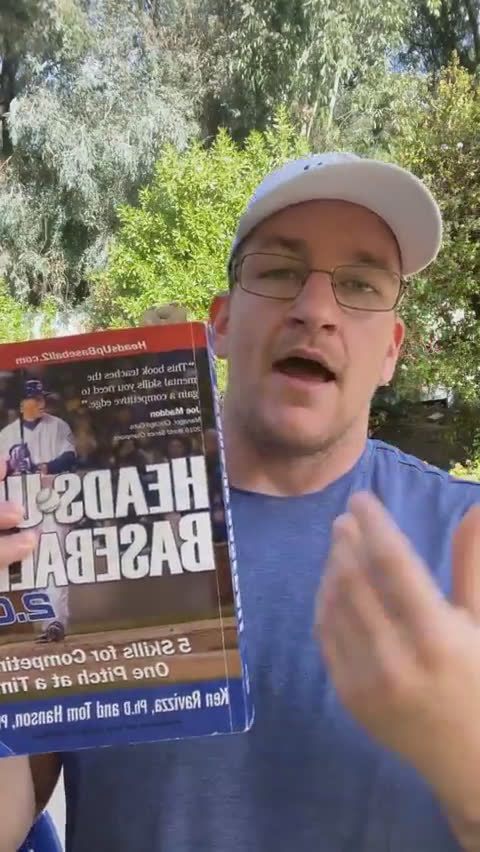
East of Eden by John Steinbeck is a classic. Heads up baseball 2.0 is probably the best sports psychology book I've ever read. Can you please put the names of these books and authors names up on the Cadre community board?
The book is about a young neurosurgeon who receives a terminal cancer diagnosis. The whole question throughout the book is, what makes a life worth living? It makes you question life. I would recommend it to pretty much anybody.
This one is made to stick by Chip and Dan Heath. It talks about what makes ideas sticky and interesting and memorable. If you're a teacher and educator, you need to read this book.
Louis Zamperini is an Olympic athlete turned world War Two veteran with a great, inspiring and resilient story. I'm going to share all of those on the Cadre community board for anybody to share as well. Be happy to hear other people comment on here of maybe your favorite books.
Garrett: How to improve the quality of how you read? Take notes. Write annotate as much as you can. For increasing the quantity of your reading, set goals. Maybe posting your own book book review of the year.
Okay. Since we're wrapping up 2023, so to speak, with a few more weeks left, I want to do what I always like to do at the end of the year, what I've done the last probably three or four years, which is an end of the year book review. So I think it's really important to read. You get all the knowledge from all these intelligent authors and all these people's life's passion. So reading is a good skill, but I don't need to tell you that. And I'm not going to tell you that today. But today is for those readers, or people who maybe don't deem themselves as readers who just want to get better.
I'm going to share two practical tips for how to read better, maybe how to read more books, but also how to take notes and things like that, and also do my own personal book review and share with you my top five that I've read from 2023. So I don't want to provide to all graduated high school or people who think they don't like their. They don't like reading or they're not a reader. This is for anybody, really. So number one is concerned with the quality of, or the quantity, rather, of how many books you read.
And then the second tip, which I'll share at the end, is more concerned with the quality of how you read your books. In other words, how do you remember the books more, and how do you take notes and really engage with what the author is saying? So, number one, hello. Speak wonder. Thank you for coming. Happy Monday. So, for number one, I'm concerned with the quantity of books. What I like to do is kind of relate it to what I've already talked about with goal setting, is set an outcome goal and then work backwards in order to set a process goal.
So, for example, what that might look like is I want to read one book a month. Okay. Well, on average, there's about 30 days in a month. So simply divide the number of pages in that book by 30 or however days there might be in that month. So if I have, you know, a 300 page book and I want to read it in 30 days, do the quick math. Boop boop, guess what it is trying to read ten pages a day for those 30 days. Simple as that. Obviously. Adjust it as you need to, whatever your goals are, whatever the book thickness is and things like that.
But that is a practical tip that I've used in the past to go about getting more quantity of books. Now I want to. I'm going to give you one more tip at the end. What's up, Cadre? Happy Monday to you. So at the end, I'm going to share another tip based on the quality of your reading, how to take notes specifically. So with my top five, I'm gonna share first. I read 27 books so far this year. I still have probably two more that I'll finish for the year. So my personal goal, kind of related to what I just said, is I try to read two books a month, one fiction and one nonfiction, just to kind of keep my balance.
So I'll read non fiction during the day just to learn, take notes, things like that, and then to wind down, I'll read some fiction before bed. So for me, my top five, since I read so many, there's so many good books. But this can give you a glimpse into what I have in my library. So I'm actually going to do two honorable mentions because I thought they were important. Number one is educated by Tara Westover. This one is a really great memoir. It's a really impressive story. Tara, the author, was a, she lived, she was homeschooled for her whole life on the west coast with her family.
Her parents were, let's just say, non traditional in their ways. And it's really cool how she was homeschooled. Her parents were very against education. They thought that would tarnish her mind and corrupt her. Hi, junk food junkie. Welcome. Happy Monday to you. So this one is a really good memoir. She actually went on from being homeschooled and her parents hating schooling to go on and get her PhD at Oxford, so, and other prestigious schools as well. But in the way, there's just a lot of cool stories.
Really good, inspiring book. Again, educated by Tara Westover. That gets my honorable mention. Then last one that I want to share from my honorable mention, this is just a feel good one. The art of racing in the rain by Garth Stein. This is a dog book, and I do want to warn you because it's a dog book, you probably might know how it ends. That sucks. But I just want you to be warned. Don't say I didn't warn you. But throughout the story, it's told from the perspective from the dog, Enzo, and then also the story itself of their owner's family.
That story itself is really interesting and a really good kind of drama, but also just told from the story of a dog. If you love dogs like I do, I have four at home with my fiance and her family. So we have a lot of dogs. We love dogs. This one is a good one. All right. And now for the actual top five. Those were each honorable mention, and those were amazing. So the top five is even better. Number one that I have is actually a classic, and that is east of Eden by John Steinbeck. So I don't have a few of these books because they're in storage.
And by storage, I mean they're in my parents house in Wisconsin right now. But nonetheless, I don't have the physical copy. But east of Eden by John Steinbeck is just imagine it right here pulling up for you. So east of Eden, it's a good classic, just a really good story. It's a little bit longer, so be ready for that. But it's based in the hills of California, and that's kind of what interested me, moving to California recently, learning about that, and it's just a good story. If you love classics, I recommend any of those.
Any of the works by John Steinbeck, especially that one might feel like you're in english class back in high school. But if, again, if you like classics, I personally do. I love him, Ernest Hemingway and others. So that's, that's a really good one. Junk food junkie, can you please put the names of these books and authors names up on the Cadre community board? Good point. I will definitely do that. Thank you for that suggestion. I can absolutely do that. So that was number five. And really, I'm not putting these top five in any order, so don't think one is better than the fifth, but really just kind of general.
The second one, the second one that I thought was really good is this one. 0. As someone in sports psychology, this is probably the best sports psychology book I've ever read. Even if you're not in the sports psych world, this is still amazing. If you want to, if you're curious, it's literally just talking about the mental skills that are present in the sport of baseball. It's written by doctor Ken Revisa and Tom Hansen. Ken Revisa is probably, in my opinion, one of the best sports psychologists of all time.
He talks about how you're not going to get in this perfect headspace every time you have to get comfortable being uncomfortable, which I think a lot of us can benefit from that mindset. So this one, again, if you're interested in sports psych, if you are a baseball player, if you have people who are a baseball player, recommend this one to them. And I honestly think almost all these mental skills are applicable to other sports as well. So if you know an athlete. If you are an athlete, I recommend this one for you.
Number three, my top five. I know I said I didn't rank them, but this one was probably my favorite. And that is when breath becomes air by Paul Klanathy. So this one is similar to the dog book. If you don't cry during this book, I don't think you're human because it is all about a young neurosurgeon who receives a terminal cancer diagnosis. And he talks about his process of that. He's very into philosophy and English and is also a neurosurgeon. So his whole question throughout the book is, what makes a life worth living?
And it's just amazing if we're all impacted by cancer in one way or the other. Maybe we know someone, maybe personally gone through it. It's a really powerful way to look at the good lens of someone with terminal cancer diagnosis and just hear. Also, if you're curious about surgeons and their process, he talks a lot about that. So this one is a tear jerker. It makes you question life. It makes you very grateful for what you do have in life, and I would recommend it to pretty much anybody. And then number four on this, I'll do final two.
One is made to stick. This one made to stick by Chip and Dan Heath. They're brothers who are both business professors. And this one is really about the main question of what makes ideas sticky and interesting and memorable. So if you're looking, if you're someone who, like me on this, on this platform, makes content, or you're just someone in the world who has ideas, aka all of us, then you would benefit from this book because it talks about, again, how do I make ideas sticky and memorable? If I'm passionate about something, how can I convey it to others in a way that they understand it in the way.
In a way that they're going remember it. If you're a teacher and educator, you need to read this book. I'm sure you'll recognize a lot of these concepts and principles, but it's super beneficial. And I think this one, again, not ranking them, but I think this one would probably be my second favorite if I'm being honest. All right, and then last one that I have for you, my top five, I don't have that because it's also in storage, aka my room back home in my parents. My parents house in Wisconsin is unbroken by Laura Hildebrand.
This one is a really cool look. It's basically a history book based on Louis Zamperini, I believe is how you pronounce his last name and that is, or he is an Olympic athlete turned world War Two veteran with a great, inspiring and resilient story. He made the Olympics in 1936 in Berlin, came from a very humble background in California and then made the Olympics, was an great distance runner, probably could have been the first one to break the four minute barrier mile, but went to war instead. So he went to World War Two, was based there, and then, you know, had his service in the Pacific theater.
So did a lot of missions in Japan, Hawaii and things like that. And he actually, if you're into like war novels or anything, I would recommend this one because he was, he worked as a bomber pilot. He wasn't the pilot, but he worked in bomber planes. And as they were doing a mission over the Pacific Ocean from Hawaii to Japan, his plane malfunctioned. It crashed. He survived 47 days out at sea with two of his, two of the people in his unit for 47 days just on a raft. They ended up eating birds, eating sharks.
He literally caught sharks with his hands, which is pretty crazy. And then after the 47 days, the reason that ended is not for good reasons. He was actually, they floated all the way from about 2000 miles over to Japan, where they got taken as prisoner of wars or prisoners of war by japanese POW camps and then went through years of torture. And it's an interesting book. It's a story of resilience and just a lot of cool, inspiring things. So that one I would also recommend and thank you to junk food junkie on here.
I'm going to share all of those on the Cadre community board for anybody to share as well. Be happy to hear other people comment on here of maybe your favorite books or on the community feed as well. But I did promise I would share one more skill, and that is how to improve the quality of how you read. And that is take notes. Take notes. It's simple as that. However you want to structure it, just take notes. Especially if you're reading a nonfiction book, even a fiction book, if you highlight certain passages, you're going to be more engaged with that book and that author.
So, for example, this one made to stick, which I already mentioned, has a bunch of different notes in it. So if I go through here, like this chapter, what I usually do is I highlight. I highlight the heck out of the book. I write little notes. Junk food junkie Garrett, if you get a chance to read the Ripken way. Ooh, I've heard of that one. Haven't read it yet, but I definitely want to. That's another good baseball book about Cal Ripken, one of the best of all time. So thank you for that recommendation and all the good ideas today.
So for this, I highlight the heck out of it. Write annotate as much as you can. Whatever your style is, I'm not going to say you have to do it a certain way. How I do it personally is as I highlight and annotate, I just write little notes, things I find interesting, maybe put stars along, really good quotes or things like that. And then at the end of each chapter, like for example, this was after chapter two, I just wrote kind of the summary. This one is a little bit more lengthy because it's the first part of the book and it has a lot of cool ideas.
But later on, just anywhere from like three to five bullet points really quick. Just a little way to summarize each chapter, different quotes that you found interesting, however you want to do it. And then at the end, what I usually do, honestly, is I go on my laptop, I kind of synthesize those notes and try to break it down into a way that's digestible, maybe like ten main bullet points, actionable steps as well. And then I write those in the margins of the book or on the front cover, back cover, things like that on the inside of those.
So take notes if you're trying to improve the quality of your reading, and then for increasing the quantity of your reading, set goals, set an outcome goal and work backwards in that process goal, which is stuff I've already talked about with goal setting, and it's really applicable to reading books as well, so hope you enjoyed it. Hopefully, if you do read any of these books, or if you have read them, please reach out to me, let me know what you thought, and I'll post these on the community board as well.
See what other people think. Maybe posting your own book book review of the year. We got a lot of readers on here. I already know that a lot of the creators on here, a lot of the wellness experts are also good readers. So lots of content to share with you all, and I hope this helps with those tips as well as learning a little bit about what's in my library. Happy Monday.
Reactions and comments are for members. Joining is free and takes a minute.