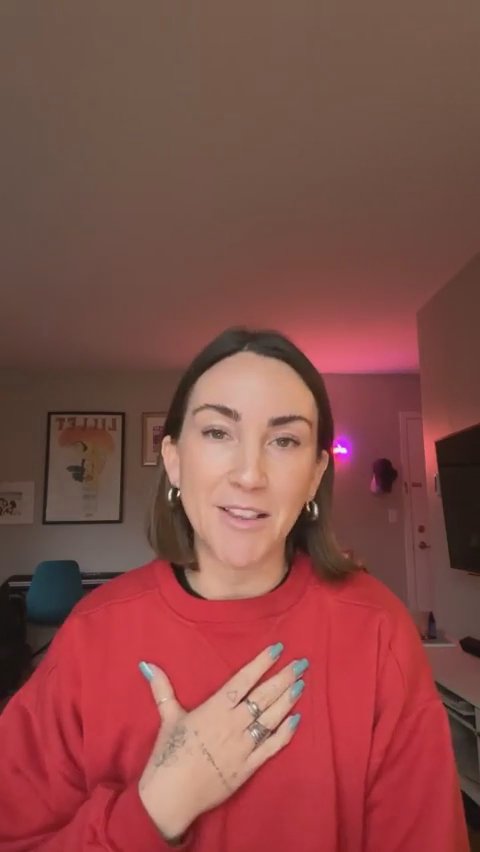
Rachel explores whether New Year’s resolutions are helpful, weighing gratitude, mindful goal-setting, and honoring transitions while sharing personal reflections from recovery and hints about SMART goals.
Rachel: Is it healthy for me to do New Year's resolutions? Rachel: Let's focus on what's already working and I'm now in a place in my life and my recovery journey. First question I ask myself is, who am I making resolutions for?
Miles asks self questions for New Year's resolutions. Is this resolution trackable, measurable, and reasonable? And I think it's okay to have goals. There's no right or wrong way to do it.
Rachel says she's awful at setting goals. Always feels the same as resolutions and results and feeling like a failure. Lynn says it's better to just take things as they come at the moment. We'll talk about smart goals and how to do those.
This Friday is my birthday. I'm turning 35. How weird is that? I will see you all next year. And next week, we'll talk about smart goals.
Hi, Cadre fam. Happy Wednesday. I am very happy to be with you here today for the last time in 2023. So I wanted to talk to you today about New Year's resolutions and some of the things that come to mind for me as we enter the new year. Specifically, as someone who has a history of not feeling good enough and seeking perfection and constantly trying to change who I am, the new year has historically been a time when I make very sturdy, high lofty resolutions, which typically sets me up for a lot of disappointment and kind of reinforces this belief that I can't do anything, that I start.
So today I'm going to kind of answer this question of should I do New Year's resolutions? Is it healthy for me to do New Year's resolutions? And I think it's important for us to have autonomy with everything that we do in life. And I know that in the past I have recommended to folks and invited them to, you know, maybe replace resolutions with gratitude instead of making these plans to change. Let's focus on, you know, what's already working and I'm now in a place in my life and my gonna say recovery journey.
My recovery journey. Hi, Rachel. That I feel, I feel well and confident and balanced enough to look ahead at the new year and make some goals for myself. And there's a way that I need to go about this mindfully so that I'm not putting myself in a position that I have in the past where I take this idea of resolutions and turn it into a I must transform this year or else I won't be enough. So Elsie Wallace says, love that gratitude idea. Yeah. com in my blog I have a whole blog post of New Year's gratitude and the kind of the process, the journaling process that I've done for many years around fighting gratitude at New Year's, because I also do really find value in acknowledging transitional time.
Last week I went live and talked about coping with transition. I think it's important for us to acknowledge transition and to name it and to say, okay, I'm in this time period where change is occurring. So how do I want to acknowledge this transition? Whether that's through reflection and gratitude, whether that's through reflection and then maybe change making, whether that's through ceremony and simply sitting in the transition and creating some ritual around change, I do think there's a lot of value in doing that rather than ignoring or suppressing or avoiding the reality, which is that things are changing.
Okay. Oh, Lynn, nice to meet you. That sounds good. So, this year, as I find myself in a place of mental well being, stability, and also coming out of a year where my entire goal for 2023 was to find stability, period, I was not looking to grow. I was not looking to change or evolve. I was coming out of a really, really dark, deep depressive episode in 2022. And so I needed to focus on the year, on simply just finding stability. And so now that I've done that, now that I'm in this place where I feel very stable, I'm ready to set some goals for myself, and that might be a personal thing, that might be a work thing.
So I know that as the new year comes around, I start to think about, okay, what might my goals be for the coming year? And so, for me, when I think about New Year's resolutions, these are some three questions I like to ask myself. If I'm in a place of wondering, is this the right thing for me to do? So the first question I ask myself is, who am I making these resolutions for? Sorry, Milo's having a little moment on my couch. Hi, Luke. I was gonna say happy new year, but we're not here yet. Even though I'm talking about New Year's, I'm like, it's already New Year's.
So the first question I ask myself is, who am I making resolutions for? And that right there, will give me an indication on whether it's rooted in insecurity, worthiness, or me building self trust and self confidence. If I'm making a resolution for a partner, a family member, external validation, a group of people, an employer, whoever it might be, then I get to ask myself some more questions around where is that feeling coming from? Where is that emptiness coming from of thinking that I need to make some resolution or change for somebody else and just getting curious about that without any judgment or shame.
If the answer to that is it's for me, then I'll ask myself some follow up questions. So the next question I might ask is, and, Rachel, you made a comment about this, so that's a really. You're very insightful. You know, the question I might ask myself is, if this is a resolution I'm making for myself, then I might ask myself with a lot of compassion, right? Not from a place of criticism, not from a place of judgment or shame, but from a place of, let's get really honest with ourselves. If this is something that I really wanted to change, why did I wait until now to do it?
And so, Rachel, kind of made a comment about this already, which is, you know, if I was not making this change all year long, why? What was standing in my way? And why is it that right now I feel like, okay, now I'm going to be able to do it? And so then we have to get honest with ourselves about a. Is this really a realistic thing for me to ask of myself? Right. Because if I wasn't doing it all year long, maybe it wasn't a realistic thing that I wanted to change. Maybe it was something that was, I set the bar really, really high, or I put too much pressure on myself, or I didn't have enough tools or support to even do it right.
Like, if I set a goal for myself, but I have zero skills and zero support in place, it's hard for me to expect myself to be able to do that. And so I also need to also ask myself, like, what are the obstacles getting in my way? And are those obstacles that I have some power if I really wanna make this change for the new year? Are those some obstacles that I have the power to overcome or to remove? And I think that instead of just blindly making resolutions and saying, okay, here's a list of things that I'm gonna do it this year.
We need to set ourselves up for success if what we want is change, and there's no shame in wanting to change. I think I went through a whole process of learning to have radical acceptance rather than trying to constantly change or fix or solve myself. And I think that that was really beneficial for my wellbeing because I've learned to accept things I can't change. Or I've learned that, like, I don't need to change everything. Not everything has to be optimized or perfected or improved. Sometimes things are just enough, and that's okay.
And sometimes we want to do things right. Like this year, I want to travel more. Well, if I want to travel more, I'm going to have to make some changes. I'm going to have to budget differently. I might have to get some extra work for extra income I'm going to have. Milo is so funny. Milo always makes noise. He's quiet all day long. And as soon as I get on the video, he's like, mom, mom, mom. So if I want to do something in my life, I might have to make some changes for that desire to occur, right?
And so we have to then get honest with ourselves about if this is something I want to change or resolve that I have for the new year. What were the obstacles that were getting in my way, or maybe what was lacking in terms of support or tools and how can I implement those so that I can maybe make this a reality for myself? Right. And then the final question is, is this resolution trackable, measurable, and reasonable? So again, it kind of comes into that, that framework of how realistic is this? Right.
And Rachel goes, he's not spoiled or anything, Miles. Milo's very spoiled. He's definitely spoiled. Lynn says, that's such a great ask. Yeah, I think it's important to ask ourselves these hard questions. Right. So if you haven't heard of smart goals, I mean, I can do a live about it if you want, but if you just Google smart goals, holy grail of helping you set up goals. So it's an acronym or is it an anagram? I always get the two mixed up, but that each letter stands for something so specific, measurable, attainable, realistic and timely is what I believe it stands for.
But feel free to google it yourself. And basically, when you set a goal for yourself, or you can do this with a resolution, asking yourselves, is this something that I can actually track? Right. So if my resolution is to get outside more, what does more mean? Does that mean once a day? Does that mean a few times a week? Does that mean for a longer period of time? How do I, how will I know what more is and when I've got there? Otherwise, we just set ourselves up again for never really arriving at this thing that we've planned on doing.
So making those resolutions feel more specific, measurable, and trackable, as well as reasonable. Right. So that kind of goes back to what I was talking about earlier, of being honest with ourselves about, like, is this a, is this a reasonable, realistic thing for me based on where I'm at emotionally and mentally, based on the resources and the tools I have, based on the support I have, is this reasonable? And I think that allows us to, not just during New Year's, but anytime in our lives, to set up goals for ourselves.
And I think it's okay to have goals. I think it's okay to want something for ourselves and to give that to ourselves and to do it in a way that's healthy and to do it in a way that's, that's where we're not putting ourselves under these huge expectations and weight of pressure. So those are my little self inquiry questions for New Year's resolutions. If you're watching the replay of this, let us know in the comments if that was helpful or what you plan to do for New Year's, how you plan to honor this transition.
Again, I think there's no right or wrong way to do it, and I'm here to support you in ways that are healthy and helpful for you because everybody's different. So Rachel says I'm awful at setting goals. Always feels the same as resolutions and results and feeling like a failure. So I don't do it. Oh, my gosh. I get that so much. I totally get that. And I think that it's so okay and appropriate to back away from something that isn't working for us and just pause. Right? It's okay to take a break and say, you know what?
In the past, when I've done resolutions, when I've set goals, this is the experience I have that's negative. So I need to take a break from this for a bit and give myself permission to just not right, like, I did that for but a few years where I just didn't create high expectations for myself. I didn't make these huge goals that ended up having, leading to burnout or failing or, you know, or having symptoms in my mental. My mental health. So I needed to do that to create enough space and distance so that I could go, okay, you know what?
I'm okay as I am. I feel comfortable with who I am. And now that I'm in that space, the goals that I set are not coming from a place of feeling like I don't, like I'm not good enough, because the goals are now not coming from a place of I need to change, or else I'm not enough. They're coming from a place of, hey, I would really love to do this in my life because I believe I deserve it. So now the goals I set are coming from a place of enoughness rather than not enoughness. So I think it's okay to do what you need to do.
If you need to step back and take time on that, that's perfectly fine. Lynn says I focus on support for everyone else in my family. These questions for myself are flippin awesome. Thank you so much. Would love a smart session here. Aww. You are so sweet. Yes, we will. Then let's do it. I'll plan on for the first week of the new year. We'll talk about smart goals and how to do those. That feels timely. So Rachel says it's not that I don't have them, but they seem so far away that it's better to just take things as they come at the moment.
H***, yeah. And I support that. Again, I think that you should do what feels right for you. And if what feels right for you is taking things in the moment without setting up these faraway things, then that's what you need right now. And I'm. And I want you to honor that. And so I'm glad that you're listening to that intuition and making that choice for yourself, because I think that's exactly where you need to be. Okay, my loves, I'm gonna sign off. Happy end of 2023. This Friday is my birthday.
I'm turning 35. I'm very, very excited, so I will see you all next year. How weird is that? I will see you all next year. And next week, we'll talk about smart goals. Thank you, Lynn, for asking for what you want. All right, my all. I'll see you soon.
Reactions and comments are for members. Joining is free and takes a minute.