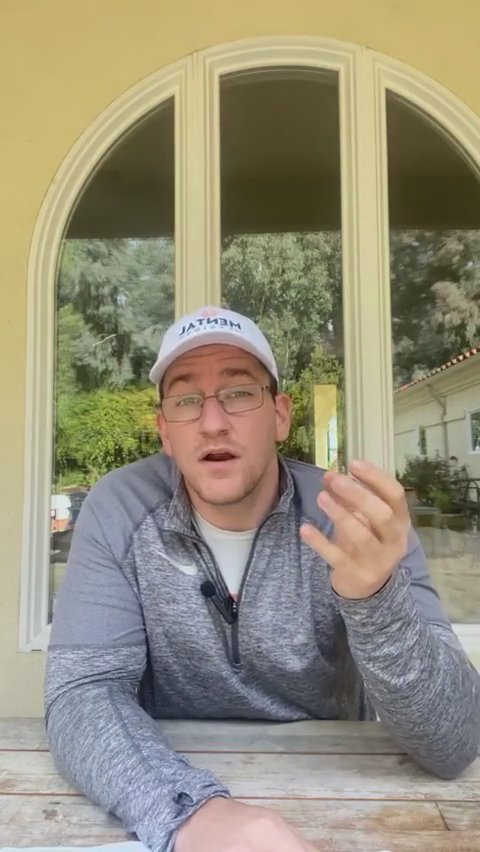
I want to share a few examples, including ones I’ve set for myself, of how to do the goal staircase. I talked about this topic in a recently published video, but providing more examples here!
The goal staircase is a way to break down a long term goal into more short term milestones along the way. Here are some examples of how you can use this tool. The priority goal for the next few months is weight loss.
There's a really good quote, actually, that I wanted to use. Setting small, immediate, controllable targets and then hitting them builds confidence. It breaks the goal into winnable chunks. The only time you can make progress on your goal is right now, right here.
To a good start. I'm filming outside, as I usually do, just because I live in Southern California, and today is actually one of the very rare days where it's kind of cloudy out. And it actually was raining this morning in southern California, which, again, doesn't happen very often, but still able to be outside in January. So as a kid born and raised in Wisconsin, it's pretty nice. So for the sake of today, or what I want to talk about today is kind of reiterating what I already talked about a little bit with a recent video that I posted on Cadre, and that is the goal staircase.
I want to spend some time today talking about, just different examples of how you can use this tool. And I also wanted to include a personal example of mine that I 100% set myself. I wrote it out. I did the exact things that I try to teach and educate people about, which is using the goal staircase on a goal. That is my resolution. So I'm going to include that and just, again, reiterating why the goal staircase is important and using some examples. So I'll dive right in. Like I said already, I already made a video about this, and it's posted on the Cadre app, so feel free to watch it if you can.
It's about six minutes long, and it's got a lot of information packed in it. And just if you haven't watched it, it really, what the goal staircase is, is a way to break down, you know, a long term goal into more short term milestones along the way. I speak wonder. Happy Wednesday. Thank you for joining. So, that goal staircase, just, you might actually do it by drawing out an empty staircase, having your ultimate goal at the top, at the pinnacle of that top staircase, and then kind of reverse engineer the steps to get there.
So you start at the end, and then you make the milestones along the way and then figure out where you're starting out at. So, as an example, I'll use my personal example. I wrote this out. I have one of my journals here that I wrote this out in, and it's my personal goal staircase. So I'm going to open up about what my goal is, or my biggest goal. My priority goal for the next few months is, and that is weight loss. So a lot of people can probably resonate with this. For me, the reason why I want to do it is because I was always a bigger person growing up.
Played as an offensive lineman for football in college. I peaked at, I think I was about 275 pounds in college. As that so speak wonder says. I'm a visual learner. I'll draw my personal staircase. That would be great. So you can see mine gives you an example of just the staircase. And I put a bunch of little notes on there, so I remember what to talk about with you all. But I think I'm a visual learner, as well. So that's why I think the goal staircase is great. So, that's why weight loss is important to me.
It's also important for health. I love fitness. I love just to try to improve my health for longevity, mental clarity, cognitive benefits, all that different stuff. So, for my staircase that I want to use as an example, at the end, I want to be at 215 pounds by July 1. So that'll be six months time. All right. And I chose this goal because at the start, I am about 240 pounds right now. And typically, just as a general weight loss goal, you want to think about trying to lose about 10% of your body weight in six months time.
That's usually a safe and healthy way to lose weight. It's sustainable. It's not too much at once. So, my end goal at the top of that staircase is 215 pounds by. By July 1. Then on the sort of intermediate steps along the way, I have losing four pounds a month, because that would be kind of the track to get there over six months. Losing 24 pounds is right about there. Four pounds a month. So, right there, I have 226 by April 1. Another milestone I have in the middle there is 234 pounds by February 1.
So I just want to lose four pounds by about a month time. And so those are more outcome related goals along the way, some milestones, and then I have included in there also process goals. In other words, verb actions that I take to get to those milestones. So, three of them that I have in there, I didn't want to go too crazy just to keep my focus in line. One is no alcohol in the month of January. So I'm doing dry January, which some of you maybe have heard of. Just a good way to start the year, trying to reset the body, reset the mind.
So, that's one. Another process oriented goal that I have is go for at least 115 minutes walk per day, and then another one is eat a vegetable, a serving of vegetables with lunch every day. So, just some examples of activity limiting alcohol, and also some nutrition goals. So, I have all those on the way to reach that ultimate goal, which in six months time, I can't really control what happens six months down the line. I can only control what I have now. That's my example. But some other examples for you all might be if you're.
We have a lot of parents on the steps. Maybe you're a parent, maybe you want to be a better parent. And that's at the top of your goal staircase. Well, one get a little bit more specific about what that might mean. Being a better parent can mean a lot of different things, but one example of a process goal you can have along the way or a milestone that you want to hit is, say, for example, spending one night a week doing a movie or game night, something that's completely in your control and will help you build your relationship with your children.
You can also do this, maybe if you want to be a better spouse or a significant other, maybe you want to do one date night a week along your goal staircase. Those are examples. Maybe you want to be a better leader. So one example of a process goal along the way might be simply spending five minutes in a conversation with a new person under your leadership, or maybe extending a conversation, trying to deepen the relationship with another person. Another example, because I'm in sport and performance psychology is a sport like baseball.
So a top, you can even do a really short term goal staircase. Let's say at the top of a baseball game is I want to win this nine inning game. Baseball has nine innings, so I want to win this nine innings. Well, a milestone along the way might be let's try to outscore the other team in the first three innings, or let's try to set whatever our strategy is, let's try to get that in place by the first 1st inning so you can break it down into winnable chunks. So why I like, after using those examples, why I like the goal staircase is overall, it just turns the outcome that you want into a definitive process.
So process goals are simply just the verb actions, and they're what you have complete control over, and those are the actual actions that lead to the goal, and that's why they're much more important for your success in a goal, and they've been shown by research to improve your success in that goal. You also I like the goal staircase because you need short term goals to give you guidance. If you just have that long term outcome goal at the end, it's hard to stay motivated. It's hard to feel like you're getting progress on it.
So if you have short term milestones to get you there, it'll again boost that confidence, boost that motivation, and boost that persistence along the way. There's a really good quote, actually, that I wanted to use. It's by doctor Ken Revisa, and he's a really famous sports psychologist who passed away in the past few years, but he's a longtime kind of historical figure in the field and he had this great quote. So setting small, immediate, controllable targets and then hitting them builds confidence.
It breaks the goal into winnable chunks. So that's really what the goal staircase is about. Short term milestones. As speakwinder said, short term milestones more attainable. Couldn't have said it better. That was great. So setting small, immediate, controllable targets and then hitting them, it builds confidence and it breaks the goal into winnable chunks, gives you more control over the process. And another great, great framework by Doctor Ken Reviso that I try to live my life by is if you break down your goal, if you break down any long term thing that you want to achieve, let's say it's over a year, for mine, it's over the next six months.
Well, that six months is broken into a combination of today plus today plus today. So I have today, January 3, and then I have tomorrow, January 4. I have just a bunch of days stacked on each other. Well, guess what's in a day? It's the present moment plus the present moment plus the present moment. All you have in a long term goal is the day you have, and all you have in the day you have is the present moment. So connect with the present moment and that is the only time you can make progress on your goal is right now, right here.
So try your best to break your long term goals into stuff that you can control right now, today, in the moment. Try to be in the present moment and accomplish your goals and make 2024 a great year. So thank you. Thank you. Speak, wonder and others for, for joining me on this Wednesday. I look forward to, as always, continue educating you on how we're all performers and we can use sport and performance psychology to educate, to make our minds work for us rather than against us. So thank you all. I appreciate it and we'll see you next time.
Reactions and comments are for members. Joining is free and takes a minute.