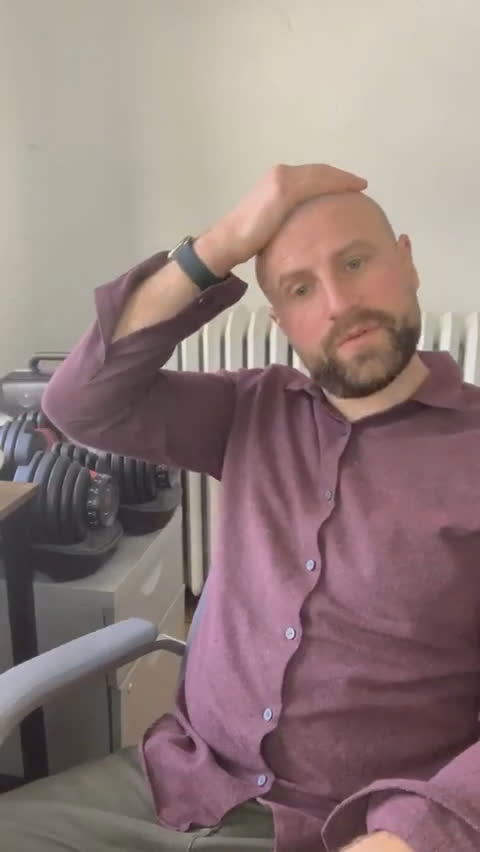
On this episode of MHM, I will be discussing trauma and how it impacts our minds and body. This will be an overview of treating clients with trauma and PTSD as well as what healing looks like. Don't missit!
Evan is your resident mental health and addiction therapist. What day is it? Tuesday. Sweet.
JFJ wants to talk about trauma education, science behind it, the healing. The following week, he will to do an AMA. If anyone has any questions about anything mental health, addiction related, feel free to ask in next week.
A breakdown of what trauma is in general, clinical trauma. Mental, emotional trauma in and of itself an injury. We humans are built to be quite resilient because the world is a harsh place. I'm filming a bunch of videos that'll be part of a trauma series.
There are lots of policemen and firemen that have PTSD retirees and still on the job. That's where we actually got this concept of PTSD was after World War One. What does the healing process look like? And that's something I'll outline more in the series.
generational trauma is essentially trauma that gets passed down. The effects that that trauma has on an ancestor, a parent, grandparent, great grandparent. changes the thoughts, beliefs, behaviors of that individual and impacts how they raise the next generation.
Would a person who is fearful of things happening to fall in the category of trauma? A pretty small percentage of people will then develop PTSD over it. Not every bad thing that has happened to me is a trauma, but in some ways it is.
What's up, Cadre fam? Evan here, your resident mental health and addiction therapist. It is. What day is it? Tuesday. Sweet. Anyway, today I wanted to talk about trauma, a topic that comes up quite a bit now. You'll see a lot of this on social media, more awareness on it. So I wanted to do a little bit of breakdown and promote a video series I have about trauma education, science behind it, the healing. Yeah, I got a lot of requests for stuff like that, so I'm gonna go ahead and do this for Cadre.
I'm working on it now, cranking through some videos, but, yeah, let's see if we have anyone join. We could get a conversation going. There we go. JFJ. Like that. I summoned you. Good to have you here. But yeah. So if anyone has any questions in the meantime about anything mental health, addiction related, feel free to ask in next week. Actually, I won't be here for the next week. I will not be here, but the following week, I will to do an AMA. We're going to switch the time up. I'll be in a different time zone.
So for a few months, I will be in the evenings for you all. Yeah. So a little late night radio show. Anyways, what up, Ana? How are you? So, yeah, I wanted to talk about for this session. Session stream trauma, because again, that comes up quite a bit. So I thought I would just do a quick breakdown of what trauma is in general, clinical trauma, a little bit of a background and some of the topics that I'll discuss coming up that I want you to look out for as I drop. I don't know, there may be about ten to 15 to look.
About ten to 15 videos on trauma and healing. So anyways, when it comes to trauma, when we think of that word, what comes to mind? Well, now, with all the awareness you may think of, like trauma in our past and mental health, emotional trauma, now, that wasn't always the case. Or when you think of a trauma, you think of something physical, like the trauma ward in a hospital. Right? A physical injury of some sort. And in the same way, mental, emotional trauma is in and of itself an injury. Now, the thing is, we humans are built to be quite resilient because the world is a harsh place.
You know, we need to be able to regenerate, to heal, to bounce back. I mean, the world used to be a far crueler place. Or there's still a lot of, you know, even. Even in the best of circumstances, even if we're the most privileged, you know, the world is still a tough place. And probably people a few hundred years from now look back and be like, how do these people do it? You know, how do they deal with, like, all this adversity and. Oh, you're uploading the series now? I haven't done. I haven't released it yet.
So for me, we're talking about the same thing. But I do actually have a video that's probably out on PTSD. Breaking that down, I'll do another similar one, but right now I'm filming a bunch of videos that'll be part of a trauma series. What up, Alec? That's why I got it on the mind, because I'm in the midst of filming all this so soon. I will hopefully maybe in the next month or so, get that out to you all. But I do have coming out. What did I just upload? I just uploaded a whole bunch, actually.
It was just really a batch of 25, 24 random videos. So maybe Alex saw that. I just. I like to overwhelm Alec and instead of slowly releasing videos, I'll just drop 24 on his lap just to keep him on his toes. So I just, you know, so there's 24 videos on any topic you could think of involving mental health. So you could check some of those out. Those are some fun videos. Yeah. So trauma from tragic loss. So, yeah, so basically any of these, like, really adverse experiences, right. Because we're all, as some point, going to lose someone that's close to us, an untimely passing or even something that would be on average, right, losing even someone aged into old, you know, into, you know, 90 years old, 100 years old and died of natural causes, right.
We're always. There's always going to be loss. We're going to get injured, there's going to be sickness. There's always, again, the world is a harsh place, even in the best of circumstances. But what differentiates, what makes something actually something we could maybe put in this category of traumatic versus just something bad that happened? And the way we define that, let's say through the lens, the clinical lens of PTSD, it's viewed as an experience that overwhelms our ability to cope long term.
A lot of losses are really tragic over time. There's a curve where it's like, oh, it's horrible, but then over time, maybe it goes up and down, but the trend line usually gets better. Eventually you get to a place of where it's mostly healed. Doesn't mean it's not going to be sad or whatever, but it doesn't affect our day to day functioning in the same way we're able to get back to ourselves. So that would be one of the big differentiators. And when someone had. And so when you look at one of these adverse experiences, typically, like, with something like PTSD, it will impact every area of your life.
And PTSD is one of the more complicated diagnoses out there. And it's broken down into five, essentially five distinct categories. Can I name them off the top of my head? Maybe. But there's avoidance, right? So let's say I was in, like, a really traumatic car accident, and after that, I'm so shaken up, I'm afraid to drive a car, even though maybe the odds of something like that happening again are very low, right. Have this outsized fear. I have this anxiety. So basically, like, anxiety, depression, mood, fear response, then you have the avoidance.
So therefore, let's say if I avoid ever driving or going down a certain road or my trips become 50 minutes instead of 20, because I have to avoid highways or something like that, you know, that'd be an example of avoidance. So being keyed up on edge, fearful, hypervigilant, avoidant, intrusive thoughts, right? Thoughts about the world. It's not safe, or I can't do this or that, or very much about yourself. I'm a bad person. I'm worthless. You feel guilty. So that's another big one, too. But also this desire to cope with it in any way possible, which is often unhealthy.
So looking at things like substance use, self harm, these are all things that you would see associated with a severe traumatic reaction. Now, again, it's on a spectrum. And who are we to say? Where's the line between this being a normal bad experience or trauma? So it's more just about the effect of the experience itself. Very often abuse, emotional, sexual, physical neglect, a big one, too. Childhood neglect. So a lot of the ones in childhood are some of the most pertinent because our brains are developing.
And it may not be these, like, huge instances, but often it's a series of things, like if you have a, you know, an abusive caregiver, and over time, these multiple instances that add up. And that's what we call, like a complex trauma, where you have more something like a simple trauma, which could be like that car accident or very specific instance that was, you know, if you got kidnapped or something like that, where it was like a one time big thing. All right, so, JFJ, I never knew this until recently, that there are lots of policemen and firemen that have PTSD retirees and still on the job.
Yeah, absolutely. So, yeah, you have, like, very high rates in, like, first responders in general, police, firefighters, military, obviously. And that's where we actually got this concept of PTSD was after World War One, a lot of people that came back from those circumstances that were absolutely hellish and, you know, just especially the nature of that war really, really had an outsized impact on them being in the trenches and the constant shelling and the disease and the rats and the smell. I mean, it was just a literal h*** on earth.
And the people who came back, often, they'd be, like, violently shaking. They were so shaken up by it. Right. So you do see this, and a lot in the medical profession, doctors, nurses, you will see a lot of trauma that people have had on the job. And sometimes that's what leads to a lot of. Sometimes these incidents of people being hyper vigilant or it seems to be overzealousness or whatever. I have a friend who's a paramedic, and he was assaulted twice after the second one, he had pretty severe PTSD, and he had to stop working in the field.
You know, he was not able to go back. He did a lot of therapy, got to a better place, but it was a real long journey for him. So he had police, firefighters, a lot. A lot of trauma in those fields. That's a really good point. So we got these complex traumas, these simple traumas, however you want to categorize it. All right, what does the healing process look like? And that's something I'll outline more in the series. What about generational trauma? Okay, that's an interesting one, too. So I feel like we don't know quite as much about this.
I mean, there's more research coming out about it, but it's essentially trauma that gets passed down. So, for example, like, let's say, myself, being jewish, plenty of traumas to choose from, you know, going back thousands of years, but that, you know, or let's say someone who's, like, native american, african american, you know, descendants of slavery, right? The effects that that trauma has on an ancestor, a parent, grandparent, great grandparent, that changes their life. It's like a butterfly effect, right?
In a big way. It's not just stepping on a butterfly, but you're causing a great deal of trauma, and that changes the thoughts, beliefs, behaviors of that individual and impacts how they raise the next generation. And so the effects get passed down over time. Like, let's say, for example, you know, being like a system, a form of systemic racism that causes. That leads to conditions of poverty and cycles of poverty, while a cycle of poverty is hard to break and gets passed down and passed down. So you could see a direct correlation.
So, but typically in that generational trauma, sometimes they're talking about like on a deeper level of how that affects that person and how even though let's say the ancestor didn't experience that exact trauma, it still has an impact on them, right? So sometimes people talk about like in this ethereal way of like, let's say like, okay, I wasn't in the Holocaust, but let's say I had a great grandparent that was, that still, that event still has inflicted a wound on me too. And sometimes that could be just knowing, right?
Like, let's say you're like jewish and then you learn about the Holocaust for the first time and you're like, what? You know, you're like, wait, that happened to my people? And like that in and of itself could be traumatizing. Like, as you learn about that and you learn about maybe how certain people in the world view you and that hate you and, you know, whatever, right? And sometimes, and you then experience it firsthand and it all compounds. So that's usually what they're talking about when they were referred to as a generational trauma, something in the past that gets passed down that you may not have directly experienced.
So that is a good point. So there's generational trauma. Sometimes there's like something called epigenetics, which is another kind of newer concept idea. But it's basically the fact that like suppose a parent went through something really traumatic, that it actually changes their genetic, the structure of some certain genes that get passed down. So you're actually very directly impacted not just from a cultural behavioral sense, but it's from. Yeah, like what you're saying now, like the stress of being in a stressful situation could change the genome or something.
Again, I'm not a biologist, I'm not great with this stuff, but essentially because it was always believed that just like you're just born out of the box the way you are, you have this genetic code, you pass the genetics down, and that what you actually experience in and of itself doesn't change that, but that, you know, through natural selection, essentially, it's just like whoever passes their, like the random act of like who passes their genes down over time, over thousands of years, that's what changes usually.
So this is almost like, that was always the belief. Now this is almost like, well, no, actually what you experience can actually change the code you passed down. So that would be, like, epigenetic. I mean, that makes a lot of sense because stress, too, alters so many different things. So, yeah, these things don't happen in a vacuum, for sure. So JFJ says, I'm curious. Would a person who is fearful of things happening to fall in the category of trauma? It depends on what you mean by that. So I'm trying to see if someone who's just afraid of things happening.
So, like, anxiety. So, again, we do come out of the box in a certain way. So, again, and I think that we fail to talk about enough, is that probably everybody at some point has been through something like a traumatic experience, but actually, a pretty small percentage of people will then develop PTSD over it. And it's typically believed that traumas will compound upon each other. So let's say you send a bunch of people into war in Iraq or, you know, put them in a stressful situation. Not everyone comes back with PTSD.
Now, again, it's on a spectrum, so there may be some impacts, but typically a lot of people who are most impacted are ones who've, let's say, been through childhood trauma or other forms of trauma growing up. They're more likely to develop PTSD from that. So, again, these things don't happen in a vacuum. And most of the time, we can be shaken up, but most of the time, we bounce back and more resilient. So sometimes I think the term gets overused. Right? Like, so not every bad thing that has happened to me is a trauma, but in some ways it is, right?
So it's like this double edged sword. Like, let's say I had a really bad breakup. I saw this with a friend the other day. We were talking about exes, and she was talking about an ex that she had that when he was like, you know, so this is like, they're dating in their thirties, okay? So this ex, when he was 17 years old, like, was in love with his girlfriend, and they were, like, saving themselves for marriage or, you know, whatever. So they were like. And so they were together for a while. They were, like, saving themselves for a special time or marriage or whatever, right?
And then he goes on vacation, and one of his best friends sleeps with her, right? Right away, even though they're waiting, right? So this, like, she was talking about how this just, like, totally messed him up, and he's, like, 30 something years old, and he's operating in ways that stem from that hurt and betrayal, right? So maybe his belief of, I need to act in a way that is protective of myself, right? So that would be very. That would be a good definition of traumatic because it's still having a huge impact on the person and a negative impact.
And maybe the way they pursue their relationships is ineffectual or maladaptive and creates problems. Whereas maybe that same individual went through something like, let's say, a horrible car accident and they're over that, right? Like, near death experience or in the hospital, they had to get their leg sewed up. They were there for two months, and eventually they get over that. But that one little, like, high school breakup was traumatic. So it's really tough to say, like, well, what, you know, what is an incident?
So, like, let's say if things have happened to them in the past, be fearful of it happening again and again. Yeah. So that would be an example, right? If this thing happened in the past, I'm afraid it'll happen again now. You could have that trauma response, or let's say we look at it through the lens of anxiety. Is this an outsized fear? Right. Like, I always use the example of the I 35 w here, the highway here bridge collapses. A bridge about 2 miles, not even right over there, that goes over the Mississippi river.
And in 2007, I'm pretty sure the bridge collapsed. So this is like, right before I moved here. When I moved here, that bridge was closed for like a year. I never even saw it open. And, yeah, so people, like, in rush hour traffic, there's videos of this. They're just on the bridge. I drive over this almost every day, and they're driving and they're slow in traffic, and then boom, the whole thing collapsed and a bunch of cars dropped. Imagine you're just sitting there and all of a sudden you're like, dropped 100ft into the Mississippi river in your car.
And a lot of people survive that. Now imagine wanting to drive on a bridge after that. Well, what are the odds you're going to be on a bridge that'll collapse like zero, zero, 1%? But the body doesn't know that, right? Your hot, your head knows that. But every time you go through a bridge, you may have a sense of panic, and again, then you're driving, you're doubling your commute time just to avoid that. Right? An outsized fear from a traumatic experience. So, yeah, I would say that would be a good way to look at the lens.
So sometimes it is very obvious, but sometimes, again, we all go through these experiences that have an impact on us, and it's often not positive. So sometimes in therapy, even if I'm not doing, like, trauma therapy. That's like, basically what we're doing is we're looking at some of those experiences and can we have corrective experiences? Can we challenge ourselves? It's like forming new habits. Can we challenge ourselves to look at things in a different way and to act accordingly, to no longer act out of fear?
So really, that it all really does come back to trauma in a way. So, I don't know. I thought it'd be a cool topic and it was awesome. Thanks for all you who participated. This was a great discussion, and I hope you keep your eyes out again. Probably in a month. Probably a month. We'll see. I'll drop about, you know, Alec loves this. I'll drop, like, maybe I'll break it up a little bit for him, but I'll drop a bunch of videos. February, about the trauma series. It'll be called healing our hidden wounds is the running name I have for it now.
And I already filmed videos saying that, so that'll be the name. I don't know. It'll be maybe ten videos, 15 videos. We'll see. Can't remember how many I wrote. But anyway, folks, it's been awesome. Thanks for participating. Thanks for discussion. Go check out some other videos. If you have questions, put it in the community feed, comment on my videos, and I'll answer your question in the next live. All right, folks, take care.
Reactions and comments are for members. Joining is free and takes a minute.