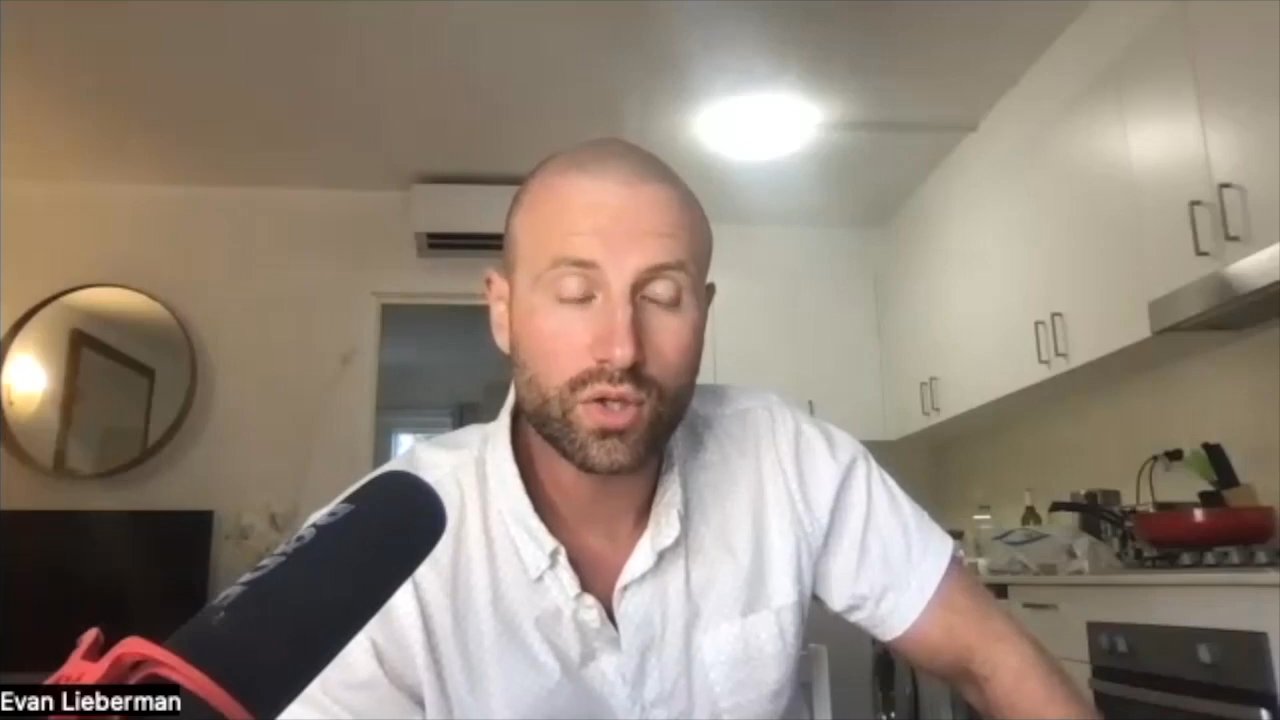
In this episode of conversations with Cadre, Evan Lieberman, our resident mental health and addiction therapist, sits down to interview another Cadre Creator, Dan Cunningham. Dan is a fascinating guy as an organizational coach, cooking instructor, and full time content creator. Evan and Dan discuss how Dan became an "influencer" and why his content resonates with so many people. In this video, Dan gives his top 15 Organization
Dan Cunningham is a coach, he is an organization expert, and he's all about how we can organize our life to live a better quality of life. Evan shared some of the tips and tricks I use to help clients make changes. Check out this interview.
People love those quick life hacks. What is it about those that you think people resonate with? I think everybody. I can relate to them because they're just tips that, you know, everybody can apply.
Mental health expert says he views mental health through different dimensions. As if we go through maybe each of these areas, you could share a hack. Along the way, we could learn more about you and what you do.
We'll start with life hack number one. This is one that I have had throughout my life, but I utilize it now. It is a system, and I call it the box system, for organizing. We all have different areas of our life that we focus on, and they change throughout our life.
Right now I'm an organizing coach for a startup app, Cadre. I am an influencer, an organization and storage influencer for Amazon. Im a home cook chef and I teach an instant pot cooking class. Keeps me scrambling for sure.
Life hack number two is all about passion. Think about what you were most passionate about when you were little. It really helps spark a lot of those forgotten passions that were so creative as children. Taking a trip back can really help people out in and doing what they love to do now.
A lot of the TikTok I consume is just, like, old wrestling stuff. I like to encourage people to revisit that stuff. If you love, you'll love it now, and even if you don't. They tend to spark other memories.
What else can you remember from when you were younger that you were passionate about then but don't do now? There's some things that I really would have enjoyed, but I never fully pursued. Don't lose the passion.
Have you worked with hoarders? I have, yes. It's extremely difficult. Every single one of them, I maintained a. A maintenance program with them. Just, there's so much, so many layers.
A lot of times people will reach out for help, but they don't have a clear understanding of what the process really is. It's like a form of obsessive compulsive disorder in OCD. It is very hard to break some of those heads. It needs a huge team effort to succeed.
As a young kid, Dan was extremely organized. But looking back, and he was extremely, extremely troubled as an adolescent. Organization, no matter what his career was in life, really served him very well. He ended up making a business out of it.
"I can sustain this passion and this work for, you know, as long as I'm alive, " says 60-year-old chef. "When you are living your sole purpose and you can really feel it, it's such a gift "
Time management would be really, really important. Treat your job like it is going somewhere to work. Preparation is gold, especially for ADHD. What's organized in the physical realm also affects your mental organization.
The only thing I don't like about it is too sweet. You gotta have like a good collection, you know, for different. purposes. I like like the old school crystal Louisiana hot sauce. Another one I use the most is like tapatio Mexican.
Dan: My brother just had a baby and his wife's peruvian. So now my nephew, I'm officially a teo. One of the first videos I ever saw is you were cooking. On the Cadre app. Why don't we talk.
Kitchen hacks are, I mean, they're just, there's so many and I probably 40,000 favorites. So we're going to give them like 15 here then.
The hat is freezing your leftovers in muffin pans. You can literally build your own meal out of these muffin portion frozen food pucks. It's a way to either cook in bulk and have stuff ready in the freezer at a grab.
Is it really bad to microwave your thing in plastic? I find that nutrition science is extremely unreliable. I always encourage people to follow their gut, right. If it works for you, then you need to do that for yourself. But I caution people at exerting their beliefs on others.
John: I would utilize apps, but also I want to go back to the passion and what you like. Find what you enjoy in health and wellness and incorporate those things into your day to day reserve.
Brian: I just love these little mini ziploc. pill organizers. Once a week, I'll put vitamins, meds or whatever, and I'll do it just once. It makes it so much easier than finding each pill thing and then taking it off. It's important, too, because of mental health podcasts.
Habit stacking is adding a new habit to a habit you already do. The more you do a behavior, the more habitual it becomes in you. To change anything, we have to be motivated enough to do it.
Yes, accountability is, I think, so huge. Having a plan is so important. Sometimes the more of these things you implement, the more likely you are to change a behavior. Some of those behaviors really equate to big changes in your life.
I think we maybe underestimate or some people don't. Of people, like having a cozy home or having things like, in their space. Kind of with the whole Marie Kondo thing, when that came out, everyone's like, you know, but having things that bring joy.
Matt Welch: My idea of when an organized room or home is different from yours or anybody else's. He says start small and start in a room where you spend most of your time and just do those things. Welch: Developing the systems that help a person achieve those goals.
What tip or trick would you do to help somebody make their home personalized to them? Let's spend a half hour in, brainstorm at what makes you happy, what. What you're passionate about or what you want to do, say, in a specific room.
Once you have the iPhone and you're like, how the hell did I live without it? You know? So it's like being open, I guess, to new things and not really realizing. But at the same time, there are certain things that you, that maybe are worth an investment.
Living out of two suitcases for four months is impressive. There's just so many different ways to live life now that aren't standard. But then also it makes you appreciate when you do have a more solid home base.
"I leave the house around noon or something. I have my bag just full of stuff. And whether I'm going to play volleyball or this or go for, go for a swim or, you know what, I'm prepared for what " You're redefining what is important to you, at least in the space you're in.
Make sure you're scheduling your time for leisure. Think outside the box. We all have to do something that's fun on. Get creative about having fun.
Have some kind of creative outlet. Could be art, writing, could be knitting. I think it taps into a part of your brick. Pick organization systems that are going to fit for your personality and also fit with your physical surroundings.
With ADHD, it is difficult to organize and manage all of these different things that I do. I tried so many times to implement a system of making lists, blocking time, and it just never worked. Finally realized that it has to be physical and that's okay. Have a different system I usually recommend.
Randall says the pen and paper system is stellar for people that suffer with ADHD. He discourage people from letting anybody tell them how to organize. Just find a system that works for you and rock it out.
There are five different love languages. It's gift, physical touch, quality, time, affirmations. determining what your partner, spouse, significant other's love language is can be helpful. tapping into your awareness of what makes you tick.
I call it the wheel of life, and it's looking at all the different areas of your life. How much time are you devoting to that and what is the satisfaction rating. Make sure you're scheduling time for what works for you as far as spirituality goes.
Another thing that I work on people is their chemical health. Sometimes its abstinence based, sometimes its, let's try to get back on track and balance. I would concentrate on some, some goal setting, you know, with addiction. If plan b doesn't work, keep trying something different.
My most, most viral video was using press and seal as a, I saw that as a cloak, as a clothing guard. It's really a great tip for so many different things.
Store things in clear containers. If you want to hide things, hide your favorite good. Or just label it different. That would be, that would be number 15 hack.
Dan: My favorite hack is to pinch a cheeseburger instead of biting it. Evan: I've seen people eat like that in Japan. Dan: Who doesn't love making life easier? Evan: Where can people find you and the organizer in their life?
All right, folks, welcome to conversations with Cadre. Today. We have a super special guest, and that is our very own Dan Cunningham. And as you know, Dan is a coach, he is an organization expert, and he's all about how we can organize our life to live a better quality of life. How do we arrange our space? How do we find tips and tricks that help us be more efficient to make us, overall happier? So it's really cool, someone who's a mental health professional, a therapist, how a lot of these can really apply to the work I do with my clients.
And I shared some of the tips and tricks I use to help clients make changes. So I learned so much from Dan. I know you will, too. So check out this interview. All right, Dan, welcome to the show. It's awesome to have you here. Thank you. It was great to be here. The organizer man in the flesh. Thank you, Evan. Thank you for having me. Yeah. The digital flesh. Yeah. So you and I, we chatted before, and we came up with this idea because I found, you know, in reviewing your content, it seems like one of the things that people just love the most of all this stuff that you do is, like, some of those life hacks.
And it seems like it's very all encompassing, right. In all the work that you do as far as organizing and everything that you teach people, but it seems like people love those. Maybe it's the TikTok era. People love those quick life hacks. What is it about those that you think people resonate with? I think everybody. I can relate to them because they're, you know, they're. They're just tips that, you know, everybody can apply. Every. Everybody relates. It's kind of like, what makes a joke funny.
And if it's relatable, I think Alan DeGeneres even has a stand up routine now with that title. But if it's relatable and people can relate to it, I think they resonate with it. I have always been really into lists of tips and tricks. I can remember combing through cookbooks and Readers Digest, and when the online world started creeping into mine, it was just a wealth of additional knowledge. So I don't know. I love them myself. I, like, maybe they pick up on my excitement about them. Yeah. So watch some of those videos that people seem to resonate with most.
And, I mean, in all your videos, you're like this, but you have this, like, energy and excitement about it. Yeah, I think there. Yeah, some. Some of those things, those little tips can really make a difference. I just thought of one. One of my favorite ones. Maybe I'll share it a little bit later on. But it's a hack to eating a cheeseburger that I show everyone. I want to know that I don't have it. I don't have a cheeseburger eating hack. And, like, you'd steal this one. I mean, because I didn't, like, I invent.
It's not like I invented it or anything, right? I mean, I don't know who ever invents any of these. You know, it's all just gathered in research. I just. Some of them I may have along the way, I'm not sure, but certainly not an inventor. Well, I'll share that one. I don't want to be the first one to give a life hack on. Wait on your. What's that? We'll wait on your cheeseburger. We'll wait on the cheeseburger one. We'll wait on your burger hacking. Yeah. So what we talked about was in this interview going through, we'll see how many we get to.
But your top favorite life hacks. And I thought, since this is a show about mental health, one of the things I do with clients and what we work on and the lens in which I view mental health is through different dimensions. So there's something I do with clients. Sometimes you'll see it known as the balance wheel, and it's just these different dimensions of your life. And I'll ask clients, okay, well, how happy are you in each of these areas? Now, someone who's in a better place may have a wheel that looks a little more bounds, right, where the in which dimension is most highly weighted.
For example, their physical health, exercise health. As far as just moving your body, it's part of physical health. But what do you do for fun? A creative outlet, your relationships, spirituality, a sense of purpose, your work, your professional life, what you put in your body, what you consume, what you eat, even your relationship to substances. These are some of the things that we look with, even on my first session. So I thought that would be cool. As if we go through maybe each of these areas, you could share a hack, and along the way, we could learn more about you and what you do and how folks who are listening here could benefit from what you have to share.
How does that sound? Yeah, that sounds great. That sounds awesome. Awesome. I can't wait to share all of the knowledge. Yeah, I can wait to hear some of these, too. I'm excited. I like that format. Yeah. We'll start with life hack number one, and that will be just a life hack, representing where you're at right now, just to introduce the audience who you are and what you do. A life hack that I have right now. Okay. So I. This is one that I. That I have had throughout my life, but I utilize it now, and it is a system, and I call it the box system, and I implement it for a lot of people that I organize for.
We all have different areas of our life that we. That we focus on, and they change throughout our life. So right now, you know, I've got multiple areas, and when it comes to paperwork or anything that relates to those specific areas, I have a box, and depending on what those are, it could be just a box for paperwork or a box for art supplies or whatever, but I keep that general filing system in place so I'm not on a rampage looking through an entire pile of stuff to find a form that's, you know, that only applies to work I'm doing with Amazon, say, or whatever, so.
And I'm doing a project with the client right now. And she has three main areas of focus. She has her main job, and she's on two boards, and she struggles with the confusion in those three things in the paperwork. So I'm teaching her to keep those three areas separate and filed separately. And then when you need to go for the information, there's less of it to go. And that's helped me throughout my life in multiple different situations and different things I'm doing, whether it was school and work or work and leisure stuff or.
I sing right now, I'm in a choir, so I keep all of my music in one spot and that. I love that there. So you have, like, a box for each one, right? Yeah. And where do you keep the box? Is it by your desk or. How does that look? Yeah, I mean, if it's different, you know, it depends on. On what's happening. Right. So if it's, you know, if it's office related or paperwork heavy, it would be near the desk and, you know, to piggyback on this. Well, actually, I'll wait. I'll wait. Before I share the next tip.
It does relate to this one a little bit. Okay, cool. It might be my office. So who are you, then? What are you? What's the. What's the summary? The quick summary of who you are, what you do. Right now I'm an organizing coach for a startup app, Cadre. It's a health and wellness app that you are aware of. And I am an influencer, an organization and storage influencer for Amazon and I post creative content to bring my favorite organizing products to light for people that are interested. So I do that for Amazon.
Im a home cook chef and I teach an instant pot cooking class for the senior citizens in my town at the senior center. Its this brand new multi million dollar complex that we just finished last spring. And they allowed me the honor to begin organizing their commercial kitchen so I can film products in there and do my cooking classes. I create content on TikTok and Facebook and Instagram and yeah, if you could combine three mix and organizers with a cook and a coach and that's what you get with me.
So. So that's a lot of boxes, huh? Keeps me scrambling for sure. That is a lot of boxes. Yeah. I mean, even, even digitally there are, there's organized keep together there too. So that's awesome. So all right, so life hack number two, this will represent how you got here. So who were you in your past life and how did this come about? I would say this is all about passion. I did a lot of work, a lot of core, I call it core work in purpose, in our life purpose. I've done that on and off. I've always had a desire to be better, to learn.
And then in that I really focused on what I was passionate about. And some of that was organic that I knew from childhood, and some of it was things I was passionate about, you know, say in high school, but hadn't, you know, have hadn't taken part in currently. So, yeah, I'd say, you know, I do this workshop and one of the sections is, is this. It's concentrating on our purpose and our passions. And a lot of people get to the point in life where they've forgotten what they're even passionate about.
Maybe they get busy and they concentrate on a lot of other people, other themselves, or they lose their fun in their work. But one of the, the best tips or tricks that I have is in this area is to think about what you were most passionate about when you were little, when you were a kid. It really helps spark a lot of those forgotten passions that were so creative as children. So taking a trip back and remembering some of that stuff can really help people out in and doing what they love to do now, which is what I'm doing now.
I'm doing everything I love to do. So that's kind of a really long answer to a tip and trick. I mean, I guess. I guess it is, you know, there's a lot of buildup, but then it's, you know, essentially, you know, if you're feeling lost or something. You know, look, thinking back to as a kid and what you loved and using that to. Yeah. So. Connecting with your inner child in a way. All right, so me as a kid, I really liked wrestling. Yeah. I really like pro wrestling. So then the question is, how do I.
What about that? How do I use that? So let's say. Let's say I told you that you're working with me and I'm lost. I don't know. I love going to the blockbuster, and I was never someone who likes. I don't. I didn't even have cable tv. I didn't even know how it worked. But I just like going to blockbuster and renting, you know, the pay per views. I just thought that's kind of what wrestling was for a while. I didn't realize it was, like, on every week or anything, but, yeah, I don't know. What. What do I do with that?
So have you ever been to see, you know. So I went to lens. Yeah. And when was the last time you did? Oh, my God, I don't know. I mean, I was probably about 14 or something. I want to say buddies, when it came in town to a w. Yeah. I would go again. Go again like this. Yeah. And then, you know, if you love, you'll love it now, and even if you don't, you know, all right, well, you know, you would. You don't have it now. But what I think things like that do is they. They tend to spark other memories or other memories of other things that you did around that time when you were into that, you know, who knows?
But, oh, my gosh, I think it'd be great just to hear what you said after you went, I have some friends that are really into it. And they go, oh, no, that's the. The demolition derby cars are those big tire. The cars that were all over. Yeah, I went to some of those, too. I don't say I was passionate Vaughn shows. I like to encourage people to just, you know, revisit that stuff. And if it sounds good, I mean, if it's completely off track, well, you know, no, I never thought about it, but that I would totally do that.
And one of something really funny is, like, I don't know where. I don't know where it was. And maybe it was from, like, TikTok, right. They started. I started seeing some WWE videos, you know, particularly talking about, like, the nineties golden era and then the attitude area era of the two thousands. So I get these videos, and then TikTok realized I was, like, enjoying them. So half of my FyP is just old. Like, it's just content about, like, stone cold Steve Austin and the unders. It's like, I just consume.
So, like, now I know, like, more about it than ever. No, I don't go back and watch it. You know, I haven't watched it since, like, the early 2000. Like, followed it to any degree. Even so, it's just kind of funny now. Just, like, a lot of the TikTok I consume is just, like, old wrestling stuff or on fate and, like, on Facebook page picked up on it, too. So I just get all sorts of random stuff thrown at me. I love it. I love it. What else? What else can you remember from when you were younger that you were passionate about then but don't do now?
It was like I'd forgotten about. It's a good question. I mean, I think. I think as a kid, starting to sound like a therapy session, but as a kid, I didn't really have a ton of interest, really. I was kind of. I was a little lost, you know, like, I kind of liked a little bit of everything. And, I mean, I think there's some things, looking back that I really would have enjoyed, but I never fully pursued, like, I started to, but I kind of withdrew from it, you know, like, something like martial arts.
So, like, a lot of these, like, a lot of these things that I should have done as a kid that I was interested in, I ended up, like, going back and kind of doing later once I got sober, because, like, then I went into, like, an addiction, I think that filled this void of missing a piece. Yeah. So, like, going back, like, I probably should have been on the wrestling team. Right. I probably should have done some kind of martial art. Right. And then also, like, acting like, I. Like, that would be something I probably would have been interested in and creating, writing, all those kind of things.
And now, obviously, much later on, I get to do that just through my own platform and TikTok and the writing I do for videos. So I guess it's a long way of saying, yeah, I didn't really find it, you know, as a kid. Right, right. Well, you know, it's interesting. Just. Just the things that you mentioned would be. Would be worth taking a peek at. Yeah. And that's, you know, that's kind of what I'm doing. And I think with the wrestling things. Love that. Brainstorming practice. Yeah. With, you know, with, like, the wrestling, if I think about it, right, it's about entertainment.
Right. It's about showmanship. I just liked, you know, I liked the characters. You know, the. This is grandiose. Seven foot tall, you know, like, I just, like, binge on, like, andre the giant. Stories of him drinking two cases of beer in an hour and a half without even feeling buzzed and, you know, him farting for 60 seconds, clearing rooms and, you know, no wonder why you loved it. So, yeah, just. I just like the stories. Yeah, it's hilarious. Yes, it's extremely entertaining, for sure. So, I mean, just, you know, get it.
Don't lose the passion. And, yeah, it's odd how we took kind of a turn at, you know, a whole different area, but I think it's a really important area to look at, you know, as a coach, as an organizing coach. One of the things, the general ideas in organizing that this really does apply to is people hold on to items that they don't really need anymore. Like, I'm never gonna downhill ski anymore. My knees can't take it, but I loved it, right? So I got rid of my skis, and a lot of people are holding on to, you know, golf clubs or bowling balls or, you know, items that do not serve them anymore and no longer will.
We call that shedding. And so that's something that I would also add here, in addition to our finding your passion, is in finding your passion also looking at the things that you're not doing anymore that you have collected items for that are now just eating up space. That's. Yeah. I don't know why I didn't think about this before, but have you worked with hoarders? I have, yes. It's extremely difficult. It's really difficult. And it's challenging. It's very challenging. It takes so many people to really.
A couple clients that I have now that will call every now and then, you know, it's the indication that they're feeling that urge to do something again. And then, you know, through whatever process, the brakes, the brakes get put on. But I'd say, you know, I did have success with about four or five different hoarding cases, and every single one of them, I maintained a. A maintenance program with them. Incredible, because I don't think there's really good success rates. I mean, those are, like, really extreme cases.
Like, that's incredible. Yeah. Right. And I think. I think the odd, you know, it's just like, you know, with anything else, with changing your diet or implementing exercise, if you really want to do that, it's about the long haul. You know, it's about upkeep and accountability and all that stuff. I think it all plays a big part in making that happen. And it's such an overwhelming process for hoarders. Just, there's so much, so many layers. How did they find you? How did you get these boarding cases?
Just through the regular channels of contact I'd see initially, I think at the very beginning, I probably was, I think I had ads on Craigslist. Craigslist and would run local ads. And then it wasn't long before it was just word of mouth, and clients would just come to me organically. And then I guess the last ten or 15 years, it's been influenced so much by social media and all of that, for sure. Yeah, because with hoarding, I mean, there's always this emotional component to it, right. Letting go of the past so often.
My understanding is there is trauma. It is such an extreme behavior. I mean, people living in these just horrific circumstances that others from the outside would just, you know, makes your skin crawl, you know, send shivers down, you know, watching that show, you know, how hazardous it is. I mean, there's something under that. Absolutely. It's, you know, just even from watching that show and from my understanding of psychology, there's, you can't just go in there and organize stuff and throw stuff away because you could do that, but then it's just going to come back if you don't deal with the underlying issues.
What's your strategy there when you're working with these clients? To get under the hood a bit and do the deeper work, really, until you get under the hood, the project shouldn't really start. There's speed bumps along the way always, you know, there's clear indicators that it might be time to pause or have different conversations. That may be difficult, but I think really identifying, locking in to what traumatic situations did transpire, that played a part in the behavior. It's so important to identify that, and it's not.
It doesn't do any good to identify it halfway through or at the end. You know, it's in that first step is, I think, the most difficult one. A lot of times people will reach out for help, but they don't have a clear understanding of what the process really is. And they tend to downplay. They get scared. It is literal paralysis. I mean, theyre just paralyzed in their behavior and their environment, and its a major, major thing to literally dig out of. So, yeah, I would just do my best, really, to try to encourage some awareness around the situation.
And in that, you know, therapy is always recommended and, you know, that's something, too. I can help somebody with a hoarding situation. But I'm not a therapist, and I can and do refer clients to get additional professional help. So that's what I meant, really, at the very beginning, such a huge team effort, you know, to succeed. You know, they're a good therapist and a really good action team that's doing a lot of the physical work and then the organizer kind of coordinating, kind of like a project manager in between the therapy and the actual, the grunt work.
So, yeah, I think the first step is really kind of tapping into to what happened. Like, tell me about when the house wasn't. Wasn't like this. What water does it like? That's awesome. That's incredible that you've had so much success doing that. I mean, I know. It's just, it's like a form of obsessive compulsive disorder in OCD. I say it's a very sticky disorder. Right. It is very intense. It is very hard to break some of those heads, very compulsive, and it's very hard to break. So that's super cool.
So how shifting a little bit. I'm assuming you didn't turn 21 or graduate from college or something and then just hop into being Dan the organizer man. Who were you in your past life? And then how did this happen? And give me an associated life hack. Life hack number three. Okay, I got you. All right. I'm up for the task. So, you know, I have, and according to my baby book, my mom has written this in my baby book. It's actually on my website, a little extra. My aunts and uncles and everybody can verify that.
As a young kid, two and above, I was extremely organized. I was always keeping my things tidy and keeping everybody else's stuff tight. I clean up my brother's stuff, too. We're a natural. I was a natural one. But looking back, and I was extremely, extremely troubled as an adolescent. Lot of different things going on. And looking back. As I had entered therapy in my adolescence, the organization started to make sense. I realized that the environment that I grew up in was really chaotic, and it was unpredictable.
And I could see how organization was my way of managing the situation the best I could. And as long as my room was in order and my things were looking good and where I could find them, it was one part of my life that I could control and have some influence on one thing. I could count on also just being anxious and really anxious. As a youngster, I had to develop systems that would help me find items or make sure I didn't lose them or because it would always cause so much anxiety, you know, if I was.
If I was holding up the crowd or, you know, if I never wanted to make waves. So I wanted to make sure, you know, the best that I could, that my stuff was in order so I wasn't the one, you know, getting yelled at for. For keeping. Keeping everybody held up. So, anyway, as I, as I. I grew older, it just became a way that I just think that way. I just think organized. I'll sit in a room and scan the room and just think about that here, or, oh, I take that out of here. I'm constantly in this internal dialogue where I'm creating different spaces, faces where I am.
But organization, no matter what my career was in life really served me very well, and I ended up making a business out of it. I didn't end up full time on the organization path, and actually, it is just a part of what I do now still. But I really dove into it during COVID and so many of us. Yeah, it really started developing a brand and, you know, honing in on the information I really wanted to convey to people. So what did you do before? What was your past life? Well, I had immense tons of experience in the hospitality industry.
My grandpa was the president of the American Restaurant association, and he, until about the year I was born. And so we, I was in restaurants all the time, and I also worked in restaurants when I was of age. And so I had tons of experience in hospitality, was in the airline industry for 15 years, and trained service for one of the major, major airlines. And I also was not only into diving into myself, but helping other people because I had basically transformed my life and really changed my entire focus and turned my life around with the help of other people.
It was so important for me. It was just one of my passions to do that for others. It was something that I was so moved to do, I just couldn't not do it. Yeah, eventually, coaching and organization came together. I've always been. Been passionate about food and cooking, and so, man, kitchen organization has always been my favorite thing to do as far as organization goes. But when I blended everything together, it happened organically. And I really, there was a time where I thought, I want to do everything, I want to do all of this, but it just doesn't make sense.
I didn't. I couldn't see how. I mean, I always knew being organized affects the way we think and feel and show up in the world. I knew that for sure, but I couldn't see how it was a career, you know, like, but it just kind of. And food, you know, the three pieces, but it really organically fell together, and I've just found myself in a sweet spot. And really, it. It's such a gift because it's so late in life. I mean, I'm 60 years old and just one year into a whole new career path that I'll be able to do forever.
I mean, I can. I can. I can sustain this. This passion and this work for, you know, as long as I'm alive. How much just really, how much of really living, you know, having a job like this that you're passionate about first? I never. I never feel like I work at all. I feel like every day is Friday at five. It's like, it's so fun. You know, some days are a drag, you know, I'm not saying that I don't have the same life challenges and struggles and worries and all that still happens, but, boy, is it different when you.
When you are living your sole purpose and you can really feel it. It's. Man, it's something I always heard people talk about, like, I love what I do and, you know, love what you do and you never work a day in your life, all that stuff and that. I really can feel it now. I know that to be true from experience, it really is fun. Yeah. Yeah. It's rare to be able to find something like that. And I feel like I have. In many ways, there's always going to be things, even in full time influencer at this point.
But so much of what I do relates. I don't to know if I really want to be. I don't know if I want to give up therapy or managing my practice or building my housing program. It's like, I don't want to give that up because I do enjoy that, too. But all that blended together, having those many boxes, I could really relate with that. People just know me as that person that has all these different boxes, and they're just kind of bizarre. I just live like a very. The way my life is set up is just very bizarre.
No one understands it, and I don't. I really. So people are like, wait, what do you do? I'm like, I have no f****** glue. I do, like, now this, this and then this and then what, how? And I don't know. Which brings us. Fantastic. Which is another topic that I'm gonna ask you about in a little bit, but which. Which would be ADHD and. Oh, yeah. And I'm assuming you've come across absolutely some of us for sure, but so what would be, because we, we hit on that. What would be a work? And we're talking about work and vocation.
What's a good work? Another good work. Hack. Work, hack. I think so many people do so many different things. So it's, you know, it's hard, like right away, I think, okay, you know, something for the desk or something for the office. But really, work means so many different things to so many different people. So to people that never leave their house to work or to go to work, I would say time management would be really, really important. That would be treat your job like it is going somewhere to work and block out certain times of the day where you're focused on work and not on interruptions.
It helps in many ways. It helps with productivity, and it also helps with a sense of completion at the end of the day where you really know, you set some guidelines, that you completed those guidelines, and it gives you a sense of accomplishment. It also gives you something to measure, you know, your, your dedication or your success. By now, if you work outside of the house, I love this tip, and it's one of my favorites. Throw a bag or a box or laundry basket, something that you, you know, carry to the car.
Or. The point is you want to have something by the door that collects items that you need for the next day as you think about them the night before. And it's so, it's such a relief in the morning to know that, you know, you already thought about the day. You have everything you need at the door, and so you're not scrambling around the house looking for keys or your wallet or your whatever else. If it's going to rain, you got an umbrella in there. Or if, you know, it's cold, you got the right layering.
Or, you know, if you're going to a meeting, you have what you need. Doing a little bit of prep the night before is so great for anxiety. That's brilliant. That is true. And, yeah, if you are able to get those things prepared, you just, you feel better. Anything about that, and I'm sure this is so much of what you do. This is not just about organizing. It's like having your space, your things. What's organized in the physical realm also affects your mental organization. Right. There's this connection with how we.
Because everything is a concept. This table, everything around me is a concept, but it also lives in a place in my mind of what I understand this cup to be. So that all lives in different places and serves different purposes. So if we can organize the outside. It sounds like that also helps with the inside and would reduce that anxiety of knowing where things are. Knowing that in the morning I have just a little bit more time, because while I had a little bit of energy left over motivation, I was able to prepare.
Yes, indeed. Yeah. Preparation is gold, especially for ADHD. And, you know that feeling like you're scrambling, it could be boiled down into the simplest example, which is, say you can't find your keys, right? And you're getting ready to route the door, but you can't find your keys and you haven't really, you know, you're just right on time. So, you know, you're late already and you're anxious and you're. Now you're really anxious because you really can't find your keys. And so you finally do find them because, you know, you had to look so long because you didn't put them on the hook or you didn't put them where you knew they would be.
And so now you're going out into the world carrying all that anxiety and that frustration. And a lot of times, the smallest things you encounter out in the world are just going to continue to fuel because you haven't had time to really kind of relax into the day or feel any sense of calm. You know, you started out before you left the house on a rampage. And. And I like to use that example. It's like the smallest things can set us off and anything we can do the night before to prepare for a day. I mean, I encourage it.
100. It's just so valuable. Yeah. That makes so much sense because it's like when you leave the house or if you're running late, like you said, with time management, I make it think of so many times where you're, like, trying to drive somewhere, your weight, it's something important. And you're driving really fast and you're just trying to get to this place faster and you're just. And then you get upset at everything and this guy's driving too slow and you're putting yourself probably, like, physical harm, risk and risk of getting road rage.
Yeah. And it's just such a horrible feeling to be behind. So it's like, that's a very tangible example about how being more organized can really make a difference in your mental health. And I think especially for folks with ADHD, when I describe as people, I'm like, folks with ADHD are just like everyone else, just more so. It's just more extreme. Right? Everyone struggle with some of these things, but with us it's like we lose misplacing things. I mean, it just, I think for folks with ADHD, it's like life is like a constant battle on these little things.
Like every day your life revolves around kind of battling some of these deaths. Exhaust. Very exhausting. Yeah. Here's a funny example. I was with ADHD. It's a very funny disorder. And people like, you know, get a little weirded out when I talk about certain mental health disorders being funny. And others are just not funny. Like, depression is just, like, not very funny. m. When I just woke up. I guess there's something a little funny. But the ADHD, there's just a lot of goofy stuff that happens with it, right?
Like, for example, so the other day, my friend, she buys me this very nice bottle of hot sauce. You know the trough, you know that trough truffle, right? It's a very beautiful bottle. So I go, I get this chicken wrap, I go home, and I'm ready to eat this. I'm in my hotel room at the time. It's like last week I opened the bus. It's very nice top. It's like this, like geometric, like ten sided beautiful black top. I go, I put the hot sauce on, I eat this wrap, then I go to put the top back on. I can't find the top.
I mean, I was sitting at the desk, I took the top off, I put the top down, and I went insane. I could not, I mean, literally, all I did, I could not find it. And it drove me crazy. Like, I, when I dug through them, like, maybe I threw it in the garbage. I dug through the garbage. So now here, I got the bridge right here. So here's how I have my hot sauce. Now. This is the top. Oh, again, you never found it. I never found the top. It's driving me say, so literally then I had to move. So literally, I just have a paper towel.
Like, just ragging paper towel over. It's a. That doesn't. Yeah. I didn't know. I've always wanted to know how that hot sauce is. Is it good? It is good. It's very good. The only thing I don't like about it is too sweet. I don't really like sweet. You know, like, sriracha is like a little sweet. That's fine. Yeah, it's a lid. It's delicious. It's just a little too sweet for me. Yeah, I still like it. If it was more little vinegary and, uh, less, I would absolutely love it. But yeah, I went into like a savvy hot sauce.
Oh, yeah, that's not too bad. Yeah. Otherwise. Oh, sorry about that. I'm just saying I'm a huge hot sauce. What's your favorite? You know, there's this really good hot sauce. Not many people know about it. It was made in the town I grew up in originally and it's marketed now. But it's called Clancy's fancy hot sauce. And that's just an old, like, whenever you see it, it's kind of. I don't know, it just brings me back. But I think the one I use the most, I can't think of the name of it. It's at the grocery store and it's next to Pete, you know, and all the others.
But it's a habanero hot hot sauce monero one. Yeah, yeah, yeah, I love them. Yeah. You gotta have like a good collection, you know, for different. Serve different purposes. Like I got kind of like an all purpose, like, I like like the old school crystal Louisiana hot sauce. Right? Yeah, right. Or the New Orleans at a restaurant you go to. Right? Yeah. 30 for a huge bottle. It's 32. Yeah. Sometimes I'll get those massive bottles. I also probably one of the ones I probably use the most is like tapatio.
Mexican. I really like tapatio because like every morning I eat like eggs and beans and. And I throw that tapatio on there. It's probably one of the. Go to the most I'll buy. Sometimes I'll buy those. I'll go to the mexican grocery store, buy a massive bottle, and then you have to have, like, I'll have the small regular bottle and then that's a lot. With the massive bottle. That's a little hack. So you save a little bit of money. Yeah, money thing. So now I'm, you know, I'm in Australia and one of the reasons I'm here is my brother just had a baby and his wife's peruvian.
Right. So now my nephew, I'm officially a teo. Okay. So you know uncle in Spanish, right? Right. So now my nickname is Tapatio. That's adorable. Fight the uncle, I guess. Yeah. Yeah, I think it's great you were there to be for that. Yeah, it's super cool. Yeah. I mean, you and I definitely have that wild too, clearly for food, you know, I'm also like a. And so it's always fun to share, little tips and tricks. And I think one of the first videos I ever saw is you were cooking. Yeah, yeah. On the Cadre app.
So, yeah, and then some people have listened to probably her because I've had, you know, like Doctor Everett on, on our last show, I had Carrie. Doctor Carrie on. So some people here, listen, are familiar with Cadre, but yeah, so Dan and I, that's how we met as well. See, my wife and my last three, three out of four y'all have been Cadre folks, which has been great. But yeah, so making videos on that app and, yeah, so I do make my cooking videos and some of my followers on TikTok and stuff, I do post, like, I've done a couple videos, like with cooking, or I'll just sometimes post them as, like, stories and things like that.
But, yeah, so why don't we talk. Yeah, why don't we talk about that? Like health, nutrition. I mean, do you have a passion for food and cooking and nutrition? And so if you could share a life hack for that and talk about why that's important. Oh, my goodness. Kitchen hacks are, I mean, they're just, there's so many and I probably 40,000 favorites. That's why people have to follow you after. So we're going to give them like 15 here then. Yeah, yeah. So, yeah, let's talk kitchen. There's so many, but I would say this is probably one of my most popular.
And there's actually a product that was developed to help with this same hat, but, and so the hat is freezing your leftovers in muffin pans. So say you make a pot roast dinner and you've got pot roast, you've got mashed potatoes and veggies. And instead of throwing them all in a container and throwing them in the fridge, make muffin cups. And I like to use the silicone ones. So these pop out really quick. But, yeah, fill each little section with the potatoes or the veggies or the pot roast, not mixing them, you know, but keep freeze them all separate.
And then we call them food bombs. And so you pull, you pull them out when they're frozen. You pop them out of the muffin pan and you put them in ziploc bags or, you know, whatever container you prefer for the freezer and mark them. And that way, when you want to, when you're really busy but you still want a good meal, you know, you can pull out a mashed potato one and a pot roast one, and you could do like a curry sauce from the week before or, and you can literally build your own meal out of these muffin portion frozen food pucks.
It's so cool. So, so you put it in the muffin first, and then you take it out right away, then freeze it in the bag so it just shapes it. Or you freeze it in the muffin pan? You freeze it in the muffin pan? Yeah, you fill the muffin pan up with your leftovers and you throw it in the freezer. And once they're frozen and set, you pull them out and pop them out of the muffin pan and put them in a ziploc. And you collect. You know, say you got a bag? You know, we have a bag of. And, you know, I have cooked just for this purpose.
And the product I'll tell you about in a minute was designed for this, too. But, you know, if you cook a big batch of mashed potatoes and you're only going to have a serving, you can hold. Pull out these silicone muffin pans, fill the whole thing up with mashed potatoes, throw it in the freezer. When it's done, pull it out and pop those out and put them in a ziploc, put them back in the freezer marked so that when you come home and you want mashed potatoes to go with anything, you just reach for a frozen puck, throw it in the microwave, and you're good to go.
Yeah, I've got a video on this. It's not as complicated as it sounds. It's really just, it does sound easy, you know, by dividing your food up and freezing it. So, yeah, it's a great way for kids to get what they want if they're picky. Say one of them likes mashed potatoes, but the other one won't eat them. They like rice. You've got, you got everybody covered. You throw everybody's little puck in a bowl and microwave them and everybody's happy. It's really good. So super cubes is the product, and they're great, and they're designed for this.
You fill them with food. They come with lids. They're sturdy, so they don't wobble around. And they hold your food in the freezer while it freezes up, and then you pull them out and pop them out. They're silicone, so the food pops right out. And then you've got, you've got frozen lasagna ready to go or a casserole in the freezer ready to go. You just pull it out and put it in the proper serving. And that it's shaped like so it's just a great tip for people that want to focus on better health, cooking at home, money saving, time saving.
And it's a way to either cook in bulk and have stuff ready in the freezer at a grab or utilize your leftovers and saving money that way. That's, that's awesome. I think that it was someone who is big into food, I think for a long time, I don't know if it was maybe decades, where the freezer became kind of like a dirty word, where it's like you don't want to freeze anything because you're ruining it, but then you kind of realize later that, wait, this is actually one of the best ways to preserve the freshness of something and that you could also restore it back.
I mean, not everything. Like when I freeze spinach, it always tastes weird after like it just never really tastes the same. But like for example, like last night I ate pizza and my first thoughts, ill put it in the fridge but im like, I doubt im going to eat it unless I eat it tomorrow. Its probably not going to be that good. However, if I take the pizza that I got that night, I throw it in the freezer, itll be good for weeks or more. I could go back and eat it and its going to taste fresh. Ill be able to put it in the oven, not in the microwave, and get it back to its like kind of crispy form and it'll be much better.
But I think we kind of got away from that too long and demonized the freezer. Right. I just was reading some stuff about the, the pole back to canned and frozen produce. It's like you said, it was villainized almost. And really the deal, the way that stuff is processed now, especially frozen food, it's flash frozen right after they pick it. It's at the peak for freshness and vitamins and minerals and whatever benefits can offer. It's more nutritious to buy frozen than it is really to buy off the shelf a lot of times.
So, yeah, I really encourage the freezing process. You can do freeze, freeze ahead meals, bag meals for the, for the instant pot or the slow cooker. Yeah, there's, there's all sorts of great shortcuts for the freezer. Like you said, it's not for everything. Yeah. Cause I'm sure you see too for clients, you know, that nutrition piece, just like I see in these dimensions of happiness we're going through that, you know, what you put in your body is important. So I hear. And that's affect how you feel and your overall physical health, and I found that, too.
I brush up on all these things. Let's say I have a client who's eating out all the time. They're not as healthy as maybe they could want to be. It's still my job as a therapist to address some of these issues, even though I'm not a nutritionist, per se. But these are some of the hacks that I give them as well as far as making behavioral changes, and I'm all about, that's why it's cool to hear some of these, because my job is to help people make behavioral changes, which is extremely hard. Like, making any change is extreme.
And I tell folks, I'm like, there's nothing I could do to make this change easy. And anyone who does tell you that is full of it. That's where all these do this quick or blah, blah, blah, doesn't work. I'm like, if you do these hacks, if you do these little tricks, if you set up your change in this way, it's going to be as least painful as possible, and you'll be able to get into that place where the hardest part of change is the actual process of going from a to b. But then eventually, once you get to b, it isn't always that daunting.
It becomes a new habit, a new routine, and then it's hard to even get out of your new routine if you really have done incorrectly. So that's why I think these are really cool. And then with nutrition ones as well, like, just the art of, you know, there's some people that are, like, obsessed with Tupperware, you know, Tupperware fetish people. But, you know, those are, those are, like, your people. I assume those are people. Well, I do have one thing that I see at every organization product is food storage hoarding.
You know, food storage container hoarding. But there is also this outrage right now with the p word. You know, plastic. It's there. It's a real hotspot with a lot of people with the BPA. And, yeah, so, you know, it's, anytime I post a tip or, you know, a trick that, that has anything to do with plastic, there's. It gets a lot of comments. Yeah, there, there is that out there. So, like, for example, when you're like, oh, yeah, I've breathed. You know, when, you know, it's because usually it's, like, heating and freezing, you know, oh, like, okay, if you freeze this in the muffin pan, is that gonna be an issue with things leaching or.
So is that, like, how much of that as far as, you know, like, is a myth. Like, is it really bad to microwave your thing in plastic? Like is that, you know. Cause so many of these things in nutrition especially, I find that nutrition science is extremely unreliable and maybe not even just the science itself, but how it's interpreted. And some of the letters that get started kind of like, like, I like as far as, like, milk substitutes. Like, I still really like soy milk, right? But then that got like a bad rap where it's like you're going to like, grow breasts as a man.
Your estrogen levels are going to. And I was, like, afraid. But then you realize, you look at the research, it's like, yeah, you would have to drink just insane amounts to even have that effect. Right. You know, so, yeah, and there's, some stores don't even sell it now because no one buys it, but I really think it's the best milk substitute as far as taste goes. Right? I mean, you know, there's, there's definitely worse things you could be doing for your body. So I always encourage people to follow their gut, right.
If you. If it works for you, then you need to do that for yourself. But, you know, I caution people at exerting their beliefs on others. And, you know, what you said is so true that the industry, the food industry, I mean, you know, butter's good. Nope, margarine's better. Nope, butter's better. Nope, margarine's. I mean, literally, there's England like that went on like that for years. And so, you know, maybe plastic is hidden and maybe, you know, it's. And I'm sure, you know, there are, there are better things to use.
But, you know, I think in general, just, just allowing people to practice what they, what they feel and what they believe in and, you know, letting, letting other people do what they believe in, this is fine. You know, unless there's some world kind of neglect going on or there. Olive oil. But, yeah, I mean, I heat food in plastic deli containers all the time and I'm going to continue. But I also. The cheap, why, if it's like a really whimsy cheap one, you know, it's going to, like, I feel like if you heat it and it starts to smell bad, then that's like, yeah, and the RPA, you know, hey, you know, people should be focusing on that if they can, you know, using the BPA.
The product that I endorse, that I, that I promote is BPA three. And they're just like the deli containers that you use. That you see on the deli counter. You know, I'm sure they vary from place to place, but this is, they're that size. The lid that fits everything. Okay. But, yeah, the Tupperware. The Tupperware thing. I mean, when you think about that, we've been people my, in my generation, we grew up on Tupperware. We've been eating out of plastic our whole life. Yeah, well, so many things we go, we'll find out later.
Oh, yeah, no, that's only if you do it like eight times a day for every, well, you know that we need some context on this. And, you know, because what happens, and I caution a lot of people on this too, is research comes out and then we misinterpret it and someone puts it for clicks. They put in a headline of this is bad. Everything. You and I always love this one. Everything we knew about blank is wrong. It's like, no, probably not. You know, Mike, he sound like we just came up with that s***. Yeah, it's like, yeah, you know, crazy.
And you see that with diet where it's like, we wouldn't, this like big thing, this big shift of like, hey, maybe if you want to avoid heart attacks, you shouldn't eat, you know, a lot of saturated fats and this, that. And then it went to, no, actually it's carbs. And then you go back and it turns out like, no, it's still, if you eat a lot of saturated fat, like, you ever increased risk. It's not just this like weird magic thing of, well, if you eat, um, you know, a lot of, you know, if you eat like certain carbs and you're not, I don't know, just like, it becomes this weird, like bro science, and then you just go back to like the ba, I mean, a lot of times it is wrong and our views change on it, but I don't know, that's one, it's like, I feel like you have to be so careful with.
And I just kind of throw my hands up half the time and just say because I guess, I mean, I understand the sentiment of, like, you have to do like, what you feel is right, but sometimes, like, I don't know, you probably shouldn't do what you feel is right. Yeah, I think I was just talking specifically in relationship to plastic now, like, do what we feel like. I feel. I wonder who you're comfortable with. But like, but like, first do some like, research, data research, right? No, I'm just, yeah, but, yeah, but then we do it with a bias and we just end up confirming our own bias anyway, you know, so just like, keep an open mind and don't, you know, since I go in thinking like, oh, the big plastic industry and there's a conspiracy.
Well, I'm going to find any research that really, you talk about information by us all the time and now at the same time, if that's what you believe in. Yeah, don't do the plastic. And you're probably not fine. You know, you could be right. And that's just. I don't know, that's just a whole nother topic we get into. Right, right on the bias. And following all this COVID, it just. I don't know. It's very interesting, but no, that's awesome. Okay, so we do this nutrition thing for our physical health.
Well, are there any hacks that you have just for our general. Not just nutrition, but overall wellness? Anything as far as going to the doctor. Oh, how about remembering to take our medications or just things that promote our physical health? Do you have a hack for that one? Oh, wow. There are so many different products, you know, that come to mind when I think about, when I think about that with health, you know, I guess this came to mind right now. I guess I'm going to go for it. I would utilize the app on your phone, like Apple has the health app and I'm not an Android user, but I'm sure Android has an equivalent, but.
And there are so many different apps. I want to do a two parter here. I would utilize apps, but also I want to go back to the passion and what you like. I think a lot of times when people hear health or wellness, they start to panic already thinking they're going to tell me, I can't have this or I can't have that, or I'm going to have to change this. People get a little, maybe anxious when somebody approaches them with starting on a path of better health and wellness. But really, I hear more often than not that the thing to focus on is to do the things that you like.
Right? So if exercising is something you're going to do and you really love to walk, but you hate running, then walk. Or, you know, if, you know, you need to eat more fruits and vegetables, but you cannot stand broccoli, but you like carrots, you know, you want, you know, so. So focus on the things that you enjoy. Find what you enjoy in health and wellness and incorporate those things into. Into your day to day reserve. Is there a certain app I may have missed it? Was there an app that you like that, that does.
Well, you know, I just use the, the health app on the iPhone. You know, it's just, it comes with the iPhone. It's part of the operating system, and it's kind of a warehouse for other, for other applications. So, I mean, I don't need to wear a Fitbit because my iPhone, as long as I have it with me throughout the day, which I usually do, it, is tracking my steps. And, and, you know, it's a, it's a great, uh, kind of like the warehouse for keeping health and wellness information. You can track your weight.
You can track, uh, you know, uh, oh, check out the app that. The apps on your iPhone or your Android, the health app. And, um, so many, so many people don't put their phone down anyway. You might as well have it, you know, access to John Meat tracks everything, right? I don't do anything with that info, but for some reason, I just like to track it. And, like, every once in a while, I go back. Like, for instance, when I came here to Australia four months ago, right. I had my watch on, and I just like to see, like, one.
Usually when I work out, I just like to see as how many calories I burn. Just out of curiosity, of, okay, well, how does this exercise compare to this one? And I came here, and, like, pretty quickly after a couple weeks, I realized, like, my output doubled, right, because I was run from, like, winter to summer, too. But it was just crazy because of the amount I was walking because I don't have a car here. So, like, my step count way more than double, like, on it, like, on weeks where it's nice weather, I walk, like, over 20,000 steps a day, which is insane.
I never came even close. I mean, that would be like a vacation day. I kind of am on a vacation every day, but in some ways here, just walking down the beach and, you know, and I play my new obsession. This kind of transition to this, you know, as far as physical exercise and stuff is beach volleyball. So I've gotten in some leagues and stuff. And so, like, I'll play for, like, obsessive, like, 2 hours a day. And, like, on average, I'll burn like, over 1000 calories a day just on. So, like, my phone alerts me.
It's like, hey, something's going on with you. Like, you doubled your. Exactly. Was my right. There's one day I burned just like a couple thousand or more calories just in that day by just doing extra walking and playing. Yeah, but the interesting thing is, you know, that's tracked that information, you have it. And now you know what that day feels like, right? You know what it feels like to watch walk 20,000. Maybe it was easy, right? Maybe you're like, wow. It didn't even feel like it. Or, you know, maybe it was really difficult.
But I often. Every day. Yeah. Oh, my God. I know. I would be. I sleep like a baby, though. It's kind of fun. It's like, yeah, right? Crap out of my phone. Oh, my gosh. I bet you do sleep like a baby, son. Yeah. Yeah, it's fun. And I want to show you this one product I love. Okay. Let me go get out my kitchen for those. Just listening. I'm gonna find this for my house. Would you work? Where'd I buy? Just move. Let's see here. Yeah, I like your new place. Here's some, like, bags. You know that? Yeah.
I don't know if I can find it. This is going to be embarrassing. No, I'm not. Yeah, I just moved to this place, so I'm, like, reorganizing. But I love these hill pouches. Oh, my gosh. We just got those delivered to the house, Brian. And I don't know what it is, because I've tried, like, you know, the pill organizers, the big plastic ones, but I just love these little mini ziploc. And then, like, once a week, I'll put, you know, vitamins, meds or whatever, and I'll do it just once. And then every.
It's so easy. I just go, I have them, like, I'll put them in my drawer here, you know, by where I make my oJ, and I just pull one out. Boom. It's all prepped, and it makes it so much easier than, like, finding each pill thing and then taking it off. Right. Better. Yeah, yeah. Brian just sets himself up for the whole week, and just like you said. Yeah, it's just a grab and go now. So I pretty much. Yes, great. I'd save these. Like, I can never buy them again for some reason, you know? Like, I'll flat them and I'll be like.
I'd be like, oh, I can't lose another pill. Pop for, like, $2 and get, like, fit vids. Like, I don't know, like, I treat them like they're like gold nuggets. I'm like, I can now lose another. You know, I'm like, I found it. That's good for the planet, though, right? Reusing plastic. Yeah, we're just talking about. Yeah, that's a great, great. That's. Yes, definitely a great tip for medications and vitamins. The thing I love about that, too is, you know, with the pill organizer, you can't drag that around or say you want to take vitamins later in the day and you throw it in your pocket or your backpack or whatever and have them, you know, ready to drop in your hand whenever you need them.
So advil, you know, like in my backpack, movies full of advils or whatever. Right. Needed or whatever. Yeah, yeah. But then it helps it become a habit, too, because then you don't have to think about it, right? Like every morning. It's like part of my routine. And it's important, too, because of mental health podcasts, probably half the people listen or more like take meds and medication adherence rates are not good. And even if a medication is great, if you don't take it, it's not gonna help. So those are routines, whether it's like physical therapy or whatever.
It's like if we don't do, if we don't incorporate it, we don't find a hack. We don't find. Because a lot of these are just a hack. It's like we're hacking our brain, we're tricking our minds and to do what they don't normally want to do. Right. This is. I want to. I'm going to drop this here. Maybe this might have been the one I was going to add before, but I want to talk about habit stacking while we're talking about behaviors and health and wellness and habit. So habit stacking, you probably know about this, but I want your listeners to should know about it if they have, if they don't already is.
Habit stacking is adding a new habit to a habit you already do. Like something that is my, you know, that that's ingrained in you. So, like, I want to start. I want to start, you know, getting ready, like I talked about the night before for the next day. So every time I brush my teeth, I'm just going to go also to the door and make sure I have everything ready for next step. Like that's a habit stack, right? Like, or if, you know, if you want to track your weight, every time you brush your teeth, you're going to jump on the scale and trick.
So it's adding a habit to something you're already doing. I use brushing your teeth because I don't know of anybody that doesn't at least do that once a day. I don't know about the frosting. So, yeah, just something that you know is. Is ingrained in you, a habit that you're definitely going to do every day to stack something new onto that and it just helps you remember to do it. And at the end of 30 days, you know, as we know, the more you do a behavior, the more habitual it becomes in you. I think it's a great, great tip for adding, oh, you're doing one thing, you may as well do another kind of thing.
Right? Right. Yeah, yeah. Habit stacking. I read an article on that. I really loved the theory that it was cool. Yeah, that is interesting. Yeah. And I think, I mean, one of the things, I kind of have this model that I do with folks for like changing a behavior. And I did a Cadre series on it where it's like based on like four principles, which is, you know, motivation, plan, accountability and a commitment. And just in the work I've done because like a primary is addiction and that's like, you know, you're trying to break these like hardest behaviors.
And so as folks I work on, you know, because to change anything, we, you know, it seems simple, but we have to be motivated enough to do it. And there's ways to enhance your motivation to remember the downsides of not liking what you're doing in the moment and thinking about all of the upsides and what your life could look like if you do it. So getting that motivation enough that you can make a plan, a written plan, heres with all the replacement behaviors of what youre going to do. So then you have accountability.
Like, Im going to tell my friends about it, I have my therapist, and then the commitment is tomorrow Im going to do it. Or in one week I write out, I commit to myself, Im going to do this, Im going to implement my plan. And so that person who does all those things, you compare that to someone who just says, all right, I'm going to quit tomorrow or it's New Year's, I'm going to just, you don't think about it, right. Having essentially the things in your plan is I incorporate little hacks or tips or tricks for that individual and it just, you know, it just, it needs to be a more organ, hashtag organized, you know, approach to making changes when that's what, you know.
And I, so I see that kind as we're talking, how that incorporates into the work I do with folks. Yes, accountability is, I think, so huge. I know personally, for me it is. And, but having a plan is so important. I, you know, I use this example, too. You know, football team doesn't just run out onto the field like they never met before. The game. And the coach is like, you know, they had a plan. They, you know, they did the work. They had, you know, they were held accountable. They, that's a great model to look at.
Just something that every, everybody's aware of that, you know, it, success doesn't just happen. You have to visualize it and that the better your plan, you know, the better rate of success you'll have. It doesn't mean that you're always going to meet your objective, but you just keep trying something, something else, right? Yeah, no, it's exactly, I talk about a battle plan. It's like, do you want to just run onto the field and just hope it all goes and then you're in the fog of war and it's not going to work means again, behavior change is hard.
The odds are stacked against you. But all of these little things, every little hack, every element of your plan, every big element of the pillars I was talking about, each one of those increases your odds because if someone just like, hey, Im going to quit smoking this week, Im not going to bet on you. Im just, odds are in your favor. But if you come to me and say, hey, look, I bought these nicotine patches, or Im going to quit on this date and I bought this gum that I like and im going to do this, I'm going to track it on my phone and like, okay, that person, still tough, odd.
But you know, this person is much more likely, just like with the folks in my, like, sober living homes. Like, that's why I do sober living for people, because it's like, okay, who am I going to bet on? The person who leaves treatment and goes back with their partner, who also uses or whatever environment they came from, or the person who goes and commits to living in an accountable environment, who's going to meetings as a spot, all that. Like, it's just that simple. Sometimes the more of these things you implement, the more likely you are to change a behavior.
And some of those behaviors really equate to big changes in your life. Yeah, they definitely can. Well, we got a couple more. We got ahead, so let's just pick one. Do, let's do home, right? So, I mean, I think we maybe underestimate or some people don't. I think there's more of like an awareness of it, right. Of people, like having a cozy home or having things like, in their space. Right. Kind of with the whole Marie Kondo thing, when that came out, everyone's like, you know, but having things that bring joy.
I don't know. Tell me what's your approach to a home and the importance of having your home in a way that it's kind of a respite or a sanctuary. And what do you recommend for that? What's a hack there? My approach, I think I'm going to wait on the hat for a minute and talk about my approach is the client's approach. Learning what the client's approach is and what organized organization means to that, because organization is different for everybody. My idea of when an organized room or home is different from yours or anybody else's.
I may want something, you know, the tape in that drawer, because I. Blah, blah, blah. Or I may, you know, love those stacks of books over there because I use them every day, and somebody that doesn't read would see that as clutter. So really diving in and getting to know a client and getting to know what systems aren't working for them, where their bottlenecks are, where they're struggling in their day to day, or what they don't like. We call them those tiny little annoyances that add up. They're just the little things that, over time, that don't get addressed.
So, yeah, learning what the client, what the client's objective is. Now, I can guide them there, but it's like, same thing with the football team. I need to know the plan, right? I need to know what the objective is first, and then the real work comes in. Developing the systems that help, help, help a person achieve those goals. So I guess my tip or my hat for starting organization in the home would be to start small and start in a room where you spend most of your time and just do those things.
Even if it's just clearing off a dresser in the bedroom or if it's just organizing the top of your desk. Maybe it's something as simple as gathering the trash in the room and emptying it. And I'll piggyback another one on. I just can't stop with these tips. But the laundry basket method is so cool, and I love it. I see. Matt, didn't you, does you. You use a laundry. Love a good laundry basket. I do. I love a good f******. I really do. You know, you grab one and you walk through the house and you grab things in rooms where they don't belong, and you just relocate them.
It's a really cool process to kind of sweep through the home. You know, if you already have a somewhat organized system in place, you know, this just wouldn't work for a catastrophe, but, you know, for upkeep or whatever, it's a great system. To. To be able to walk into a room and just do a clean sweep and pick things up that believe to belong in the laundry or they believe that they belong in the junk drawer or whatever. So, yeah, carry a box into a room and load it up and get whatever. That's the first step I encourage people to do on a kitchen organization project, get everything out of the kitchen that doesn't have to do with cooking.
Okay. This for the home outside of just the organization. I'm talking more for the enjoyment. What's something you need to think about in your home to make it a space you like to come back to? I mean, this is, you know, whether it be something to. Okay, so maybe there's that idea, right, of removing, like, certain work things and reminders, right? Like, to remove distractions, things to bring you out of this space of relaxation. I don't know. But what's something maybe you need to bring in to make your home a sanctuary that helps with your mental health.
I don't know. Yeah. Similar approach. Right. So going back to what you're passionate about. So. Or we could talk about, you know, architectural digest. You know, we page through an issue, and people will point out, oh, I like that. Like, that's a big. In a log cabin with a roaring fire, or, ooh, I like that. It's really stark, minimalist, modern. Somebody loves music. Somebody can't stand it. They'd rather read. So what would it take to make you feel how you want to feel? And if you're looking for cozy, let's go for cozy.
If you're looking for minimalist, you know, let's. Let's take that route. So, you know, what would you do? What tip or trick would you do to help somebody make their home personalized to them would be, you know, let's. Let's spend a half hour in, brainstorm at what makes you happy, what. What you're passionate about or what you want to do, say, in a specific room. Yeah. Is there anything you saw? Oh, yeah. I think for, like, my personal life, too, like, thinking about it, because, like, I really.
I really like my home. And, you know, I kind of had this cool opportunity where I moved, and I moved out of this, like, kind of a shared environment where I had this house that made it like. But it's like, okay, I'm moving. I'm gonna have my own space again. And I had this kind of blank slate of an apartment, and I was going to do some renovations, two level, whatever. One of them was mine. It's fun when you get a blank slate and you're like, okay, I have these things from before, but I got a little budget.
I can get some new furniture, and what do I want in my living room? So I really put a lot into it. I'm like, you know, I'm probably going to be here for a while. So, like, even things, like, I added light switches in certain places. Cause, like, here in this place I'm renting now, it's like b and b kind of apartment, right? That walk out of the bedroom here, and there's no light switch right there. I would have to walk all the way here. And, like, it was like that in my house, but I, like, brought in electricians.
I'm like, I want light switches everywhere, right? When I walk in this way, in the dining room, when I walk in that way, right? So it's like, simple things like that. Cause, like, in the morning, in the middle of the night, if I have to walk out or I want to, like, grab a snack or something, I want to be able to just hit it, you know, I did that. But, like, in my living room, like I said, wanted a certain color scheme. Like. Cause, you know, everything for a while is about, like, you know, kind of cold colors and blues, and I'm like, I want, like, warm.
I know it's, like, ridiculous. Like, I want, like, reds and oranges. Like, that just makes me feel comfortable, right? So I kind of set it up that way. Like, in my office, even, like, I love my office. And some of that's just because I look out into the street or I get a little parade of dogs and stuff, and I put this, like, little bird feeder out there, right? And so then I see, so, like, work, I get my, like, little birds and I kind of track them. Like, oh, there's that cardinal, or there's that, you know, so I don't know.
It's a certain thing like that that make me, like, my, like, my home, right? It's like customization is the word that was just popping in my head. Like, yeah, we got a. You. You want your comb customized to your needs? Customized. You know, if you're a big guy, you don't want a tiny little chair. You want a chair that's comfortable for you. Or, you know, if you're the porch that Goldie box shows, you know, you want to be the media bowl. So, yeah, you gotta, you gotta customize your environment to make it work for you.
And, yeah, it's. What, what are you tolerating, right? What are your little, like, you know, right now you're, you're tolerating that light switch because, you know, number one, it's not your place, but. And you're not going to be there long enough. But that's something that just annoys you, but you're just going to tolerate it. But a lot of times in our homes, we do that. I learned this when I sold the home and I had that laundry list of all those tiny little things and hired a handyman to come in and knock him out.
And it costs so little. And I was just, after it was done, I'm like, why did I wait to, yeah. Do all this work, but don't wait. Yeah, don't wait and personalize your space now. Make it. Make it a happy space. I've learned that to do it right away and not always easy, like, oh, with the money. But I mean, I think it's a good investment, if you can, on, you know, where, like, when I first moved in my house and it was like a shared environment, I was renting bedrooms out and stuff. Like, I should have added that shower right away, you know, to the middle floor, not wait till I'm, like, moving out and thinking about that.
Yeah, I think that's really important, and that investment goes a long way. So I always notice that we kind of have this, like, bias as humans to be like, what? I'll call it, like, my grandpa bias. What do I need that for? You know, iPhone. What do I need that for? You know, it's like we kind of get attached to these things, and maybe it's not even the best way to approach life, but it's kind of like, maybe it's too decadent with comfort, but, you know, it's like, once you have the iPhone and you're like, how the h*** did I live without it?
You know? So it's like being open, I guess, to new things and not really realizing, or, like, let's say you have, who has, like, an old car and they still have to put the tape deck to put the cassette, or, like, or they don't have the. They don't have the car play or they don't have the blue. I was in a car the other day with someone, and here in Australia, they don't really care about car stuff as much, right? So I got in the car with a friend, and she didn't have a Bluetooth. The car was older.
She'd, like, accidentally bought the model without it. And I'm sitting there like, how would you go on this many years? Like, I would. I get rid of the car right now. Like, I would f****** turn that thing in. But then you get the Bluetooth and you're like, how the f*** did I not live without this? I should have gotten more. Now there's maybe two sides of that coin where it's like we should be more mindful and not get attached to these things. But at the same time it's like, if that brings you joy, if you love listening to music in your car, there are certain things that you, that maybe are worth an investment.
And I always say that, like for myself, like, I really like coffee, right? So I spend a little bit more to get good coffee that I drink every morning. That enhances my life. And another thing, maybe you could touch on this too. So kind of me doing this experiment, right, this kind of once in a lifetime, well, probably first in a lifetime kind of thing where im basically for the last, since December right now, were almost in April, ive been living out of two suitcases, right in a bag like for four months, right.
And I've, and I've actually, I've had to move, uh, probably eight times. I've had to pack those suitcases and move to another spot and back and here and there. And it's been, you know, I'm out of, it's so far out of my comfort zone. It's like every, I guess I'm used to it now, but it's like getting used to these new spaces and noticing, oh, im missing this or I dont like. Part of the reason why is just the housing where im living, this incredible place. But the housing is so expensive and theres not a lot of medium term housing.
And so I was basically living in a hotel. That gave me a good deal, but I was living in a hotel room for probably two months of this, right. I didnt have a kitchen, I loved to cook. I mean I've been eating out every, it's just some of these things are out of my comfort zone, so I think there's a benefit to it. But then also it makes you appreciate when you do have that more solid home base, you know. I don't know what I'm getting out with that but yeah, I did. I think it's so, so, I mean, I just think it's interesting that you're doing what you're doing.
And um, living out of two suitcases for four months is impressive. I um, it brought to mind when um, I took, I think it was a six week long trip, a road trip. And um, I was so surprised by what little I needed, and, you know, if I needed it, I could pick it up usually. I love doing thrift shopping and stuff like that, especially on the road or in different places. Yeah. There's just so many different ways to live life now that aren't standard or typical or normal words like that. I think as we grow as humans, and everything's evolving so much, there's so many different people doing different things.
Living out of vans now is, you know, it used to be, you know, Chris Farley living up on a van down by the river was like a Saturday night wide, but now it's desirable, right? It's like they want to live in a van down by the river. It's pretty funny here. So people here are all about that lifestyle in Australia. So, like. Like my brother, he has this group of friends. They're all expats and stuff, but even the Australians here, like, everybody has a van or a four, four x four. So my brother has this massive.
They don't even make them anymore, so they're like a rare collectible. But he has a Toyota FJ cruiser. It's a tank. He literally drives around in this tank. And he put this really cool, like, tent above it. So it's like, there's always, like, a tent that sits on it, but it's, like, compact, and then it, like, raises up and it's sleep on top of their car. So they could just hop in that tank and they could go anywhere in this massive country. And all his friends either have something like that or a van.
And one of his friends actually cussed for work, customizes vans and rents them. And one of the friends I made here, I play volleyball with. So we're always just kind of hanging over here by the courts. I live so close by. I'm just living a beach bum lifestyle. So he and I will play, and he's one town over, so we'll drive in, but I never saw what he drove or anything. And so one day he's like, yeah, I'll pick you up. And so I go outside, and there he is. He's in this Mercedes sprinter van. Like the biggest frickin van.
He goes huge, and I'm laughing. I'm like, this is your car? He's like, yeah, and like, this is like, this is your primary vehicle? He's like, yeah, I drive it. Like, I bought it. I wanted to customize it, you know, and travel the country a bit. He's like, I just never did. He's like, I bought this here. So he opens it the back is like a garage. He has nothing in the back of the sprinter van. And I'm laughing my a**. I'm like this. I'm like, you build an apartment. Like, I see people with vans. This is the biggest van I've ever seen.
Like, you could build a two bed. He's like, I know. I just never done it. So now you're just driving around. A NASA van is your primary vehicle. But, yeah, I mean, these other things that are kind of bringing people joy is just getting out of your comfort zone and getting into nature. But bring, like, maybe bringing that comfort and rethinking about what comfort is. And that's kind of what's made me do here a little bit where I'm just kind of living, it's like I'm living an alternative lifestyle of, again, I'm lucky I still have.
There's not a lot of air in here, but I still. These places, I've gotten lucky where I have it, you know? So I still have, like, the creature comforts, but it is. There is something about it. I mean, it does kind of weigh on you to have to move all the time and, you know, people who travel to different places, but I've been able to. But it's become like, a new, like, you know, just, like, with habits kind of tying it back is it just becomes a new normal. Right? Like me. Like, I thought even though I'm out of my routine, I have a new routine, right?
I wake up, you know, I, you know, maybe go for a little. I walk to the beach. I heard you. I don't even have a coffee mug. So sometimes I'll just. I'll just, like, be a weirdo. And I walk down the beach, like, with my coffee, like I'm in my backyard or something, and I'll see my friends on the volleyball court. I'm like, hey, what's up, guys? You know, they're already playing. I'm sitting there walking with my mug down the beach. So I think I probably am not going to buy a mug. And just to continue, I don't know, there's something like, even though it's inconvenient, I just like doing it for a weird reason.
But it is, too, that sometimes those little items that we have, right, like, pill pouches, the things, you know, like, you know, like, everything for a purpose. Like, I bought this, like, vacuum seal water bottle. I invested in that because, you know, I could take it out. Like. And part of my routine is I leave the house around noon or something. Like, I try to get all my busy work done, my meetings that I have to do face to face on Zoom, whatever. But then I have a backpack, right? I have this backpack that's really important because I put my laptop in there and then I just got this laptop case, so that protects it from the sand.
So I could basically, I packed like a beach bag. I have like goggles in there. I have like anything. So I leave and I don't come back till like eight or 09:00 I leave at noon and I'm just gone. I have my bag just full of stuff. And whether I'm going to play volleyball or this or go for, go for a swim or, you know what, I'm prepared for what, you know, for anything. And it's like just those items and the new routine that develops wherever you. Because we are creatures, a habit, but then also thinking about those little items that mean a lot to us and what do I bring in my cases and why.
Right, right. You're redefining what is important to you, you know, at least in the space you're in. So with that, we got a couple more hacks. So how you doing on time? I know we're kind of. Yeah, I think, yeah, I can give it a little bit more. Okay. Yeah. What's your list? Yeah, let's set it up. So, fun having. Fun doing, you know, that's another thing, kind of that recreational part of your life. We all have to do something that's fun on. How do you, what's, what's a hack or a recommendation you have for that?
Oh, wow. Again, you know, what does fun mean to you? I was in a meeting the other day, I'll toss this out there, that just, I guess it would be time management. Again, it would be related to, that would be make sure you're scheduling your time for leisure. A lot of people, especially like, you know, ones like us that don't have that typical go to the office kind of life where work and leisure tend to blend together. Sometimes it can be hard to really block out the time, whether it be, you know, to interact with your family members or your loved ones or, you know, or both or, you know, whatever.
So blocking out and making sure that you are doing things that you enjoy. So make making the time for that. And another really quick one is don't think. Think outside this, outside the box, especially since one of my tips and tricks is putting things in the box. But when you're thinking outside the box, like the other day, I was walking through the grocery store and I thought, you know, money is tight for a lot of people, and so you don't have to spend the money to have a good time or a lot of money.
So I was walking through the book section, and I thought, oh, you know what it'd be kind of fun is grab one of these cookbooks, find a recipe that's in it, and then just buy what you need to make it at the grocery store. You have to eat anyway. So it was just kind of thought that went through my head. So get creative about having fun and make sure you're scheduling time to do that. That's a good one. So with that, too, you mentioned the word creative. That's another one I always push for folks, is have some kind of creative outlet.
Could be art, writing, could be knitting. I don't know. I think it taps into a part of your brick, because even, let's say, what you do for fun is, let's just say, okay, I play volleyball or I go cycling or something like that, right? So there's something fun about it, but there's. But it's not creative. And maybe it's not for everyone, but I don't know. I have this belief that creativity taps into a part of your brain and that everyone, even, like, my mom, she's like, I don't have a creative bone in my body.
You know? She's like, my mom. Well, you and my mom get, not that you're not creative, but my mom just, like, loves organization. She's like, she's like, I have a very linear brain. She's like, she's like, she's like, I have a japanese or a german brain. Everything's near. And she loves organizing, and she has her friends who are artists. Like, I don't have a creative buzz. She's like, she's very black and white, very kind of two dimensional, or they're reading. I don't know. But. So it's kind of funny, but yeah, but I don't know.
I think there's something to that. Maybe everyone doesn't need that. But what's your thought on finding a creative outlet? And if you have any hacks on that, and it could be, and it could be something like, if you're an artist, like, how do you organize your supplies or writing or, like, organizing your time to do those things? I don't know. It could be anything, right? I would say make a list. Make a list of the things that excite you, that subjects that. That you were good at in school or television shows that interest you, and let those be your guiding goals.
But as far as the actual organization, it really is. And it goes back to that personal thing. It's had to pick organization systems that are going to fit for your personality and also fit with your physical surroundings. So if you have an elaborate system for organizing your beads because you're this jeweler and you want your beads and all these different compartments, but you don't, it doesn't really work for you because, you know, it takes too much time and it kind of messes with your creativity because you like reaching in the bucket of everything mixed up.
Then you know, keeping your beads organized is not the system for you. So make sure you know what you're choosing to organize with fits, not only the things that are going in it or that are going to be organized by it, but make sure it fits you and the way you operate. Yeah, thats very good advice. Now you type an organization and im glad we talked about making a list and its come up a couple of times. I think with folks with ADHD it has been hammered into our head and the issue I had because again, with me and yourself as well, having these different boxes, right.
And with ADHD as well, I could get very mentally organized. And some of that is just based on ability and brain structure. But some of that too is because it's kind of like because I have ADHD, I choose to do so many different things. Therefore it is also difficult to organize and manage all of these different things that I do. And so I always try, I tried so many times to implement a system of making lists, blocking time, and it just never worked. And it was just always this kind of chaos. I mean, I get it done in the end.
Was it in the most effective, productive way? Would I probably be further in life if I'd found something? Sure. But it wasn't optimal. And then I realized it was because I was always trying. I always felt like we have these tools to do it online, whether it's on my computer, phone. I always tried to do it that way, but it never worked. And I finally realized that it has to be physical and that's okay. And it's like, it's okay to have to carry something. Like, I don't necessarily take it everywhere, but I have it in my primary workspace on my desk where I spend a lot of time.
And every week, every week I rip a piece of paper off. And on Monday I found that so important. First thing I do Monday is I restart my computer because I never do that. Just so things like operate because like usually just gets gunked up with all these tests. I restart my computer fresh. I rip the piece of paper up, I look at the old piece of paper from the week, and I put on the stuff that I hadn't done, and just, all I do is I just think about what do I need to do and having those tasks. I think there's just a million ways of doing.
Have a different system I usually recommend. I'm just curious to hear how I do it and what you. What your thoughts are. Like, I have this legal pad, right? And I like it because it's got this little wood, green, it's yellow. You'll see here how it's all like, wrinkled up. That's because right when I got to Austria, I brought two of these. I got it wet, so I bought another notebook, but it dried. I'm like, no, it. F*** it. It's good enough. I still want this, like a freaking thing, but I just, I like my yellow wood grain.
Yeah, but anyway, so, you know, I just do it. I cross it off. If I. Even if I do something I didn't have, I put it on. I don't. I try to do one task at a time. The only time I break it is if I think of another task, put it on, I go right back, you know, so I, like, I just. I have a system, and I found that it's helped me immensely for my mental organization and productivity that I don't. Because every time I have to go back and think about what do I need to do, I'm wasting a ton of time. Whereas if I have it here, oh, I just do all I gotta.
I don't have to worry about what I have to do. It's here, I just do it. And the more I do, the better I feel. What are your thoughts on Rand? Oh, I find that the more people with ADHD that I work with, the more I realize that the pen and paper system is stellar for. For people that suffer with ADHD. One of the big, big symptoms that I find, or the similarities, I guess it's not so much a system, but the similarities in behavior with people with ADHD, they need to see what's happening. A lot of times they don't do well with things crammed in spaces like it packed dresser, where you can't.
They need to kind of see what's available a little bit more. Yeah. Than other people. So. So writing it down in hand and paper and pen. Old school is something that I do personally myself. I. If it's in a device, it just does it just doesn't exist, especially if I don't have a reminder set, you know, because, and I may be in and out of my device all the time, but I can miss things a lot if they're not, if they're not written down and in front of me. So I use your sane system. I have the same pad, those yellow legal pads.
I have a long yellow. Something about that. Yeah, yeah, I know. I love it. The yellow legal pad. So that works for me. And I also, there's a lot of this shaming of the old school way, like, oh, you should do, you know, you should do Google calendar. You know, you can do everything on your phone. You should do that. Yeah. Just like I discourage people from letting anybody tell them how to organize or what organization means, you know, use your own system, the one that works the best for you. And if pen and paper is what you need to do, then by all means, some people do both.
You know, they have, uh, they have the pen and paper and they take time once a week to make, to sync the two and make, make sure they're, they're uh, they match up. Yeah. Any way that works, man. Just find a system that works for you and rock it out. For sure. And it's good. That's why it's good, I think, for people like ADHD and stuff to like share tips and tricks I've learned from other people and what's worked for them and trying it. So like for me, just, just that I just do the task list and the other thing I'll do that I should be better with, that I've done in the past is on the back page.
Under it I'll write the day Monday, and then I'll write a schedule. I'm going to do tasks related to home and do tasks related to Cadre, tasks related to videos, editing, whatever, and I'll write my day out. I find this so that a form of time blocking. Yeah, I even at a point created a time block of like heres what my week. And I keep it right in front of my desk, right there. It color coded. Like heres what, you know, just to give me a general idea of kind of like thinking ahead, heres what I need to do to reach my goals.
I probably need to put this much time into this this because otherwise when Im thinking about it in the moment, Im confused. I dont know, I dont have a sense this or direction of. So for me, the task list I write out I do. And then all my appointments I do put in phone, Google account, I have everything synced because I do need. I don't take my notebook everywhere. I don't really want to do that. I get the reminders. So I think there is a lot of software and stuff online. I just found for the tasks itself, I need this right in front of me, and I love it.
The. But, you know, I use things like evernote. Yeah. So I have a note for, like, all my. I mean, I probably shouldn't do it, but, like, you know, I put, like, my passwords. Right. You know, like. Because, like, it's certain things. Like, every time I have a new password, I don't f*** around. I go and I write it down because I know it's gonna bite me in the a** if I don't, you know, just to have a list of, like, where my passwords are. So I have another note, Raquel, another note for having the counselor stuff.
Another note. So then I always know where that stuff is and my ideas and, like, that. Like, that's when I use quite a bit, you know? Yeah. Digital boxes, right? Yeah, exactly. Exactly. In the handwritten format. You're boxing. Your boxing, like, tasks in there. In their areas. Yeah. It's. It's a system that works whether it's a physical box or a digital box or something written on a pad. Right. You're collecting ideas that are categorizing things that'll work in a way that's not going to drive you nuts, for sure.
Let's do a couple of rapid fire, because you and I could chat all day. I love this. All right, what's the hack for? The importance of relationships, your life, and who you have with you. Okay. Because that's how happiness. Oh, hack for the importance or the hack, too. Anything that comes to mind. It's a relationship. I love languages. The love language. There are five different love languages. It's gift, physical touch, quality, time, affirmations. Words of. Yeah, words of affirmation. One more, I think.
But we. That's the way we receive love, the way we see and feel. Love generally will fit into one of those categories. The thing that really makes you feel the best, like, oh, acts of service. That was the other one. So if your partner does something, you know, like, you know, I don't know, washes your car for you, and you just feel like, oh, God, that makes me feel so good. And, you know, that's the way you. That you would be an acts of service person in the love languages. And then it's determining what your partner, spouse, significant other's love language is.
And approaching each other in their love language. So if I knew. If I knew you. Doug acts in service even in friendships. Right? You, man, Evan really loves it when you think of them and you just pick something up because. Or, you know, that would be, you love receiving gifts or whatever. So approaching people from their love language, from the way that they. They like to receive love the most, is really a cool way to look at managing relationships and how different people receive and give love, that's awesome, man.
No, that could be helpful. That could be really helpful when you understand, because I think there is something to that, and there's some kind of criticisms of that is it's not, like, the most scientific thing on the planet, you know, like. But I think there is something to that where I could think of, like, some of my friends here, like, I have one friend who just, like, is the nicest person. She's like, she. She's always doing stuff for everybody, but she's like. She's just, like, a machine of acts of service for everyone in her life.
She's the most giving person. And to a point, it could kind of, like, get a little uncomfortable because you're like, oh, my God. I'm, like, way behind in what I owe you for this. And, you know, for her just after a while, because I'm like, I'm not really good in, like, the minute to minute, like, stuff, but, like, I'm more like, all right, we'll do. I'm gonna do one big thing for you, you know, every period, you know? So, like, I went and son, and I bought her a thing for a massage. Right? A gift certificate for a massage.
I'm like, you take care of everybody. And I think it was just, like, getting that back, you know, just, like, meant so much to her, you know, it just. It's just interesting how different acts of service, I guess, people, or different ways you approach other people or show your affection can be received so differently. Some people even get offended by what someone else would be. Super. So I think that is good to know of people in your life, even if it's not like asking them to do the quiz or whatever that may be, but just kind of knowing them, being aware of what they seem to like.
Because with her, I always joke, too, that she's like a puppy. She's like. She's like a puppy dog. She has so much energy. I'm like, you just need a treat and a pat on the head and you're in your hat. Yeah. Once again, quality. Sometimes spirituality, that can mean a lot it can mean for some religion, it could be some nature, I don't know, like a concept of a higher power. It could be a connection with nature. I find that that's very important for a lot of people. Do you have anything you work with on folks on that or any tips or tricks?
Again, it's just tapping into your awareness of what makes you tick. Similar to every other area. We are all different. So what made work for me doesn't work for anybody else. Me personally. Nature is my, is my church. I'm spiritual. You know, I believe in a higher power and that I'm, you know, the sun rises and sets every day, and it has nothing to do with me. So. But as far as you know, I mean, it's funny when, when we talk about religion and organization, I thought, well, organized religion is something people talk about all the time.
So in religion, there already is organization. We even refer to different faiths as organized. Again, I would say you talked about it before, something that you do with your clients, and I do it coaching, too. I call it the wheel of life, and it's looking at all the different areas of your life and measuring whether you're, there's two ways to do it. How much time are you devoting to that, that area of your life and what is the satisfaction rating you're going to give it? So that's what I was talking about at the beginning.
Right, of like. Right. What I do with them, that bounce. Well, that's. Yeah, and that's what we're doing here. I'm kind of going through. Right. Wheel for the life hacks. Yeah. Right, right. So, yeah, it's just, you know, it's funny we're ending on this, too. The wheel of life is such a great indicator in not only what you're devoting time to, but what areas of your life you are feeling. Gratification. And if you're giving tons of time in one area and you have very little gratification, it's something that you really should focus on and think about maybe not spending so much time in that area of life or get somebody to help you, somebody that does like to do, you know, uh, you know, can, can help you along in that specific area.
But it's interesting, too, with coaching clients. Sometimes people devote so much time to something that they can't stand. Um, I just watched some of these live that they were talking about running, like running a half marathon and, um, running on a, you know, running just for hours and. But he hated it. And I thought, what are you why would you spend, why would you spend 4 hours of mini hate? You know, you talked about the dedication and everything, which was so admirable, but it really shocked me that somebody would spend that much time doing something that they hate.
And so I would say, again with religion, make sure you're scheduling time for what works for you as far as spirituality goes and pay attention to what is working for you spiritually and what isn't for sure. I could say I've got a great hack. Set your alarm to go off a half hour before church starts. Do you make sure you get there? No. That's a hard one to tie into. Yeah. Made sure that, you know, take a look and I think it's that whole like satisfaction versus time thing. It seems like it fits well in phase that, you know, if your, your tank is dry, think about it and think about what areas of spirituality resonate with you the most.
For sure. All right. Three more, just quick ones, and you could go. So this one is another one that may be a little hard to do, but ill give you the prompt. So another thing that I work on people is their chemical health. So we all have a chemical health, and that may mean I dont use substances like alcohol or drugs, but it is a part of humanity, of our lives. And so we all have a different relationship. Sometimes its an unhealthy relationship. One of the things I do with folks is working on what does that chemical health mean to them?
Just because im an addiction counselor doesnt mean I only work with folks with severe addictions who need treatment. And this, that and the other. Sometimes its abstinence based, sometimes its, let's try to get back on track and balance. Sometimes it's a non issue. You know, one of the things that I do with folks is like, you know, closing the back doors as far as like, do I have, I'm trying to not smoke weed? Do I have weed in the house or do I have the phone or. So there is an element of organization.
Is that something you ever work with folks on is, you know, if they're like maybe drinking too much or that's an area in their life that you're coaching them on or anything just related to that? That's a little stretch as well. Yeah. As a coach, you know, as an organizing and, you know, coach that I focus on, you know, cooking and, and, and organization, I tend to stay away from that. I mean, I would refer somebody to a professional. Yeah, yeah, I would, I would. I would concentrate on some, some goal setting, you know, with addiction, you know, I think about, I was a smoker for a long, long time, and I tried to quit so many times, but it was the time that I worked with a smoking cessation coach that I was successful, but I wasn't successful two times with that coach, but I kept at it, and I quit smoking.
I could not imagine smoking right now. Just, and it just, the thought makes me. But I did tons of preparation. I learned how much nicotine replacement I needed, the patches or the gum. I learned behaviors that I would engage in that would attract me to smoking or give me the urge to smoke sitting in a different spot every morning than I would or so I learned all that I could before I set the date and actually, and actually quit. So that aligns with my model to everything that you were saying. Is that there?
Yeah. That's a good hack, because that substance, it can mean a lot of different things. Right. Right. So really make a plan. Right. Like, if you're, if you're in a spot and you desire something else, so decide where do you want to be? What is it that you desire? And then what do we need to get you there and, and not just stop at the first, you know, if, if plan b doesn't work, you know, don't, don't just stop. Don't ever, you know, keep trying something different. Trying something different. And until, until you, you achieve your, your desired result.
Great. That's a great point, is you, you know, if the plan doesn't work, you come back and you readjust the plan because it sometimes will take 3456 times of trying something, whether it's leaving an abusive relationship or getting out of the discontinuous substance. The relapse is what you, even though you don't want to relapse, you want to avoid it. But when it happens, it is a very valuable piece of information. You go back to the drawing board and you do it again. That's what I work with folks on.
It's awesome you brought that up. And you're learning, too. You're learning what doesn't work, valuable information. All right, real quick, what's your most viral video? What hat was that? And why do people, why did it, why did people like it so much? My most, most viral video was using press and seal as a, I saw that as a cloak, as a clothing guard. So, so it's basically a bib, but press and seal sticks to your clothing, and it blew up. And I think part of the reason it did was it's kind of funny.
Like, I tossed this chili dog all over my shirt and it's actually hitting the press and seal. I stayed up, pull the pan, seal off. But it's really a great tip for so many different things. Like if you have sutures from surgery and you need to take a shower, you can wrap that up with press and seal is basically a saran wrap that sticks. You know, it's sticky, it has an adhesive to it. So, you know, you can use it to cover stitches. It's great for, you know, elderly people with dementia, Alzheimer's, brides, when they're getting ready, you know, family pictures.
If you have a bunch of little kids and you've got them all dressed up, then you know they're going to ruin their clothes. You can throw a bunch of presents. So that tip, that was the one. Yeah, that was a funny video. What is, what's your favorite hack? What's like your personal favorite that you maybe use the most in your life or your favorite one to recommend that you think is the most useful? And then that's the end of my. That would be, that would be number 15 hack. 15 hack. I would say store things in clear containers.
Oh, why is that? You can see what's in there. You know, if, if you're looking in your pantry and you've got, I don't know, a bunch of boxes and stuff crammed in spaces, if you have things in jars, like glass jars or clear bins, it allows you just to know what's there. So if I had one blanket, like favorite organization tip or hack, it would be, yeah, keep, keep things in clear, clear storage containers as best you can. There is one exception. If you want to hide things. If you want it, you know, from your partner, hide your favorite good.
Or just label it different. Be like hydrocolloid, acid spices. That's one of my favorite. Yeah, yeah. It's funny. Like how those little things, like, for example, when I like to cook, I have a million spices. I love my spice collection. Right? So, like in my cabinet, I have like one of those three tiered spice things. So you could put. Yeah, you know, so you could see them, you know, like, it's like things like that that I just love. All right, so now I'm going to share with you my favorite hack that.
Oh, yeah, that, right. I told my desk I had forgotten all about it. I don't think there's like something I could, like, use to demonstrate. Like what? Uh, okay, here. So let's say this is a cheeseburger. So usually when we eat a cheeseburger, right, we pinch it like this, you know? Right. Bite into it. But then what. What happens when you bite into it and you squeeze it? Right? Yeah. Everything comes out, the other comes out. You kind of ruin it, and you're like, all right, so apparently I saw this in TikTok, right, where in Japan, the way they hold it is not like this, but they take their.
And you got to kind of watch this on YouTube, or you could look it up. But the ring finger and the pinky finger, you pinch me. Have you seen that? Not the hack, but I've seen people eat like that in Japan. So show me how they're doing. Okay, so instead of like this. Yeah. Pinky. So, yeah, so you remove your pinky from the top, and you go. And you slide it around the back, and you grip it like this, and it kind of pinches back. It doesn't come apart. So your burger stays all the top areas. All the sauce stays one.
I told you I was the flight attendant, right? For 15 years, I flew in Japan a ton. A ton. And. But when. As soon as you did that with your hands, I'm like, oh, my God. You know, I've seen so, so many people eat sandwiches or, you know, whatever, but I didn't know that's why they did. How do I do that? So whenever I eat a burger, I show. I show everybody. I'm like, all right. Jen is so cool. So now. Yeah, yeah. So you see those life hacks? You actually can apply them. And now my cheese. Cheeseburger, it's a better experience than before.
I think that's what people love about hacks, too, is, you know, if they try one and it's like, oh, wow. If it's solve something, right? It solves an issue or a trouble or a problem or, you know, a situation or whatever, people love it, right? Who doesn't love making life easier? 100%. Well, Dan, thank you so much. So cool to, you know, we've obviously talked and we know each other, but it's so cool doing these and getting better in the work you do and just shoot. I mean, you and I can shoot the s*** forever.
Oh, my God. Yeah. And I learned tons about you too, which is great. It was really fun. My weird hat. Thanks for having me on, Evan. It was really cool. Oh, that's awesome. Well, hey, where can people find you if they want more, Dan and the organizer in their life? com. com. Shop the organizer, man. And I'm the organizer man on all other social media platforms. Awesome. Well, Dan, thanks for coming on. Go check out his stuff and more to come.
Reactions and comments are for members. Joining is free and takes a minute.