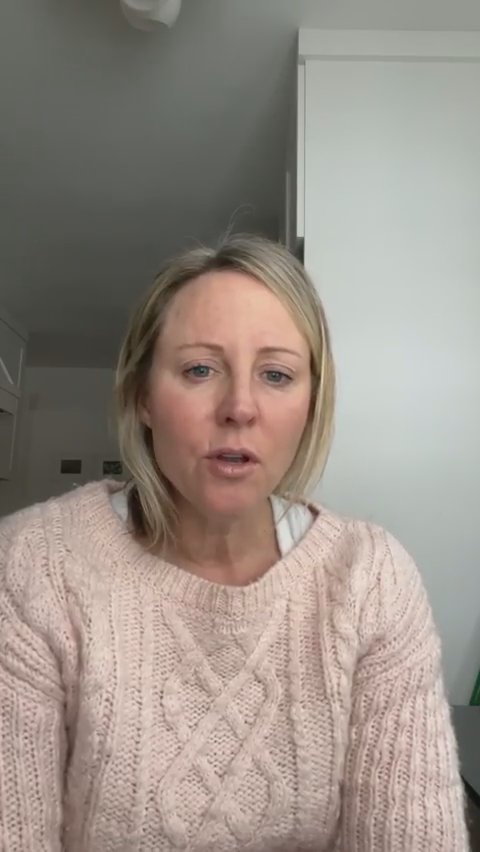
After seven years together, my AIR network therapist, Tracy helped me change my life. I’ll share her “best-ofs” with you, as I learned to love myself.
Shannon is a woman who lives with CPTSD anxiety and a child with autism. One of the things that Tracy says is notice. Noticing is an internal action, and that's a big distinction. It's also what can be the differentiator in your ability to change.
How you. What parts of you come up when you're with this person. Writing down those adjectives and really understanding it, you're gonna start to get a lot of great information. And doing that internal work is going to help you start to understand who you are.
Cadre. Hi. Happy Monday. It is Shannon from aloud. It is Monday, January 8, and I'm here today with a version of Tracy says. And so for those of you who have joined me before, you know that I am not a therapist. I am a woman who lives with CPTSD anxiety, and I parent a child with autism. And I have been in therapy for seven and a half years. And so my therapist, Tracy, is an air network therapist. And so I've learned a lot of things from her. And so my role here today is not to give you any clinical advice, but to share with you my experience and some of what I learned from her that I continue to use today.
So today, one of the things that Tracy says is notice. Notice is a word you might hear in wellness, right? If you go to a yoga class, it's notice how your body feels or notice what's, you might actually have it in your cognitive behavioral therapy. Notice the thoughts go through your mind. So this is, I think, a little bit of a different kind of notice, at least it was for me. And so this is a notice of what's happening inside of you. And so I think as we go into a new year, in my experience, you know, we're all seeking to, many of us are seeking to be different, better, grow all the things that we do as humans.
And I think sometimes that manifests in an outward manner, meaning it's an action, right? So it is January 8, and I'm going to be different, and so I'm going to act, right. Noticing is an internal action, and that's a big distinction. It's something that took me a while to learn. It's also what can be the differentiator in your ability to actually change, if that's what you want to do. And so what does noticing mean as a. Hi, Nikki. Good to see you. What does noticing mean? So, noticing means, and I'm going to use an example from my own life of relationships.
So for me, I can act all day long. I can go to the gym, I can move, I can check off boxes on my list and all of those things. What's harder for me to do is to slow down and to do that internal work. I can imagine that that might be the same for many of you because I would argue that that internal work is the hardest work to do because it requires you taking that lens that is outside facing and really shining it into yourself and noticing what's going on. All right, so how do we do that internally?
So, for me, relationships are my hard thing. And by that I mean, hey, JC. Hey, Luke. Guys. Glad you're here. And by that, I mean I didn't have a lot of really positive models about relationships growing up. And so it requires me to be incredibly intentional about the kind of relationships I want to have. And that means I have to do a lot of internal work. So when Tracy taught me about noticing, there's three things that I started to do that I'll share with you that were really helpful. Number one is just to notice how you feel.
Right. Truthfully, how you feel. And that's a huge distinction. And I'm going to say it one more time, because it can be like jumping off a cliff. Notice how you feel and how you actually feel. So, for me, I will do that in a relationship with someone. Does that. Is it positive? Do I feel healthy? Do I feel like the best version of me? Do I feel, you know, you enter in there whatever works for you, and that can be really, really scary because you might come back with an answer that you don't like.
And honestly, I will liken it to getting on the scale. For many of us, that's not a pleasant thing. And sometimes when we look at our weight, we can say, oh, my God, this is not what I want it to be. It's really that same feeling of noticing inside what's happening. To say, is this relationship what I want it to be? So that's the first thing, is to be real and notice how you feel when you think about interacting with that person, and that's going to give you so much information. The other thing to think about is, and I sort of mentioned this already, notice what part of you comes up when you think about that relationship.
So, by that, I mean, one of the things Tracy taught me was we all have parts, right? So I'm sure for many of you, one way to really get to a shortcut of this is think of a song that reminds you of 12th grade. Right. We can all do it. I'll go Paula Abdul. Right? Paula Abdul. I don't think that was 12th grade. But Paula Abdul brings me back to a very specific point in my life, and that's like a part of me that's a version of me. So there can be times, even at this point, 47. At 47, where I might have an interaction with someone in my life, and I'll go back to feeling like I'm that age again.
And that's important because at that age, you had certain skills. You could do certain things, right. Like when I was listening to Paula Abdul, I didn't have a lot of mental health skills. I didn't have a lot of coping skills. So if I'm noticing that I'm in a relationship with someone and it's really bringing me back to that part of myself where I'm like, ooh, this is, for whatever reason, this is making me feel like I'm that version of myself, it's super important to notice that, right? That has meaning.
And I think the last one is just to notice what happens after you leave that person. This is, again, this is my experience. How do I feel after jagged little pill JC? Oh, I could sing that. That reminds me of sitting in a car in snowy Omaha. That's a whole other story I'm not gonna tell now. But notice how you feel after you leave that person. Is it. Is it better? Is it worse? Is it full of energy? Is it tired? Right? All the things. And so once you start to pay attention to these, these parts of you, if you will, pay attention to modest mouse.
Nikki. Beautiful. I love it. Once you start to pay attention to these things, right? How you. What parts of you come up when you're with this person, how you actually feel when you're with this person, you know, writing down those adjectives and really understanding it, you're gonna start to get a lot of great information. And so that can be the start. That can be the start. Actually, I'm going to put a period at the end of that sentence. That can be the start. That can be the work. That's a lot of work.
And that can be the work that you do to just start to feel like yourself and notice what's actually happening in your world. So that is something Tracy taught me. Notice, notice, notice, notice. And doing that internal work is going to help you start to understand who you are and get you to the place you want to be. Thank you. Thank you, everybody. Nikki, JC, Luke, I appreciate all of these comments. And yes, let's love all of our parts, right? They're all beautiful and there's nothing wrong with any single one of them.
And if you do this exercise and you start to see things you don't like, like when you get on that scale, if that's your experience, pay attention and that's it. That's all you have to do today. But that's gonna start to give you really great information about where you want to go from here. Alright, Cadre friends, have a beautiful Monday and I will see you back here soon. And keep being you. You're a beautiful version of yourself and you're doing a great job.
Reactions and comments are for members. Joining is free and takes a minute.