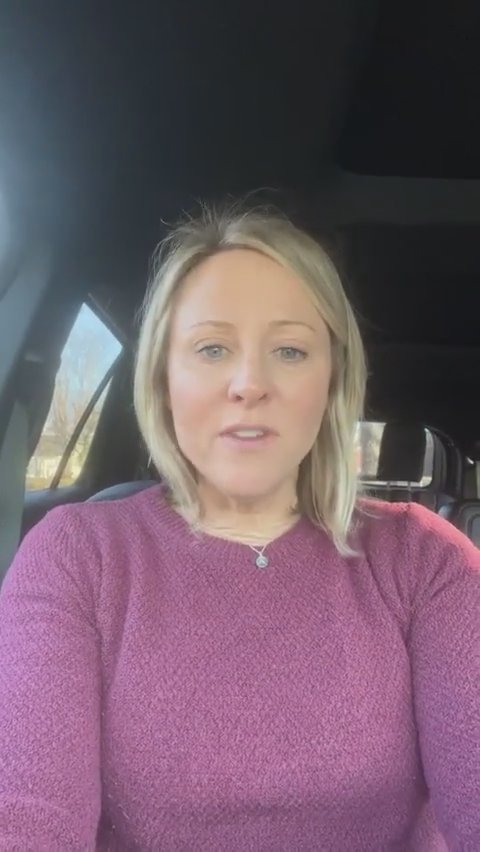
Being human means we make mistakes. Join me as a person living with anxiety, parenting a child with special-needs, and PTSD, as I talk about what it means to be human and live without shame.
Cadres fear. Happy Monday. It's February 11, and it is Shannon here from Cadre. Sorry I didn't see you as much last week. I was kind of running around crazy.
Shannon is a human who lives with generalized anxiety disorder. She also parent a child with special needs, and she has CPTSD. We are going to talk about how to move on from decisions that you wish you would not have made.
How do you move on from decisions that you wish you wouldn't have made? We all make decisions in life that we regret. Even those teeny tiny decisions up to a huge decision can sort of be reframed with this structure.
LZ: What are our values? Right? What do we value? And so, always keeping that front of mind, reminding yourself again. And again, as speakwonder said, regret can be a launching pad for success.
Cadres fear. Good morning. Happy Monday. It's February 11, and it is Shannon here from Cadre. Sorry, I'm getting my camera situated. Hi, guys. It's nice to see you. I didn't see you as much last week. My apologies. I was kind of running around crazy. Okay, bear with me for 2 seconds while I get this settled. Good morning. So, we are here today for things we weren't supposed to talk about. We are going to talk about how to move on from decisions that you wish you would not have made. So, for those of you who don't know me, I'm Shannon, and I am not a clinician.
I'm not a mental health professional. I'm a human who lives with generalized anxiety disorder. I parent a child with special needs, and I have CPTSD. I have also been in therapy for eight years. And so I am constantly working on myself and how to be a human in a way that makes me happy. So, today's topic, how do you move on from decisions that you wish you wouldn't have made? We all make decisions in life that we regret or, I'm not going to use the word regret that we think later probably shouldn't have made that decision.
You know, the phrase hindsight is 50 50 comes into play here because we don't know what's gonna happen when we make a decision. And so why this came to mind is over the weekend, I was spending time with a friend, we were getting to know each other better, and we talked about my, the time that I was remarried. So I was married once for ten years, got divorced, and I got remarried. And in talking with that person and sharing, you know, more about the decision and who's asking me some questions about it, I realized, like, oh, God, I regret that.
And that was my first reaction as a human, was I regret making that decision. I should not have gotten married that second time. But I want to break that down a little bit because this played out for me, sort of an internal narrative and a breakdown of like, okay, stop for a second, Shannon. And hi. Speak wonder. Oh, my God, it's so good to see you. I wanted to break down why I felt regret and sort of transform that into a different story. So I already shared I was remarried. I got remarried. I made the decision to get remarried.
I have two children. My husband, my new husband had two children as well. So as I just sort of went over in my head all the things of like, ugh, Shannon, you know, how did you make that decision and what were you thinking? I stopped and I reframed it. And this applies to any decision that you make, right. It might be a super small decision, honestly. Like, ooh, I'm lactose intolerant and I just ate a huge bowl of ice cream. Not a great decision. So even those teeny tiny decisions up to a huge decision can sort of be reframed with this structure.
So a couple of things I want to share. Number one, no matter what the decision was, whether it involves another human, like, in my case, it did, or whether it was just you deciding to do something, it's not about the other person, it's not about the context. It's not about the situation. And what I mean by that is, as we're processing choices we make. And again, in my case, it was, I'm choosing to remarry sitting here five years later, no matter what. It's not about that person. It's not about my ex husband.
It's not about, well, he did this or I did this or xxx or with the ice cream. Let's use the ice cream example. I'm lactose intolerant and I eat a bowl of ice cream. Well, I'm at a party and everyone's eating ice cream. Or I just, you know, xxx whatever that is for you, it's not about that. Right. So it's owning that. Okay, I made that choice. And then I think it's digging into, yes, why you made that choice, right. Because sometimes it can feel like those contextual pieces do matter. Right? Like had in that moment, I got so swept up, everyone was eating ice cream, and I really wanted to try it.
And so I did. Sure, that matters, right? But I think the way to reframe it in our heads to give us some sort of deeper insight into, at least for me, this is what worked for me, was to say, okay, the decisions I made at that time were based on the person who I was at that time. And that person is not bad. That person is not flawed. That person. There's nothing wrong with that person. When I made that decision to remarry, that decision was based on the knowledge I had at that time, the skills that I had to take care of myself at that time, which, frankly, were really limited.
I had not been to any therapy at that time. And so I didn't. I didn't have a lot of skills. So I made decisions based on what I thought was best in that time. And so I think stopping down and sort of not forgiving yourself for a decision, but just sort of honoring who that person was in that moment and who you were in that moment when you made that decision, it's just, it takes some of the weight off of it, right? That person wasn't bad or at fault. That version of you wasn't bad or at fault. It was just the version you wore at that time.
And I think that's really important. So for me, I was able to look back even this weekend, as I'm sort of rehashing it out loud with this friend and explaining why I remarried the second time, I was able to say, you know what? At that time, I had no ability to take care of myself emotionally. I didn't know how to do it. I thought another person was the answer, right? So I hadn't learned those skills. And by being able to say, like, oh, yeah, that version of myself just, they didn't have that. They didn't have that option.
It just takes the weight off of it and says, that's okay, right, I'm gonna, yep, that person did. No, and that's just fine. Then I think the last thing, speak wonder. You said regret can be a launching pad for success. I 100% agree with you. It's learning, right? We're always learning. It's taking stock and saying like, okay, again, I was that person and now who am I? And then I think the last piece I just want to share with you is values play a role in everything. So at that time, we all have values that we hold dear.
And at different points in our lives, one value is going to take the first, the top seed, right? So there might be a time and I'll use again myself. In that moment, I was like, I've been married for twelve years. I'm seeking X. And for me right now, my value is I want to be free. I want freedom. I want to be able to do what I want to do. And so I wanted to be free to seek out this other relationship and have that be okay. And that's the value that won out at that moment. And now I've learned, and I've said, okay, I did that.
I learned those things. And now there's other values that I have, like relationships that might say, hey, you know what? These relationships, ancillary to this example or ancillary to this moment, are actually pretty important to me. And so I'm going to take that freedom value down a little bit in this moment because I've learned. And now I know I'm going to, I'm going to jack up that, that relationship one. And that's going to be the thing for me. So I think that's the last piece. It's just, what are our values?
Right? What do we value? And so, always keeping that front of mind, reminding yourself again, going back into sort of the three things. Number one is you always made the decision. And so owning that and understanding the context, but not putting it on, well, it happened because X. It happened because of this other person. If you're able to keep it on, focus on yourself, you're gonna really get to the core of it. Number two is to forgive yourself. I use the word forgive yourself, but really understand the limits that that person, that that version of you had at the time you made that decision.
And then, number three, always go back to your values. And so the more and more, you're able to sort of toggle those in your mind and say, like, okay, today I value this, and I'm gonna make a decision in alignment with that. You're gonna feel better. And so I was able this weekend, as I had that time with my friend, I was able to say, you know what? That version of me made that decision, because my value at that time was this. I learned. I do think I have regret, and that's okay. And now I know that moving forward, I'm a different version of myself.
That is what I want it to be. So that's what I have, guys. I mean, I think that is a way when you make a decision, this is sort of a process to go through to say, okay, I'm gonna move on from that. I'm letting it go. I'm forgiving that part of myself, and I'm headed into the next thing. And again, as speakwonder said, regret can be a launching pad for success. And I 100% agree. So I hope, as we go into this week, if you are faced with sort of the fallout or the feelings that come from a decision that you wish you wouldn't have made, just remember, you did the best you could in that moment.
You can always choose a different path moving forward, and you're a fantastic, beautiful person who is human, who doesn't know everything, and that's life. So we will always be here. I hope you have a wonderful week. Speak, wonder. I hope you have a wonderful week, and we'll see all of you here soon again in the Cadre sphere. Bye, guys. Talk to you soon.
Reactions and comments are for members. Joining is free and takes a minute.