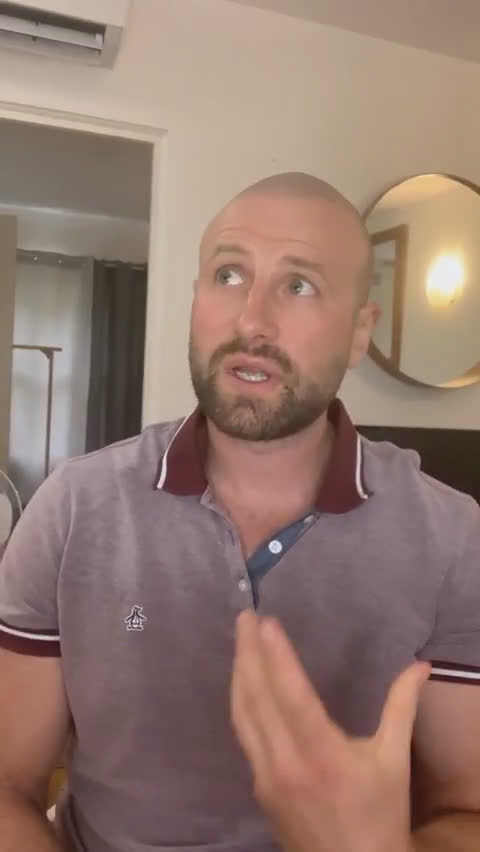
Today we are doing another episode of Mental Health Matters, except you bring the topics for me to answer. This usually makes for a lively and fun conversation, so come join and contribute your questions or experiences. Feel free to put any questions in advance on the community feed and tag me whether you are joining live or watching later.
This week on Mental Health Matters we talk about mental health and addiction. If anyone has any questions about anything related to mental health, now's the chance to ask. You could also ask any questions in the community feed, comment on any one of my videos.
Can you have memory loss from trauma? Yes, absolutely. It can be a core feature of it, especially in childhood or even as an adult. That is a symptom of PTSD is remember, forgetting, not remembering key facts about it.
Wrote relationship with jobs. I did a video about work burnout and three possible solutions for that. Some of the solutions we talked about is having that vulnerable conversation with the superior. Maybe it's time to move on, which often is potentially a viable solution.
Many therapists take insurance, they may take your insurance. The problem is if you have like a high deductible you don't meet, then it is out of pocket. Things are usually better now because of some legislation that came into play. Think about it as an investment in yourself or cutting out the budget elsewhere.
Borderline personality disorder is essentially a reaction to trauma that affects how you interact with the world, but also within yourself. This is characterized by difficulty in relationships, attachment fears. It would really apply in most areas in your life, not just one.
What's up, folks? Welcome to another episode of Mental Health Matters. I wish I could have, like, words come on the screen like I do in my videos. Mental health matters, sound effects. Anyway, it's where we talk about mental health, addiction, and because it's important, it matters. Anyway, every other week I do an ask me anything episode. Sorry, I'm a bit under the weather and sound like a crazy crap. That's why I didn't pop in Wednesday. I wasn't feeling so good. Got me a man cold, so that's not fun since.
I will say, though, I've pretty much been sick from the end of October until January 90% of the time, no exaggeration, maybe 80. I don't know what's going on this year. Driving me crazy. Crazy. Although here I am in Australia visiting family. It's a beautiful day. Can't complain. I'll take a little sickness. What's up, Abe Parkman? Anyway, if anyone has any questions about anything related to mental health and addiction, now's the chance to ask. This is my ama. You could also ask any questions in the community feed, comment on any one of my videos.
I will probably see that. And I could bring it here to answer your question. Maybe I make a video on it. Who knows? You never know. So you're not sure. I found some questions people asked me with Cadre on social media, so we'll just go through some of those. And again, if you're here, if you have a question on anything that's even more fun, have a conversation and ask me here. First question is about trauma and memory loss. Can you have memory loss from trauma? And. Yes, absolutely. That's actually a.
I don't know if it's a key feature, but it's definitely. It can be a core feature of it, especially in childhood or even as an adult. Like, when you go through something overwhelming, often our minds block it out as a protective mechanism. So a lot of times you got to be careful here with, like, false memories and getting those inserted into your mind. But sometimes when you start to think of something more, you're processing it. In therapy, there's a chance you'll remember some things that are real and that you did not before, and some things just kind of remain repressed and you're just never going to know.
Well, maybe for the better. Yeah, I think, like, if you're, you know, like when people are in accidents or even, like, witnessing something, how fallible our memories are, like eyewitness accounts. So you add stress and fear, then that further impacts the ability to remember certain events and details. So, yeah, that is a symptom of PTSD is remember, forgetting, not remembering key facts about it. So. Yep, absolutely. Wrote relationship with jobs. I don't even know what that means. I don't know what I was talking about, but someone did comment.
I did a video about work burnout and. Oh, I think that was from a comment. Yeah. So I did a video on work burnout and three possible solutions for that. Some of the things we talked about were, you know, one relationship with the leadership in the company. You know, a lot of times the work could be stressful, but if you're not feeling supported, if you don't have a good relationship, you know, that could be stressful. Not receiving, like, validation for your work, you know, being maybe a little too stagnant in what you're doing, not having enough challenge is another one.
A lot of times, like people, you know, you get so good at your job to become second nature and you don't get that same fulfillment out of it. Most people do like a challenge or just variety, trying something new, promotion, you know, obviously feeling like you're being underpaid would be a reason for burnout if that consists for too long. Some of the solutions we talked about is having that vulnerable conversation with the superior, telling them where you're at, how you're feeling. Hopefully most folks are reasonable, and often it does lead to a productive conversation, even though it could be uncomfortable.
And perhaps if you are valued, they may find some different projects for you to work on, could lead to a raise or, you know, so I find that that often is helpful. I find that also, if you're doing that, you're having those conversations and they're not really receptive, you know, that could be a good indicator. Maybe it's time to move on, which often is potentially a viable solution for work burnout, as is to leave. That doesn't mean you should. Well, always. And that there's not ways of remedying the position you're in.
Another question I get, when I get a lot of comments about this, I recommend therapy. Obviously a little biased as a therapist, but I recommend therapy. And people are like, oh, yeah, that's great. Can't afford it. Be nice if I could afford it. 100 and $5200 a session plus ain't happening. And that is. That is an issue now. I also find people don't fully understand their benefits sometimes. So, like, very often therapists take insurance, they may take your insurance. The problem is if you have like a high deductible you don't meet, you know, then it is out of pocket and it is expensive.
Now, as someone who owns, manages a clinic, I could tell you, like, our profit margins, even at those, like, high billable sessions, are not like through the roof. Sure, you could do well if you're like in private practice and do some of your own billing. And sometimes you can be a full time employee, I don't know, make 70 tops a year pretty good if, depending on what you feel, getting a little off the rails here. But I'm just trying to say that, you know, even at those high costs, it's not just us sitting there like laughing, like scourge McDuck and swimming, diving into a sea of gold coins.
But regardless, that is very difficult to pay out of pocket sometimes. But a couple options. One is, you know, asking if therapists have a sliding scale, it may be better to not use your insurance, and you could maybe qualify, based on your income to get a lowered rate if you're like, well, I'm just going to be paying my deductible. I'm not going to meet my deductible either way. I may as well. But if you know that that year you have other medical stuff, you're going to meet that deductible anyway.
May as well, may as well use those benefits that you have. But, you know, you could also think about it as an investment in yourself, you know, if you can afford it or, you know, cutting out the budget elsewhere. Again, therapy, often, I don't say it like pays for itself, but I think it holds its own as far as values for what you pay and the potential benefit if you have the right person. So doing searches for therapists, know your benefits. You could call your insurance company, see, as you have a list of people that are in network, though it's usually not as comprehensive.
So just know the company, the policy, and you could look at just like therapy clinics near me, do they take my insurance? Do they take Blue Cross, Medica, whatever that is? And you could call them and they'll run the benefit and they'll tell you sometimes that'll happen and like, there'll be issues that come up. But things are usually better now because of some legislation that came into play. It's called the no surprises Act. I think that's pretty beneficial for folks who are, you know, to be sure that you're like, they're not like, oh, I take your insurance.
Oh, you know what, I sent it in, claim came back, said it's not network, won't pay you got to pay. So that happens less with that. You just got to be a little careful. All right. Someone asked borderline personality disorder. Okay, is it possible to have this disorder but just in relationships? We've talked about on here before? Borderline personality disorder is essentially a reaction to trauma that affects how you interact with the world, but also within yourself. This is characterized by difficulty in relationships, attachment fears.
So that's where this question comes from, because a lot of times shows up in your relationships, attachment fears. It's basically like almost being over sensitive in a fact that, like, it's. You feel emotions really intensely. It's like I always say, it's like not having an emotional filter. So everything just kind of comes up. You know, be like smoking a cigarette without a filter. You're like, oh, God, you know, taking your coffee and not using a filter. I don't know. You know what I mean? And so, you know, that could lead to, you know, a lot of difficult emotions, difficulty coping with emotions, and that could lead to really, really feel a lot of depression, anxiety, substance use, self harm, a lot of suicidal ideation, trouble in relationships, attachment fears.
And so that's what this person is asking is like, well, what if I'm acting a little loco in my relationships only, but not outside. Well, I'd say, like, to truly have borderline personality disorder, it wouldn't. It would really apply in most areas in your life, not just one. I mean, we've all been in relationships where they may drive us a little bit nuts, you know, or if we're, like, really attached to someone and maybe they're not giving us what we need or validating us, or they're, like, cheating, and that could cause us severe, like, anguish, and that could look like acting out.
And so, like, you know, being in a toxic type relationship or even just having, like, a fearful attachment and having whatever element in your relationship trigger that. But maybe that could be across a lot of relationships, and that could be due to trauma. It could be something you want to work on. But typically, if you're not seeing that in, like, a bunch of areas in life, then probably wouldn't do the diagnosis in most cases. So that's a really great question, though. Someone asked on my social media, why do you look like crispy Watts?
And I'm like, oh, is this like, a famous actor or something? Like, you look him up. I look him up. He was like a murderer. I'm like, okay, thanks a lot. I guess I sort of do. But everyone who has, like, a shaved bald head, whatever, who's like, within the ages of, like, 25 and like 50 with, like, some facial hair. I just look like them. People always are. Like, as I walk around town here, I'm in, like, a smaller town. I saw some guy that looks like you. I saw it look like I thought it was you. I almost went up to him.
It's just always that profile. Anyway, I just throw that in there for fun. Remember, folks, if you have a question, community feed, if you have a question, ask me in a video. Come join the live stream next time. If you're watching this retroactively still, you could comment, I believe, on the live itself. So anyway, it's been real, as always. Take care.
Reactions and comments are for members. Joining is free and takes a minute.