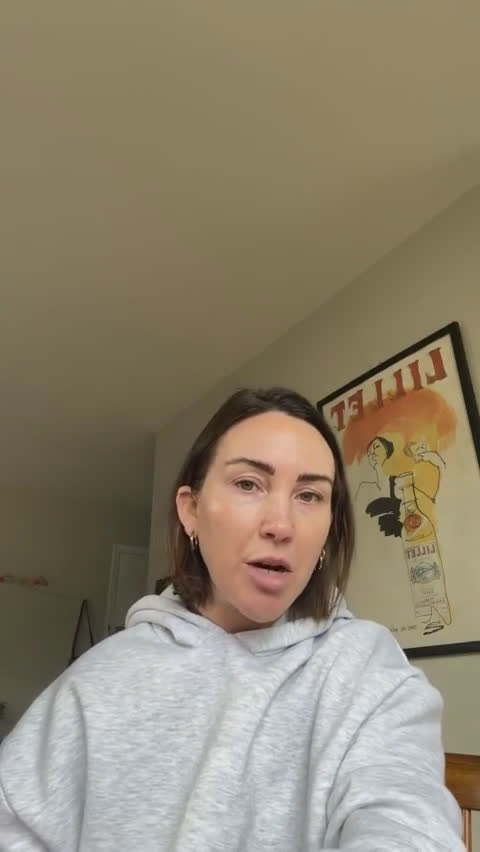
Rachel shares a tender livestream about coping with low motivation, discussing how suppression of emotions, DBT strategy one thing in the moment, and simple reward systems can help when motivation is low.
Happy Wednesday. Here we are at our new scheduled time, Wednesdays at noon. Thank you for your patience. As I sorted out the bugs.
Anna, I'm particularly tender today. I noticed in the last few days that I've been suppressing a lot of my feelings. It's good to feel your feelings. There's nothing wrong with you if you're struggling. We all struggle.
Low motivation is a symptom of depression. When we're depressed, oftentimes we don't have the motivation to do the things that we normally do. Here are some tips that have helped me when I feel like I'm struggling with motivation.
If you struggle with depression, you'll know that it's very hard to get motivated to just kind of do basic things. I've learned this skill from dialectical behavior therapy called one thing in the moment. The other thing that I will remind myself is, like, you don't have to do everything.
Milo: One of his tips is creating a reward system by which we basically reward ourselves for doing certain things. Sometimes low motivation is not a sign of us being defective or unmotivated. Sometimes it's a sign that we just need a rest.
Chasing the scream, a sticker chart. If we can use sort of like a reward system that also builds up to a bigger reward, that can kind of be a fun way to also create that reward system. Going to be using more? Yeah, absolutely.
All right, that is what I have for you today. I cannot wait to see you all next week, same time, noon. If you have questions or if you have ideas or things you want me to talk about in live streams, please feel free to leave a comment. I'm always open to suggestions and feedback.
Are we live? Is it working? Okay, it's working. We got it. We got it. Milo, pot five. He didn't give me a pot five. Hi, beautiful humans. Happy Wednesday. Here we are at our new scheduled time, Wednesdays at noon. Pst. I'm so happy to be here with you. Thank you for your patience. As I sorted out the bugs. Today, I. Hi, Anna. Today I'm going to be talking to you. Well, the plan was to talk to you about coping with low motivation, which I do plan to talk to you about. I first just want to share that I am.
I'm particularly tender today. I had therapy this morning and have been crying a lot and having a resurgence of some grief and noticed in the last few days that I've been suppressing a lot of my feelings, and that has led to me coping in ways that are not effective, like overeating, drinking alcohol, and just shutting down my feelings. And so yesterday, my friends came over to help me practice this talk I'm giving for Cadre on Saturday in Charlotte. And afterwards, I noticed myself getting hypercritical and getting super emotional and feeling really sensitive to their feedback.
And one of my friends said, reach. What else is going on? And the flood works just like. I just started sobbing and I realized how many feelings I'd been suppressing for weeks around feeling lonely, around feeling insecure, around feeling afraid, unsure, having longing for love, and then also experiencing some residual grief that I didn't realize was still there. So I just wanted to share that I'm in sort of a tender emotional space, and I'm still happy to be here with you. And I guess it's just my reminder to you that you will see a lot of people on this app who seem like they have their s*** together.
And we're humans, too. And so I think sometimes we can compare ourselves in ways that. That make us feel like there was something wrong with us if we're struggling. And there's nothing wrong with you if you're struggling. You're a human being. We all struggle, and we all have days where we feel where we feel, and it's okay to feel. I also am someone who really avoids my emotions and does not like feeling sad and crying, so I will. Milo, why you squeaking, boy? I will preach all the time. It's good to feel your feelings.
It's good to feel your feelings. It doesn't mean that I'm good at it. You know, we might know things, but embodying them is really difficult. And I still struggle with it, too. Also, I'm just gonna grab Milo's squeaky toy. Cause he does this every time. I feel like if you've been here and you've been on my lives, you know, Milo loves to use his squeaky toy when I'm live. Hang on. I know mom's not alive. Do you wanna come sit with me? Do you feel like you're not getting the attention you deserve?
Okay. Come on. Come on. Come on, my little munchkin. Here's my boy. Here's my boy. So, that being said, let's talk about coping with low motivation, because that's also something that your girl struggles with quite a bit. So low motivation can range from, I just don't want to do this task I have to do, sort of like, this is just something I don't want to do, to not having motivation to do things that we want to do. So. And oftentimes, low motivation is a symptom of depression, right? So when we're depressed, oftentimes we don't have the motivation to do the things that we normally do on a day to day basis or don't normally struggle to have motivation for, or we struggle to feel motivated to do things that we really want to do.
Right. So I'm gonna just sort of share with you some tips that have helped me when I feel like I'm struggling with motivation, both from a just sort of a technical, like, task oriented standpoint, but also in times when I'm feeling maybe depressed or like I'm not motivated to do things that I really want to do. So Rachel says, thank you for saying that. Absolutely. Thank you for being here, Rachel. SLP and dotomack. Oh, I'm sorry if I mispronounced your username. Says, we often give the guidance we most need to hear.
True, so true. So, okay, so one thing that I like to do, if I am struggling with depression and the low motivation is connected to that, things that normally I don't have to think about as much, like getting out of bed, making breakfast, getting dressed, taking a shower, those things start to become really, really, really difficult. If you struggle with depression, you'll know that it's very hard to get motivated to just kind of do basic things. Basic things. So I have this. I've learned this skill from dialectical behavior therapy called one thing in the moment, and it's essentially focusing on literally only the thing you're doing right now.
So. And there's a practice of sort of narrating to yourself what you're doing as you're doing it. So if I'm starting to experience low motivation associated with depression. In the mornings when I don't want to get out of bed, I will just, I will repeat out loud to myself, I'm lifting my head off the pillow, I'm sitting up and putting my feet on the ground. I'm walking into the kitchen, I'm making coffee, and I will narrate literally one thing in the moment. And the idea of that is to get us out of maybe a thought spiral or a shame spiral, or the thoughts that say, I don't want to do this, or, this is going to be hard.
And we focus solely on the one thing we're doing in the moment, and that allows us to gently and slowly move through each thing throughout the day. So that's one skill that has been very effective for me for a very, very, very long time. The other thing that I will remind myself, like, if I'm having low motivation associated with depression, is, like, you don't have to do everything, right? So sometimes when we experience low motivation associated with depression, there's also a lot of shame that comes along with that around.
Like, how come I can't do these things that I should be able to do? Like, why is it so hard for me just to answer this email or to make this phone call? And so I think, also, like, reminding myself that, like, in those times, like, I can do the bare minimum. Like, it's okay for me sometimes to do the bare minimum. If that means doing something that I know I need to do or that I will feel better about doing afterwards, I can do it at a bare minimum, right? So maybe that means I'm answering emails from bed.
Maybe that means I don't answer emails that are not needed to be answered today. Maybe that means, you know, if I want to go outside for a walk, I don't need to put on my fancy outfit to go walking in or look cute. I just need to get outside and walk around the block, right? So allowing myself to do the bare minimum while still doing and engaging in the activity that I know I would like to do or I'm trying to do. So then when we talk about, like, hi, Milo, I have to show you this. He's trying so hard to get to his toy, which is right here.
He wants it so bad. Anytime I'm live or on a podcast or on a Zoom call, he goes for his squeaky toy. He's like, I know this is how I'm gonna get the attention back. And he's, like, crawling on the table, buddy, you will get it when we get it. Promise. Okay. I love you so much. Okay. Yeah, he's. He takes after his mama. He really does. My therapist said this to me today. She was like, yeah, you really have this really strong need to be seen. And I was like, I feel a little called out, miss, but she's not wrong.
This is something I've been working on in therapy for a long time, so. Okay. Anyway, so if you are experiencing low. I can't with him. Let's just include Milo, because it's gonna bring some joy if you're experiencing low motivation with things that maybe, like, when it's not associated with depression. So maybe just might be like, I just really do not feel like doing this today. Like, I know that I need to answer these emails, or I know I have this work thing I have to do, or I know I gotta go to this dinner, or, you know, I'm in physical therapy for a broken whatever and I need to do my activities, but I just don't want to.
I will make like a pros and cons. Listen. Like a literal pros. This is also something I learned in dialectical behavior therapy, but a pros and cons list. It's like, what are the pros of me doing this thing? What are the cons of me doing this thing? What are the pros of me not doing this thing? And what are the cons of me not doing this thing? And sometimes just doing that, like, puts it outside of my brain. I can see it outside of me and I can go, yeah, okay. There's obviously, like, a lot of pros to doing this, right?
Sometimes that works, sometimes it doesn't. So if that doesn't work, what I like to do is I ask myself, how will I feel after I do this, right? We can also. What book was I reading? I think it's. Hi, Milo, I'm reading. Oh, this is so funny. This book is about attention span, and I can never remember the name of it, but it's by Johann Hari, who just published a book called lost connections. And he has an older book about, or maybe that's his newer one. Anyways, it's about focus and getting in flow states, and how do we find more focus?
And one of his tips is creating a reward system by which we basically reward ourselves for doing certain things, right? So, like. And we habituate our brains to this. So it's kind of like I have. I've kind of done this with getting out of bed. I know that when I get out of bed, the first thing I'm gonna get is a hot cup of coffee. Coffee exactly how I like it, right? So now in the morning, I wake up, and when I don't want to get out of bed, it's almost like I start to smell coffee. It's like a Pavlov's theory sort of effect where, like, I start to salivate and think about coffee, which gets me out of bed.
So I get rewarded for a thing I don't necessarily want to do. So we can do this with, like, certain tasks, right? So if I know every day I have to sit down, I don't know why emails is coming up, but, like, let's say I have to sit down and write an hour of, do an hour of emails every day, and I just do not want to do it. I start to associate every word with it. So at the end of my hour of emails, I get to whatever that might be. Maybe it's have a certain treat that I really love. Maybe it's I get to watch an episode of my favorite television show, and our brain starts to associate this reward that comes with this task.
So then we start to really almost look forward to the task because our brain knows that there's something positive coming right afterwards. So this is a really. That's an effective tool sometimes as well. The last thing I'll say, sometimes low motivation is not a sign of us being defective or unmotivated or, like something is wrong with us. Like, sometimes it's a sign that we just need a rest. Like, sometimes low motivation is our body's way of saying, slow down, like, you're doing the most, and it's okay to take a break.
So I think oftentimes, too, we think, oh, I'm not motivated to do this thing, therefore, I'm lazy, therefore, I'm bad, therefore, you know, you know, I should be more motivated. And I think sometimes we can. We can actually take a look at, you know, what we've been doing and say, maybe I've just been overworking, right? Like, maybe I've been doing a lot. And the reason I'm not motivated is because I'm out of juice. Like, I literally don't have anything left in my battery. How could I be motivated to go forward when there's nothing propelling me?
So, sometimes taking a break can kind of cue us into, like, is this really low motivation, or am I just out of. Am I just out of gas? So, making sure that we're also, like, refueling ourselves not just physically, but emotionally, socially, spiritually. Is my cup full enough to have the zest and the juice and the energy and the gas and any other metaphor I can use for this analogy to keep me moving forward. So homie agrees, right? Milo, guess what? You're gonna get a reward. There you go. All right, I'm gonna check in with the comments really quickly here.
So Rachel says he loves attention. Yeah, this is true. Chasing the scream, a sticker chart. Yes. I love that. Like, having, like, gold stars we can give ourselves. And, like, I. At one point, I tried doing this thing where I would have kind of like a calendar, but just like a rubric, right? And I would put in gold stars, and when I got to 30 gold stars, then I could get a really big treat, like, go buy a new pair of shoes or whatever a big treat means to you. Cause if I tell myself I can get a new pair of shoes every time I do an hour of emails, that's not gonna be very good for my bank account or my financial health.
Right. But if we can use sort of like a reward system that also builds up to a bigger reward, that can kind of be a fun way to also create that reward system, too. Yohan Hari. Oh, chasing the scream. Oh, I haven't heard of that before. Yeah, the one I have is Milo. I'll find out what it is and I'll post about it in the community. I'll post both books cause I think they're both really valuable. So Anna says, thank you for highlighting this, too. Going to be using more? Yeah, absolutely. All right, my loves.
Well, that is what I have for you today. Thank you so much for being here. I will also check out chasing the screen. Thank you, Luke. And I cannot wait to see you all next week, same time, noon. Pst. And if, as always, if you have questions or if you have ideas or things you want me to talk about in live streams, please feel free to leave a comment. I'm always open to suggestions and feedback. Thank you so much for being here, and I will see you next week. Bye, Milo.
Reactions and comments are for members. Joining is free and takes a minute.