How to decide if creating space is right for you.
Cadre friends, Happy Friday. Today I'm going to talk about grief through the lens of family estrangement. My name is Shannon. I am a human being who lives with anxiety, CPTSD, and I parent a child with special needs.
Today we are gonna talk about grief through the lens of family estrangement. How do you know if you need to make space with people in your family? Jules gives three tips from her own lived experience.
Jules: Give yourself the gift of whatever that looks like to you. If you need to create space and boundaries to give yourself the freedom to say, it looks like this for me. Have the boundaries. You're not alone. We are with you.
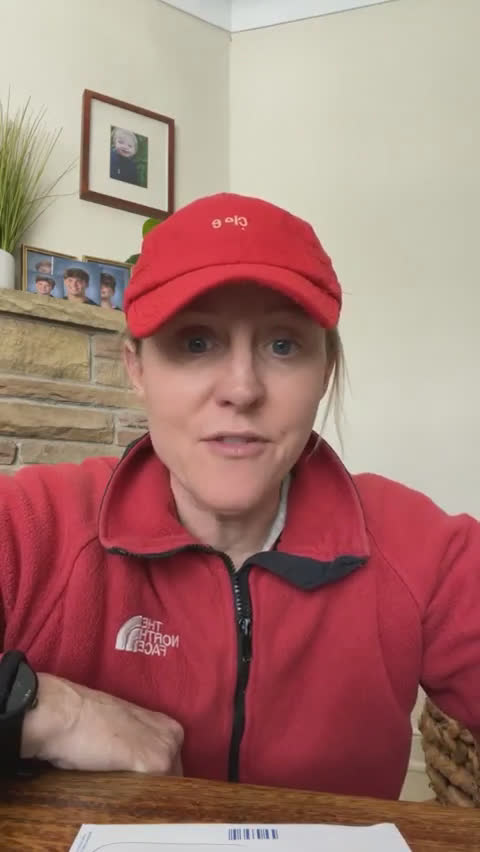
Cadre friends, hello. Happy Friday. It is shannon. I am here in my living room today. Thank you for joining us for grief day on Cadre. Today I'm going to talk about grief through the lens of family estrangement. I'm going to give you all a moment to join, and for those of you, I'll introduce myself, who don't know me, as you join. My name is Shannon. I am a human being who lives with anxiety, CPTSD, and I parent a child with special needs. I am not a clinician. I am not a mental health professional.
I'm a person who has a lived experience with this thing that I'm talking about today, which is family estrangement. I will also tell you I have a cold today, so I'm just really going for the hat and the, you know, so I'm sorry you can't see my eyes fully. I'm just. I'm really casual today. Okay, so I see you joining. Thank you guys for being here. All right, so today we are gonna talk about grief through the lens of family estrangement. This topic is hard. It can be a really hard one to talk about publicly, which is why we're talking about it.
Hi, Jules. It's good to see you. It's hard to go out in public and culture, in a culture that's incredibly family oriented, really cognizant of family systems, and say, like, listen, I'm in one that's not working. And so that's what we're doing here today. And so, particularly today, when we talk about grief, I want to talk about in its connection to family estrangement, I want to talk about how do you know if you need to make space with people in your family? How do you know when you need to do that?
And so I'm going to give you three tips again, from my own lived experience of what I went through and just sort of how I approached that. And I want to draw the connection to grief in it. And that I think with grief in general, sometimes what we're grieving is something that feels really final, right. So oftentimes we have to grieve something that's final, whether that's the loss of a loved one, whether that is a condition that happens to us. Right. It's something that feels big and final. And so, as we talk about grief in the context of family estrangement, I want to say three things, and you'll sort of hear that in the theme today.
So the first one is, how do you know if you need it? How do you know, if you need to create that space with your family, I think the first thing is to notice what's happening to your body when you're engaging with someone that you are supposed to engage with in your family. And then as you do it, what happens to you, right? So I'm going to use my own again, my own lived experience. That's my point of reference. I have had people in my family who I am connected to, and I am supposed to engage with them, right?
It's a holiday time, and I'm supposed to see them, and I am supposed to bring my children. I'm supposed to do all these things. And what I noticed was, the first thing I noticed was, when I'm around that person, I'm having a physical reaction. I am like this. I am tight. I'm immediately closed off, right? So I'm noticing all these things that manifest in my body, and it's just. It's something to pay attention to, right. For me, I was like, wow, I really just incredibly go up on the scale of stress when I'm in this moment with this person.
And so it was just for me starting to notice that and say, like, okay, this is not great. This is impacting me. So that was number one. Number two was, as I thought about creating space from this person, and I had this feeling, I learned that it doesn't have to be all or nothing, right? I think when we hear the word estrangement, it feels like this huge divide, right? This huge grand canyon between people. And in my experience, it doesn't have to be all or nothing, at least to start, right? So you might say, I won't see this person in person, but I'm gonna do a phone call instead, right?
So you might take some different approaches, and you might try on some different things that feel better or worse or right or wrong, but the function of this phase of trying to decide whether or not you need to create space is really about what works to make you feel better. Because I think as we go through this entire process of trying to take care of ourselves and honoring ourselves in those familial relationships, the goal is to take care of ourselves. And so at this juncture, when you're trying to see if that's something you need to do, I think it's very much about, like, all right, how am I feeling and how much space do I need?
Right. Then the last thing is, give yourself a time limit. And so, again, this is my personal experience. When I went through this, I tried it on, and I said, okay, I noticed that this isn't feeling good. It's not sustainable. It's manifesting in my body in ways that are harming me. So I'm going to create this type of distance. And I named it. And I think, I believe if I go back in time, I think I articulated like one or two days that I said, I can do it on these days. For me. I was able to say, I'm going to do it these days.
And that works for me. That might not be the same for you, and that's fantastic, but it's putting those parameters around saying, I know I need to do it. Here's what that looks like for me. And the last thing is to do it for a specific amount of time, right? I think I did it in three month increments. And I just said, I'm going to try this for three months. And what I'm doing in those three months is I'm gathering information about how it feels to have distance between this, this person. And so when we're juxtaposing this process of needing to create space to care for ourselves with the concept of grief, I want to say it is sad, it will feel sad, and there will be times in sort of these test moments as you're going out and you're saying, I'm going to create distance for this amount of time in this way, it's going to be sad.
And there is a gift to be found. And knowing that it doesn't have to be forever, this might be a step towards reconciliation, it might not. It might be a step towards a better and deeper understanding of knowing what you need relative to your familial system. And there might be grief in that either way, right? You might grieve. Who even knows? Right? Who knows what's going to come up in this process? But I encourage you to, again, go into it knowing that in these strained familial relationships, which can be so hard to talk about, you're learning, you're learning how to care for yourself, you're learning what you need, you're learning what your limits are.
With that space might come that ability to learn to forgive yourself, to forgive another, right? Because anytime families are involved, it's a lot, these are the people that are our blood, right? They're our blood. And so just giving yourself the space to say, it's okay to be sad about this, it's okay to explore different boundaries, it's okay to do all these things, is gonna give yourself that energy and that space to be able to process it. Without feeling guilty, without feeling like there's something wrong with you, because there isn't.
And so I wanna say that to everyone today. I see all of you have joined. I know this. Again, if this is something that you're going through, I will say it is probably one of the most lonely things that I experience as a human. Because it feels really shameful to live in this space. And it can feel like you did something wrong, and it can feel like you're flawed. And I'm just telling you you're not. And so I hope that you're able to give yourself the gift of whatever that looks like to you. And one more time to notice if you need to create space and boundaries to give yourself the freedom to say, it looks like this for me, and that's okay.
And then, last but not least, to remind yourself that it's an exploration. I'm gonna do it for a month and then I'm gonna see what happens. And I have the power and I have the control to shift it. And that's okay, because I'm doing it in care of myself and you're doing it in care of yourself so that you can be a whole person. Yes, Colleen, explore the boundaries. Have the boundaries. You know, I'll tell you guys, Colleen's on the Cadre team. And if you want to find someone who really knows how to explore boundaries, I'm going to say, check out her email signature.
Colleen, I would encourage you, if you're ever willing, to pop that into the Cadre chat, the Cadre community chat. Colleen is the queen of boundaries. It is freaking beautiful. So I'm going to call her out and, yes, feel the feelings. Right? It's hard. You will grieve. You will be sad. Jules, thank you for your heart hands. I just want you guys to know you're not alone in this. You're never going to be alone in this. Even if you don't put comments here. You're here. You're here. You're here. You're not alone.
We are with you. We get it. Hope you have a fantastic weekend, everyone, and we will see you here next time at Cadre. And you're doing an amazing job being you. We're glad you're here.
Reactions and comments are for members. Joining is free and takes a minute.