Everybody reacts to stress and pressure differently. Just like an elite athlete in a late-game or "clutch" situation, we all encounter times where we must perform under pressure. This video helps you gain insight into the two main ways we experience performance anxiety and grow your awareness of how you respond!
Why is it that some athletes choke under high pressure situations, while others thrive in such situations? It all comes down to how your body and mind react to stress. Here are the two main types of performance anxiety that people commonly experience.
Why is it that some athletes choke under high pressure situations, while others are those clutch performers that thrive in high pressure situations outside of athletics? Why is it that some people experience test anxiety or experience a little bit of nerves when they're public speaking to answer those questions, it all comes down to how your body and mind react to stress, which is what I want to talk about today, and specifically the two main types of performance anxiety that people commonly experience.
Important disclaimer right away is that some people experience anxiety that is more generalized and constant. In other words, it's somewhat integrated in their personality. And that's not what I'm talking about here in this video. What I'm talking about more is specific moments that elicit performance anxiety. This topic is one of the most common reasons that athletes seek out a mental performance coach like myself. They experience performance anxiety. It robs their enjoyment of the game, diminishes their performance and their consistency.
And there's lots of situations where it comes into play. Maybe it's a kicker in football trying to hit a game tie in or game winning field goal late in the game, a basketball player with, you know, late game free throws, or a soccer player with penalty kicks. There's so many high pressure moments that are all individualized to how the athlete experiences them. This topic is somewhat obvious as to how it relates to athletes, but guess who else has to perform under high stress and high pressure? Pretty much all of us.
And that's why I want to talk about it today. It might be taking a test, public speaking, job interviews, certain social situations. Pretty much any moment or situation where we're worried about our performance, can elicit this performance anxiety. And with that, let's dive into the two main types of performance anxiety, number one being cognitive anxiety. This is pretty much the thoughts associated with performance anxiety. That can be worry, apprehension, fear of failure, perfectionism. Any thought related to what makes you nervous in that situation, whether it be I'm not good enough or this person's going to judge me.
The list goes on and on with what could be involved in this category. And the second main type of performance anxiety is somatic anxiety. And this is essentially the bodily symptoms associated with that experience. The event might trigger a fight or flight response in your body, and that triggers that racing heart rate, the sweaty palms that you might feel, maybe that butterfly in your stomach, some nausea, or that trembling, shaky voice that you might have. Think about which one you experience.
People usually experience a little bit of both. They might experience one way more than the other, and some lucky people don't experience either. It's important to distinguish between these two types of performance anxiety for two main reasons. Number one is that they affect performance differently. Cognitive anxiety on one hand, has a direct relationship that is negative with performance, such that the higher your cognitive anxiety is, the lower your performance tends to be. Cognitive anxiety? No bueno.
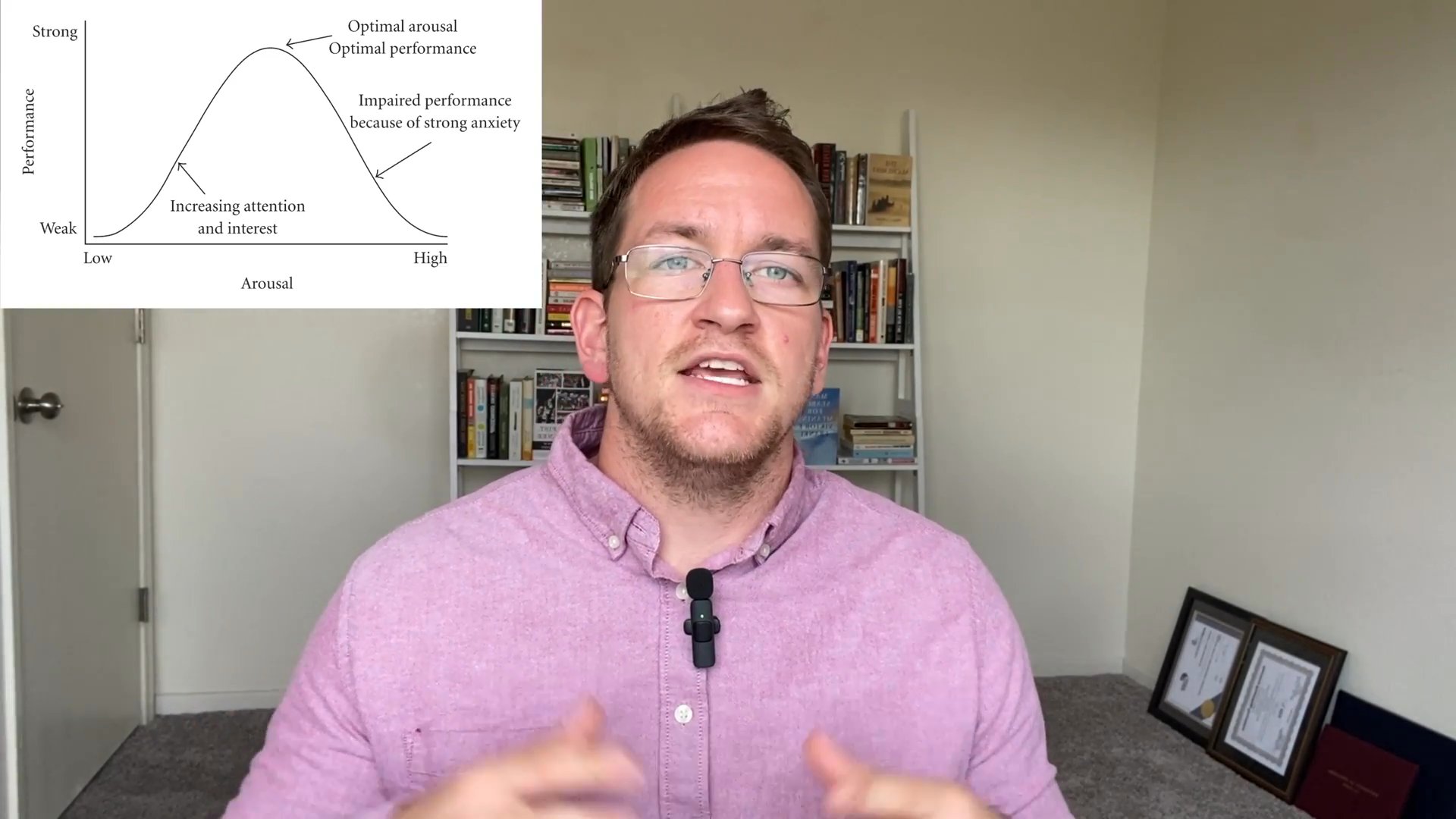
On the other hand, somatic anxiety, those bodily symptoms, has an inverted u relationship with performance, such that the higher your somatic anxiety goes to a degree, the higher your performance, until it reaches that optimal level, and then after that, somatic anxiety has diminishing returns. The second main reason why it's important to distinguish between these two is what we call the matching hypothesis in sports psychology, which is a fancy term just to describe how we want to match our treatment strategy with the dominant symptoms you experience.
So if you're someone who tends to experience cognitive anxiety, maybe I as a mental performance coach, would direct you towards more self talk strategies, for example. Whereas if you're someone who feels those bodily symptoms more and has more somatic anxiety, then I would go about it a different way, maybe going through more relaxation techniques, since it's super important to have that initial awareness of how you experience anxiety. Where do you fall amongst those two categories? If you're not sure, take some time to raise your awareness, maybe do something that you're uncomfortable with and see if you have any nerves and how you experience those nerves.
Once you've reached that initial awareness, come back ready to learn. As I'll dive deeper into specific techniques that are tailored towards each dominant performance anxiety type, and then I'll use the same tactics that I would use with an elite, high performing athlete. So you can be a clutch performer just like they would, and you can go out and conquer performance anxiety.
Reactions and comments are for members. Joining is free and takes a minute.