Shannon shares her lived experience of family estrangement, CPTSD, and parenting a child with autism and anxiety, exploring how trauma interrupts beliefs about self and relationships and reflecting on what might be true without that interruption.
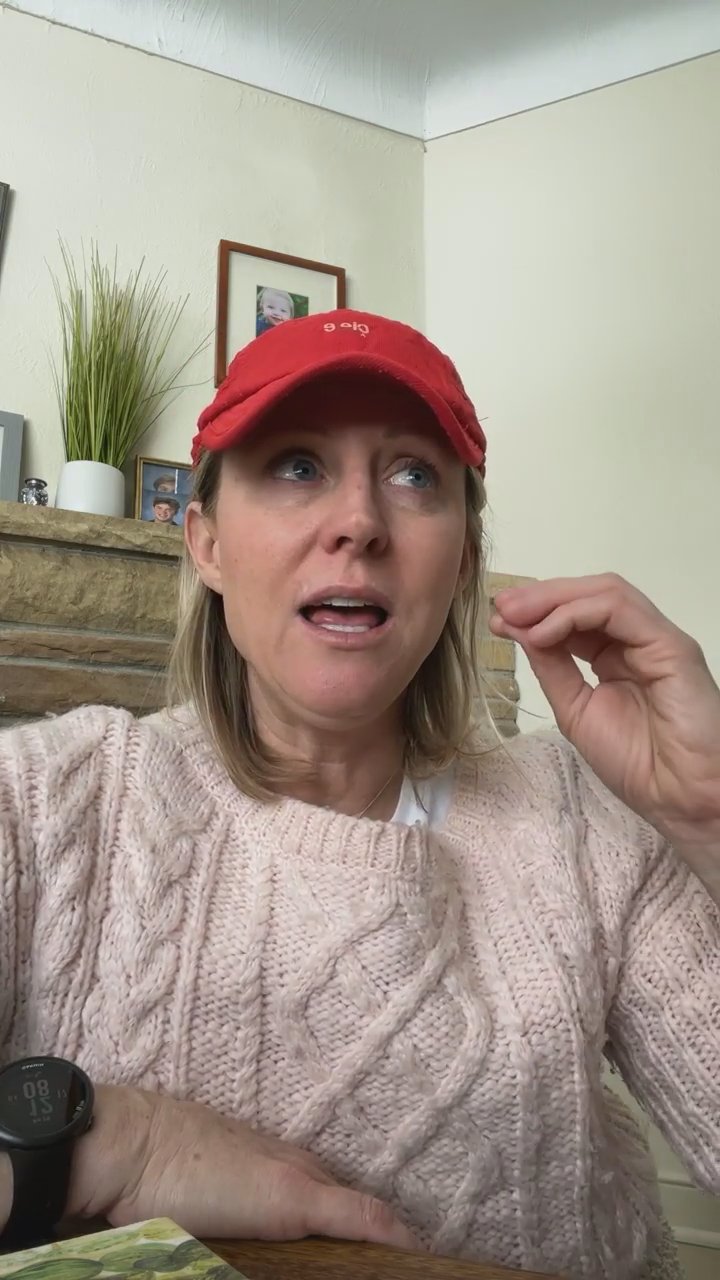
Shannon: It's Friday noon here in St. Paul, Minnesota. Sometimes I wear my hat when I am not really totally dressed and showered for the day. I hope you all are having a beautiful day so far and you have exciting weekend plans.
Shannon is a human who parents a child with autism who has generalized anxiety disorder, and who lives with CPTSD. She hopes that by talking about it out loud with words, we feel less alone.
CNN's Kelly Wallace has CPTSD that is very much tied to family estrangement. Next week, she is taking her children to Portland, Oregon, for spring break. Wallace asks: What truth would you believe without the interruption of trauma?
Happy Friday, Cadre. Hello, it is Shannon. It's Friday morning. It's Friday noon here in St. Paul, Minnesota. So I think I've shared before. Sometimes I wear my hat when I am not really totally dressed and showered for the day because I work from home, and I can do that. So anytime you see my hat, that's my situation. And so that's how I am today on this Friday morning. Good morning. Good morning. Good morning. Good day. Good midday, I guess, maybe I should say. I'm gonna give you guys a second to join.
I hope you all are having a beautiful day so far and you have exciting weekend plans. Maybe whatever exciting for you is, I know exciting for me is a pretty low key situation. So whatever exciting for you is, I hope that's ahead of you. All right, so you guys are joining. I love seeing you here. Thank you so much for coming. Good morning, Anna. Good day, Alec. Nice to see you here. All right, you guys. So today, family estrangement. For those of you who don't know me, I've just introduced myself quickly.
I'm Shannon. I am not a clinician. I am not a mental health professional. I'm a human who parents a child with autism who has generalized anxiety disorder, and who lives with CPTSD. And so I come on here to share my experience, my lived experience with those things in hopes that by talking about it out loud with words, we feel less alone. And that's sort of the deal with me, is just wanting to talk about the things that make us. That can make us feel alone, because culture doesn't talk about it.
All right, so you're going to get a little bit of a stream of consciousness from me today. We're going family estrangement. Here's how we're going to manifest that today. I want to talk about a couple things I just shared that I have CPTSD that is very much tied to my family estrangement. And for those of you who don't know what that is, google it. It's still sort of a controversial thing, honestly, but it comes from living through sort of ongoing traumatic experiences with people who are supposed to take care of you and then not necessarily showing up in those ways.
And so what happens is you really sort of live in a state. For me, I'll speak for myself. I've lived a long time in a state of fight or flight, particularly when it comes to familial relationships. So today, how that's gonna manifest. Here's my dog, Gilbert. He's part of my family now. Gilbert is I'm actually gonna use a prompt from someone that I follow called Nate Wrights. N a t e w r I t e s. He talks a lot about childhood trauma. And so one of the prompts, or just a thought that I read on his website recently, was, what truth would you believe without the interruption of trauma?
And I think that's such an interesting idea. What is possible to believe about myself, about my world, without the interruption of trauma, which I have to tell you is such an overwhelming thought for me, that causes grief in and of itself because it makes me aware of how long I've been living in trauma. So sit with that for a second, and that may be something that resonates with you if you have an experience with family estrangement. One of the things I've learned in navigating that is that there is intense grief in just the acknowledgement of sort of what you've lived through.
And I feel like that seems like a little thing. It's such a huge thing. And I think it's even a bigger thing when. And I'm now I'm going to go to a real life example from my life connected to grief around family trauma. When you are living now, I'm 48 years old. I'm living my life. And next week, I am taking my children to Portland, Oregon, for spring break. I'm taking them to see their cousins and my brother and my kids love it there, and it's a fantastic time. I love it. I love it. I love Portland.
Side note, which I know some of you will resonate with, I did schedule it the wrong week, which means that it's actually not spring break week when we're going, but that's okay. All right, so I'm headed to Portland next week. So I love my brother. I love my nieces. They're these amazing people. And in 2016, when I went to Portland with my then husband, my former husband, my kid's dad, and my mother, it was the site of incredible familial trauma. It was. I shared this story with someone the other day, and as I traveled down that path in my head, I remembered all these really, really painful things that happened on that trip with my mother.
And it was sort of the beginning of this break. It's a long story I'm not going to go into today. But the point is, today, at 48 years old, when I'm planning a trip to Portland, which I want to do, which I chose to do, which I'm very much looking forward to, I have a response in my body to Portland, I have to break it into chunks in my head of the things that I love, like the hiking and driving to the ocean and spending time with those people that I love. And my body when I get there takes me back to a very traumatic event with my family that broke us apart for years.
And so going back to that question of what's possible without trauma's interruption, I have to, as I think about Portland next week, what's possible is that I can reframe it as something new and different, right? So that is what I'm actively trying to do. I'm trying to do that by choosing to go there. I'm trying to do that by choosing to focus on the things that are positive, focus on all the potential and the things that if trauma didn't interrupt it, right? Going back to that state, that thing that Nate Wright said, I'm looking at my computer because it's there.
What truth could I believe without trauma's interruption? The truth is that I could believe that I could go to Portland, and I can spend this time with my brother and my nieces, and I can have an awesome time. And I could believe that that wouldn't have to take me back physically to that other traumatic moment. And that's a lot of freaking work. And I know I can do it, and it makes me tired right now. Honestly, as I think about it, I feel it in my body. So I think in reflecting around what's possible without that traumatic interruption, it's really.
It requires me and potentially could require you if this is something that resonates with you. So just sort of pull apart all those different things. Notice where you are now. Notice the ability that you have to do that work, to separate it and know that there is another way forward. So that when you think about the grief of what you're not, or the grief again, I can very quickly go into a grief of all the things. I also am aware that I can intentionally make new choices to see what's possible on the other side of that trauma and that grief.
So I'm going to be doing it next week. Actually, guys, I just realized next Friday, I will be live in Portland, and I will be coming to you, and I will give you an update on how I'm going, how it's going. And I can promise you it's going to be a mixed bag because it's work. And that's part of the deal with grief. That is part of the deal with family estrangement. And that's okay, right? Because I can still find a new truth on the other side of that interruption. So happy Friday. I do consider, I told Anna this morning, you know, you come on here with these heavy topics and I have, you know, part of me wants to be like family estrangement, but you know what?
It's true and it's real and we're in it. And Anna, thank you for your oh, speak wonder. Gilbert loves you. Thank you. Gilbert loves being a part of this. I love sharing my story, you guys, because we are all in it together. No one's alone in this. And it's hard and it's hard and it's beautiful and there's choices, right? And both things can be true at once. All right, guys, join us for animeo coming up, I believe at 01:00 and I just hope this helps you. I hope that, you know, you're not alone in grief.
We're all here. You guys are going to have a great weekend. Please join us next week and we'll continue to be here for you in the Cadresphere. And I hope you have a wonderful, fantastic weekend.
Reactions and comments are for members. Joining is free and takes a minute.