Join me to talk about the realities of life as caregivers, to normalize the parts of it we don’t talk about in culture.
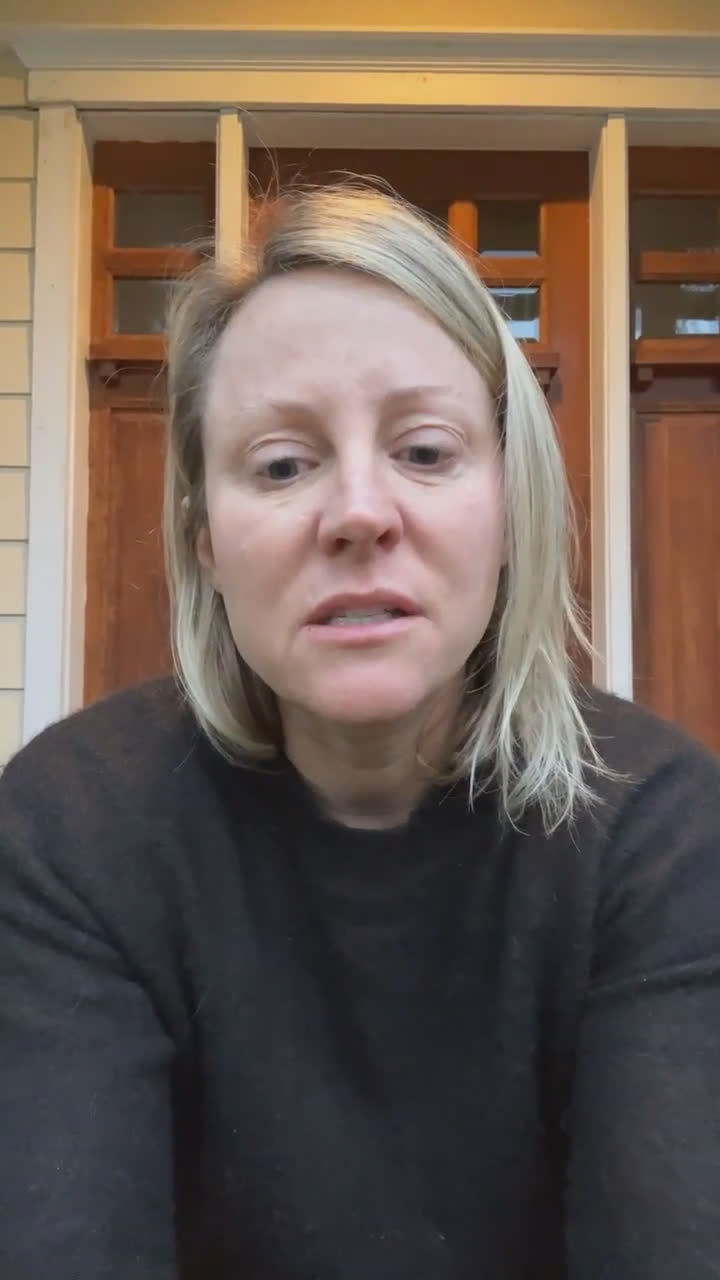
Shannon: Happy Thursday. I'm in Portland, Oregon, visiting my brother. It's such a beautiful place. We arrived late last night. I apologize for how I'm presenting today, but I wanted to be here.
Today is caregiver day on Cadre. Shannon is a human being who takes care of a child with autism. She also has generalized anxiety disorder, CPTSD. She wants to share her experience in those different states of being as a human with mental health.
Today, Jarrett Bellini talks about the ands of caregiving. This can apply to anything in life, not just caregiving, but it's all the juxtapositions. As a caregiver, it could be really hard to ride that line of wanting to let your child be that person and protect them from the world.
Coming up on Cadre today on caregiver day, we have Colleen Lindstrom, who's going to talk to us about the sandwich generation. And then we've got Mac Minnesota autism Center, and we're excited to see Michael coming on. I hope you have a fantastic day.
Hi, guys. Good morning. It is Shannon. Okay. Happy Thursday. Happy caregiver day here on Cadre. It is. Okay, I'm gonna tell you the truth of what's happening today. I'm so excited to be here. And I'm in Portland, Oregon, visiting my brother. So the beautiful thing. So, I'm sitting outside, and I had to sit outside because if you are from Minnesota, which is where I'm from, you can see, you know, Minnesota is gorgeous, but this is Portland. And so it's just. It's such a beautiful place. I'm not giving you a good view, but full transparency.
We arrived late last night. I may or may not have just rolled out of bed. I did just roll out of bed. So I apologize for how I'm presenting today, but I wanted to be here. And so today, on Cadre, on caregiver day, for those of you who don't know me, I am Shannon, and I am not a clinician. I am not a mental health professional. I'm a human being who takes care of a child with autism. So that's my caregiver role. I also am a person myself, who has an anxiety, who. I have generalized anxiety disorder, CPTSD.
And so my job, why I'm here, is because I want to share my experience in those different states of being as a human with mental health. Not conditions, but things that I live with around mental health, and just talk about it out loud so that people like you can feel less alone. I know that's something that I struggle with. Not struggle with, but it's something that's. It's why I'm here. Right. I don't want people to feel alone in these things that we're going through that are very human. Okay. So, today, like I said, is caregiver edition, and so things we aren't supposed to talk about really just means that it can be really hard to talk about caregiving or caregiving roles and culture, because if someone hasn't had that same lived experience, it's kind of hard to get to that understanding.
And sometimes you're like, it's just not. It's not worth talking about it. So, today, I want to talk about the ands of caregiving. Ands. The ands. Right. So what does that mean? This obviously can apply to anything in life, not just caregiving, but it's all the juxtapositions that come with it. Right. So it is the good and the bad. It is the positive and the not so positive. It's all of those juxtapositions. And so I'm going to use the experience of flying out here last night. I am here in Portland with my two sons as a juxtaposition, because, as many of you know, who are caregivers of people with disabilities or invisible disabilities or anything.
Right. Any other condition, when you are out in the world with your person in an environment that is not safe. I'll use the word safe. I don't know if that's the right word. But in an environment where people might have an opinion about what's happening, or in an environment where people might have a perspective on how that person that you care for is showing up in the world, it can put you on red alert. It puts me on red alert. Right. For a couple of reasons. Right. When you're out, we're boarding a plane, and I want to make sure that my son is safe.
I want to make sure that my son is treated with respect. I want to make sure of all of those things. And there are ways that he's showing up in public differently than others. And so I think, as a caregiver, it could be really hard in those moments to sort of ride that line of wanting to let your child, let that person, and I shouldn't use the word let, watch your child be that person that they are and protect them from the world. It's hard to do that. And so there's a lot of ands just in that. Yes.
I'm gonna let my son move his body in the way he needs to move his body to feel calm and safe on this plane. And it might create a little anxiety in me, because I see that others are paying attention and wondering what's happening. And then that might go into my brain a little bit to say, okay, what do I do with this? So I have this information. I notice these two things are happening. He's being himself, he's calming himself, and it's making me anxious. What do I do about this? Right. Cause it's not about me, but I'm also in that situation.
So I think that's one of the things about being a caregiver, is that there's so many ands, there's so many sides of the line, and you can't always ride them right. You can't be on both sides at the same time. And so I think as we navigate that, as caregivers, and each of us is going to have a different way that we do it. That works for us, which is fantastic, because the goal is that it works for you. For me, I sort of self talk myself. And I remind myself that this is what he does, to feel calm and that's okay.
And sometimes it can be hard. Right. And so I think this can come up. These ands, these both sides of the lines can come up for us as caregivers in many ways. I think even as we partner with our clinicians, who we need and who help us. Again, it's walking that line of, yes, you know, my child, you're doing a great job. Clinician, mental health professional, social worker. I'm adding to his care, and you're bringing a point of view that I don't have. And I'm his mom, and I know him, and I know that if this happens, it means this.
Right? So I think it's just what I want to say about it today is to give ourself the space to sort of walk that line. And sometimes we're going to fall to the left, and sometimes we're going to fall to the right, and there's not a wrong or right way to do it. And I think for myself, it's just honoring who my son is and then honoring myself in that process as well. So give yourself some grace, give yourself some love as you sort of walk on that line. And it's like a tightrope sometimes. You're gonna fall off.
I fall off all the time. Right. And that's great. That's okay. So you guys are doing a fantastic job being you. I'm so glad to have joined you this morning. Thank you for your patience with my early morning appearance. And coming up on Cadre today on caregiver day, we have Colleen Lindstrom, who's going to talk to us about the sandwich generation. She lives right in the middle, caring for her son, her family, and then also caring for her mother. We've got girls mentorship coming up today, and they talk to us about caregiving from the lens of people who are in the lives of teenage girls.
Wow. I was a teenage girl. Please give me some care. And then we've got Mac Minnesota autism Center. We've got Michael coming on, and we're excited to see him today. And then at 02:00 Central Standard Time, we have Miss Shannon Paul, who's going to help us laugh through it all. So it was great to see you all. I hope you have a fantastic day. Thank you, steph. We'll see you guys soon here on Cadre. You're doing a great job being.
Reactions and comments are for members. Joining is free and takes a minute.