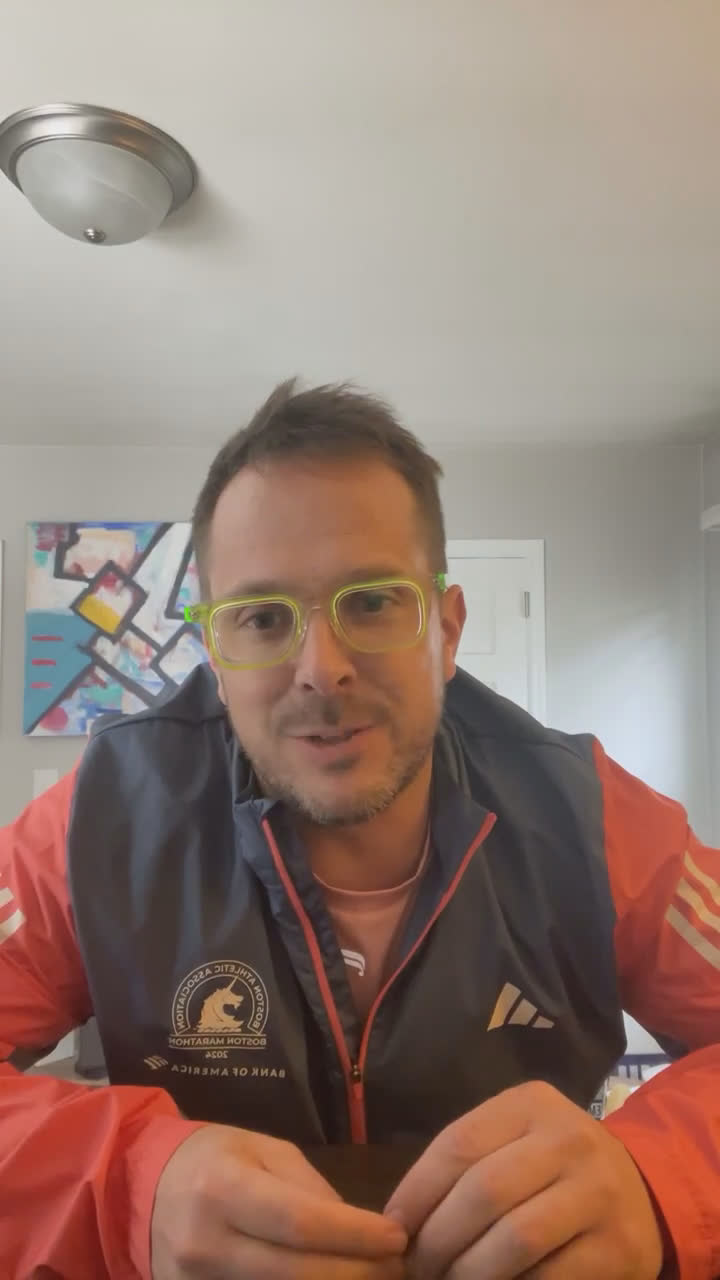
We spend 99% of our time in the role of follower but we only ever work on our leadership muscles…JC shares thoughts and techniques on how to boldly follow like a pro.
Cadre is creating a space where there's many pathways to wellness. On Mondays, we talk about professional development. I lead a livestream on the idea of bold followership, unconscious, purposeful followership. All you who are signing on today, I hope you are doing okay.
Doctor Andrea: We are all emerging leaders. Then we are being emerging followers. Who's being the role model within those 60 employees to maximize the opportunity to grow together? You can see Daryl later on today as he jumps on to livestream.
Well, hey there, Cadre. Happy, happy Monday. Another start to a week. Whether this is the beginning of a work week for you, or if this is the day off, whether you're in the midst of stress and schedule or vacation and ease wherever you are, thanks for taking a little bit of time and demonstrating what it looks like to take care of yourself. You taking a few minutes here to connect, to listen, to maybe think through a different set of eyes or a different idea. It's how we always say. Cadre is creating a space where there's many pathways to wellness, and it's through these connections that we see that come to life.
So all you who are signing on today, I hope you are doing okay. And if you're not doing okay, that's okay, too. On Mondays, we talk about professional development. And I lead a livestream right now on the idea of bold followership, unconscious, purposeful followership. What do I mean by that? Well, we are only in the seat of leader at certain moments of our life. But if you walk through the bookstore and you walk down the professional development aisle, every single book says how to lead, how to lead, how to lead, how to lead.
How are we ever supposed to learn how to follow? Or how are we ever supposed to believe that following is something that we should know how to do really, really well? Doctor Andrea, nice to see you from up north, my friend. You know, I'm from Minnesota because up north is. Is not a direction, but it's. But it's a place. So it's so great to know that north of the border in Canada that we have our friend, strong and true. Chime in on in, Jules, nice to see you as well. Well, hey, as you're tuning in, I'd love to ask this question because we're going to talk about this topic today.
The topic is role models. So can I go ahead and ask the question? If you have your fingers free, can you type into chat something that you are a role model for or maybe someone that you are a role model to think about that and then type into chat. So the idea of role models, if we have children, I don't, but I work with a lot of children. We always want good role models for our children. We always want good role models on our staffs, in our businesses. We want people that we can point to and say, hey, be like that person in this way.
Notice how that person is doing this. Take their lead. Where are you a role model in life? Doctor Andrew says I'm a role model for my emerging adult children. Yeah, absolutely. And I even love how you said that. Emerging adults, I feel like that's a really wonderful way to look at the transition from childhood to adulthood. It's not a day, it's not a. And now you are. But it's an emerging process. I'm going to use that word many times today. Doctor Andrea, we are all emerging leaders, but I think we're actually all probably a bit further down the pathway of being emerging leaders.
Then we are being emerging followers. I'll give this as an example. Let's say you are the leader standing in the front of the room, and let's say you have, let's say it's a Zoom call, and you have 60 of your employees on your call, and you ask a question. Like, you ask, does everybody understand? And no one responds, or everybody says, yep. Mm hmm, mm hmm, yep. As if they think that the right answer to the question, does anybody have any questions? Is, no, I don't have any questions. Everything is okay.
Who's being the role model within those 60 employees to maximize the opportunity to grow together? I'll use this as an example. So you maybe have heard me share in the past, if we've shared time together, that I also, along with my professional coach and consulting career, I'm also a theater educator. So I work with groups of individuals, teaching them through the process of music direction and artistic direction and how to powerfully tell stories to together. And I always make the point at the beginning of a new production, I raise the question, who has the hardest job within this show?
And they'll often say, oh, the lead. The person whose name is in the title of the show, the person who's on stage most often, the person who has the most songs or the most lines, those are the people who have the hardest job. And I go, I think you got the answer completely wrong. I think the lead has the easiest job. Why? Because all of their questions are answered on the page. It's the follower who has the hardest job. Because the follower needs to create their pathway. They need to create their story, their narrative, their personality.
If you have 60 followers on a Zoom call, and it seems like there's one leader and everybody else, those are the only two entities on that call, you are stunting your potential growth. If you have one leader and 60 individuals who are sharing their perspective, who are asking their questions, who are being the role model for how to listen, how to question, how to engage, how to excite, how to inspire, then you got a pretty powerful team that's starting to come into action. So I ask you, are you a role model?
Who are you a role model to? And in what ways are you modeling the ways that people should act? I just see that my friend Daryl glaze bopped on into the call. You can see Daryl later on today as he jumps on to livestream. Daryl, why don't you type in the chat right now? What is your live stream going to be about today? But everybody, I really want you to think the next time you are in a group of people where you are clearly not the one in charge, maybe there's no leader. Maybe it's an autonomous group of people.
What can you do in that moment to model, how to actively follow, to engage? Can you be the person to introduce yourself? Can you be the person to, when someone asks a question, rather than sitting silently with everybody else to say, nope, I actually don't have any questions, but thank you for asking. Or you know what? I don't have any questions right now, but I will raise my hand when one comes up. Or, hey, you know what? I do have a question. Because what happens when you do those things? The rest of the followers understand the opportunity at hand.
Back to the theater analogy. The best productions you will ever see of troops, of people telling stories together on stage, they don't have the best leads. They have the best ensemble, because every single show has at least one or two people who are really good at doing the thing, who are going to be the leads, who are going to be the person you see all the time on the front of the stage. What's the difference between that and seeing a show on Broadway? On Broadway, everyone is understanding that their part is not born of passivity, not born of consolation, but is born of them saying, I'm going to actively be a part of telling this story, even if it's the story of the leader.
We all have perspectives that allow people in the audience, people in the workforce, people in your office building on your team to understand their true capacity. So if you are watching this later, answer the question, when are you a role model? Who are you a role model to, and what are you modeling for those people around you? If it's only in the moments when you are leading from the front, consider the power you have to teach people how to be active parts of a team. We'll talk to you soon. Have a good one.
Reactions and comments are for members. Joining is free and takes a minute.