Talking all things food, body image, disordered eating, and shared meals.
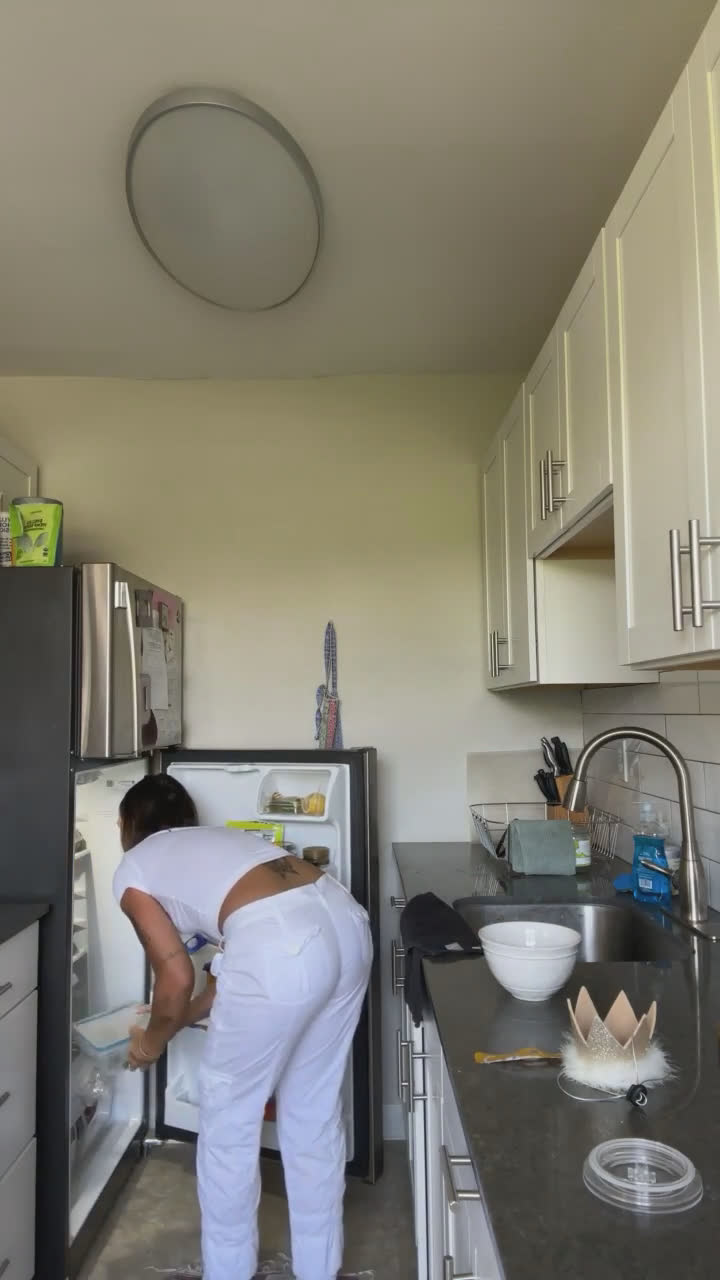
Cadre thought it might be nice for us to share a meal and talk about body image and food and eating disorders. I chose to wear all white for lunch because it's so sunny in Seattle. If you have questions about or thoughts about food, body image, eating disorders, please comment.
Rachel: It is really important for me to have meals ready to eat. Avoid preparing for a meal until I'm really, really hungry. I'd starve if not for the microwave and on purpose.
While on vacation in Mexico, Rachel says she trusted that her body would adapt. A vacation for two weeks is not going to change her body permanently over the course of the year. Recovery is really a long journey, and you know, learning to trust your body.
If this conversation resonated at all, or if you wanna talk more about eating disorders, body image and recovery, let me know in the comments. I hope that you all have a lovely Wednesday, and I will see you. Same time next week.
Happy Wednesday, Cadre. I hope that you are all having a lovely day. We are going to do something a little different today. We're going to have lunch together. So it's my lunch hour. I don't know what time zone everyone is in but it is very important to me that I stick to my meal schedule as someone who is in recovery. So I thought it might be nice for us to just share a meal and talk about body image and food and eating disorders. And this is something that came up a lot for me when I was on vacation so it felt relevant.
So I'm gonna start making my lunch while people filter in and then I'll check back in and we will chat. Also, I chose violence today wearing all white for lunch. But it's so sunny in Seattle and I really, I just wanted to embrace. I wanted to embrace the weather. Hi, Rachel. Hi. Hello. CMM sts and lots of pretty numbers. Hi. I'm so glad you're here. So today I thought it would be nice for us to share a meal together. This is a little different than what I normally do on a live stream. So I'm gonna be making my lunch, aka microwaving leftovers.
And then I thought we would chat about food, body image, eating disorders and just things that have come up a lot for me the last couple weeks. And I'm always reminded that it's so important to have accountability and consistency when it comes to recovery. Hi, Alec. Hi, Luke. Hi, Jules. So I am bringing you with me into the kitchen today. I am not cooking. I'm not a good cook. I'm literally just gonna microwave my lunch and then we will share a meal and just kind of chat. So while I microwave, if you have questions about or thoughts about food, body image, eating disorders, disordered eating, body dysmorphia.
If that's something that you've ever struggled with or know someone that's struggled with, that's what we're here to talk about. And I'm gonna be eating because it is lunchtime and it is important that we stick to our meals. So I'm gonna start microwaving and I'll see if any comments come in. While I do, Rachel says, perfect timing. Okay. Also, I said this in the very beginning. I don't know why I thought wearing all white while I was gonna be eating lunch with you guys is a good idea. You were about to probably watch me spill curry all over myself, but I know you won't judge me.
So. Okay, I'm in a microwave because I'm not cooking. So something that I have learned in recovery is it is really important for me to have meals, like, ready to eat, because I have a tendency to. I don't know if there's a word for this, but I have a tendency to avoid. Avoid preparing for a meal until I'm really, really hungry. And I know this is related to my eating disorder, where I have a big fear of eating. When I didn't have a hunger cue, my stomach didn't say, I'm hungry. I was really anxious about preparing a meal.
And so that would tend to get me to a place of being in a state of absolute starvation by the time I needed to start making myself a meal. And if I didn't have anything prepared or already ready, that meant waiting probably another hour or getting to a panic mode about not eating soon enough and destroying my metabolism. And that would create a lot of anxiety and stress around mealtime. So something that's been important for me in my recovery is making sure that I have food ready at hand. Takes me five minutes to make so that I'm actually eating a real meal.
Not that there's anything, anything, you know, like, such thing as, like, a real meal or a not real meal, but so that I'm actually feeding myself a meal instead of maybe only having something like a snack or something that's not gonna suffice me for a full meal. It's really, really important that I have food on hand so that I can quickly and readily make myself something and actually feed my body. So I. At the risk of sounding, um, I meal. I meal prep, but not in the sense of, like, uh, um, the way it's sort of used in, like, the diet and fitness industry.
But I do it in a sense of, like, Rachel's got food for herself for the week. So I make a lot of rice, a lot of protein, a lot of vegetables, and I have, like, a thousand sauces on hand. So if I'm in the mood for Mexican, I can just put enchilada sauce and cheese and avocado on there. If I'm in the mood for curry, I can put a curry on there and just have things ready for myself so that I make it easy and accessible for me to have all my meals. So I am gonna put a bunch of stuff in a bowl and then ask myself, what am I in the mood for?
I kind of feel, yeah, I feel like curry. I'm gonna have curry. Curry it is. I don't know if y'all are Trader Joe's people, but this thai style red curry, if you're not buying this at Trader Joe's, you haven't eaten, you haven't lived. This is. This is the bomb. So let's see. I think I'm gonna put another avocado on there, too. Does cilantro go well with curry? Does it? Why not? Maybe I'll first cilantro on there. Rachel says, same. I'd starve if not for the microwave and on purpose. Yes. Yeah. I'm a big fan of my microwave because, again, like, it creates ease and speed, which is important for me sometimes because I still have a tendency to get to that real edge of hunger before I let myself eat.
So not going on. Rachel says, I've never had curry. Oh, rach, do you also not talking to myself. There's a Rachel in the chat. Do you have a trader Joe's in your neighborhood? You're in Dallas, right? Do they have Trader Joe's there? I feel like they must also. Milo's back. Look who's back. Milo, say hi. That's my chicken, Milo. Wait, can I take this down? Milo, say hello. He's shy. I got him back from my mom today. I was so happy to see him because I was on vacation. He was funny, too. He was, like, really excited to see me.
But then he immediately ran back to my mom, and I was like, have you bonded with my mother? Are you bonded to her now more than to me? But he'll quickly remember who his real mom is. At least I hope so. I hope so. So while I was on vacation. Cause I was in Mexico for two weeks. On vacation, you said? Yes, but I can't afford it. Is Trader Joe's expensive where you are? We have, like, really crazy, like, fancy bougie grocery stores in Seattle. So Trader Joe's is actually, like, one of our, like, cheaper options here.
We have a few other, like, options that are less expensive than Trader Joe's. But it's, like, a lot of, like, the whole foods, PCC, that kind of stuff. So. But, yeah. So while I was on vacation, it was very interesting because it's the first time I've been somewhere tropical where I'm, like, in a bathing suit or, like, my body's more exposed. Since going through recovery, I was really interested to see how I would respond in that environment. And I was really proud of myself because I ate all my meals, and that was a big thing for me because I have this big fear that if I overeat one day or under exercise one day or do it for multiple days in a row, my body's going to drastically change in ways that I cannot control or in ways that, like, are irreparable.
And I realized, talking to my therapist, I realized this has so much to do with this idea that when things are good, it's temporary, but this idea that when things in my life are good, it's not going to last. And so I have to hold on to it for a really long time. And in the same vein, I have this idea that when things go wrong, they're gonna go completely wrong and fall off the edge of the planet or whatever, and they're not gonna come back. And so I have this tendency to, like, if something isn't going well, I almost kind of like.
I'm like. I have, like, the case of the f***, it's where I'm like, oh, well, I overeat today, so I'm gonna overeat for the next five days straight because this is gonna ruin my body for the rest of eternity, and I might as well just, like, completely ruin it. Not that my body changing shape is going to be ruining it, but that's where my brain goes. And so this was a really great practice in trusting that my body would adapt and that any experience I had of bloating or fullness or weight gain was temporary.
Because a vacation for two weeks is not going to change my body permanently over the course of the year. Right. People go on vacation, they eat more food, they drink more alcohol, and they go home, and things go back to normal. But for me and my brain and my ed recovery brain, my body won't go back to normal. If I do something wrong. There's no room for flexibility. And so this is a really good test in how can I remain flexible and how can I let myself enjoy this trip where I'm enjoying the foods I want?
But it's not like I'm writing this rollercoaster of, oh, this is the only time I get to indulge. So I'm gonna go nuts and harm myself by binge eating or binge drinking, but rather enjoying these things and trusting that my body is gonna be fine and still waking up the next morning and having my breakfast and having my lunch and not compensating the next day because I had cake and tequila the night before. And it was really. It was kind of a really cool thing because for the most part, like, I was able to do that and, like, it wasn't perfect.
Like, there were times where I thought, like, oh, my God, my body has completely changed. I can't eat anything today. And I'll go, no, Rachel, your body is not changing overnight. Wake up, have breakfast, and go about your day like, it's okay. And even when I got home, I had kind of a freak out. Like, I was like, oh, no. Like, I shouldn't have eaten the way I ate on vacation. And I, you know, I f***** everything up, and it's all over now. And I had to remind myself, like, again, like, that's, that's not, that's not true.
Like, my body, I trust my body, and my body is going to be okay, and my body is okay. Um, and that's, that's been a really, like, wonderful transformation to experience. And it's still, I'm still having to mentally remind myself of that because it's not habituated yet. And, um, and so that, you know, recovery is really, it's a, it's a long journey and it's evolution. And, you know, I think, like, learning to have a relationship with our body where we trust it and where we can, we can have a sense of, I trust that my body knows what to do is one of, like, the biggest key parts of recovery.
I mean, obviously, a lot of it is learning how to eat again, learning how to feed ourselves, learning how to be in Social Situations, learning about triggers, learning about where, you know, where feelings about ourselves and our bodies come from and self worth. And it's about building a relationship with our body and a relationship with ourselves that includes a lot of trust. And I think that's kind of where I'm at in my recovery, what I'm working on. And it's probably one of the most rewarding parts of Recovery because it feels like I'm building safety in my body and in my brain.
And that is so new. So new after, like, years and years of not trusting my body and not trusting my mind, it is a pretty cool feeling. Rachel says after my first treatment, I went through a period I wanted ice cream all the time, something I never let myself have. My dietitian helped me make the connection that I probably craved it for that reason, and it wouldn't last forever. I ate it every day for at least a couple weeks, and I survived. H***, yes. That is so f****** cool. That is such a win.
And that was true for me in recovery, too. And I think for a lot of folks in recovery is the things that we typically binge or crave are the foods that we restrict from ourselves or don't allow ourselves. And so really, the way to sort of reduce those binges or those cravings is to actually intentionally eat them to allow ourselves to have them. So our brains don't see them as these forbidden objects or forbidden foods that we're not allowed to have, but rather things that we can always have, which doesn't create a scarcity relationship.
Right? So if there's a food that I don't ever allow myself to have, as soon as I see it, my brain's gonna go, I don't know when I'm gonna get that next, so I better get it as much as I can, right? Whereas if I see it every single day and I have access to it every day, there are gonna be days where I see it and I'm like, you know what? I'm actually not in the. I don't actually want that today, and I know it's gonna be there tomorrow, so I'm gonna leave it. And then we create a relationship with ourselves and these external things that is about what we actually need or what we actually want, and not from a place of lack or scarcity.
So that's such a good example. I love that you brought that up. Okay, well, I'm gonna go eat now. I think that to save you all from the sounds and the mess I'm gonna make while eating, I'm gonna eat off camera. And also, I don't really wanna talk with my mouth full, but if this conversation resonated at all, or if you wanna talk more about eating disorders, body image and recovery, let me know in the comments. And if you're watching this as a replay and have questions as this came up, please do feel free to leave comments and I will get back to you or make videos about it.
I hope that you all have a lovely Wednesday, and I will see you. See you. See you here. Same time next week. Goodbye, Cadre.
Reactions and comments are for members. Joining is free and takes a minute.