Join me to talk about the parts of caregiving that can be hard to talk about in culture, so we can all feel less alone in it. This week: How much of a thing is caregiving, actually?
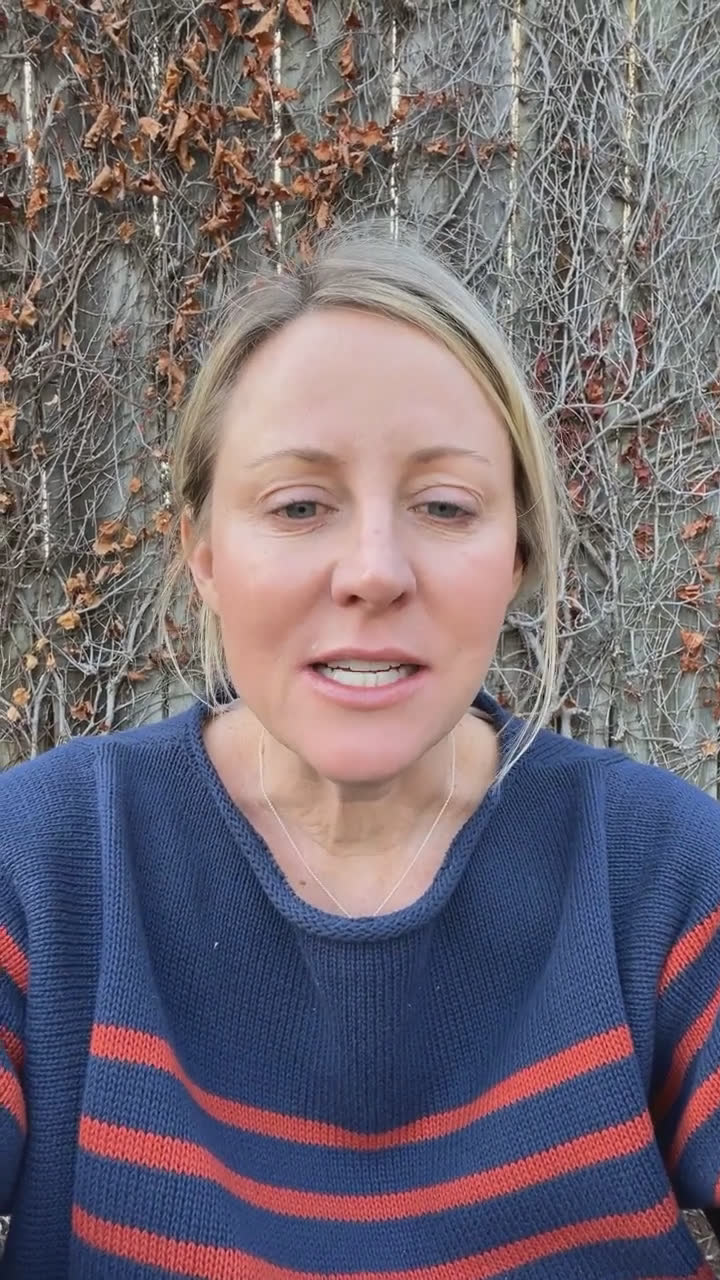
Good morning, cadre. How are you? Happy Thursday morning. It is Shannon here at cadre. It is caregiver day on cadre today. I'm excited to see you guys are joining. Thank you for being here. So I will introduce myself as folks join. So my name is Shannon and I am not a clinician. I'm not a mental health professional. I am a human who parents a child with autism, child on the autism spectrum. I am a human who myself lives with generalized anxiety disorder, CPTS D and what's my other thing? Oh my god, you guys.
No, I forgot. Generalized anxiety or CPTSD. I think, yeah, parenting a child with autism. So those are the things that I live with. My self-appointed role here on cadre is I want to be here to share my lived experience with you all as someone living through that and in hopes that you'll feel less alone and hopes that you will know that you're not the only one out there. So welcome. Okay, so I do things we aren't supposed to talk about and I call it that because in my lived experience, I struggled with going through things that are very human that we all experience like parenting or caregiving for someone we love and not having a place in culture to talk about it, right?
It can be really hard to talk about. So today, what I'm going to talk about relative to caregiving is how big of a deal is it actually? So I'm going to use actually, I have two sons, a 16 year old and a 14 year old and my one son likes to say actually, honestly, mom. So I'm going to go. Today, we're going to have the actually, honestly, conversation about how big of a deal it is to be a caregiver. And so what do I mean by that? I was talking to a friend yesterday who is a caregiver as well. And we've talked about it a lot, right?
We both have kids on the spectrum. And as we're talking, I'm like, can I see a question? And she said, yeah. And I said, is this a big thing in your life? Like, is autism like a big deal in your house ? And she's like, yeah. I'm like, okay, good. So it's, it's a thing. And she said, absolutely, it 's a thing. And it was interesting because as I asked her that question, and I found myself as we were talking, getting up to that question, sort of wondering to myself, like, am I just, am I overdoing this thing?
Like, is this caregiving thing not a big deal? Am I actually not weak, but am I being a martyr? Am I taking this on as a thing? And it's really not that big of a deal. And so even in asking her that question, I was a little nervous. And I appreciated that she showed up with a yes, absolutely. This is a thing. And so we started to talk about why it's a thing. And I'll share it with you all today. I'd love for you to, if you have thoughts , you know, on how big of a thing it is for you, put it in the comments.
But what I appreciated is that the tentacles of caregiving and all the parts that come out of it touch everyone. So as we continue that conversation, it's like, yes, it's a thing financially. Yes, it's a thing with our other kids and the other people in our lives. And the impact on our partners and our relationships, the impact obviously on our self care as caregivers, right? And so the reality is, it's a thing. And I think sometimes I'll speak for myself, but my guess is that I'm not the only one.
It's like the thing we don't want to say in culture is like, oh my God, this is so much. Oh my God, I'm so tired. Oh my God, I just wish this one day, this one thing would have gone as planned. I just wish that X. And for myself, I can start to feel shame at times when I think to myself, suck it up, right? This is a person you love. This is your child. And yes, those things are true. And it's a thing. And it's a thing that touches a lot of parts of our lives. So I want to say to you today a couple of things.
If it's a thing for you, that makes complete and perfect sense. And in that conversation with my other friend who acknowledged authentically, yeah, it's a thing, I was able to find some peace to say, okay, I'm not the only one whose life is touched in ways that are unanticipated on a daily basis because of being a caregiver. And yeah, it's a thing in the room. And actually, I'll steal her line. So credit to you, friend, for the line. And she said this autism for us is like the another member of our family.
And so whatever that is, whether you're caregiving for someone with dementia, where you're caregiving for someone with a long-term medical issue, whatever person you're caring for, it is a seat at the table. It is a chair that's pulled up to all the things you're doing because the truth is, it's a thing and it's going to impact all the parts. And so for me, what I felt and came out of that conversation feeling was don't ignore it. I think that's something that I also have learned in therapy over the years is the feeling, the thoughts, they're all happening for a reason , whatever that is.
And so let's bring it to the table, let's acknowledge it, let's notice it, let 's give us its space to say it's okay for it to be a thing. Of course, it's a thing. It affects a lot of things. So that's my message to you today. All those caregivers out there who are taking care of others, who are feeling like it's not a big deal. It's going to be okay. And all the self-talk we say to ourselves to tamp down all the parts that come with caregiving. It's a thing. Pull it up to the table, acknowledge it, give it its grace and it's all the things it needs and let it be a thing.
Because it is. So I hope you all have the best day today. We've got a fantastic lineup per usual on caregiver today on cadre. Colleen Lindstrom is coming up next. She is a sandwich generation caregiver. She's always got some great words of wisdom. Later on today, yes, Jules, it's more of a thing when you're tired and stressed. 100%, 100% it is and why not, right? Everything in life, I think, is more of a thing when you're tired and stressed. I think for me, it's about noticing it, right? And you're noticing it too to call it out as a thing.
And being able then to self-care to get through it. So Colleen Lindstrom is coming up today. We have Matt clinicians on today. We're going to hear from them, our fantastic partners at Minnesota Autism Center. We've got girls mentorship coming up who's going to talk about what it means to be caregivers, supporters, people who love people who are teenage girls. All that comes through that. And then Ms. Shannon Paul is of course coming up this afternoon and she's all about laughing through the things, right?
Let's bring comedy to it all. So I hope you feel supported here on cadre. If you need more interaction, communication, go to the community feed and we can chat there. But it was great to see you all today. You guys are doing a fantastic job being caregivers. I'm proud of you. Thank you for being there for me as a human and we're all going to get through this thing called life together. We're all going to get through this thing together. So have a fantastic day and we'll see you
Reactions and comments are for members. Joining is free and takes a minute.