It can be hard to talk about the real-life parts of being a caregiver, in our culture there can be shame attached. Join me as I share my lived experience with it in hopes you can feel less alone.
It is caregiver day here on Cadre. Shannon is a caregiver of a child with autism. She also has generalized anxiety disorder and CPTSD. We're going to talk endurance in caregiving today.
Jules: We're going running today. People usually love or hate it. I'm going to talk about it from being a running track. I ran a 400, an 800, a 1500 and a 3000. Some people love to hate it, and that's okay.
Gilbert: How is this related to caregiving? Gilbert: If we go into these hard things, full gusto, we're gonna run out of energy. He says caregivers are here for the long run. Gilbert: And so things are gonna be unwashed. We're gonna stink. But we're running a marathon.
The rest of the day for caregiver day will be amazing. Colleen Lindstrom is coming up at 945 sandwich generation. Girls mentorship is going to talk about caregiving for young girls. Miss Shannon Paul will round out the day with humor and laughter and love.
Cadre, good morning. Hello. Happy Thursday from the Cadre sphere. It is caregiver day here on Cadre. I am Shannon. I'm going to give you all a moment to join. I'm a couple minutes late. It's 09:04. For those of you that don't know me, my name is Shannon. I am a caregiver of a child with autism. So I am not a clinician. I am not a mental health professional. I am a human who parents a child with autism who I myself have anxiety. I live with generalized anxiety disorder, and I also have CPTSD, which means that I have to work really hard at times in relationships to feel safe.
So those are some of the things that I live with, and I am here. My self appointed role here at Cadre is to talk about my lived experience with all these things so that you can feel less alone in whatever it is that you are going through. So that is why I'm here again. Happy Thursday. It is caregiver day. Encadre what does it mean to be caregiver? What does it mean to be a caregiver in life? That's what we're talking about. And so today, I'm going to talk about caregiving for my child with autism.
But honestly, I'm going to talk about it relative to, I think, something that anyone who takes care of anyone else will understand, even including taking care of yourself. So we're going to talk endurance in caregiving today. All right, so I'm a runner. I was a runner when I was younger. Continue to run today. And so I'm going to talk about it from being a running track. Okay, so I don't know if any of you, any of you out there are runners. I don't know if any of you ran track or any endurance anything in your life, but we're going running today.
People usually love or hate it. So if you hate it, apologies, but I'm sure you have been a spectator. Come against the road where it's closed and you're trying to get through, and people are running by and you're like, oh, my gosh, I'm super annoyed, or whatever. Whatever that manifests for you. Right? You get it. Hi, stuff. It's so good to see you. Good morning, JC. Okay. Yeah. And you know what? Some people love to hate it, and that's okay, too. My friend Colleen. Okay, so when I ran track, I've been a runner my whole life, and I ran a couple of different distances, so I ran a 400.
Good morning, Jules. I ran a 400 I ran an 800, I ran a 1500 and I ran the 3000. So 400 is one time around a track. 800 is two, 1500 is four. God, I'm going to do this. I'm going to screw this up. And the 3000 was eight. Okay, so those are a lot of different distances. So when you run a 400, you sprint. It's an all out sprint. People say it's the hardest race that there is. You know, some people say that in track because essentially you gotta go hard the entire time. It's the thing that sucks. Like, it's like a gun, a punch in the gut, right?
So you are just like. You're just going all the way around. When you do the 800, you take it down a notch, right? So you settle in a little bit more. Cause you got two laps around. It's still hard. It's still taken. It's still taking the wind out of you. When you go to the 1500 of the mile, that was honestly probably one of my favorite races, you, you're slowing it. You're certainly starting to slow down. And so you may start with a little bit of not caution, but you got to set the pace right. You know that, like, okay, I got to settle into this thing because I got to go around four times.
You start to pick it up in round three and then round four, you're kind of, you know, you're going strong again. And then the 3000, it's a different mindset altogether because you're doubling that mile. Right. So how is this related to caregiving? When we have someone in our lives get a diagnosis, when we have someone in our lives start to go through a thing, when there's a medical emergency, honestly, when you become a parent, when you as an individual have to take care of yourself, I think oftentimes we can start at that 400 pace and we are like, I'm going to freaking take this thing on and I'm going to fix it and I'm going to be amazing at it and I'm going to x, x, x and x, right?
And I'm going to, like, just take that thing down and you can do that. And I will say that I did that. And I think there are still moments in my life when I do that, when a new thing comes along and I'm like, I'm going to take this thing down. I'm going to own this thing. The truth of it is, and this is coming from my lived experience in the last few days and weeks and months, is that it is. Oh, there's Gilbert. Good morning, Gilbert. It is a. It's a 3000, right? It's actually what it actually is.
It's eight times around the track. Eight times around the track is a lot more than once. So if we go into these caregiving moments, if we go into these hard things, full gusto, we're gonna run out of energy. This is happening to me in my life right now. My son is going through some stuff, and I am like, what I want it to be is I want it to be the 400. I want it to be push hard, and I'm done. It's not. It's not that right now. What it actually is is it's a lap and a lap and a lap and a lap and another lap and another lap.
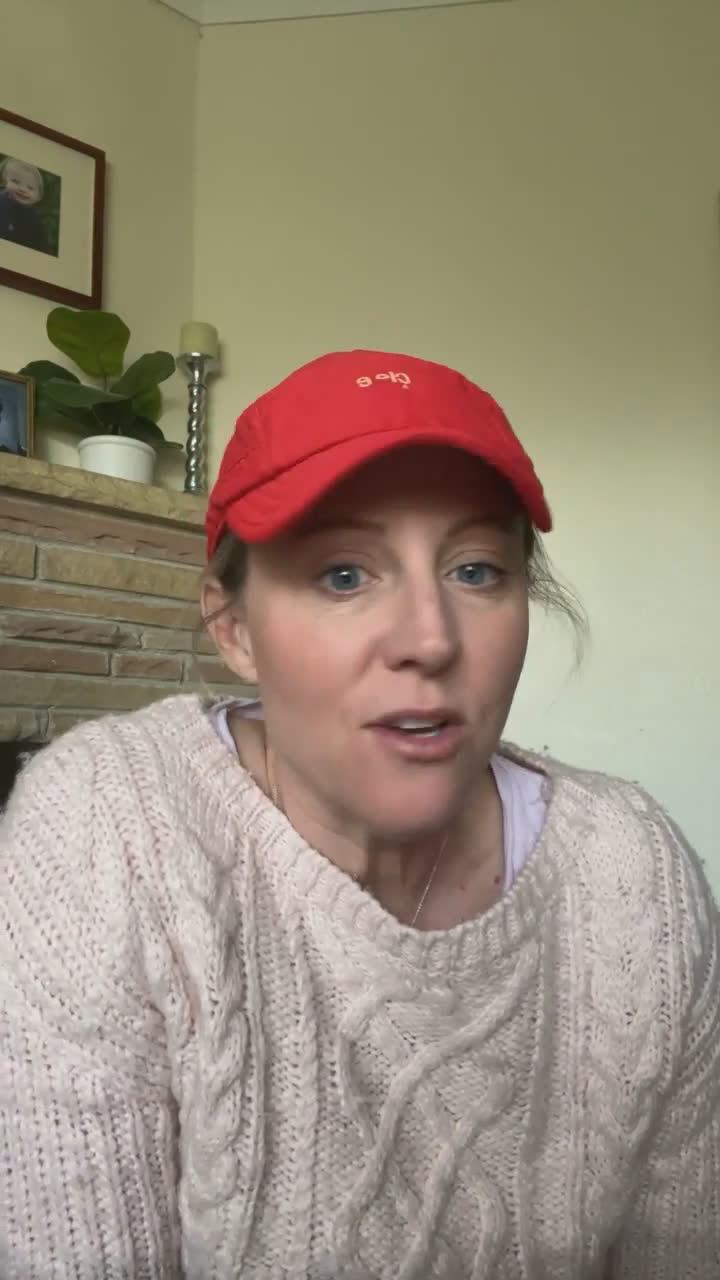
And that's why, you know, I'm sitting here today with my hat on and my hair not washed and all the things, because I'm in the middle of a bunch of laps, and I'm tired a little bit, honestly. Like, I'm getting fatigued. So I use this analogy because I think one of the things, as caregivers that we need to remember is that we actually. Now I'm going to go even to the other end of the spectrum. We're running marathons. We have run marathons, too. We're running a marathon. So we are here for the long run.
We are here for the miles when, like, your feet don't work and you're hungry and all the things. And I think I want to remind us that today, because that's the truth. That is the truth. Particularly if you have a child with autism or if you have a child with special needs or if you have someone with a chronic health condition. You're here for a while. You're here. You're in it. You're just in it. And so I want to give us the permission. I'm honestly probably giving myself the permission right now to notice and acknowledge that, like, that means s***'s going to fall apart a little bit, right?
Uh, I mean, it's just gonna fall apart. It's just gonna fall apart. And, yes, steph, thank you for being there with me. Right. No. Hair is washed. That's fine. I'm not gonna get into, actually, all the things that are undone in my life right now. But I am reminding myself, and I am reminding you that we are in a marathon. And so things are gonna be unwashed. We're gonna stink. Right? Let's just go full on to the analogy. And, yes, Colleen, sometimes you feel like it's done, and then you're right.
Back at the starting line. And that is so resonant with me right now. And I want us just to be each other's cheerleaders. So my last analogy. And then I'm done with all these analogies. The cool thing about a marathon is that when you do pull up to the street and the street is closed, now we're all in the car. Now, I'm pretending we're not running the marathon, but we're coming up as a spectator and we're seeing the street is closed. And maybe we're frustrated because we can't get through. But if you stop and you take a look, the coolest thing about a marathon is that all kinds of people run them.
Everybody looks different. People are there cheering them on because they know it's hard. The spectators see that this is a hard thing, right? And they want them to be successful. And so I want us to be that for each other. And Jules, thank you. You are here every week, and you are here for me, Steph and Colleen and everyone else who shows up, JC, who shows up consistently. We are each other's cheerleaders, right? And I just want us to continue to be that. And I want us to continue also to know that, you know, we're gonna have shorts that fray, and we're gonna have messy hair, and we're gonna have all the things, and we're doing this really, really freaking hard work.
And so that's great, right? Because life is not always a 400. And you may never watch one of my lives again if you hate running. And then you just got sucked into all these analogies. So I apologize if you don't like it, but that's what I've got for you today, guys. We're kicking a**. We're kicking a** in all of our messy, unwashed, starting over always ways. And so I'm glad you're here and I'm glad that you know, or I hope you know, you're not alone in this thing. And we're all there together. So the rest of the day for caregiver day will be amazing.
Colleen Lindstrom is coming up at 945 sandwich generation. She's got it on both ends, so definitely listen to her. We've got the mat clinicians today. Sarah is going to join us. She's awesome. Love her. She's going to be here to talk with us. Girls mentorship is going to talk about caregiving for young girls and just humans. Right? So how can we care for each other, but particularly that group of group of individuals who definitely need leadership and support. And then, as always, Miss Shannon Paul is going to round out our day in the way that only she can, with humor and laughter and love.
So thank you guys for being here. Thank you for being a part of the Cadre sphere. You're kicking a**, and we're all in this together. So hope you have a fantastic day and keep doing a great job being.
Reactions and comments are for members. Joining is free and takes a minute.