It can be hard to talk about the real-life parts of being a caregiver, in our culture there can be shame attached. Join me as I share my lived experience with it in hopes you can feel less alone.
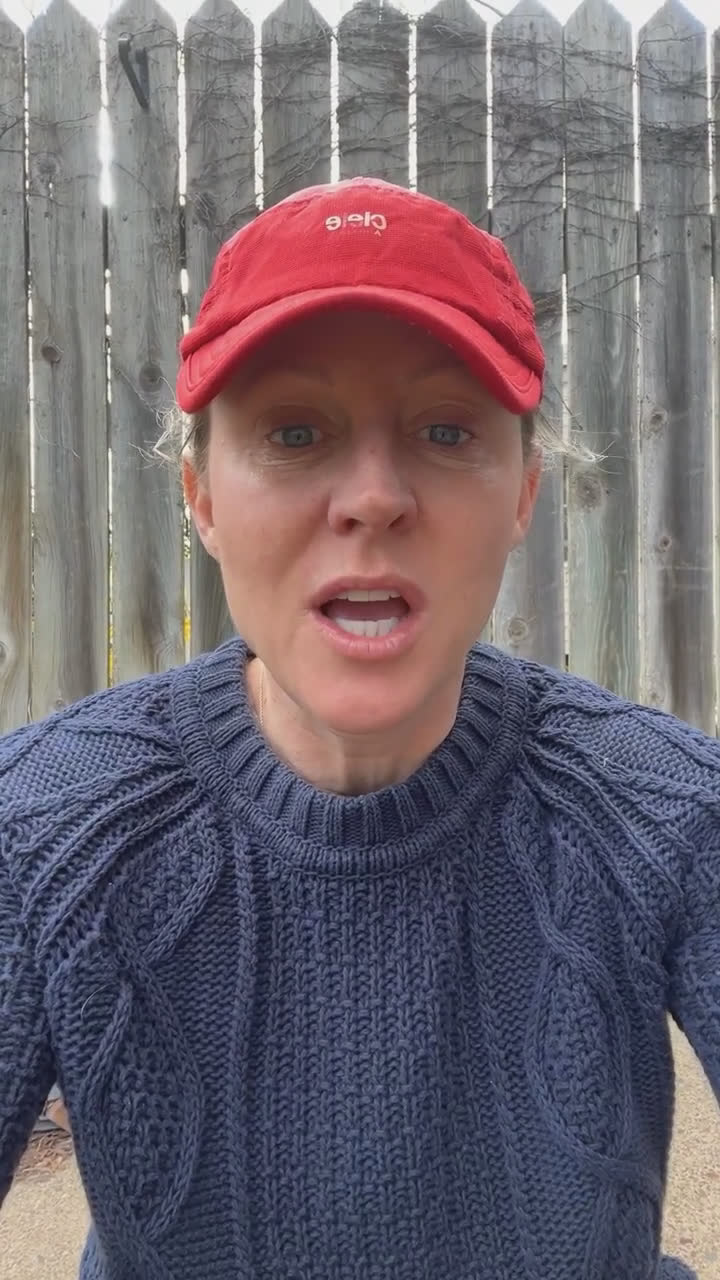
Cadre, good morning. Happy Thursday. It is caregiver day here on Cadre. I'm sitting outside in my backyard in Minnesota today. I'll show you blue sky that's coming in here in Minnesota.
Today is caregiver day on Cadre. Shannon is a human who manages life with CPTSD, generalized anxiety disorder, and she has a son with autism. She hopes to make you feel less alone with whatever you're going through.
Stephanie Coontz: Allow yourself space and time to gather all the information when you are faced with a new challenge in your caregiving life. Also about trying to find a partner, like, who's your wingman on this caregiving journey.
There are 53 million unpaid caregivers in the US. The work equates to something like $60 billion in labor. We need a partner, we need a tag team. Give yourself the space to get all the information and know that that's okay.
Cadre, good morning. Hello. Hi, everybody. It is Shannon. Happy Thursday. It is caregiver day here on Cadre. I will give you all a couple moments to join. I'm sitting outside in my backyard in Minnesota today. I'll show you blue sky that's coming in here in Minnesota. It is a beautiful time of year where everything starts to pop up outside, and it is just a gorgeous time. So I'm going to sit outside as much as I can here in Minnesota. All right, so today is caregiver day on Cadre. Today's the day when we talk about those of you who are caring for others, whether it's your parents, whether it's a loved one.
In my case, it's a child with autism. But so, for those of you who don't know me, I'm Shannon. I am not a clinician. I am not a mental health professional. I am a human who manages life with CPTSD, generalized anxiety disorder, and I have a son with autism. And so I'm here to share my lived experience with you all, hoping, in hopes that you'll feel less alone with whatever you're going through. Jules, good morning. It's great to see you. I'm so glad you're here. All right, so, today, the topic that I'm going to talk about from a caregiver perspective is two things, and it's kind of practical in nature.
It's about allowing yourself space and time to gather all the information when you are faced with a new challenge in your caregiving life. And then it's also about trying to find a partner, like, who's your wingman on this caregiving journey, knowing that for some of you, you may not have a spouse, you might be single parenting, you might be solo supporting whoever that person is. And so trying to give you some ways to think about how you can find partners and support in ways that you might need.
So, those are the two topics. So, the first thing I'm gonna say is, I'm going through something right now with my son that requires me to gather a lot of information. So new symptoms are happening. New things are happening in his life that are concerning to his dad and I, and so we're managing that within his school system. He is a freshman in high school. We have been involved with the school system for years and years, and this new thing is happening. And so, as his caregiver, my job is to say, okay, what's going on here?
And bring that to attention. Right. To try to solve for that. So I'm sure for you all you have the same thing for whoever you're caring for. There's times when a new thing happens that you haven't dealt with before, and you're like, listen, I don't know how to do this. You know, no one gave me the rulebook on this. So I want to give you some practical and emotional advice. What we're going through is a lot in that, if I'm gonna be really honest, some of the symptoms my son is having, I got on a Reddit thread and went down a really dark Hole.
That scared me. And so with that new information, I couldn't not do something with it. And you may also have something like that that comes up in your life, right? So you might have this new thing with your loved one where all of a sudden you're like, oh, gosh, is this a big thing? What is this? And so I want to say to you two things about that. The first is, allow yourself the space and time to get all the information right. So as you get overwhelmed with this new thing, you got to manage. Give yourself the space and time to say, okay, what I'm going to start with is some data.
What? I'm going to start with as much research as I can find to figure out what's happening here and don't feel. I'll encourage you to not feel pressure to do it. Right. I'll encourage you to not feel like you have to rush. What I would say to you is, take your time, do your due diligence, and give yourself the respect and the space to do that for yourself. Good morning. Speak wonder. Thank you. I appreciate your compliment. My nice sweater. And I see you, steph. Nice to see you. Thank you for your hug.
And why does that matter? Because I think as we are caregivers who are operating within a system of care, whether that is a healthcare system, whether that is an educational system, we're operating within this big old thing that exists that we have to go into to take care of our people. And that can feel like a lot, and it can feel like we don't get how to navigate it. And so I'm just encouraging you to say, okay, I'm gonna take control of myself here. I'm gonna take control of the situation, and I'm gonna allow myself space and time to do what I need to do to feel like I've done my due diligence, to feel like I can show up in this with as much information as I have.
And I know that sounds maybe like a little thing, but I think as caregivers we have emotional connections to the people we love, that we're caring for. And so you can get emotional because, of course you're going to get emotional because this is a person you love and care for. So, yeah, of course you're going to get emotional, but you're in a system that isn't necessarily emotional, and so just give yourself that space and that gift of. All right. I'm going to do this in the way that works for me, and that's okay.
So that's the one. The first thing I have to say, the second thing I want to offer you today is to get a partner, be a tag team. And I know that's easier said than done for those of you who are parenting alone, who are taking care of a loved one, without a technical partner. Right. Like, without a spouse or without a sibling or whatever that is. But there are places and resources and there are people who want to be by your side. I live in Minnesota. One of those organizations is called Pacer center.
It's full of advocates that will help you. And why does this matter? Because as we go into these situations again, they come with emotions. Because, hello, we're humans. It's good to have someone to tag in for you. It's good to have someone to say, like, yep, nope, this is great. It's a cheerleader. It's a person by your side. And so I just offer to you, maybe, you know, maybe that tag team partner is Cadre. Right? Like, maybe you need to say, hey, team Cadre, I need you to support me today because this thing is happening, and we'll absolutely be there, because I think, as caregivers, we can feel so alone in what we're doing.
But the truth of it is there are 53. So now I'm going to be a nerd. There are 53 million caregivers in the US. 53 million unpaid caregivers in the US. The work we do. I'm a data nerd. I'm sorry. The work we do, this group does, equates to. Now I'm going to get my data all wrong. It's like something like $60 billion in labor. The math they did on all the work unpaid caregivers do and all the stuff we're doing. And so if we're doing $60 billion worth of work, we need a partner, we need a tag team.
Speak wonder. We need someone, whether it is a spouse, whether it is Cadre, whatever it is, we need someone to come alongside us and say, like, hey, man, I'm in. You get to rest for a minute. So that's what I'm offering you today is a couple of pieces and thoughts and some advice, I guess, if you want to call it that. I'm really self talking to myself in this moment as well, but I'm really trying to practice those two things. One, giving myself the space to get all the information and know that that's okay for me to do that, because I have that right.
And I have that right to go into any conversation and say, here's what I know. I know this and I know this and I know this. I don't know exactly what it means, but I do know these things to be true. We have that right. And so allow yourself that space to do that. And number two, find a partner. Again, if it's Cadre, if it's an organization like Pacer center in Minnesota, Steph, you probably have one in your local area. Who are the people that can stand alongside you? Even if it's just to say, like, hey, man, I'm in.
Take a break and you can come back when you're ready. Speakwonder says, I have a cheerleader, a friend who comes with me. Speak, wonder Colleen. I did see you were in here. We are your cheerleader. We are here. We are one of the 53 million people who do this work every single day. And so I just want you to know that you're not alone and you're kicking a**, and we're all going to get through it together. So hang up. And we have girls mentorship. So we're here for caregivers. We're here for you all.
And I hope you have a fantastic day and we're going to see you here soon on Cadre. Take care, my sweet friends.
Reactions and comments are for members. Joining is free and takes a minute.