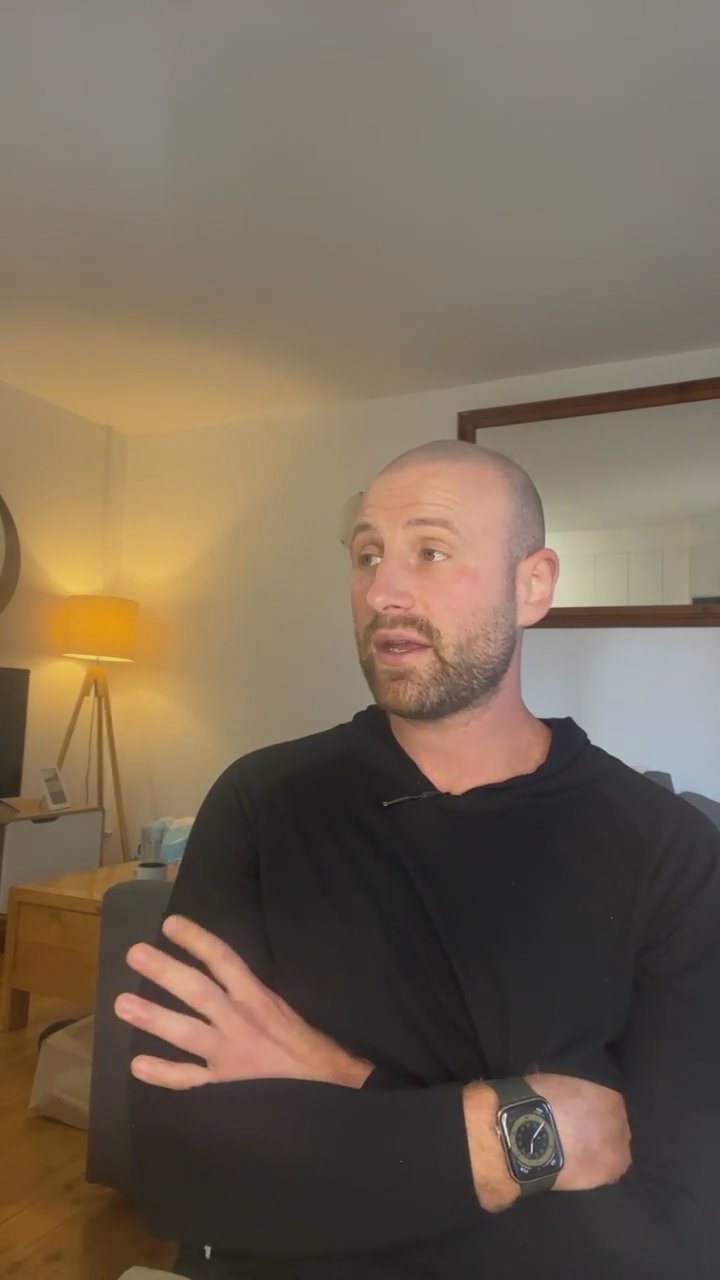
Welcome to another episode of my livestream, Mental Health Matters, where we discuss MATTERS around addiction and mental health because mental health MATTERS. Today we are doing out every-other-week, ask me anything episode, so feel free to to send me your questions or just join and participate!
Every other week, we do an ask me anything episode where I compile questions that you all have asked me. This is mental health matters, where we discuss issues when it comes to mental health and addiction. Having those discussions on livestream is what is the most fun, most interesting.
So how's everyone doing? We got seven victorious, 71. Victorious, the victorious one. So again, throw any questions. Mental health addiction, I'm happy to answer.
How do you change your mindset from living to work, working to load jewels? There's two general types of approaches to how we live our lives. There's more like mindful living, which is like acting with more intent and purpose.
It just takes really dedicating some time to clarifying your values and goals and then critically analyzing what needs to go. Use your support network, friends, family, and then ask them, you know, talk about it with multiple people. Then the motivation comes in.
Three steps. Drinking problem. You gotta write these things down. There is a name for it other than the Benjamin Franklin method of making a decision. Try the exercise next week. Let me know how it went.
With alcohol, there's a unique element. There's a physical dependence. withdrawal with alcohol more than any other. It could be all the way from death to having psychosis to seizures. The first step may be to manage withdrawal.
This is important because everything's on a spectrum, especially with alcohol. There's mild, moderate, severe. Of the eleven symptoms, not all of them are created equal. Get an assessment, make your decision with your friends, family, loved ones, and medical team.
What's up, folks? Evan here, your resident mental health and addiction therapist. This is mental health matters, where we discuss issues, topics when it comes to mental health and addiction. Because mental health matters, it is important that we have some of these conversations. So today, every other week, we do an ask me anything episode where I compile questions that you all have asked me, whether it's here, general social media, or just through my clients or anywhere else. So I brought some questions here.
Hopefully we're gonna get some people joining or as I say, that we have lynch here. What's up? We got Juul some of our regulars. That's awesome. Thanks for joining. And again, we're doing our ask me anything episode. So any questions you want to throw at me, I appreciate it. I do have some preset questions as well we can get into, but having those discussions on livestream, that's what is the most fun, most interesting. So how's everyone doing? We got. We got seven victorious, 71. Victorious, the victorious one.
So again, throw any questions. Mental health addiction, I'm happy to answer. You got me here. You may as well, but yeah. So let's do some questions that I've gotten. Number one. Okay, here we go. This weekend, I realized I've been working at least two, sometimes three jobs for over 20 plus years. How do you change your mindset from living to work, working to load jewels? I love this question. So it's really funny. I have a cousin who I was just talking to. She's, like, kind of one of these, like, super genius people.
5% IQ kind of thing. Always been an ambitious person. And she always just takes on, like, a college professor as a family, does all these projects. She speaks multiple languages, and, you know, whenever I talk to her, this has been our entire life, she's always, like, kind of in the state of, like, stress and feeling overwhelmed. And she said, you know, I'm working hard to having less stress in my life. And I was like, do you see the irony in that? You know, you're working hard, you know, to not work hard, right?
I mean, I guess that's fine, but I just think it was kind of funny. And, you know, it's just like, everybody has a different relationship to work, right? It's that live to work or work to live. So how do you change that mindset? I mean, it's difficult, you know, like, almost like any mental health disorders, like, in doing whatever pattern you're in, what is the negative impact that it has on you. And if it really does, yeah, it's worth addressing. I think there's two general types of approaches to how we live our lives.
And it could change in a given moment, but it's kind of like an automatic mindlessness, right. Or mindless, but just kind of reactionary. Automatic. We're on autopilot and we're just in. We're just acting out those behavior patterns that we always do that seem natural to us. And then there's more like mindful living, which is like acting with more intent and purpose. Now, I think in order to do the second one, it's really important, just like, making any change to gather, garner the motivation to make that change.
So let's say I'm working with a client on this. I would maybe ask them, like, okay, tell me more about this predicament you're in. Tell me more about work. Why is it that you want to make this change? So really exploring how it's having an impact, taking a step back and actually analyzing it instead of just being reactionary, not thinking about it. Maybe you have these, like, passive thoughts of like, oh, this is not a good idea. I want to do something better. Just like it would be like doing a diet or actually how I should do this.
So you kind of do these, like, little passive attempts or thoughts and nothing really changes. So really exploring why that is, gathering the motivation and coming up with a plan as to, okay, well, what would that look like? What would it look like to have more balance in my work? Like, what is it that I'm doing now that's most fulfilling but also most practical? You know, something I need to do to get by to make money, whatever, and live the life I want to live. And part of that is like a values clarification exercise.
Like, what are your values? What are your goals? You know, what do you want out of life? And then what in your life now is in the way of that? You know? So what are some specifics? It's kind of like, what are some things that I could cut out? And I've had to do this a couple times, and it is really difficult. You know, if you're doing all these different things, there's, like, a reason for it. And maybe you like all of these things. And, I mean, this is just classic for me because I have all these different projects.
I'm really good at starting projects, but, like, seeing things to completion or maintaining the ones I started is difficult because I love new, exciting things. I'm an ideas guy, right? So whether it's like doing the Cadre stuff, other social media, managing my practice. You know, I had a recruiting business for a while and like, at one point, it was just too much. And I wasn't doing any of them very good. You know, it was like kind of, okay, decent at some, right. But it was like, okay, well, what are these things?
Even though I like elements of all of them, what. What's something I could drop off? What's. You know, what should I focus on to really live to those values and goals? Yeah. So, yeah, again, it's, financials aren't the issue. So it's like, okay, maybe I could drop any one of these things. But I think really, Jules, it just takes really dedicating some time to clarifying your values and goals and then really critically analyzing what needs to go. And it's hard to let go. It's hard to let go of some of those things that, again, we do for a reason.
You like it, but then, unfortunately, now, this is what I was telling my cousin, too, where it's like, okay, you do all these things that you like, love, whatever. However, as a collective, if you're doing too much and you have stress and you're not going to really enjoy them, you know, so now you're kind of enjoying nothing or not present. So, you know, what are, what are the different, you know, it's like, it's like if you're writing or something, like, if you're like an author, you're writing and it's like, God, like, I need to cut some of this stuff out.
I need to cut it down. I need to simplify. It's really kind of killing the baby, you know, hitting that delete button, you know, on some of your work. And maybe there is a way of doing it all. Maybe it's like, not all at once, but you say, okay, I'm going to hit some of these goals and do something else. But, you know, only, you know, not only you, but you, you know your situation best and others around you, and especially when you, you know, you get emotionally wrapped up in, you know, emotionally tied to many of these things.
It's really difficult to see things clearly. And this is where it's best to utilize your support network, friends, family, and then ask them, you know, talk about it with multiple people, ask their insights, the ones who know, you know, what you do, and they may really help you. And maybe you don't always hear what you want to hear. And in this case, if you're having a real difficult time with any of this, there's going to be some tough things that maybe you don't want to hear, some insights you come up to where you're like, okay, I don't want to drop this, but it's clear that I have to.
Then the motivation comes in, those actionable steps to doing it. There's like a grief process in that, too. If you're giving up a project, but as you do it, you need to maintain that motivation, continue talking about it, because it's like substance use. There's going to be a temptation to go back. I've had that happen where I'm like, I'm dropping this project. I do. And then something brings me back. You know, it almost like, feels like an addiction at some point. But, you know, doers do. You're a doer, but, you know, you gotta.
We gotta discipline ourselves. And Lord knows I'm there with you. So maybe one thing's gotta go. You say you got three jobs for over 20 years. I think one of them's gotta go. At least one. Probably one. Start with one. Another thing. Another thing, too, that kind of helps with values clarification. There's a, there's actually like some objective ways of doing it that you could check out. And this is, someone showed me this once. This is actually how I chose grad school, which is like, I had three options.
And there's something that's called, like, what's. It was like the Benjamin Franklin method of making a decision. I forget the actual name of it. It's like a cross analysis, like something like that. But it's as simple as you make a spreadsheet and you have each of the options. So in this case, three jobs. And then you identify different values and variables within the job. So, for example, how difficult, you know, the difficulty of it, the level of fulfillingness, convenience, you know, like, you like every element that's important.
Like, you could be like the commute. You could do as many as. You could do like, 20, as many as you want. And then you rank, you rank the importance of each of those variables, right? So you're like, okay, you know, out of ten, the commute's like a four, the fulfillment's like an eight, the, you know, whatever other value, you rank each one, the variable, right? So then you have that written out for each one. And you probably want to, like, look this up so you could, like, visualize it. It's maybe hard to wrap your head around.
Maybe it is easy for you, but it is pretty simple when you see it. So then you rank each one of those. And then you look at each of those three options and you rank them in each of the variables. So the, so for this job, the commute is like, it's like a five out of ten. Good. For this job it's eight, it's closer. For this job it's like a two because it's far away, right? This one's more fulfilling, this one's better financially. You know, whatever. It's not as much one for you, but maybe you do put the financial, maybe it's something, maybe it's worth a two.
You could put it down again. You could put 1000 variables if you want. You don't want to overcomplicate it. And then you kind of do this like little simple math where it's like you multiply. I mean, there's other ways where you could like kind of negate some of them, but in an easy way you could like kind of multiply. Like, okay, the commute's a two, it's worth a five. So that's a ten, the fulfillment's an eight, it's worth an eight, it's 64. And then you add it up for each one, then you get a total score, and then the next one, you get a total score.
And then you line it up and then it's right there. Is this perfect? No, but it is like a really interesting exercise and a good way to actually identify the values and the variables that are important to you and really objectively try to see on paper comparing the three. Someone I did like a video on this long time ago and some people were saying, like, let's say it's like a choice of two where it's like you flip a coin and whichever one it is. Like if it, like sometimes after you do that, you get this feeling like, oh, crap, I wished it was the other.
And then it kind of gives you this, this feeling where you're like, oh, okay. Like, actually this one maybe is more valuable because there actually was one that I hoped was going to be more, but it was hard to sort through. So someone said that once, or actually multiple people commented that that's what they do sometimes they flip a coin and then see how they feel after which one they're happier about. So that was a long winded answer, but I think that would maybe be a good way to go. That's what I would do.
But what do I know? But I empathize with you. I mean, it's funny that you brought that up, actually just having that conversation today. Well, let's see, like, I'll just do if. Unless anyone else has another question. Maybe I'll just do a random one. Let's see these two go together. Maybe I'll save that. So let's do, like, a simple one. I get this all the time. Just like, what do I do if I have a drinking problem? So there's some easy answers. I could seek help. I could do this. But, like, from a really practical standpoint, actually, maybe do another video on this.
Three steps. Drinking problem. You gotta write these things down. So the lesson here. Cause I'll forget it. Gotta always have my list here, Jules. Okay. I'm glad you're still with me, that you didn't, like, tune out and just be like, this guy's boring as h***. So hopefully try that exercise. Actually try the exercise next week. Let me know how it went. I'm curious. Let's actually, I'm gonna look this up real quick because there is a name for it other than the Benjamin Franklin method of making a decision.
Ben Frank issued paper. Okay, what's this called? Pros and cons. Okay. I'm not seeing the name. I don't want to spend too much time here looking it up. Maybe I should just ask. Chat GPT. Yeah. Anyway, you'll see. Just type in the Benjamin Franklin method. Okay. So you have a drinking problem. You don't know what's going on. Is it, you know, maybe it's you. You maybe got a little pressure from friends or family, but for whatever reason, you're like, okay, I need to weigh my options. And that's the most important thing.
However, with alcohol, there's a unique element. Some of the other harder drugs, there's a physical dependence. There's a unique element here, and that is withdrawal with alcohol more than any other, withdrawal is deadly, can be deadly, but at the very least, it's, like, extremely uncomfortable. But there are levels to the game. It could be all the way from death to having, like, psychosis to, you know, seizures. You know, that's usually how the death happens, is like, seizures and stuff. But you got to make sure that's managed now.
A lot of time. I'm doing a video on this now about, like, functional alcoholism. I may have done some live stuff on that, too, but a lot of times, let's say someone who's maybe not like, who doesn't seem super severe, you know, they're like, you know, functioning in other ways. They could hold down a job. Their relationships are maybe okay. Health is like, okay, just so, like, not like a purgatory so, like, not enough to be like, I need to go to the hospital now or rehab now kind of thing. However, even those individuals who really consistently drink very often, it's those folks that don't take all that many breaks.
You don't really see the need to. It's, like, part of the routine. I come home, I have a couple whiskey on the rocks, a few glasses of wine, whatever. And then when they finally do stop, they don't realize, oh, I can stop when I want. Maybe they're like, okay, I got some motivation. I'm gonna stop. It'll be okay. But then all of a sudden, they're like, holy crap, my hands are shaking, I'm sweating. I feel like I got the flute. Whatever. It's like physical dependency. You get this a lot with coffee drinkers, too.
People drink coffee every day, and then if for some reason they don't or they're trying to stop or they somehow forget to or whatever, they miss a dose, and, like, by the afternoon or the next day, they get, like, really bad headaches. Like, what the h*** is this? I remember the first time that happened to me. I was so confused. I was actually in inpatient treatment. I would drink coffee every day. You know, I'm not, like, crazy. Like, I'm pretty controlled in it. Like, I'm pretty sensitive to caffeine, so I'm pretty mindful of what I drink on it.
But I do drink, you know, about a cup and a half every day, a little more if I, like, super tired in the afternoon or something. But, you know, the withdrawal. I remember on Sundays, I would get these horrible headaches on Sundays. Why am I getting horrible headaches on Sundays? And I realized it was because Saturday, Sunday, we didn't have to wake up early for programming. So I just wouldn't, like, drink coffee, or I'd, like, forget or, like, not even think to do it. And that's what happens. Someday I get a headache.
So these folks who are maybe more functional, right? I wasn't, like, a severe caffeine addict. Yeah, Jules, you know, I wasn't a severe caffeine addict, but, like, when I stopped, I was dependent, right? So that's kind of a good example of, like, the difference between addiction and dependence, where I feel like addiction is more of, like, it's like a physical, but also, like, emotional, psychological dependence on it becomes a coping mechanism. So. So that's why, like, for alcohol, the first step may be a little different, which is manage withdrawal.
So go to a doctor. You know, it could be a physician, psychiatrist, like, whoever, and just kind of let them know what you're doing. And maybe it's good to taper down. You probably don't want to do with, like, alcohol. Like, people could do it themselves where it's like, okay, I have five drinks, then I'm look online. It's like, oh, do 4321, you know, whatever. And that's essentially what a taper is. But, you know, there are, like, medications where you're, like, not actually drinking. So go to a doctor, make sure that's taken care of so you're safe and comfortable.
It's hard to quit alcohol if you're uncomfortable, knowing that if I just have a drink or two, I'm going to feel better immediately. So it makes the stopping process, basically, you need some time, distance, clarity. And the next step in doing that is getting an assessment. This is important because again, everything's on a spectrum, especially with alcohol. You know, it, you know, it could be that more functional. It could be severe. You know, there's mild, moderate, severe. And it's important to kind of know where you stand with it.
It's a little subjective, but also pretty objective. And like, there's a list of symptoms. If you meet this number that zero, you know, one to three or no, two to three is mild, four to six, moderate. Above that is severe. Of the eleven symptoms, not all of them are created equal. And you got to look at severity, too. But it's a pretty decent way of doing it then. So you get the assessment. You want to make sure it's an addiction professional. It could be a psychiatrist. There's like addiction counselors, therapists with the addiction bed.
You want to make sure they have that background. Maybe, you know, just to get the assessment and know your options. Cause you should always be getting some options. I always give clients at least two options because I never know. It could be between inpatient, outpatient. You know, you could try the outpatient, see if it doesn't work. But you would be appropriate for that. So usually people fall like, okay, it could be appropriate for this, could be appropriate for this. This is the safer bet. It's more intervention, but it's a little more engagement and commitment where this is less.
So, you know, maybe try this. If it doesn't work, do this up to you. And then if you, you know, but there are some cases where you're like, your hands are shaking. It's like you need to go to the hospital, you need to go to detox. I can't recommend anything else until you do that. Or just like yeah. Your addiction's so severe, you're, like, physically dependent on, like, fentanyl. You know, it's like you're not gonna. Being sober on an outpatient basis is not realistic whatsoever. So. So I think those are just, like, the first two good steps.
I mean, really just like a one, two, get an assessment here, withdrawal assessment. And then from there, make your decision with your friends, family, loved ones, and medical team. Anyways, folks, it's been awesome. Jules, thanks for participating. That was a great question. Let us know how you are next week. Do some pondering. Maybe try that method and let us know what you think. Maybe by next week you'll have two jobs. That'd be pretty cool. All right, take care, everyone. We'll see you next week.
Bye.
Reactions and comments are for members. Joining is free and takes a minute.