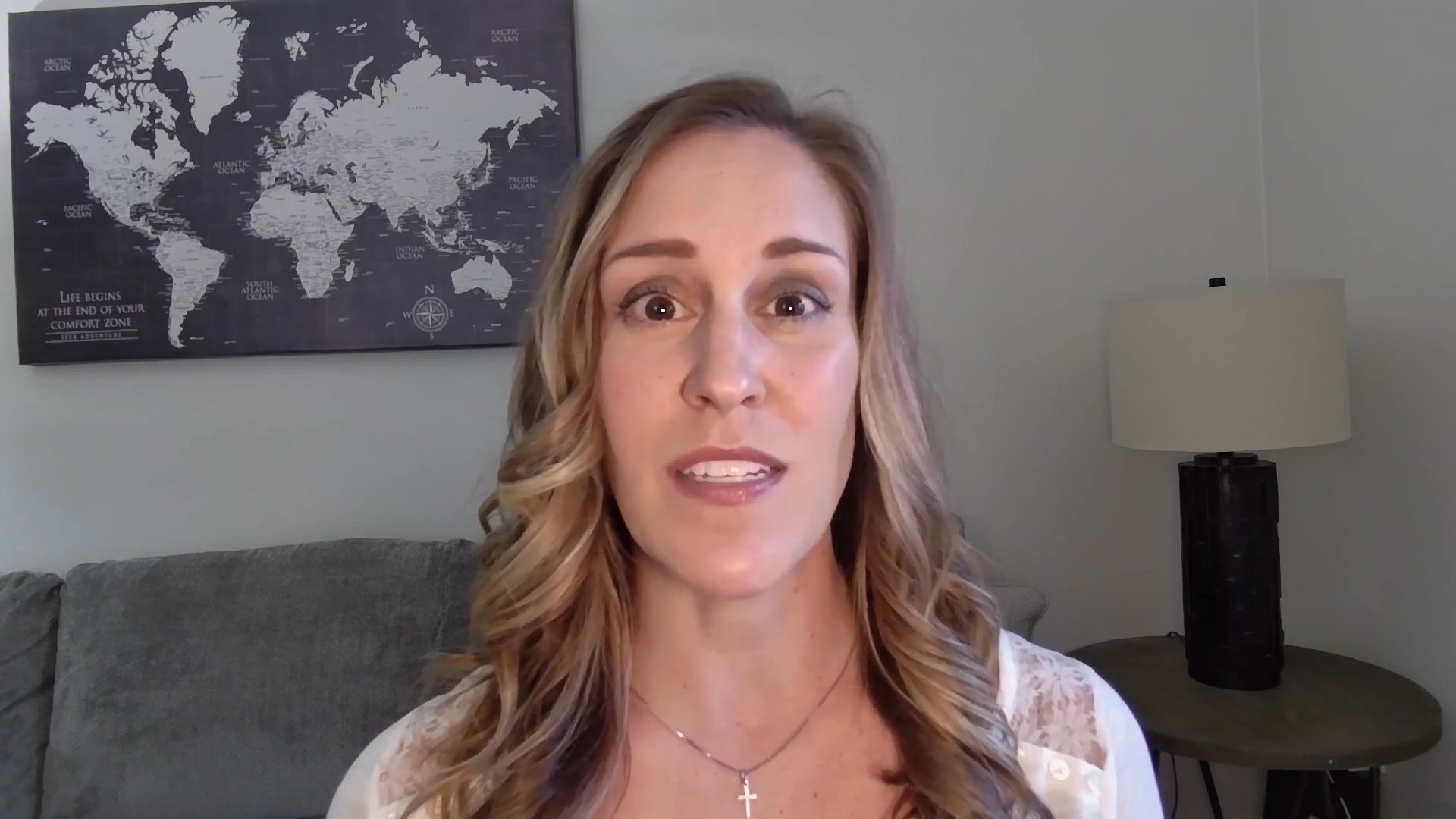
We experience grief over many things in life and there is no right or wrong way to grieve. Recognize when you're in a season of grief, validate your emotions, and engage in healthy self-care activities.
Carrie Cadre: I'm in a really serious grieving phase right now. She says she's grieving the loss of the life she thought she was going to have. Grief doesn't have to be the death of someone, she says. Carrie: Any loss that you might be having, any grief, it does get better.
Hey, Cadre family doctor Carrie here. Most people think that when you go through grief, there are certain stages you're going to go through, and it usually happens after the death of a loved one or friend. But I think we miss the rest of grief and how often we actually go through grief, especially in our adult lives. I can tell you that it just kind of dawned on me a couple days ago that I'm actually in a really serious grieving phase right now. I am grieving many things, actually. I quit my job almost three months ago and ventured out into launching my own business, doing coaching, and I'm doing a lot more, speaking and working on my second book.
And this is super exciting, but there's also a grief process with it, especially since I moved here to California for this job, and I didn't realize how much grief I'm actually experiencing in just the loss of a routine. First of all, like, not really having. I don't go to a job every day, Monday through Friday. Like, I almost had to grieve the loss of that routine and, like, making a new routine, which, again, is exciting, but it's a grief process because it involves a loss, really. That's what a grief is.
Grieving is the loss of something. So not only am I grieving the loss of my job, but I'm grieving the loss of the life I thought I was going to have, where I thought I would be when I turned 38. I thought I would be getting married soon. I thought I would be, you know, working at this stable job, making a stable income. I thought I would be having kids soon. And pretty soon after the first of the year, which also is about the time my birthday rolls around, my life kind of came crashing down, and I had all sorts of things just flowing flare up that were very uncertain.
And now I find myself single, not getting married anytime soon, not having kids anytime soon, and not having a stable income from this job. I have this other job that is providing some income, but it's not really the most fulfilling job, I guess you could say. But I think what I'm realizing is I'm going through a serious grieving period, and I'm grieving the life I thought it was going to have because I lost that. I have visions. We, as humans, love to, like, hold on to visions and hopes for the future, because that's what propels us forward.
That's normal, to want to hold on to hopes for the future and just starting to picture our lives in a certain way. And I can tell you I was picturing my life in 2022 looking very differently than it is right now, and I'm grieving the loss of that. And I was talking to somebody else who's grieving the loss of a family member and just realizing how many similarities we're having in our emotions of just kind of feeling ups and downs, and, like, some days you just want to cry, other days you feel fine.
And really, what do you do when you're in a grieving process? So I've done quite a bit of research on grief also, you know, talked to some other mentors and spiritual leaders about this. Like, what is a healthy way to grieve, whatever your loss is, and it doesn't have to be the death of someone. It could be the loss of a job, it could be the loss of your home, it could be the loss of your marriage, it could be the loss of a child, it could be even the loss of a child's future that you had thought out for them, that they're not living out.
You know, maybe your child is struggling with an addiction, maybe they're struggling with something, and you did not picture that life for them. So any loss that you might be having, any grief that you might be going through, I just want to encourage you and let you know that it does get better, because I can tell you, I've been through grief many times in my life. The end of my marriage was a huge grieving process. Even though I was the one choosing to get divorced because it was a really unhealthy domestic violence situation, it still was a grief I still had to grieve.
The loss of that life I thought I was going to have and that future that I thought I was going to have. And there is no right or wrong way to grieve. I wanna stress that. Now, there is clinical diagnosis for PTSD, which is prolonged grief, and that comes after a certain amount of time, like, maybe six months is usually about the time that they would start to maybe consider diagnosing you with post traumatic stress disorder. But there's no time frame associated with grieving. You know how when people tell you, like, when you end a relationship, it takes one week for every one month, one year that you're together for you to get over that person or for the death of a loved one?
You know, it depends how close you were to them versus not close to them. This is all crap. I'm sorry? It's all crap. There's no right or wrong way to grieve. And I just want to stress that point because it's really the emotional journey that you're on and where you're at. And it depends, like what kind of coping strategies you also have in place as to how effectively you're going to grieve. So some of the things that I've been doing to effectively grieve is allowing my emotions to come up when they do, allowing myself to cry and feel safe and then give it to God when I'm done crying.
Talking to friends. Don't isolate yourself when you're in a process of grief that just perpetuates that lonely, isolating feeling, and it can make the grief even that much heavier. So making sure that you're surrounding yourself with people that can help you process it, and that might just sit there and cry with you. I was on a trip recently, and a woman was going through a huge period of grief in her life and she just cried. We all just sat there and cried with her. That's what she needed right then.
So don't isolate yourself in a season of grief. Make sure that you have people around you that you can trust, that will be there for you, that will let you vent, that will let you cry, but that are also not going to let you stay in a place of peace, pity, that will help them encourage you to find the joy. I called my friend the other day and she let me event, she let me be sad. And then she said, okay, now tell me one good thing that did happen today. Because if you stay in that perpetual state of depression in the grief process, it can perpetuate the grief process and make it longer.
So make sure that when you are honoring your emotions that come up, which is super important, that then you also choose to say, okay, you know what? I am going to cry about this right now. I'm going to cry for the next 30 minutes and I'm just going to sob, fall my eyes out, scream, yell, whatever you want to do. And then when I'm done with that, I'm going to choose to be enjoy for at least the next hour. Maybe it'll come back in an hour and you'll cry for another 30 minutes. I can tell you in the early stages of grief, sometimes it looks like a lot more crying and a lot less joy.
But eventually, as you're moving towards the healing through that grief process, make sure that you're allowing yourself to actually experience joy and happiness. Because we have this stigma in our society, especially like, if you have experienced the death of a loved one, that if you're seen, like, laughing or joyful, that like, oh, my gosh, she totally just forgot about the death of her mom. I can't believe she's actually laughing and enjoying life right now. No, I'm sorry. That's crap. You do get to experience joy in the process of grief and happy moments, and that's why surrounding yourself with that community is really important, so that you can have those breaks from your emotions.
Because if you do sit with your emotions too long, it can actually be dangerous and unhealthy. If you avoid your emotions, it can also be unhealthy. So allow the emotions to come up, sit with them, cry about it, and then choose to be joyful. You know, maybe it involves self care activities. Maybe you do a lot more self care right now in your season of grief. I can tell you that that's what my life looks like right now in this season of extreme uncertainty and change. And grief is really figuring out, like, what brings me joy, what helps fill up my cup.
Like, it's going to hang out with my women's Bible study. It's going to the gym, it's going to have coffee with a friend, taking my dog on a walk, listening to a podcast. You know, like, what are the things that bring you joy in self care and grief is really important to figure out. I would encourage you, if you're not in a season of grief right now, make that list now so that if you do experience a season of grief, which you will at some point in your life, you have those habits already formed of self care, healthy self care.
So I just want to encourage you today that if you are in a season of grieving, understand that there is no right or wrong way to grieve. It is okay that you're grieving. It's okay that that person died two years ago, and every once in a while, you still cry about it. It's okay that you were the one that asked for the divorce and you're still upset about it and you can still cry about it. That is okay, because you are grieving a loss. And you have to actually let your heart heal when you're grieving a loss, because that is the only healthy way to really come out on the other side of it.
And time does not heal all wounds, but it does heal a lot. I can tell you that. That the longer time goes on in a season after a loss, it does get better. And eventually, if you allow yourself to process the emotions in a healthy way, it does get better. So I hope that encouraged you today. Take care, guys. God bless.
Reactions and comments are for members. Joining is free and takes a minute.