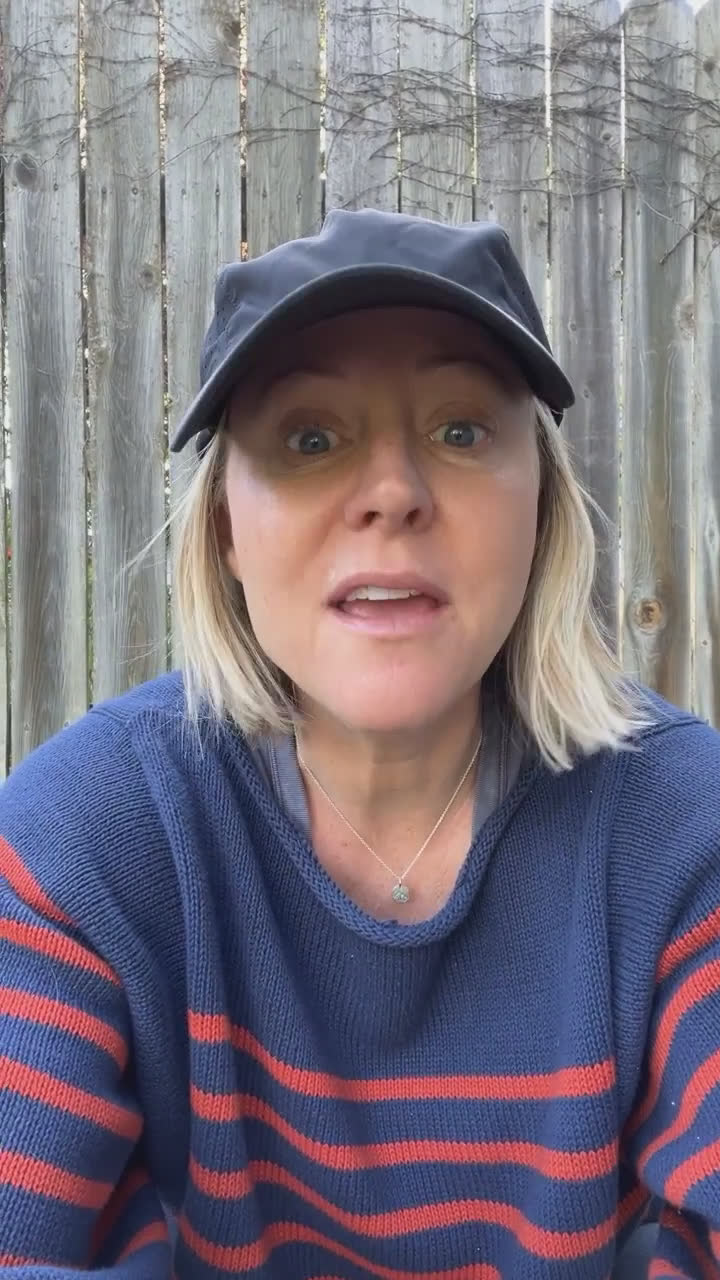
Shannon shares her experience as a caregiver and parent of a teen with autism, reflecting on the tensions of hardship and beauty in caregiving, reframing how that lived experience can bring connection and meaning.
Cadre, good morning. I am coming to you live from St. Paul, Minneapolis. Minneapolis is our sister city. It's caregiver day on Cadre. I'm going to show you the sky.
Shannon: I'm a human who is a person living with generalized anxiety disorder. She also parent a son with autism. Why I'm here on Cadre is because my dream is to help people navigate hard stuff.
Josh Horowitz: Talking about caregiving can be challenging. He says there's incredible value and beauty in the lived experience I'm having with my son with autism. How can we reframe what that experience means in service of there being a beauty to it?
Coming up next, Colleen Lindstrom, sandwich generation in 15 minutes. We have a new contributor today. You need to find her. She is a Cadre. She's amazing, and I can't wait for her to share her story.
Cadre, good morning. m. here in central standard time. Happy Thursday. I am coming to you live from St. Paul, Minneapolis. St. Paul, Minneapolis. Nope. St. Paul, Minnesota. Minneapolis is our sister city. I'm coming to you from outside my house in beautiful St. Paul. I'm going to show you the sky. It's just a gorgeous day here, and so I'm glad you can be here with us on caregiver day on Cadre. All right, so, for those of you, you who don't know who I am, who have never met me before, I'm Shannon.
I'm actually part of the Cadre team here. And in addition to that, I am not a clinician. I am not a mental health professional. I am a mom. I'm a human who is a person living with generalized anxiety disorder. I have cpTSD, and I parent a son with autism. He's 15. So those are the roles that I live with in life, and why I'm here on Cadre is because my dream is to help people who are navigating hard stuff, not be alone in that. And so I learned some things in my own life through the process of living with it, going to therapy.
And so I'm here just to share it with you, share my experience, in hopes that you feel less alone. Good morning, Jules. I love seeing you here. Happy Thursday. Okay, guys, so today, what. The thing we're going to talk about when it comes to caregiving is the idea that talking about it can be challenging, because oftentimes, one of the things that I experience, and I'd love to know if you do, too, is when you bring up the fact that you're a caregiver, whatever that is. Right. Whether it's a parent, whether it's a child with a disability, whatever that is.
I think at times, when you bring it up, it's like a downer. It can be a downer. Right. So for people who don't have that same lived experience, who don't know what it means, sometimes in my life, when I say, oh, and I have a child with autism, like yesterday, for example, I was talking with someone, and I said, yeah, he might live with me forever. I'm not sure yet. And like many people who are trying their best to be loving and kind, at times, the response can be like, you know, sort of a. Sort of a bit of a pained expression or sort of a, you know, that's hard.
And while, yes, that is hard, while at times I can see that, I can take that lens as a caregiver of like, yeah, this sucks. Like, you know, I'm gonna take care of something for the rest of my life, or someone for the rest of my life, right? Like, I can certainly put that lens on it, and there's incredible value and beauty in the lived experience I'm having with my son with autism. And there's connection we have, and there's a lens that he's brought into my life that I wouldn't change for a thing.
Right. And so actually, in my own brain, while there are times where I'm like, oh, gosh, is this going to be my life and his life, there's also times where I'm like, God, that's so freaking cool, because I will likely have time with this person, and I will have a life with this person that not everyone gets to have with their child. Right. So it's human nature to say to someone when you hear something that might feel hard for you to sort of come at it with, like, oh, yes. Oh, I'm sorry. And p's no one's fault, but my reason for bringing this up is, I think one of the things I am working on, and I would love to know how you all out there who care for others manage this, think about this, work through this, is sort of that reframe of.
Maybe there's some beauty in the caregiving, too, right? Maybe there's some beauty in this relationship that comes from being so close to another human on such a consistent level. And how can we, me, you, all of us, start to articulate, reframe, start a new narrative, normalize, enter a word here that makes it, you know, a space where there's an openness to a different thought when it comes to what caregiving means. Josh, good morning. It's good to see you. And so I think that's my question for you today, and my notice for myself is, as we talk about caregiving in our lives with people who maybe don't get it or haven't had that experience, how can we?
And maybe it's not even our job, right? Actually, I'm thinking as I'm going, maybe it's not even our job, but I think it might be. How can we start to reframe what that experience means in service of there being a beauty to it in addition to the work. Right. And honestly, I think that that could be, that same premise could be allocated to any relationship we have. Right? A work relationship, our partner, our spouse, anyone in the world. There's beauty and there's work. Right? So when it comes to people, it's hard.
Josh, you said humans helping each other. We all got to help each other, right? So how can we work together to reframe what that caregiving relationship looks like, what that back and forth looks like with our people? And as we are out in the world, to sort of just think about being able to articulate it, being able to talk about it in a way where two things can be true at the same time. It can be worked, and it can be beauty. So that's what's on my mind today. It's just something that comes into my head.
Yes. Jules says, I try to look at that relationship I built with my son, and that's exactly freaking right, Jules, that you don't see in the rest of your household. It's true. There's a depth to that relationship because of the closeness, whether it's physical closeness, whether it could be, you know, helping each other through things that you don't help each other through in the rest of the family. And it's absolutely true. Those relationships are different. They are just. They're just deeper in a different way.
And I think that is so also so freaking beautiful. I'll share this before I go. My son, last weekend, my son and I. My son, Wyatt, he's my son with autism. We went on a trip together. We went to see some family in Iowa, and he. As we're sitting there, he's a really funny guy. He loves jokes. And as we're sitting there, he has my phone, and he takes my phone, and he puts on it a picture of a khecilian. Now, I don't even know how to articulate to you what a caecilian is. Google it. I don't know how to spell it.
Cac something. It is a slimy looking snake. And my son, who is incredibly knowledgeable when it comes to animals, snakes, et cetera, all the things, thinks there's, like, this inside joke with us about this caecilian, and he takes it, and he puts on my phone. On my screensaver, he puts a kaselian. So the next time I open my phone, there's a kaselian, and it's this slimy snake, and he just, like, loves it beyond, right. Like, he's the happiest he's ever been, and it's still on my phone, and I don't know how to get it off, but that is like an inside joke that he and I have.
So, jules, I'm touching back to your comment here. I don't know that anyone else has a deep connection over kaselian, right? Maybe they do. God, I would love it if someone else would. But we have this inside joke, and it's like, deep in the heart of reptile. You know, I don't even know genealogy. That's not the word. You know what I'm saying. But we have that inside joke because we have spent much time together, and I get him, and I get his deep love for animals and all the things. And so we can laugh at that, and we can take this funny little thing that exists in our relationship that, frankly, comes from spending that time together in really, really close ways.
So there's a gift in it. Josh. Thought provoking. It's nice to have understanding from others when we need a bit of flexibility. And there's a value add that comes from that personal challenge. It's not just a constraint. It's also a joy. With snakes. 100%. Josh. Listen, I'm happy to share the picture in the community feed if you all would like to see the Kaselian, but absolutely. Thank you, Josh, for that. So I hope you guys have a fantastic day. I'm proud of you for doing all the work you're doing, for being here in Cadre, for just the time and effort you put into building relationships with others.
And I'm grateful for you in my own life. Have a fantastic Thursday. Coming up next, Colleen Lindstrom, sandwich generation in 15 minutes. You guys check out. We have a new contributor today. You need to find her. Speak wonder. She is a Cadre. She's been with us since the beginning. She's amazing, and I can't wait for her to share her story. So continue to join us here on Cadre and have a fantastic day, and we'll see you soon back here in the country.
Reactions and comments are for members. Joining is free and takes a minute.