Shannon shares lived experience of losing herself while parenting and living with anxiety and CPTSD, reflects on identity’s evolution, and offers personal insights about reconnecting with an inner self remembered from adolescence.
It is 12:00 here on grief day on Cadre. I'm here live from St. Paul, Minnesota. It's a little bit of a gloomy day, but in a cozy kind of way.
Welcome to grief day on Cadre. Shannon is a human being with lived experience, living with anxiety and also I parent a child with autism. She shares her experience of how she lost herself and the grief that comes with that. Marigold will be on later today.
Sometimes I feel like I've lost myself. I think that is normal in our culture. Identity in life is an ongoing evolution. When I feel most like myself, when I feel the strongest, I think of a 15-year-old girl. I'll share more of my story in the coming weeks.
The importance, the important thing is remembering that it's still inside you. No matter what happens in life, no matter the roles you take on, you can remember that there's that part of you that's inside, that's still there. Thank you for joining me today.
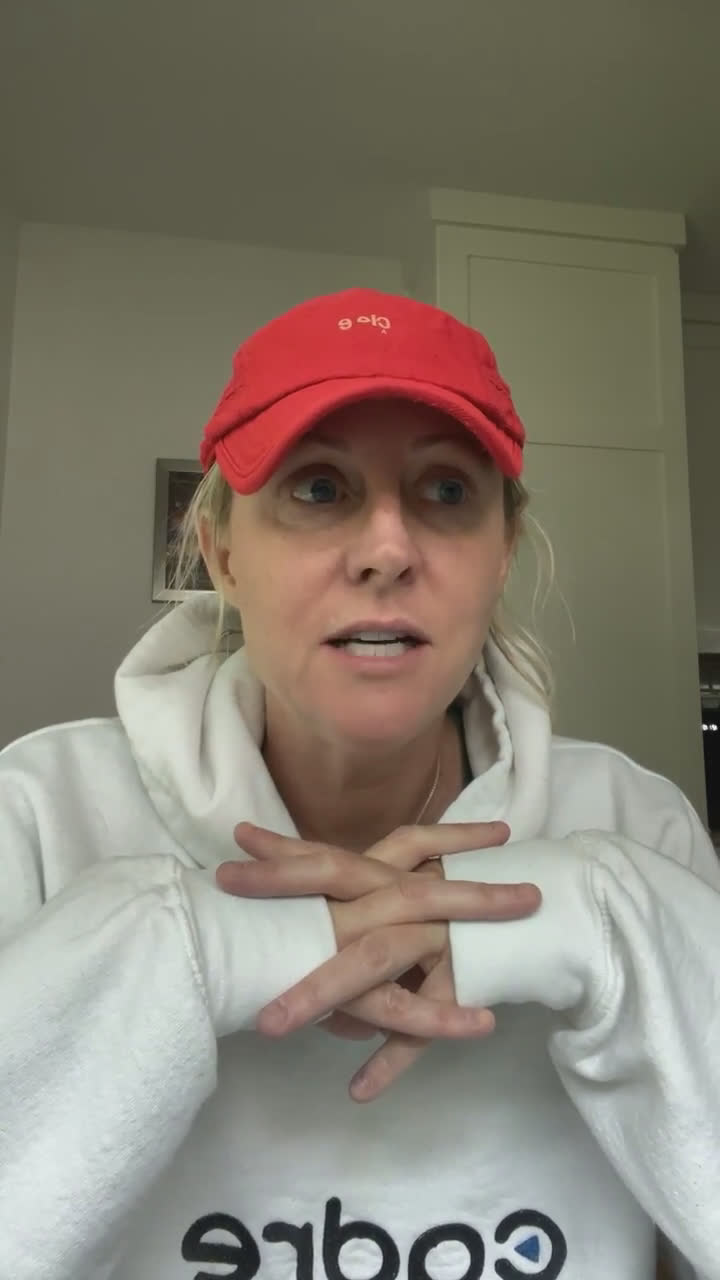
Happy Friday, Cadre. It is 12:00 here on grief day on Cadre. I've got my Cadre sweatshirt on. I'm here live from St. Paul, Minnesota. It's a little bit of a gloomy day, but in a cozy kind of way, hence the big sweatshirt. So welcome to grief day on Cadre. This day is a day where you hear from all different people about grief in different ways. Right. So we heard from doctor Charisse this morning. Marigold will be on later today. And so grief is a big topic. And I think oftentimes grief, when we think about grief, it can be connected maybe to death or the loss of someone.
And I want to also say that there's just a lot of different kinds of grief. So, for those of you who have not met me before, my name is Shannon. I am not a clinician. I am not a mental health professional. I'm a human being with lived experience, living with anxiety, living with something called CPTSD. And also I parent a child with autism. And so today I'm here to share with you my lived experience of how I lost myself and the grief that comes with that and how to come back from it. So, good morning, Jules.
Hi. Nice to see you, as always. Hey, Alec. So, if you have watched Cadre, or if you've been on Cadre for any length of time, I've created a series called five Ways to stop living in survival mode. And that series in impetus was really a life. A life where I lost myself. Living a life where I lost myself. And I am sure, I am guessing that some of you can relate to that. And please, if you're willing, raise a hand, check mark, whatever it is to say. Yep, sometimes I feel like I've lost myself. I think that is normal in our culture.
This is all my perspective, by the way. Feel free to disagree. But I think in our culture, we have such a storytelling ability. Culture has such a way to say, like, this is the way to be in the world. There's a right way and there's a wrong way, and there's a lot of messages around that. So for me, losing myself, honestly, and I'm curious again as we go, if this relates to any of you. I think I truly didn't find myself until I was about 40, which sounds very cliche, but I think for all of us, identity in life is sort of an ongoing evolution.
And so if you think back to who you were when you felt your most, yourself. Right. And so for me, when I think of myself, my core self, I think there's a part of me that always goes back to, like, a 15 year old girl who's a runner. And I don't know if any of you have an identity tied and connected to something that you do or something that you were skilled at or something that you spent time doing right. But I think there's a piece of us. Again, I'll speak for myself where when I feel most like myself, when I feel the strongest, when I feel like the core of me is present, I think of, like, a 15 year old girl running in shorts on a tank top and just feeling incredibly strong.
I felt free, I felt powerful. I felt strong and talented. It was something I was good at. And so there's that part of me that I can still tap into today. I'm 48 years old now, and I'm running, and I can still tap into it. And that's probably why I. I continue to run, is it taps into that part of me. And so I think as we go through life, and I'm going to have a couple of conversations about this going forward, but I think as we go through life and the world and culture starts to tell us who we are, based on where we are in life, based on the roles we take on, based on the work we do, based on whether we are a wife or a husband or a mom or a dad or a friend or a worker or whatever that is, those roles sort of can clutter our mind and in my experience, can make you start to lose yourself.
And oftentimes, as I learned in my own experience, it's a slow evolution. Right? Like, you don't necessarily know that you're losing yourself. You may make a. Make a little shift. You might do something that maybe your real self wouldn't do in service of someone else. You might take a job that doesn't really feel like you, but because you need the money and all of that makes sense. It's life. We're humans. We have to do things. But I think at the same time, it's remembering that amidst all the things that we are that we have to do as part of culture, that we have to do to live in a house, to put food on the table, we still have that part inside of us that is us.
And so I'll share more of my story in the coming weeks with you all. But when I think about losing myself and coming back from it, it's a very intentional effort. I've been in therapy for years, and that helped me to do it. But I think it's coming back to and again, this is my experience. It's coming back to that person inside you, whatever that is for you, whatever experience you have where there's a moment where you feel like you. And so I encourage you, if you feel lost or confused or stuck, right, or overwhelmed by a role that you have, I encourage you to think of a thing, think of a time, think of a moment or a place or anything that feels like you.
Maybe that is reading a book. Maybe that is some sort of work that you do, right? Like, maybe it's research. And when you research something, you feel strong and bold and all the things you want to feel, whatever that is. I think the importance, the important thing is remembering that it's still inside you. So that no matter what happens in life, no matter the roles you take on or the life circumstances that happen, because p's life happens, you can remember that there's that part of you that's inside, that's still there.
There's a study that I'm going to quote in a horrible way right now that shows that. I think at, like, age, I want to say it's at, like, age seven or eight, kids start to stop. They begin being less curious. They start to follow rules, right? They stop behaving like themselves, and they start to lose, you know, curiosity or lose a willingness to explore things. And I'm butchering this study. But I think about that, and I think about it. Even as a 48 year old woman, you know, we're taught to fall in line.
And so I think throughout our lifetime, to continue to go back to say, hey, no, I'm me, right? I don't have to lose myself. And so I encourage us because I think there's grief that comes with that, when you realize that maybe you have, and maybe, again, you're in a job or a situation or whatever where you feel stuck. And I encourage you to continue to go back to that part of you that does exist and say, like, hey, I don't need to stop honoring it. I don't have to stop growing it. Even if I'm 60 years old, it's still in you.
And so that's what I have for today. It's day one. It's pretty stream of consciousness, but I think as I navigate life again with all the things that I live with, and I'm sure that you do as well, I just. I encourage you to not only have maybe grief or sadness or whatever if you do feel stuck, but to remember that you is still inside you. It 100% is. And so if you could take even ten minutes and try to find that part of you, that. That morsel of you that lives inside, you're going to remember that you're actually not stuck.
And you are exactly who you should be. So thank you for joining me today. I appreciate all of you. I hope you find that part of you and honor that part of you inside that is you. Because you're fantastic people. And I appreciate you being here in the cadres sphere. And we'll see you soon. Have a fantastic weekend.
Reactions and comments are for members. Joining is free and takes a minute.