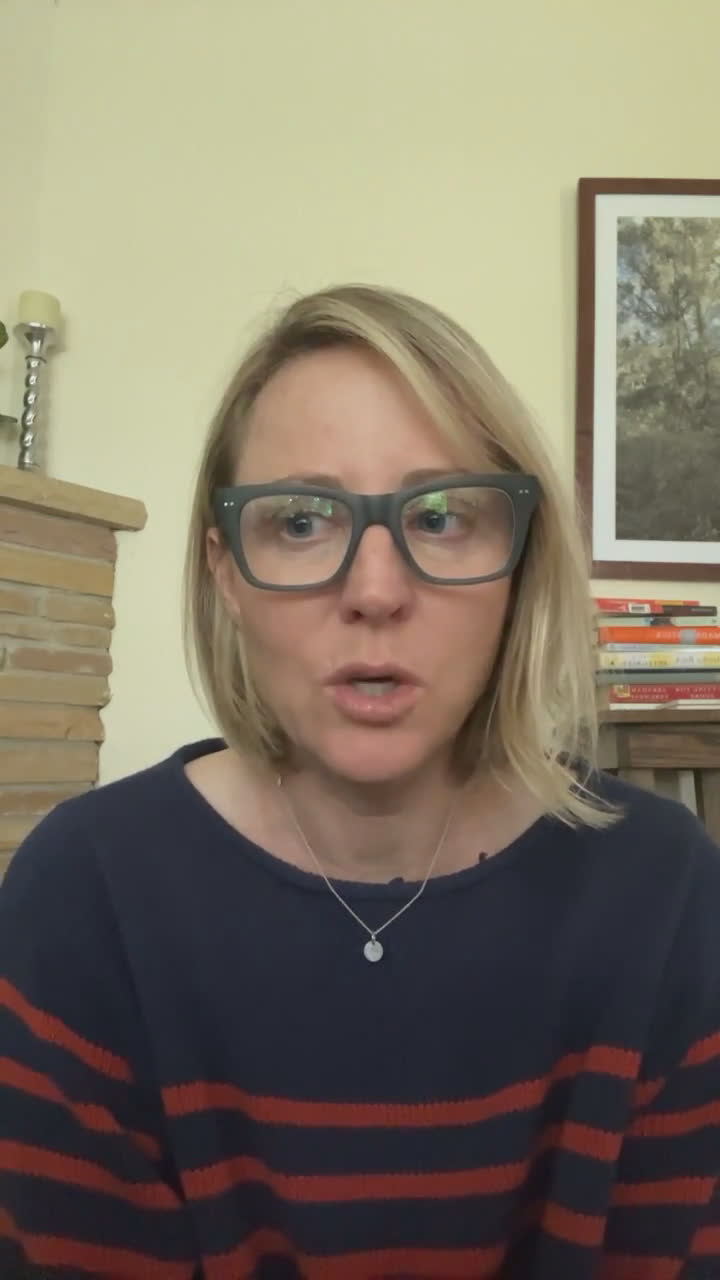
Shannon, a caregiver of a 15-year-old son on the autism spectrum, reflects on living in the present while parenting a child with evolving needs, sharing personal experience about managing future-focused anxiety and staying grounded in day-to-day realities.
Welcome to caregiver Day on Cadre. Shannon is here as a caregiver of a son with autism who is 15 years old. He is on the autism spectrum. Jules is also here. Thanks, everybody, for joining.
Today on Caregiver day, I want to talk about living in the present. It's hard as the caregiver of someone who is continuing to develop. Reminding yourself to live in the now, I know that time gives us the gift of all the possibilities.
Cadre, good morning. Happy caregiver day on Cadre. It is Thursday morning here in beautiful St. Paul, Minnesota. Welcome to caregiver Day on Cadre. My name is Shannon. I'm actually part of the Cadre team, and I'm here today as a caregiver of a son with autism who is 15 years old. His name is Wyatt. So for those of you who I have not met yet, I am a human. So I'm not a clinician. I am not a mental health professional. I am a human with lived experience, living with generalized anxiety disorder. I have something called CPTSD, and then I parent my son.
Right. His name again, I said, is Wyatt. He is on the autism spectrum. Good morning, friend. So welcome. Jules, you're here. It's great to see you. Thanks, everybody, for joining. Okay, so today on Caregiver day, I want to talk about living in the present. Living in the present. So when you have a child on the autism spectrum, or I guess I should say, in my experience, people say to you, like, where is he on the spectrum? Or people say to you, you know, how bad is it? Right? And especially as your child.
As my child has gotten older. Older, and now he's 15, and he's gonna be a sophomore next year, and he's going to, you know, the question that people tend to ask is, you know, what's he gonna do after school? Or is he gonna get a job or what's gonna happen? Or, you know, is he gonna live with you? And whenever people ask me that question, it immediately takes me from here to here in a. In a, you know, in an anxiety. Right? Because even with typical children, if you have. I have two boys. My other son is not neurodivergent.
He's typical. He. You know, when people ask you, they still ask you, right? And they're like, what's your son gonna do? And I'm like, I don't know. This, this and this. And then they say, what about your other son? And it's hard to answer that question. Right, right. It's hard as the caregiver of someone who is continuing to develop like we all are, whose skills are continuing to emerge and who doesn't. Like. He doesn't go to regular academic classes, right. He's in a nachism program where he's learning daily functional life skills.
He presents as, you know, I hate the word normal. I'm not going to say normal, but he presents in a way where, depending on the day, he might seem normal, right. And so people can sort of make some assumptions about what his future might hold. So when I get that question of, you know, what is your son going to do when he graduates? Or what does life look like? It can create a lot of anxiety in me because, hey, man, I don't know. I don't know where he is today. Do I feel like he is going to be out in the world on his own?
I don't know. I don't think so. And I don't know. So staying in the now is very much about not letting myself and my brain and my mind go to a bunch of places. My friend Colleen Lindstrom likes to say, don't write fiction. Right? Don't create things that don't exist. And so I try to remind myself that when I do get out of the now, when I'm thinking about the future, and I start to say to myself, oh, my gosh, what if this and what if this? And I know I've talked about what ifs before, but reminding myself in moments that a couple of things.
Number one, we all are always evolving as humans, right? I am not the same person I was three years ago. Oh, my gosh. And by that same logic, my son is not going to be the person he is now. Three years from now, his skills will grow. He will develop all the things. And the truth is, my son may live with me. He might, right? But what is true today is that. I don't know. And what is true today is that if I spend today angsty about what the future might hold, I'm gonna make myself crazy. And so I say all of this to say in a really practical manner, when people say to you, you know, as a caregiver, whether it is of a parent, whether it is of a child, whoever that is, and they're like, well, what about this?
And it's some future state of something that you could worry about all day long. Reminding yourself to live in the now, I know that time gives us the gift of all the possibilities, right? What's going to happen is going to happen. But in the interim, what you can do for yourself as a caregiver, to not live in that place of anxiety, is to allow yourself to just be like, I don't know. And today I'm here. And today I'm here. And so that's an exercise I do for myself, to constantly remind myself that I'm doing the best I can today.
I am using the resources that I have available to me today to solve for today. And my dog Gilbert, is really wanting to say hello. And so I just wanted to remind you all that, oops. I wanted to remind you all that you're doing a great job today and you're not going to, you don't know what's going to happen three years from now or one year from now. And don't try to, don't try to solve for that answer like I can sometimes do, of, hey, what's going to happen when your kid's an adult? I don't know.
And so I'm not going to worry about it. And actually, it's making me think of, and I wish I had it handy here. But there's a Mary Oliver poem, and if any of you know Mary Oliver, she was a fantastic poet. She's one of my favorites. And she has a poem called I worried and I'm going to find it and actually, I'll post it in the community, but it's essentially like you can worry all day long about this and this and this and this. And then at the end of the day, at the end of that poem, she says, and then I went out into the sun or into the water, and I'm not going to articulate it well, but I went out into the world and I sat down on the grass and I looked at the sky and I was happy.
And so I encourage us all today to read the poem. Actually, again, I'll post it in the community right after this, read the poem and remind ourselves that, like, yes, we can worry and worry and worry and all the what ifs about the future. And at the end of the day, we can go out and we can sit in the grass, we can sit in the sky and we can look, and we can know that in that moment, we're okay. So that is what I have for you today, friends. You are beautiful people and you're kicking a** in what you're doing as a caregiver.
Please join us. My dog is barking at everything. I'm so sorry. Please join us for the rest of caregiver today. Colleen Lindstrom is coming up next, the sandwich generation talking about caregiving for both a child and an adult, a parent. We have Kathy Joy, our favorite speak wonder. Coming up to talk about caregiving from her perspective. We have JC Lippold coming up with family ties and of course, our Mac clinicians. So please continue to join us here on Caregiver Day at Cadre. Please know you are not alone.
You are here with all of us. And we're so glad that you are. So have a beautiful Thursday and we'll see you soon. Again at Katray.
Reactions and comments are for members. Joining is free and takes a minute.