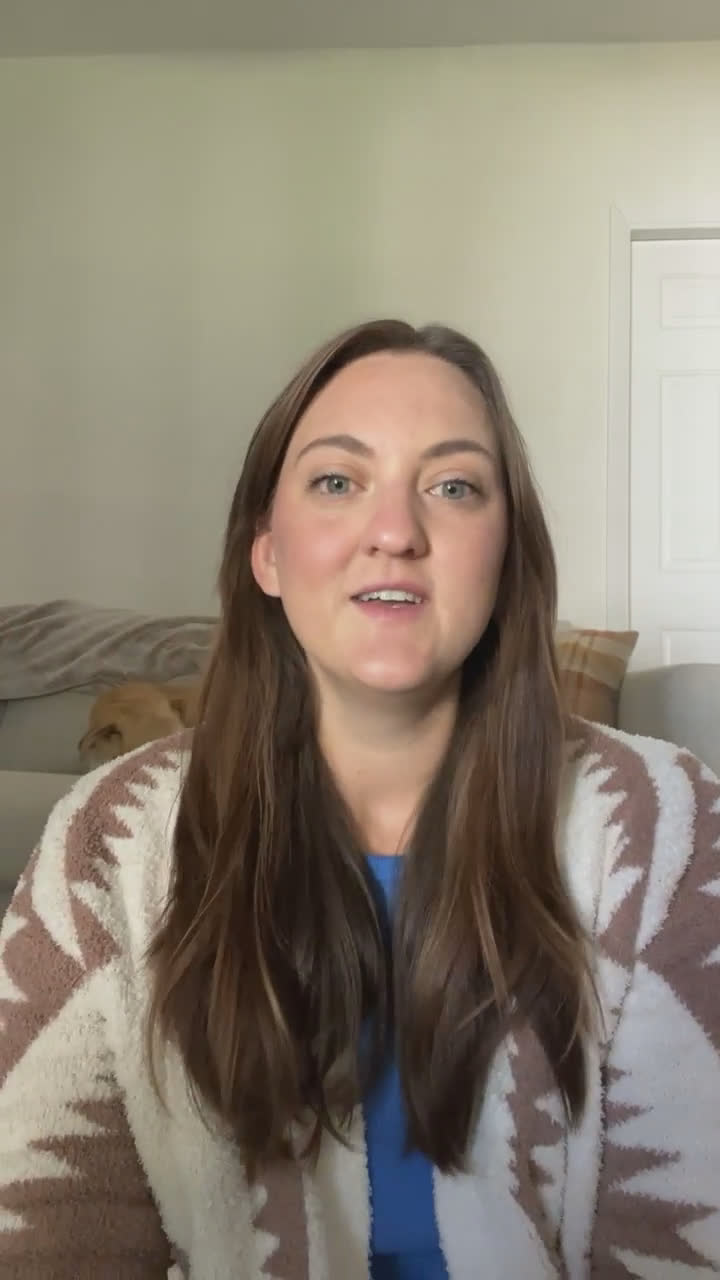
Now that we’ve begun to dive into the world of intuitive eating—rejecting the diet mentality, food rules and external expectations—this week we’ll explore what it looks like to honor your hunger to support overall wellness.
Good morning from Denver. We have Indy joining us today. I'm gonna preface we have another chicken week. If you hear the chickens in the background, they're fine. They just sound like this every morning.
Welcome back to Nourish with intent. This Saturday morning livestream is starting to kind of shift more consistently in line with the principles of intuitive eating. The benefits of making decisions from our own selves rather than from those external voices or pressures.
Dietitian: I want everyone in the chat to share with me their favorite and least favorite food. Hunger is a signal that our bodies need fuel. Food is the energy that our body uses to get through our day. There's a lot of benefits to listening to that.
Why is it important to recognize and learn how hunger shows up for us? Once we have this moment of extreme hunger, everything else goes out the window. Learning to honor that biological signal is really setting you up for success.
There is a brand of meats called force of nature that contain organ meats. If you're needing some of those nutrients, that's a really good option. It's a little bit more expensive, but nothing super crazy if you're not eating it all the time.
Hunger doesn't always show up in that way for everyone. Other ways that hunger can show up are stomach pain, difficulty concentrating, fatigue. Learning to recognize how hunger shows up for you is the first step in honoring your hunger.
When we are hungry, we eat with our eyes first by the presentation of a meal or the choices on a menu. Hunger is just a signal to eat. There are other types of hunger that I will mention how to avoid.
There are three main types of hunger: physical hunger, emotional hunger and practical hunger. Being able to respond appropriately to hunger cues can really set you up for success. Benefits of honoring hunger include stable energy and blood sugar.
When hunger hits three, identifying between the types of hunger. Next week we'll probably dive into principle three. There are quite a few more live streams coming today. See you back here next week.
Good morning from Denver. We have Indy joining us today. This is my four year old pup. I hope you all are having a wonderful Saturday. I just had to double check that it's Saturday. I'm gonna preface we have another chicken week. So if you hear the chickens in the background, they're fine. They just sound like this every morning. Welcome back to Nourish with intent. If you saw the. Good morning, Jules. Good morning. If you saw the title of this today we're going to be talking a little bit about what it looks like to honor your hunger.
Why we'd want to do that, and a couple strategies to kind of help you out. This Saturday morning livestream is starting to kind of shift more consistently in line with the principles of intuitive eating. And if you've been here the last couple of weeks, I've really focused on just kind of introducing the idea of why we might want to do that, the benefits of making decisions from our own selves rather than from those external voices or pressures. And that is really the first principle of intuitive eating, which is rejecting the diet mentality.
So now that we've covered that in depth, we're gonna move on to hunger. Ooh, I have some new faces in here. Good morning. Good morning. Question for everyone that's in here. A little icebreaker because I had a job interview this week, and they were like, what do you want people to know? And anytime anyone asks me that, I always, as a dietitian, I'm like, I'm gonna tell you my favorite food and my least favorite food. So I'll do that here. And I want everyone in the chat to do the same. My favorite food.
Tacos. Any kind of tacos. Breakfast tacos, you know, Tex Mex tacos. Authentic. It doesn't matter. Any kind of taco. And my least favorite food is pizza, which is a little. Usually gets people up in arms. So I want everyone in the chat to share with me. Favorite food. Least favorite food. No judgment. While you guys are posting that, I'll keep talking. Yeah. So honoring your hunger, what does that mean? Hunger is a signal that our bodies need fuel. Right. Food is the energy that our body uses to get through our day, to power our brain, to power our workouts, to just live.
And there's a lot of benefits to listening to that. Ooh. We're on opposite ends of the spectrum on that pizza. I can see the fish, though. Fish is a hard one for me. I'm very limited on types of fish that I enjoy. Thank you for answering. Why is it important to fuel our bodies. Why is it important to recognize and learn how hunger shows up for us? Once we have this moment of extreme hunger, everything else kind of goes out the window because we can't really focus on what we're doing if all we can think about is how hungry we are and food.
Some of the biggest things, or most shared things I hear from clients, is feeling out of control around food or feeling like you can't keep certain things in the house or, you know, I just, you know, I only overeat on certain things. A lot of that happens because we get to a place of being too hungry and not being able to consciously make those decisions. So learning to honor that biological signal is really setting you up for success in the way of helping you reclaim trust in your own body and your own intuition.
That enoughness, again, that theme from JC keeps showing up. Good morning. Speak wonder favorite is any kind of stir fry. Ooh, liver. Yeah. I've never had it, but I don't think I would like it. Actually, I take that back. There is a brand of meats called force of nature, and they are regenerative. They're doing regenerative farming. And so their products actually contain organ meats as well. So I have had. They have a bison blend that has, like the. I think it's liver and heart in it. It's very good.
You can't taste it. If you're needing some of those nutrients, that's a really good option. And it's not. It's a little bit more expensive, but nothing super crazy if you're not eating it all the time. So I have had liver in that situation. So what does hunger look like? I think the most common thing that people feel is your stomach growling. That, like, gnawing, maybe burning sensation in your stomach. And that is maybe the most obvious signs. But hunger doesn't always show up in that way for everyone, especially if we're busy and we're at work and we're trying to get all the things done on our to do list.
So other ways that hunger can show up are stomach pain, difficulty concentrating, fatigue. Right. That kind of afternoon crash is really common for people with the way that our meal times are structured. With a nine to five work day, a lot of times not eating, from eleven or twelve to like six or seven at night. And that's a long time to go without having any fuel. Lightheadedness, headache, thinking about food more, feeling more anxious. Those are all signs, or can be signs of hunger. So if you start to notice, ooh, I'm having a couple of these thinking to what's the last thing I had to eat?
When was the last meal I had to eat? Oftentimes I find with clients, it's been a while. And some of that, maybe all of it, depending on what's going on for you personally, can come down to hunger. So learning to recognize how hunger shows up for you is really the first step in honoring your hunger, because it is different for everyone. So now that's out of the way, we have to learn how to identify our hunger. Then we can use something called the hungerfulness scale. And if you've never seen that, I will post it immediately after this in the community tab.
I've been bad about that, but that is a scale of one to ten. One being I am so, so, so starving, I can't think about anything other than food. Maybe I'm nauseous, I feel sick. And ten is I am so stuffed. And also, maybe you feel a little sick and kind of that sweet spot that helps us to be productive, keep energy stable, is anywhere from that like three to seven range. And that is starting to notice hunger and starting to notice fullness. So we're kind of in this middle range. And it doesn't have to be that way all the time.
Of course, things happen, and that's normal too. But aiming to kind of stay in this range most of the time can be really helpful. Junk food. Junk. I have the funny name. I learned. When we are hungry, we eat with our eyes first by the presentation of a meal or the choices on a menu. Yes, because you, your brain, when you are hungry, your brain is thinking to yourself, I need food. And of course, again, a very normal thing, food brings joy and pleasure and that dopamine hit, and that's fine and normal, and it's a lot louder when we are hungry.
So that is why a lot of times you might feel like, oh, I don't make good decisions around food. And we blame the food when really there's some other things that we can address as well. So one, identifying how does hunger show up for you? Not throw up, how does hunger show up for you? Two, familiarizing yourself with the hunger fullness scale and kind of identifying trends there as well. If you are someone who tends to eat the same thing for breakfast and lunch, if you're going into an office or you maybe meal prep, noticing trends of when hunger hits can be really helpful to prepare.
m. slump. I'm feeling a little extra tired and irritable and anxious and not just not able to focus on my work, but I. I think it might be hunger. Now we can be prepared and have a snack ready to go. Nothing wrong with snacking again, it's just fuel for our bodies. Some people love more frequent snacks, some people love bigger meals. It's all really individualized, but nothing inherently wrong with it. m. m. that's when people often reach for a second cup of coffee as well. So I'd encourage you to kind of explore the hungerfulness scale and just noticing throughout the day what your hunger levels do, when do they show up, how do they show up?
And that is really centered on physical hunger. So the goal of, the goal of honoring your hunger is really focused on this idea of biological, physical hunger. There are other types of hunger that I will mention how to avoid. m. idea of needing a few crackers. I would say there's not really a need to avoid it. There's nothing wrong with needing a little snack or a big snack. m. and now it's the afternoon and you're hungry again. Hunger is just a signal to eat. Physical hunger again. We'll talk about the other types of hunger.
So I would say if you are noticing, I'm consistently getting really hungry in the afternoon. Okay, well, let's look at what do our meals look like. So one thing that I always talk about is having variety and balance on your plate, and that will look different for everyone's goals and needs. But that looks like pairing protein and fats and carbs and fiber, because having all of those components together is going to help with stable blood sugar and satiety. So that will get you all the nutrients and keep those energy levels stable between meal one, meal two, and doing the same thing with snacks as well.
Because if you just end up snacking on a couple, I don't know, cheez its, love cheez its, you're probably going to be hungry again pretty quickly. So again, it's kind of gauging. What does this functionally look like for me in my day? m. and you know, you're having dinner at six. Okay, well, then maybe we don't need such a big multi component snack, because, you know, you know, partner's coming home, having dinner. I'm gonna eat again. I just need something a little to hold me over. That is okay if you are.
m. dinner is not gonna be until 08:00 let's build a balanced snack. Let's get you something that's gonna give you a little bit of fiber. So maybe we. If you love the cheez, it's great. We'll have some cheez its. We're gonna add in some fiber and protein, so that could be, like, a little. Everyone really loves the chomp sticks right now. They're not my favorite, but if you want really easy protein, could be hard boiled egg, throwing in some berries or, you know, carrots, cucumbers, snap peas. Something crunchy and fibrous for that fiber is gonna give you more for longer than maybe just the crackers.
So I wouldn't say it's necessarily avoiding it. I think it's reflecting on what are my eating patterns and is my lunch balanced? Right. Is my lunch maybe really heavy on one macronutrient fat, carb, protein, and not anything else? Because then we can play around with how do we build up that balance in that meal and see if that affects hunger later in the afternoon. And that is something we'll probably talk about another week as we go through these principles. And I will. So I'll post the hunger fullness scale.
I can also post, like, a little balanced plate graphic, if that's helpful for people. Sometimes it may not be hunger pains, but your body's saying, we need to hydrate. That. Yes and no. I will say I found in practice, yes and no. A lot of people are chronically dehydrated. And that, again, you're right in the way that can show up in different ways. Headache, for one huge thing for people who are dehydrated, I know as a dietitian, my biggest downfall is probably I don't hydrate enough. And I know that, and I really try and try to take my own advice, but that one I find myself in, and I can usually tell my dehydration, headache versus anything related to hunger.
So, again, it's kind of tuning into your body's cues and reflecting on, I'm experiencing these physical symptoms. Okay, well, how much have I had to eat today? When's the last time I ate? Is it hunger? How much have I had to drink? When's the last time I took a sip of anything. That, again, also, if you're at an office, if you're a nurse and you're, like, running around the unit can be really hard to stay consistent with that throughout the day. So reflecting on those two things and then addressing each if you need to.
So that is a good point. Um, so good questions. I love this. Um, so we talked about hunger fullness scale. We talked about what does hunger look like? Um, and I briefly mentioned the types of hunger. So focusing on honoring hunger is physical hunger, but there are also three other main types of hunger, and that is the emotional hunger. There is mouth taste hungers. So that is something like, maybe you're at a birthday party and you're not hungry, but you're like, oh, man, that cake looks really good.
And I just want to try it because it looks good. That's a very normal type of hunger. And then there's practical hunger, and that one is a little more nuanced. m. and if you don't eat something before it, by the time you get out of it, you are going to be starving. So it's that preemptive, kind of more planned meal time versus in real time responding to those hunger cues. And there is definitely a time and place for that as well. So physical hunger, I have a really great graphic on that, too, so I'll just post them all.
Physical hunger really is those biological, physiological, that feedback that you are experiencing. Emotional hunger tends to be something that comes on really quick. It typically is associated with cravings. So it's not just, oh, I'm hungry, and I'll eat whatever and I won't be physically hungry anymore. It's, I need this exact food right now, and nothing else will satisfy it. It's usually in response to some sort of strong emotion or event or experience. And so that's a really good way to kind of differentiate between the two.
If you are, maybe you just ate 30 minutes ago and all of a sudden you are hit with this emotional hunger, but you don't know that it's emotional. You're just experiencing hunger. You can ask yourself, okay, what is going on here? Did I just get bad news? Did I get a really frustrating email? Did I, you know, was my kid screaming at me? Whatever it is. So that can be really helpful as well, differentiating between the two. Those things also help to rebuild your trust in your own body. Um, so I'll post the graphic.
There'll be three graphics for you guys to peruse. Um, benefits of honoring hunger, stable energy and blood sugar. Stable mood. Increased mindfulness around meals because you're not so ravenous that you eat your meal in 3 seconds and then you're like, what just happened? Um, better focus and productivity at work or just throughout your day. All of these things that can really just support our overall well being from day to day just to help us get through life. It's never fun to be irritable. It's never fun to be having a headache and not be able to concentrate on what you're doing.
No one really loves those things. So of course there's other things that play into that as well. But as it pertains to hunger, being able to respond appropriately to those cues can really set you up for success. So that is my little spiel for you today on honoring your hunger. Just to recap, first thing first, we have to realize how hunger shows up for us because it's different for everybody. Two, look at that hunger fullness scale and start to notice patterns throughout your day with the foods you're eating.
And when hunger hits three, identifying between the types of hunger. Is it a physical hunger? Is it an emotional hunger? Oh, thank you. Speak wonder. I appreciate that. Yeah. Next week we'll probably dive into principle three. Junk food, junk. Thank you for coming. I don't think I've seen your name before, so I appreciate you being here. And I'll post a little. I've been doing a little more detail on my lives each week, so you have more of an idea of what you're getting yourself into. Um, so I'll put the description of what we're talking about next week.
And then in the community tab today, you'll see hunger fullness scale. Um, then the types of hunger graphic. And I can't remember the third thing that I was gonna put in there. Ah, if anyone remembers, let me know. But I appreciate you all being here. I hope you have a wonderful rest of your day. There are quite a few more live streams coming today, so if you have time, if you are still. I'm on Denver time. It's only 850. If you're still kind of drinking your morning coffee and enjoying a slow start to the day, pop on.
I think the next one is at ten mountain time. It's in about an hour. We've got some great content coming. Otherwise, I'll see you back here next week. And yes, I'm going to post the charts in the community feed. Um, I think they'll just be pictures so you can save them and reference them as you need throughout the week. Um, and I'll put a question around that, too, just kind of what you notice, but have a wonderful weekend. Indy's ready to start his day, so I'm a sign off and see you next week.
Reactions and comments are for members. Joining is free and takes a minute.