One of my main sayings is: it’s not about doing it perfectly, it’s about doing it consciously. Let’s unpack that one a little on this rare fifth Saturday.
Today is a fifth Saturday. On the first Saturday, I talk about conscious masculinity. For the most part, that's going to be my schedule. But on those rare times where we have afifth Saturday, then it's something else.
In our culture today, we have this whole woke phenomenon. What does it even mean to be conscious or live consciously? Let go of the need to do things perfectly. Share the mistakes, right? Have the humility to clean up the mistakes.
I don't care about being woke. What I care about is trying to spread a message of conscious living and very imperfect conscious living. And to me, that's the beauty of doing it consciously rather than doing it perfectly.
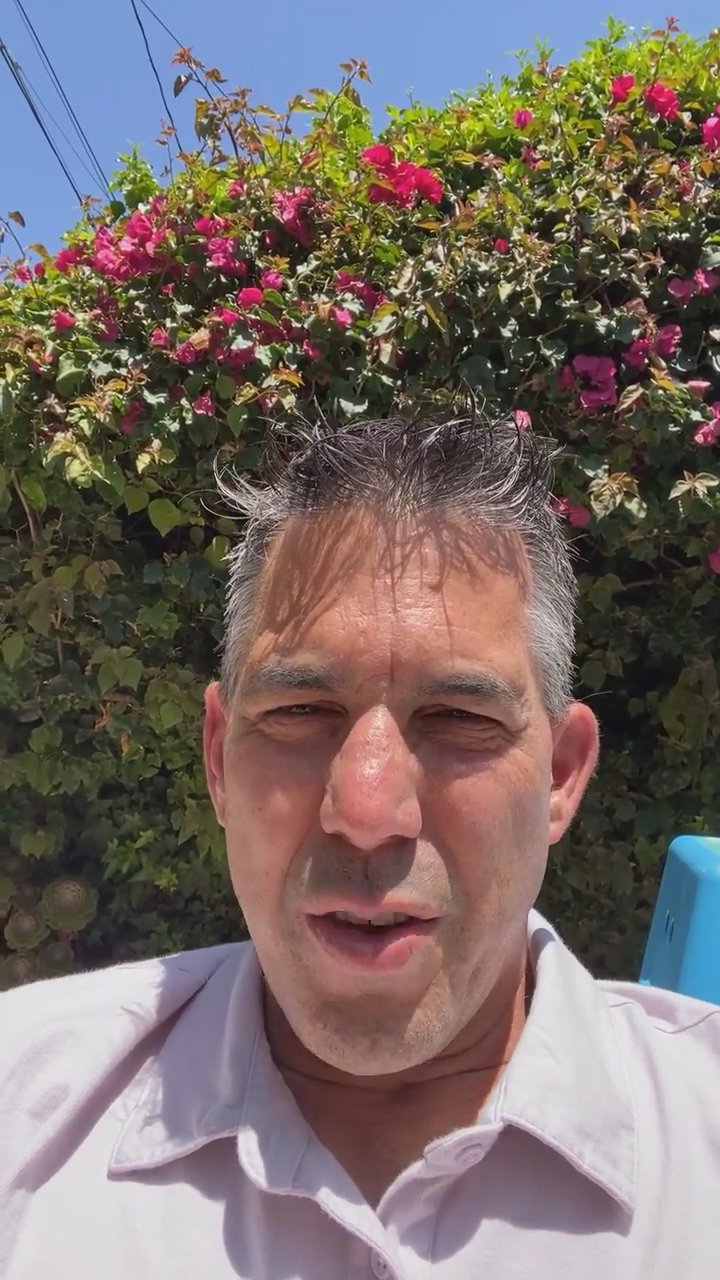
All right. Well, it is a bright day here on the California quadrosphere. I tried to find a spot where I wouldn't be squinting, and it just wasn't possible. So it's probably a blessing, right? But today is a fifth Saturday. And so for me, on the first Saturday I talk about conscious masculinity. On the second Saturday, I talk about conscious fatherhood. On the third Saturday, I talk about conscious coupling. And then on the fourth Saturday, I talk about conscious living. And for the most part, that's going to be my schedule.
But on those rare times where we have a fifth Saturday, then it's something else. And, you know, I think for me it's this whole idea of, like, what does it even mean to be conscious or live consciously? And in this description, one of the things that I talk about is how this is really about living consciously and trying to do life consciously and letting go of needing to do it perfectly. You know, we in the twelve step community, we have the saying that we claim spiritual progress rather than spiritual perfection, right?
We let go of the need to do things perfectly. Am I going to make mistakes? Yeah, make mistakes all the time. In fact, the more that I am willing to actually make an effort in my life, the more mistakes I'm probably going to make. The more I try to connect in a different way with my partner, probably. The more mistakes I'm gonna make, the more I try to father differently, the more mistakes I'm gonna make, the more, you know, it just goes on, right? Whether it's work or anything like that. And so, like, for me, what I've had to be conscious of, like, for so many years, is that there's two voices, right?
Why bother trying, right? If you can't even do it, you can't do it, right? You can't do it perfectly. And then on the other side of the coin is the pressure to do it perfectly. So, like, trying may not even be an option in some ways where it's something I have to do. And then I put this pressure on myself to do it perfectly, to not make any mistakes and to hide the mistakes, and to not embrace the mistakes, to not embrace the imperfection. And that's been such a gift from the twelve step community about doing that.
And so it's like, how do I just, how do I live more consciously and not worry about being perfect and not only embrace the mistakes, but share. Share the mistakes, right? And if it's necessary, make amends for the mistakes, clean them up, right? You know, have the humility to clean up the mistakes. You know, in our culture today, we have this whole woke phenomenon. And in many ways, it's a wonderful thing, right? But in my audiences, sometimes what I'll say a little provocatively, certainly not meaning it to be offensive, but just to challenge people a little bit of.
Because there's all this, you know, people being woke and all of this sort of stuff. And I'm like, you know, one of the bars I have gauges I have for being woke is, if you know what it's like as an adult human being to be curled in the fetal position sobbing. That's the path to woke, as far as I'm concerned, woke. True. Wokeness, right, is not an intellectual thing. You can have incredible intellectual awareness and consciousness, but yet be driven by this incredible amount of shame and lack of emotional awareness as I have been.
I mean, if you knew me in graduate school, I could talk a great, great talk about postmodernism, feminism, about, you know, all the stuff that I was in graduate school for. And I had almost, almost not zero, but very little true emotional awareness. And I was sober at the time. And, you know, it just. There was a separation. And so for me, this idea of consciously living, this idea of being conscious and not having to do it perfectly or how it connects to this idea of being woke in our culture today is, it's like, man, you know, like, you can't personally, you can't be woke and spend your life trying to dismiss other people.
You know, you can't be living consciously. Because I think the more conscious we are, the more empathy we have. The more empathy we have, the more we see. Everybody's living the narrative that they've been given, not necessarily that they've chosen. And for those of us who have been blessed enough to be given the gift, to choose, to truly choose the narrative that we want to live, you know, there's so much. So this is not meant as an insult to wokeness. Again, I think it's amazing, and I think it's incredible.
But if it's not coupled with intense kind of emotional awareness and humility, then, you know, I think it's. It's probably the other side of the coin that they decry and that they, you know, think is so bad, you know, that has to be stopped. And I think that's. That's one of the challenges in our culture today with whatever generation, you know, I mean, in the sixties, which I wasn't around for, but I've studied a lot and talked to people who lived through it. I mean, there was a huge phenomenon of increased consciousness in an attempt to, like, really, people know themselves and to, you know, be able to find peace within themselves.
And. And as part of that was political activism and was social awareness and was kind of you, you know, challenging some of the cultural forces, which I believe very, very strongly in. But, you know, there's a great Buddha saying which says, fight as if the whole world depends on you to change and laugh at yourself for thinking that you could ever make a difference. And I think, like, there's some humility in that space of, like, okay, you know, like, I guess for me is what I'll really talk about.
I don't care about being. Whether I'm considered woke, whether I'm considered this or that or whatever. What I care about is trying to spread a message of conscious living and very imperfect conscious living. I can tell you the mistakes I've made in the last 24 hours with my daughter, with my partner, with people as I still try to navigate, like, true emotional congruence when I'm able to tell people the truth about how I'm feeling instead of hiding behind fear or reactivity or control. But it's still conscious, right?
In the sense that I can see it, I can clean it up, I can learn from it, but very, very, very imperfect. And because of the work that I've done, I've released so much of the shame that cares, you know, that thinks that I have to be perfect or thinks that I can't look a certain way in front of somebody else or I can't admit to a certain mistakes in front of other people or be in the position that I'm in with some of the work that I do and still have certain challenges or things, you know, all of that, for the most part, that's what's gone.
And to me, that's the beauty of doing it consciously rather than doing it perfectly. So I hope everyone has enjoyed a.
Reactions and comments are for members. Joining is free and takes a minute.