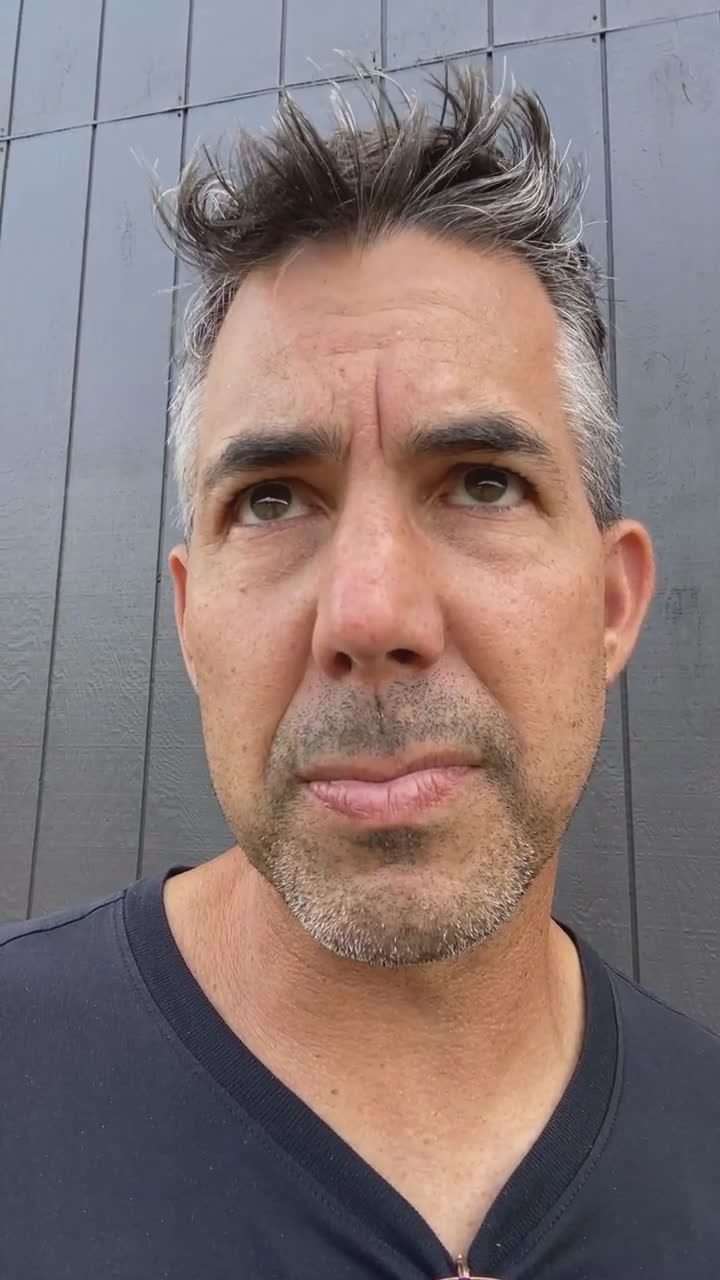
After receiving my 30 year medallion one message from my amazing group of men about recovery or life, in general: as men we have been trained and cajoled and shamed into thinking we have to figure it out by ourselves. And if we don’t we’re less of a man. And that’s simply a miserable way to live.
Dan Griffin: It is so against the notions of masculinity to have help, to get support, and yet it feels so good to have it and to get it. Griffin: There's nothing in the code of masculinity that gets in the way of us offering help to others. He urges men to model conscious masculinity.
All right. Well, hello, Kanji Sphere. It is Dan Griffin here on Saturday, July 6, and I am actually at Wild Mountain, which I've never been to. I'm visiting Minnesota, and I used to live here, and I had the privilege of picking up my 30 year medallion. I got my 30 year medallion this morning at my old home group in my twelve step home group in Minneapolis. And it was really an amazing experience. Over and over, as men were talking in the recovery meeting, the theme was how we need people. And one man gave a really impassioned share about, like, I can't do this alone.
And for me, what's powerful and what I want to really impress upon people today is, so here I am. I'm in Wild Mountain. I'm with my best friend and his family and with my daughter. My wife's at home. Wasn't able to make it yet on our trip. And, you know, it's like my life is surrounded by support, and it is so against the notions of masculinity to have help, to get support, and yet it feels so good to have it and to get it and to be able to really ask for it. Right? There's a man many years ago, who I reached out to, and he had done some studying about men in recovery.
And this is when I was writing a curriculum for treatment programs. And I said, what do you think are the kind of foundational elements men to be successful in recovery? And he said, without question, it's our ability to ask for help, accept help, and offer help to others. There's nothing in the code of masculinity or the notions of masculinity, or what I call the man rules that get in the way of us offering help to others. Offering help. You guys are great at offering help. Well, we'll give you the shirt off our back.
You know, we'll do anything to give you help. Right. But to ask for help, ooh, that's totally different. And then to accept the help that we ask for, right. It's one thing to be kind of have some humility to ask for help, but then the next step is to accept that help. And so I just was really reflecting on that and, like, how amazing it is of a shift for me that that's my life today, like I do. Still, there's no way that I still am not haunted by that notion of masculinity that says I have to figure it out.
And if I can't figure it out, there's something wrong with me. I'm less of a man if I don't know what's going on if I have to ask for help. But in some ways, it's like it's not anymore about having to ask for help. It's getting to ask for help, that it's a privilege to ask for help. It's a privilege to have people in my life that I could ask for help. And so that, to me, is a very powerful lesson for us men. Right. In the 30 years that I've been kind of walking this recovery journey, this personal growth, this self awareness, whatever you want to call it, in those 30 years, I have watched so many men who will be so incredibly helpful to others, who have been amazing at being of service, and yet I've watched them relapse.
I've watched them die. I've watched them die homeless because they just couldn't accept help. And I think that that's deep, deep down inside of so many men, and I think those who love men to really understand like that, that's what you're dealing with, what we're asking men to do when it comes to asking for help and to accepting help and really kind of having this opportunity to be a different man and to model for other men, for our children, for our partners, what I call conscious masculinity, because that is conscious masculinity.
It's letting go of the foolish because it really is foolish. But it's also. It's brutal. The idea that I have to figure out everything by myself is brutal. The idea that I'm less of a man if I can't. The idea that if I speak up and ask a question and acknowledge that I might not have the answer to something or I might need help, that I'm struggling in my relationship with my partner, everything isn't great or that, you know, maybe, you know, maybe the people who think that something is going on with me emotionally or psychologically are right.
And internally, I'm scared. And internally, I have a question about that myself. And then I can take that step and I can say I need help or to just ask the question or to just acknowledge that I don't have it all figured out, that's the first step, right? Is saying, oh, my gosh, I'm not sure what's going on. I'm not sure exactly how I'm doing. I need help. So I promised when I first started doing these posts on these streams on Cadre that every time I would do one, I would have what I call an into action, an opportunity to practice something.
And this may seem simple, but here's the one to practice for today. If you're watching this and you're reflecting on it and what I'm talking about between now and when you go to bed tonight, I want you to intentionally ask somebody for help with.
Reactions and comments are for members. Joining is free and takes a minute.