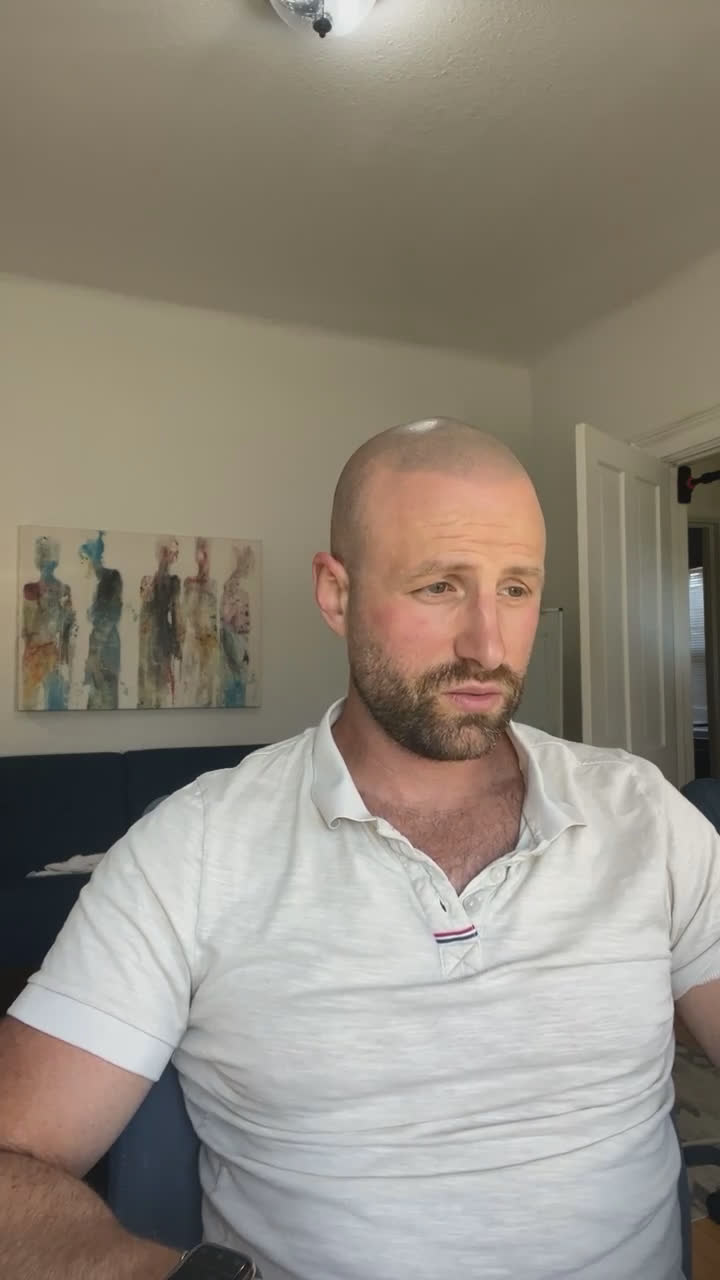
Welcome to another episode of my livestream, Mental Health Matters, where we discuss MATTERS around addiction and mental health because mental health MATTERS. Today we are doing out every-other-week, ask me anything episode, so feel free to to send me your questions or just join and participate!
Every other week, Ama asked me anything, whether it's mental health, addiction, or otherwise. And whoever then hops on, we'll see if we can get some people coming in. If so, we can answer anybody's questions who hops in.
It's most likely that it's not as severe of a case because autism spectrum is very wide. Recognize your strengths and capitalize on those, but also identify where those areas of limitation and working on those. Sometimes it could be helpful too to maybe find other people who have it.
How do you get out of a four day funk of feeling resentful, annoyed, hot tempered? I've tried extra walks, talking to friends, journaling, and your EMDR meditation video. Sometimes you need to just ride that wave.
When can I expect my brain to heal? And recovery rates. Addiction is so broad. It's one of the broadest types of disorders. If you stay sober, work a program, whatever that means to you, your brain will heal.
This is a tricky question that I get in all sorts of different contexts for different addictions. One thing you can do is ask if they want to talk about it, ask more questions rather than telling them what to do. You cannot make them change, but you can be a source of support.
It has been raining and storming to an insane degree this summer and kind of raining on our parade a little bit, but everything is green and lush, I'll give it that. I hope you have a great day.
Hey, folks, welcome to another episode of Mental Health Matters. I'm Evan, your resident mental health and addiction therapist. And today we are doing our every other week, Ama asked me anything, whether it's mental health, addiction, or otherwise, you could ask me whatever. Now, I may not have a good answer for some of the stuff outside of mental health or addiction, but you could ask anyway, why not? I did say Ama. Anyway, so I brought some topics, some questions that I've gotten from you all from people on social media that I will exclusively answer here.
And whoever then hops on, we'll see if we can get some people coming in, and if so, we can answer anybody's questions who hops in. So anyways, let's pull those out. All right, so we did this one last time. We could just do it anyway. What's up, Bennett? And again, folks, any questions about mental health or addiction, go ahead. Otherwise, I will shoot those questions up. I once again made the mistake of wearing a light colored shirt so it does not bounce off. The letters don't bounce off well, but I can still read it for the most part.
Maybe I could wear my new glasses. First time I ever had glasses, and they're not in here. What can I do with them? Who knows? I could read without them. Anyway, so someone asked, they got an autism diagnosis. Now what? Now, that's an interesting question because especially if you're an adulthood and you get an autism diagnosis, like, okay, you've made it this far. So it's most likely that it's not as severe of a case because autism spectrum is very wide, you know, for people who need full help, support, aren't able to manage life on their own without significant help, maybe even nonverbal all the way to folks who, you know, what they would use to call Asperger's disorder, now called autism level one, where, you know, it's much less severe in some of those ways, but, you know, still has a negative impact on people's lives, more likely to be able to manage on their own, have very hyper fixed interests, and often highly, highly intelligent in many ways.
So they're able to lean on those strengths. Which brings us to a later autism diagnosis. What do you do now? Well, I think it's important to, you know, recognize, well, what are the good things that you've been able to do? What are the strengths and talents you have and be able to capitalize on those, but also then identifying where those areas of limitation and working on those. So a lot of things like around social skills, social cues, relationships, dealing with difficulties with, you know, like sensory stimulation, emotional overwhelm in certain areas, mental flexibility, all of those kind of things.
Where can you do that? Well, in therapy with someone who has a specialty in it, sometimes it is hard to find a specialist, but sometimes it could be helpful too to maybe find other people who have it. Maybe on social media. Sometimes there are some good ethical content creators that can give tips and tricks, also coaches and that kind of thing as well. So that would be something to check out. Alright, let's see. How do you get out of a now four day funk of feeling resentful, annoyed, hot tempered?
I've tried extra walks, talking to friends, journaling, and your EMDR meditation video. What's left? Yeah. So I don't know. I mean, I guess I would ask first is, you know, what, you know, what kind of, what triggered this? I mean, it sounds like you're doing all the right things. Sometimes you need to just ride that wave. You know, when you have some of those things you're describing that last like a very long time, month, months. Then we start getting into some of the depression realms where you start exploring therapy, medications, all that.
I don't know if you're doing therapy that could always be helpful if you're going through a stressful time or struggling with any depression symptoms as well. So therapy can be a good one. But it sounds like you're doing some of those things to distract, maybe finding a way to get out of your environment for a little bit, take a day trip on the weekend, do some of those things that you love and not just like, oh, hey, these are these like kind of self care things, you know, journaling. So it seems like everything you're doing is like these like very pure self care coping skill things, which are good, but yeah, maybe, you know, just doing something, getting out of your routine, maybe it's, there's like things within the routine itself, very likely causing that work job, that kind of thing.
So how do you break free of your routine and reset? Could be helpful in that situation. What else was I saying? Yeah, so doing some of those things that you really love, getting your mind off of that instead of just focusing on, okay, I need to do this to help, but otherwise it sounds like you're doing some of the right things. Maybe it's you just got to keep doing them, that it's not going to be an immediate quick fix. But also, you know, what I'm asking is underlying this. What are some of those triggers?
Are you still in the midst of that stress? Because it's like, you know, if I had a nail in my head and I was complaining about a headache, you know, and I'm doing all these things for the pain, but the nail's still in my head, you know, some of those things may not work as well. So how do you address some of those things head on? And sometimes, look, we just go through dips in mood, sometimes we just get into a little funk, but keep doing those things and ride the wave. But yeah, sorry to hear that you're not having a tough one lately, but.
Well, hopefully my EMDR video helped. Other times maybe could help in the future. Alright, so I could cross that off the list. Okay. I know I did. Okay. I'm pretty sure I did a couple of these last time. I don't know. Did I do an AMA last week too? Did I switch it up? I don't know. Feels like I did, but it's okay. So I actually got an interesting question today. So I have a new client that I took on. Someone struggling with substance use, with alcohol use. They're kind of newer to it in the recovery world.
You know, they're still kind of in a functioning state, still holding down a job, relationship, kids, but, you know, really excessive drinking and struggling with their mental health, that's catching up on them. This individual is highly educated, really smart, very, you know, left brained, as they would say, very logical, that kind of thing. And so, you know, when I asked if he had any questions, you know, some of the stuff he was asking is about like research around this and neurology and brain healing, and when could I expect this and when could I expect that?
I thought it was like really telling. A lot of people wonder that. But the answer for one of his questions, like, when can I expect my brain to heal? And recovery rates. And again, that is a great question. But the problem with that question is addiction is so broad. It's one of the broadest types of disorders. And there's so many variables. For example? Well, like what substance were you using? There's probably a difference between heroin, cocaine, meth, alcohol, benzos. They all have their kind of unique difficulties to them, whereas they may not in other ways as well.
So there's that, there's. How long have you been using? What's the reason why you're using? Is it something like trauma? Is it recent work, stress? Is it just kind of a bad habit gone too deep? Yeah. How long, you know, some alcohol could have, you know, pretty long, negative long term impacts on your brain. So. So it's hard to say, I can't say. Well, you know, your brain, you could expect it to heal in this amount of time, and you could find some information like that on there. But our brains are very plastic brain plasticity, and they do have the ability to heal if you allow them to and give them the proper time.
But yeah, there's a big difference between having one, you know, zero day sober, one day sober. Big difference between one day, three day, big difference between three day, one month, one month, three month, three month, one year. These are all, you know, very, you know, different times, one year to five years of total abstinence. You know, some of that is just based on new habits, behaviors, routines, improvement in circumstances, relationships. And you're going to be in a much more because the ultimate goal is to be healthy, happy, and independent and free.
So therefore, that will increase. Maybe not in a perfect line, but the trend will be an increase in all those things. If you stay sober, work a program, whatever that means to you, your brain will heal. And unless you have very long term alcoholism damage, even if you were to stop drinking for a long time, there's maybe certain things that would never fully repair, but you would certainly be much better off than you would if you didn't otherwise. So you can make significant improvements. But those are some of those more extreme cases.
So let's check back in with Juul's. Put my arm up so I can read. Yes, your videos helped in the past for me. It helped today, too. It just didn't last long for me, if that makes sense. Yeah. Okay, well, I'm glad you found it to be helpful. Definitely put a lot into that one. I wonder if it's like, is it like, has that one been out for a while? Because I sort of redid it in a way, and it's actually pretty cool, the new verse. So I don't know if they put the new version out where I put some pretty landscapes and that kind of thing.
It's a little. So, yeah, I added that one to my trauma series, so I kind of tacked that on. So I don't know how many of these videos actually have released, but I put out a 24 recently, and I'm working on a new batch for next quarter. So there's that. But, yeah, jewels just, I don't know, keep doing what you're doing, you know, maybe it just takes a little bit more. You know, it's like if you're trying to break a wall with the sledgehammer and you take about five whacks and it doesn't really do too much, but maybe it'll take ten whacks and hitting that same spot.
Boom, boom, boom. Eventually, the wall will come down or, you know, you also tried the different approach, different tools, and let's see, we'll check in with you next week, see how you're feeling. But again, I'm sorry that it's been tough. Yes. This one we asked last with the antidepressants brain healing. All right, so someone reached out. They said they have a brother with a gambling addiction, but they aren't willing to really admit it or really identify how big of a problem it is. It's causing a lot of issues in their life, and they don't know how to go about it.
Now, this is a tricky question that I get in all sorts of different contexts for different addictions. And I, you know, whenever I get these questions and through making a ton of videos, like, I kind of have to come up with a. A pretty solid formula or set of advice that I typically give. So I've made videos on this in the past. I believe there's. Yeah, I'm pretty almost certain I made one for Cadre. I've made probably 200 videos for Cadre. Long form, edited content. So one thing, one principle here, whether it's a.
An individual in a toxic relationship or toxic relationship with alcohol, gambling, right. If they don't have that motivation to change or they don't seem to have that motivation to change, it could be one of two things. One, they're feeling attacked in a way. They feel embarrassed, they're defensive. So when you accuse someone of something, their natural response is to. To then deny. They may be afraid to. Making changes is difficult. And knowing how hard it could be, they're maybe not as motivated to make that change yet.
So it's hard to tell. However, one thing you can do is just ask if they want to talk about it, ask more questions rather than telling them what to do, just like offering them to be a source of support, because you cannot make them change, but you can, like I say, kind of the push pull where it's like you can share your concern and how your perception of it. Ask them what their perception is, you know, ensure that they are in some ways, the expert of themselves. And then if they're still not giving you much, just say, hey, if you need help, you know, I'm always here to talk with you, you know, in a non judgmental way, because, again, you can't make them change.
Now, if it gets, you know, again, the opposite of that is if it gets to the point where, I mean, their life is in shambles and they're just not taking any steps or acknowledgement. Maybe that's when you do more intervention, whether that's formal or, you know, a little bit more, you know, aggressive and asserting your feelings and maybe getting your family together to really try to push that home. And then eventually, too, maybe, you know, that's when you start to get to a point where it's that bad, where you maybe start to set boundaries where you perhaps have to distance yourself or, you know, if you're lending them money to stop doing that, or if you're giving them a place to sit, stay or, you know, there's something given to them that is enabling the behavior to continue.
And it's not necessarily just out of. Out of punishment, per se, but it's more out of your own self care, which then naturally will create consequences for them, hopefully increasing their motivation. But again, it's more about your own self care. Not getting too wrapped up, involved, not letting their situation as best as you possibly can impact your serenity, your life as well, because that's not fair. So, yeah, so that, you know, so kind of. That's. Those are kind of two concepts within that of, you know, stating concern, pulling back.
Another one is offering resources, so making it easier, you know, of course, you do that in an intervention type thing, but offering them any resources, doing a little homework on your end, if that makes sense. Replay central New York. So, yeah, so doing a little bit of research. Hey, here's some resources for gambling about. Oh, here's a good therapist. Hey, maybe just someone you're willing to talk to. Really kind of letting them know that they have autonomy in what they're doing. Really trying to reduce that resistance because the more you push, the more they pull.
But sometimes if you pull back, they will then hopefully come to you if you do it in that non judgmental way. But it really depends how deep they are in their addiction, whether it's gambling substances, a toxic relationship or otherwise. Or they may have some blind spots or they may be really wrapped up in something that is not healthy for them. So I don't know. I think we leave. I'm gonna leave that here. I gotta save. Gotta save some questions for next time. I can't burn through them too much, but if you have any questions between now and the next time in two weeks that we meet or feel free to put it in the community feed, tag me, comment on one of my videos, put a question in there and I'll add it to my list.
Otherwise I'll bring a topic next time. And of course in the live streams you could always ask me questions outside of what the topic is I bring. So let's see the help in the past. Help. Okay, so we already got that one. We have replay from central New York. What does that mean? Replay for Taj taij Taj 77. So feel free to reach out. But anyways, folks, I hope you have a great day. It's a beautiful one here in Minnesota. Hopefully it is wherever you are as well. Well, it looks like we got a good, nice ten day forecast ahead of us because it has been raining and storming to an insane degree this summer and kind of raining on our parade a little bit, but everything is green and lush, I'll give it that.
All right, folks, it's been real. I'll see you next time. Take care.
Reactions and comments are for members. Joining is free and takes a minute.