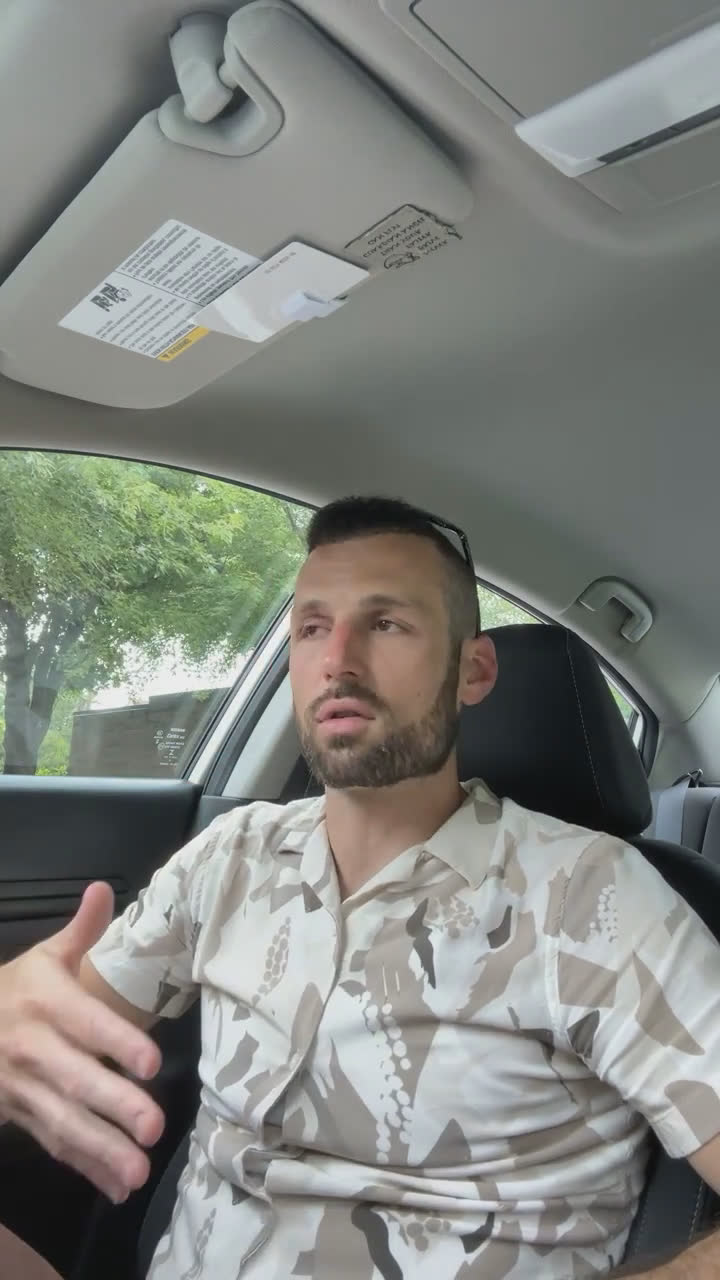
Join me this week as we talk about the stat that leaves so many people struggling: 9 out of 10 diagnosed with substance use disorder don’t receive any treatment.
Jason Lennox is your resident recovery champion. He talks about all things related to recovery, mental health and well being. Appreciate you all hanging in there.
One out of ten people who are diagnosed with substance use disorder actually receive treatment. Of every ten people that receives treatment, only one of those ten makes it from the beginning and sustains recovery forever. Jace says the vast majority of those people don't get help because of this stigma.
Cadre wants to deliver experiences, expertise, knowledge, data to the rest of the world for consumption. The biggest reason people don't get help is the stigma. At the micro level, that's what can help break that stigma.
Good afternoon to the Cadre sphere. I am grateful you're here. My name is Jason Lennox and usually I'm on Sunday. This is titled Sunday Serenity Sunday. I had a graduation party for a little cousin of mine. It was so great to spend time and be there, but didn't realize the cleanup was going to be quite as extensive as it was. Appreciate you all hanging in there. For those of you that join on Sunday, if you're joining now or you're watching later, thank you. But again, Jason Lennox. I'm your resident recovery champion and I am here to talk about all things related to recovery, mental health and well being.
I believe they're all very intertwined. I'm a person in recovery. I've been in recovery for 13 and a half years now and have a life that I could never have imagined having because of that. Good evening to you, Jules. Love seeing you here. Hope you're doing well. So it's world that are dying. We have so many people in this world diagnosed with substance use disorder, alcohol use disorder, that don't actually get help, that that lasts. Right? And so the statistics generally, I think, still hold true are, you know, one out of ten people who are diagnosed with substance use disorder actually receive treatment.
And then of every ten people that receives treatment, only one out of those ten makes it from the beginning and sustains recovery forever. So you do the math there, and we're talking one out of 100 people who need the help, who are diagnosed as needing the help that actually get it and then stay well. So one of the interesting things that I know about the statistic though, is because, you know, nine out of ten people who need help don't get it. Oftentimes people talk about that we're not doing good enough, not giving enough access, we don't have enough providers, whatever the reasons might be.
And I always have to remind myself and remind others that it's not actually the case that there are a whole bunch of people not getting help because it's not there. No, in fact, of those nine out of ten people who don't get help. So only one out of ten that needs it gets it. The other nine of those 994 percent actually don't get help because they don't feel they need it. And I gotta believe there aren't statistics here because it's hard to get to this level of data, but I believe that the vast majority of those people that don't believe they need help probably just don't want to talk about it and they don't want to talk about it because of this stigma.
So we have. I'm going to talk about stigma in two ways. One, at the macro level, which is just an education problem, meaning we have an entire world in society, even as advanced as we are. 80 years after alcohol and drugs started to be looked at differently, where we looked at it as, you know, a problem that people needed help with versus just a moral defect, and, you know, lock the person up and throw the keys away, that's what they used to do. So over 80 years, we've come a long way. But here's the thing.
We still have a society. And when I was in my own active addiction, I was met with statements and questions all the time, like, jace, if you don't want to go to jail, if you don't want to lose your family, if you don't want to lose your job, you don't want to lose a relationship. It's very simple. Just don't do the thing that causes that, because your drinking and your drugs is what's putting you in jail. That's what's making you lose the family, lose the job, and everything in between. So it seemed like a very logical equation.
And after a while, after hearing that, especially after hearing that and doing everything I could do to not go down that path, yet still going down that path, I started to think that I had gone crazy, and there was something wrong with me, and there was no way I stood a chance. So that's what I mean by the macro level stigma, where, you know, our world just keeps saying, it's not that hard. If you don't want x, then don't do y. And, you know, it's just a really unfair position to put anyone in. And it makes for.
I don't want to talk about it. So, you know, until I was 24, when I was backed into a corner, sitting in a jail cell after a hospital overdose, I wasn't going to talk about treatment. I was not going down that path, because there's no way I could admit that I had that problem, because it was such a. Such an easy thing according to the outside world. And I was really smart, so it just crippled me. And for that reason, I did not want to talk about it. And so that's the macro level stigma. And that's why I love speaking.
I get to speak. I wrote a memoir and got to publish out a year and a half ago, and I get to put that in as many hands as I possibly can. And here's why. Because through my time speaking, I speak to a couple different groups. Usually one's a group of people who are in recovery, and I mean audience group, not just a couple groups, but the different types of audiences. One is people who are living this kind of life and who are struggling with substances or who did and now are in recovery. Recovery.
And that's fun because I always get to connect on a different level. But the second group is a group of people who aren't. And the interesting part about that group, which I never intended on speaking to, is as I realized my story and weaving my own sharing into the speaking engagements with people outside who just didn't have that knowledge, they would come up to me and say, I never knew that. I didn't realize that that's how complicated this was. I didn't understand the psychological components of this.
Thank you for educating me. I know, but I know differently now and I will act differently and I will treat people differently. So thank you. So I realized that click then that people who didn't understand and who talked about addiction and who thought about addiction in the ways that they did, didn't do it because that's what they wanted. They did it because they didn't know any different. And so that was my opportunity to share. And that again, education on the macro level. Now I want to get to the point that I really want to drive home here and end with is on the micro level, we get to do things like this.
This is precisely why Cadre exists here, is because we want to deliver content to the world. We want to deliver experiences, expertise, knowledge, data to the rest of the world for consumption. Because I'm not sitting here telling anyone on the other side of the screen the jewels of the world, the sherrys of the world. I'm not telling you that this is what you have to do. I'm simply saying this is what I know to be true. For me, this is the. But the evidence that I have to support it both experientially, my life, my life shows that this is working.
But then also evidence and data and practical, tangible items from research from the industry that shows this is what works. I'm sharing that. And then you as a consumer, you get to take that in for what it's worth and you get to try on what you think could work with you. And there's no pressure there. I'm not telling you you got to go here and you got to go there. And this is the treatment you need and what's wrong with you here and what's wrong with you there? No, this is sharing and this is content.
And that's the beautiful thing about Cadre, because at the micro level, that's what can help break that stigma. See, again, 94% of people who don't get help don't actually feel they need it. And how many of those don't feel they need it because they don't actually want to talk about it because they've been directed and told their whole lives. It's not that hard. Just don't do it. So at the micro level, again, that connection and that sharing is what's so critical. That's what we get to do at Cadre.
I spoke last week at an event. Somebody came up to me after and said, you know, I really, really would love to speak and do some of the things that you do. I would love to be able to share, like this. Problem is, I don't have a whole lot to offer. I haven't been around this long. I've got this, and I hear this all the time. In fact, we sometimes hear this in the rooms of recovery, where people will say, you know, if you haven't been sober, you haven't been in recovery for a year, then you can't talk.
Like somehow that's a magical point in time where all of a sudden you're an expert at something. And to that, I always almost want to puke. Because the reality is, when I was in treatment, and I went to the rooms of recovery, when I was one week in and just. And then what it is like today gives somebody else the power they need to hang on. And I know that to be true, because when I went to treatment, when I was in the rooms of recovery, it was to get out of the pain I was in, not because I thought there was a different kind of life.
So as I sat in those rooms and listened to the people tell their stories, I couldn't comprehend how that could happen in my life. But I knew that those people weren't lying. I could tell in the way in which they told their stories, the conviction they had that they were telling the truth. And that kept me around long enough to listen a little bit more, to try it on myself, to take a couple of those ideas and say, let's see how this works in Jason's life. And because of that, I got some experience that said, this works.
And I got a little more and I got a little more. So, again, very intentional about this micro level effort, and we all have that in us, whether we've been doing this thing for 24 hours, for 24 days, for 24 months, or for 24 years, somebody is right there behind us by a day, by a week, by a month, by a year, listening to the words we're saying. And if we don't say them, there's nothing to listen to. And if people wouldn't have had the words to say, even at 30 days sober when I first came in, I don't know if I'm here today.
So again, at the micro level, we all have that opportunity. We all have that opportunity. If it's a month, a few months, six months, a year, those are powerful milestones that somebody's listening to. So I promise we need to take advantage of that and it will change someone's world. So again, why people don't get help? I think the biggest reason is the stigma. And I think there are two causes. One is a very macro level cause. We need more education. That's my job. That's what I love to do, is help people understand addiction is not what we make it out to be.
It's a disease, and it causes all the problems that it causes. Second, there's a micro level component to this where we can get in and just share one to one. I can share like this. I can tell you a little bit about what things were like for me, what I did, how I've gotten here. And hopefully you get to take a little bit of that and try it on. And macro, micro, we got to come from all angles to do something different. Because we lost a quarter million people last year in the US alone from drugs and alcohol.
And, you know, that number has doubled in five years. So we have some work to do. But I believe if we can break through that stigma, we start to look at this a little more like the rest of healthcare. And we start to look at it as what it is. A condition, a disease that can be treated. And the best part about that is when we get on the other side of that, the most resilient and powerful people I've ever met come from having that experience. To overcome something like addiction, to be knocking on the gates of death over and over and over.
To come out alive, boy, that creates a playbook that you can't make up and you can't replicate any other way. So, Jules, I appreciate you sharing. And yes, you had to admit it yourself out loud. That makes it real. That is what they talk about when they say, the first step, I need to share with somebody because I can. I can. I can accept that internally. But once I start sharing that with somebody, the rest of the world starts to know where I am. And I've declared that. And, you know, from that, I get to declare what recovery looks like.
And I've got some accountability there. So I absolutely agree. That's such a critical component. We have to first accept that this is, this is a problem we have. And, you know, from there, we talk about that with other people. And again, Jules, to make that real, guess what? You. You admit that and you talk about that out loud, again, you might be thinking, I gotta share with this person who can help me, but there's somebody standing directly behind you going, if Jules can admit that, then I know I can admit it, too.
That's a, that's something I can do. I just watch somebody do it. So there's so much value in the little things that we do. And I hope you've got something here and.
Reactions and comments are for members. Joining is free and takes a minute.