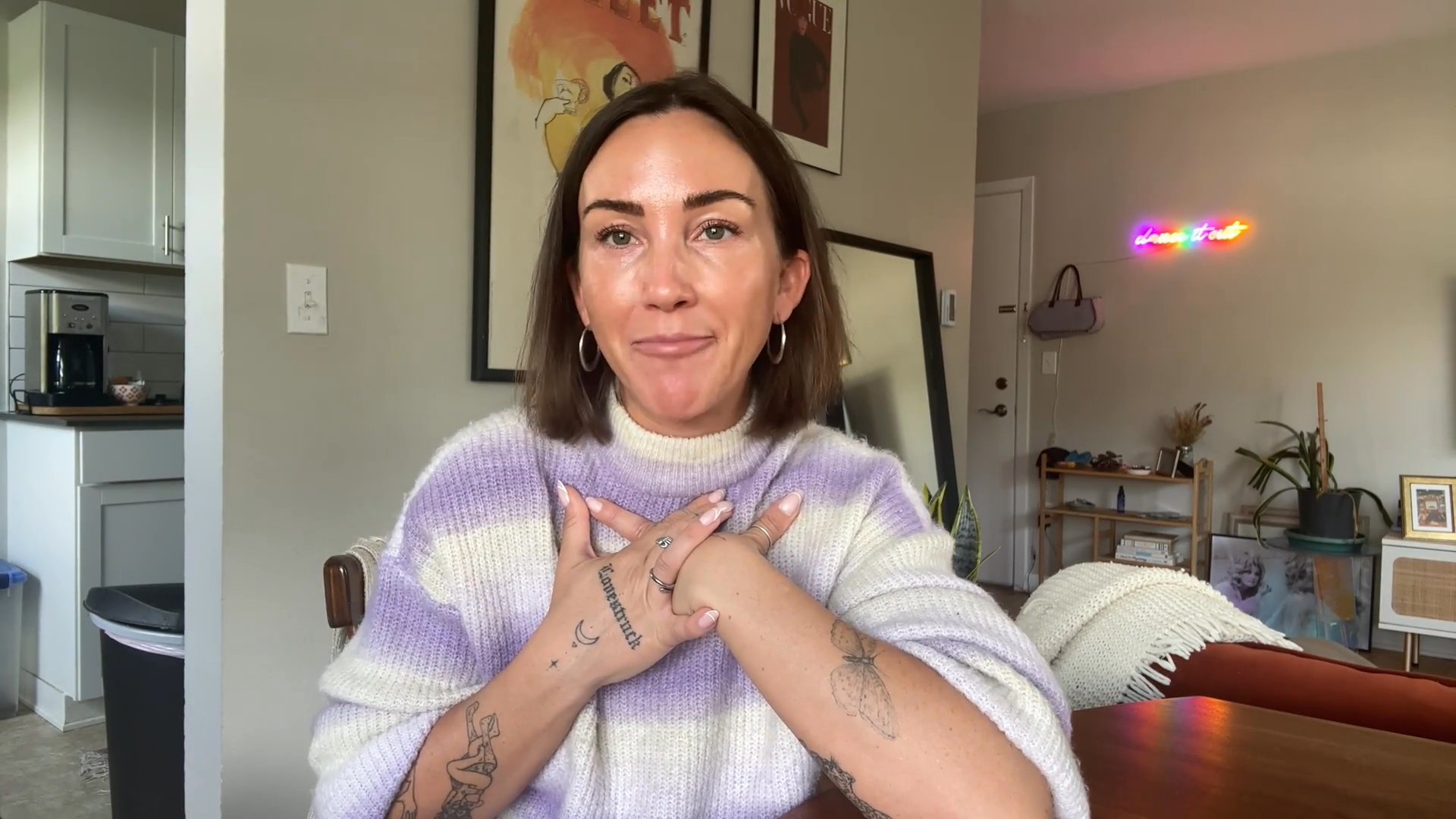
In this video I’m going to give you options for ways to share online without having to share your face or film your whole life.
How comfortable am I with my face and my personal life being displayed on the Internet? There's really no wrong way to share your story, and it's okay if it's not your face or your physical body. Chances are you need to protect your mental health in tenfold.
Question number four when thinking about sharing your story online, how comfortable am I with my face and my personal life being displayed on the Internet? I have four videos on this topic and this is number four, so be sure to head to my profile to see the other three. If you're new here, my name is Rachel and I have been a mental health writer and advocate and content creator for about four and a half years. So I've learned a lot about both the positive and negative sides of posting and sharing your personal story online.
When I started sharing online, I mostly wrote blog pieces and shared infographics. Every so often I would share a photo of myself on Instagram to say hello, new followers. And then once TikTok became popular and Instagram introduced reels, I started filming myself. This enhanced my lack of privacy online in tenfold because now not only was I telling my story, I was sharing my face, my friends, places I go, and so much more. I'm also in recovery from an eating disorder and I have a lot of body image issues that I still work through.
So constantly filming myself, seeing my face and my body on camera and then I showing that to the public almost every day started to really impact me and send me into a lot of relapse. I started to look for other ways to honor my why. Just help one person feel less alone. And again, this is why your why matters more than your what. Because if the why is strong, the what can change and you'll still impact people. So if you're not comfortable filming yourself, you can try filming nature and putting text or voiceovers on the top.
You can take a stab at doodling or share handwritten quotes. Maybe you share your story through visuals like cartoons or comic strips. There's really no wrong way to share your story, and it's okay if it's not your face or your physical body or your personal life on a video on screen. Additionally, you can always pivot. So if you start with text content like blogs or short form pieces and quotes on social media, you can always add in video later and vice versa. I have pivoted multiple times in the last four and a half years from solely infographics to photos to videos, back to text, and then a combination of all three.
A lot of it just ebbs and flows with the season I'm in in life and how I can protect myself personally. I talk about both of these concepts in the other videos of this series, talking about your why and why that's so important, which allows you to change the what while seamlessly still connecting to your community, as well as having these systems in place to protect yourself and take care of yourself. These are really beautiful ways to honor who you are and what you're going through, especially if you're writing about mental health.
Chances are you need to protect your mental health in tenfold. I hope this series was helpful as always. Please let me know if you have questions in the comments and I will see you next time.
Reactions and comments are for members. Joining is free and takes a minute.