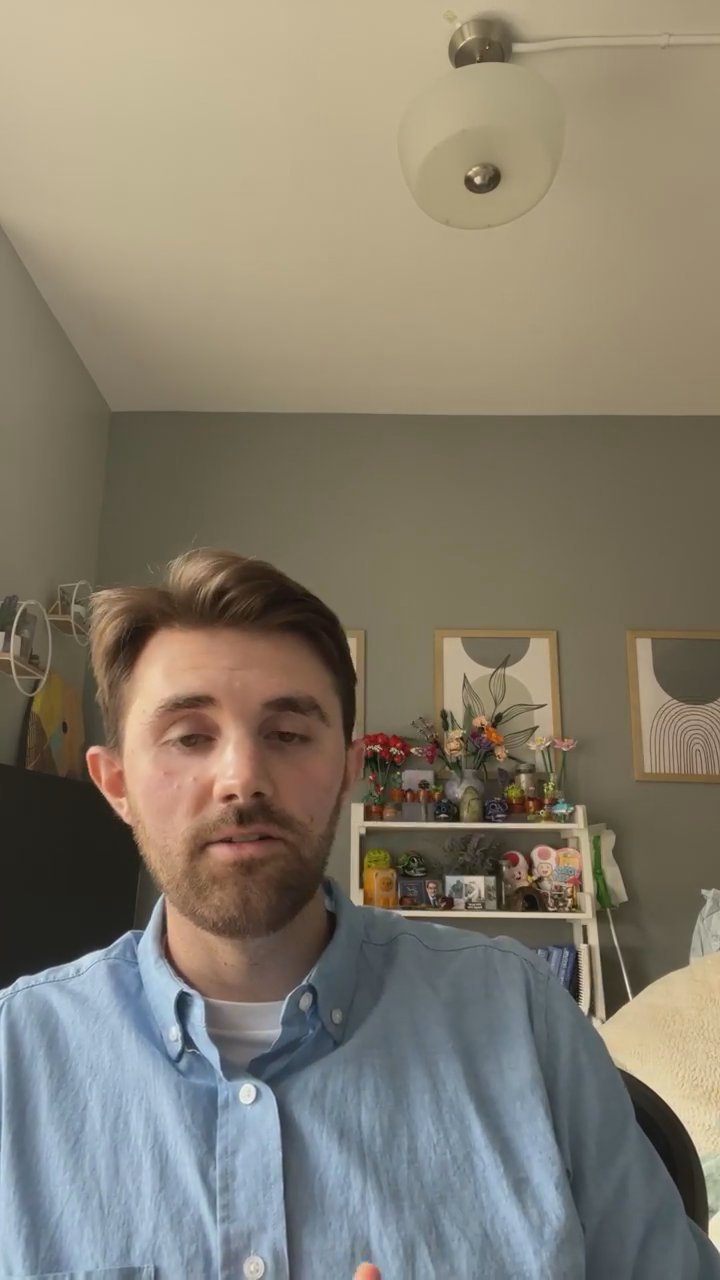
Luke outlines the idea of leading with weaknesses—putting flaws front and center in pitches and proposals—to disarm skeptical audiences, appear more intelligent, and build trust by acknowledging limitations upfront.
Happy Monday. July 22 started a little early, so I'll give it a minute here. Wait for some people to join in. Happy Monday.
Luke says putting your worst foot forward involves addressing your weaknesses first. He says it disarms the audience and builds trust. Acknowledging your weaknesses makes you appear more intelligent, he says.
Happy Monday. Happy Monday. July 22 started a little early, so I'll give it a minute here. Wait for some people to join in. Okay. Today I'm talking about putting your worst foot forward. Hi, Tara. Welcome. As you can guess by the title putting your worst foot forward. And what does that mean? I took it from the author Adam Grant in his book a long while ago. Hi, Luke. Welcome. So, putting your worst foot forward forward. What does that mean? Hi, Jules. Hello. So, putting your worst foot forward, this really involves addressing our weaknesses first.
Putting your flaws, really, out there at the forefront of everything we do. Often when we do a sales pitch or a proposal, we're really trying to make an argument about something. We highlight the strengths, and we overemphasize what we do well and try to really hide our weaknesses, try to make it not seen. So we don't want people to call us out on that, you know, kind of protect our ego a little bit. But in the case of when you're talking to a skeptical audience, putting your worst foot forward is actually more effective.
And how does this work? Well, it works in four different ways. First of all, it disarms the audience. When you talk about your flaws openly, people will actively not be looking at them anymore. Often, if we're going to try to persuade somebody, the audience can pick up on that and they'll put up a defense and they'll kind of sit and listen to you, but they'll be more skeptical. They're thinking about, well, is this honest, or is he just trying to get me to agree with him? But if you start with your flaws kind of opens that up.
It opens up the gate. People are more receptive. They're listening to you and trusting you a little bit more. And the second thing is, it demonstrates intelligence. Acknowledging your weaknesses makes you appear more intelligent. Studies have shown that people who are more skeptical or critique people more, analyze people's work more are seen as more intelligent. You can see that with Simon Cowell on American Idol and whatever he's on now, he's often the judge who critiques everybody and says a negative about the person, and he's often seen as the more intelligent one, even though who really knows who's right or wrong.
He's perceived as more intelligent up there because he's always critiquing more harshly. So if we lead with our own critiques, it makes us appear more intelligent as well. Third, it builds trust. Like I was saying before, by being open about things, people will trust in the future, you're going to be about open about the flaws as well. So leading with these flaws, they don't have to dig into your company or dig into your research or dig into your argument when you're doing a proposal, a sales pitch or something.
Because if they did, they're probably going to find out this information that you're telling them already. So by telling them upfront, they're going to be more trusting of you and think in the future you're going to say, be more upfront about things as well. And the last things, it leaves a favorable impression as well. It shows that you have nothing to hide and building that long lasting trust and by putting that information more accessible, it leaves the audience with fewer flaws for them to find on you.
So if you're stating these three flaws that you have with your argument, people will trust that those are the major three flaws, and it would be hard for them to find anything else or think of anything else in that presentation that is going to be flawed. It's just research showing that even if you're doing, say, like they've had in research, they've had participants say, name ten things that is good about your life and then also have other people say, name three things that is good about your life.
And the people that can name three is boom, boom, boom. Easy. They're more happy about their life. They think, man, I have a good life. But if you tell somebody, hey, say ten things about your life that's good, they'll get the first three, four, five. But after that it starts, oh, man, it's tough to find more things that's good about my life and they'll think more negative about it. Same thing. If you present with a couple issues with your argument, they'll think, boom, boom, boom. Okay, that's not too many.
I don't have to, you know, this isn't that bad. Of the things, there's not a lot of issues with this, this sales pitch, this argument, this issue, anything that you make an argument about, there's not that much issues with it because there's a three. I can't think of any more. But if you let them critique themselves, they're going to find a couple more in their own research. So I urge you to find where in your life this could help you. Luke, I was actually thinking of you when I was making this.
I was thinking because you always are working with Cadre and getting our word spread about there. So I was thinking, well, that kind of applies to Luke a lot with myself. I recently had to present research to a committee and have it get approved. And I went in there and I knew my flaws that I had, but instead I tried to kind of skirt around them, to try to not bring them up, not let them bring it up. And then when they did, I stuttered more. I was taken aback. I wasn't prepared for it because I was really trying to highlight the strengths and hide the weaknesses.
So I want you to think about where in your life you could take this, where you could apply, moving forward with your weaknesses, addressing them first, being more frank about them, being upfront, not hiding them, and letting that be a conversation where it doesn't hurt your ego, but they're actually more involved with you. So I was thinking that with research, I'm thinking that kind of in my school setting, with homework and projects, if I go into a meeting and I have to show off work thinking about what things do I need to ask questions about first before I try to present my ideas?
Because that can open up a conversation and it leads to less harsh for me, more or less harsh feedback. So that's putting your worst foot forward and that's really only for audiences that are skeptical. If you're going to an audience that is going to be supportive and you know it's going to be supportive, you can lead with your best foot. You don't need to forefront with your weaknesses, but if you feel your audience is going to be skeptical and you're a little nervous about that, you can lead with a couple of your weaknesses and then highlight all the positives.
So that is it for my live stream today. We have JC on here at 1230 and then you can check out the whole calendar right here on the app by clicking the little calendar icon. Happy Monday and have a good rest of your week. Bye everyone.
Reactions and comments are for members. Joining is free and takes a minute.